
The Core Software Categories You Actually Need
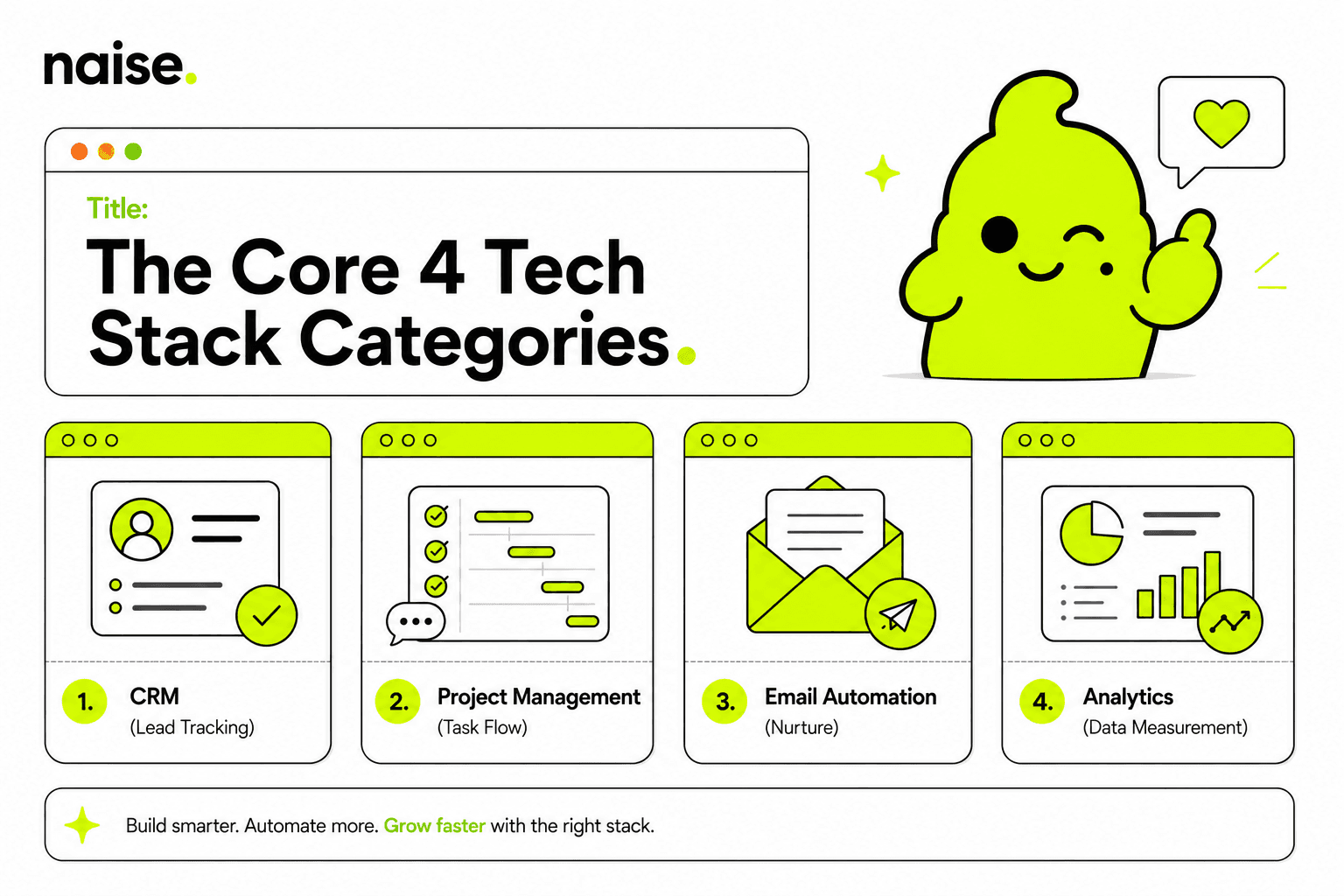
When you're trying to scale a business, piecing together the right essential marketing campaign management tools can feel like a full-time job. The foundation of any campaign relies on four main software categories (CRM, Project Management, Email Automation, and Analytics) to track leads, assign tasks, and measure performance.
You cannot run a modern marketing team out of a spreadsheet. You need dedicated software to handle the heavy lifting. The problem is that most software advice throws generic labels at you. We are naming names.
For Project Management, tools like Asana and Monday.com dominate the enterprise space. They offer robust timeline tracking and resource allocation. If you run a leaner team or a startup, Notion provides a highly customizable, budget-friendly alternative for organizing creative assets.
For your Customer Relationship Management (CRM), HubSpot remains the gold standard for inbound marketing. B2B sales teams often lean heavily on Salesforce for complex pipeline tracking.
Email & Automation: Mailchimp works beautifully for direct B2C newsletters. ActiveCampaign offers far superior conditional logic for B2B drip campaigns.
Social & PR Scheduling: Legacy tools like Sprout Social or Hootsuite handle publishing. However, they still require you to write every single post manually.
Data & Analytics: Google Analytics 4 (GA4) is non-negotiable for web traffic. Mixpanel steps in when you need granular, event-based product tracking.
Actionable Blueprints: Tech Stacks by Budget
Locking in your essential marketing campaign management tools shifts drastically depending on who you sell to and how much money you have. Copying a Fortune 500 tech stack for your local e-commerce brand will drain your budget instantly. You need a tailored approach.
Blueprint 1: The Bootstrap B2C Stack (Low Budget)
When you are fighting for every dollar, you need high visual impact and low overhead.
Project Management: Trello (Free tier) or Notion.
Email Marketing: MailerLite or Klaviyo (for Shopify integration).
Design & Assets: Canva Pro.
Social Media: Native platform schedulers (Instagram Creator Studio).
Blueprint 2: The B2B Scale-Up Stack (High Budget)
B2B marketing relies on long sales cycles and intense lead nurturing. You need data visibility across every touchpoint.
CRM & Hub: HubSpot Marketing Hub (Professional tier).
Project Management: Asana or Jira (if working closely with product teams).
Analytics: GA4 combined with Looker Studio for custom reporting.
ABM (Account-Based Marketing): 6sense or Demandbase.
Fragmented Stack vs. All-in-One Architecture
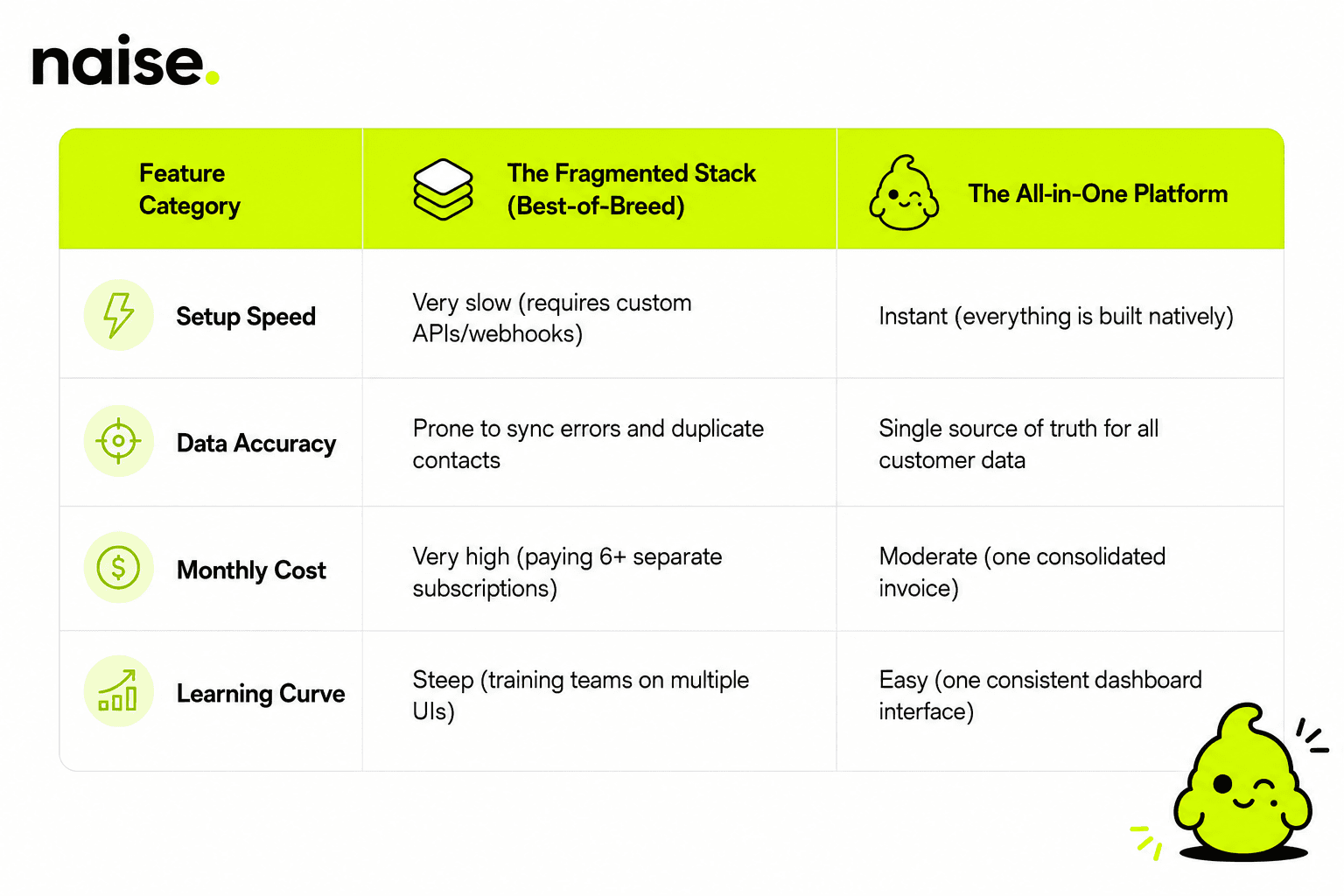
Fragmented stacks allow you to pick the best individual apps, but they create massive integration headaches and data silos compared to unified, all-in-one platforms.
Building a "best-of-breed" stack sounds great in theory. You buy the best Email Marketing tool, the best CRM, and the best Social Scheduler. Then you spend 20 hours a week just moving data between them. This approach creates a fragmented workflow.
An all-in-one platform centralizes your data. You lose some hyper-specific features, but you gain massive operational speed. When your Email Data talks directly to your Ad Spend Data without needing a Zapier integration, your team moves faster.
The Modern AI Missing Link
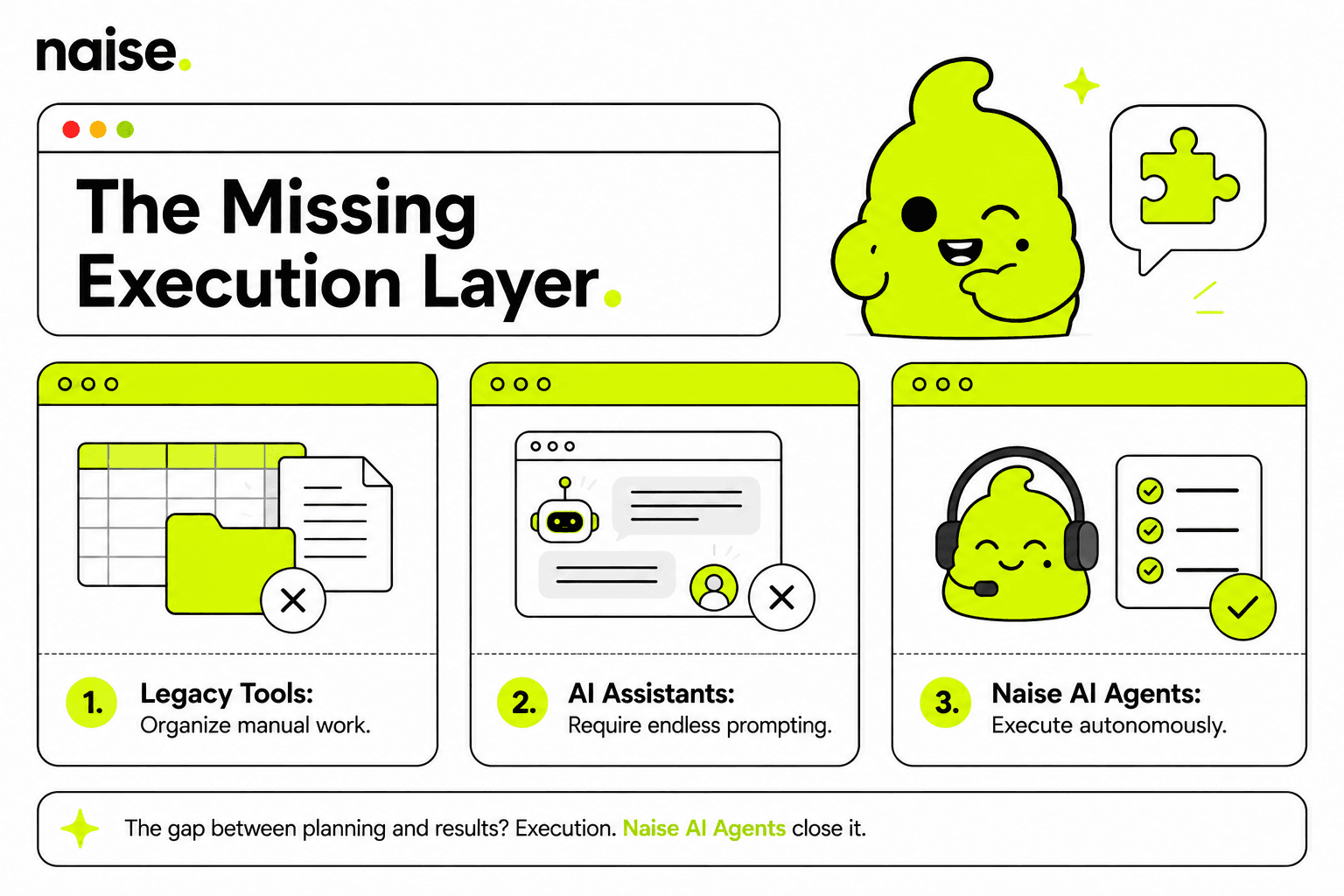
Legacy software only organizes your manual labor, whereas modern AI Marketing Agents actually execute the creative work autonomously.
Look closely at the tools listed above. Asana tells you what to do. HubSpot tells you who to email. Neither of them actually does the work for you. You still have to sit down, stare at a blinking cursor, and write the campaign.
This is the fatal flaw in standard tech stack advice. Legacy software just gives you a prettier place to do manual labor.
To compete today, your stack must include an execution layer. You need technology that actually drafts the copy, researches the influencers, and pitches the media. Now, let's look at how to automate the actual output.
How Naise AI Replaces the Fragmented Stack
Naise AI replaces messy software stacks by combining persistent brand memory with autonomous agents that generate and schedule your campaigns in minutes.
You do not need more software to manage your work. You need a teammate to do the work. Naise AI operates as your integrated marketing ecosystem, eliminating the need for separate prompting tools, writing apps, and scheduling dashboards. Here is exactly how it executes a campaign without the manual grunt work.
Upload Context to Projects (The Brain): You drop your brand guidelines, past PDFs, and website URLs into the Projects tab once. Naise AI builds a persistent vector memory bank. It never forgets your brand voice.
Command via Naise Chat: You open the Dashboard and type a simple request into Naise Chat. You do not need complex prompt engineering.
Deploy Expert Playbooks: Instead of staring at a blank page, you select a pre-configured Playbook (like "Organic Spillover Capture"). These are agency-level strategies ready to go.
Execute with Agents (The Muscle): You hand the strategy off to the specific Agent. The SMM Agent drafts and schedules your social posts natively. The Influencer Agent pulls a vetted creator list. The PR Agent pitches the media.
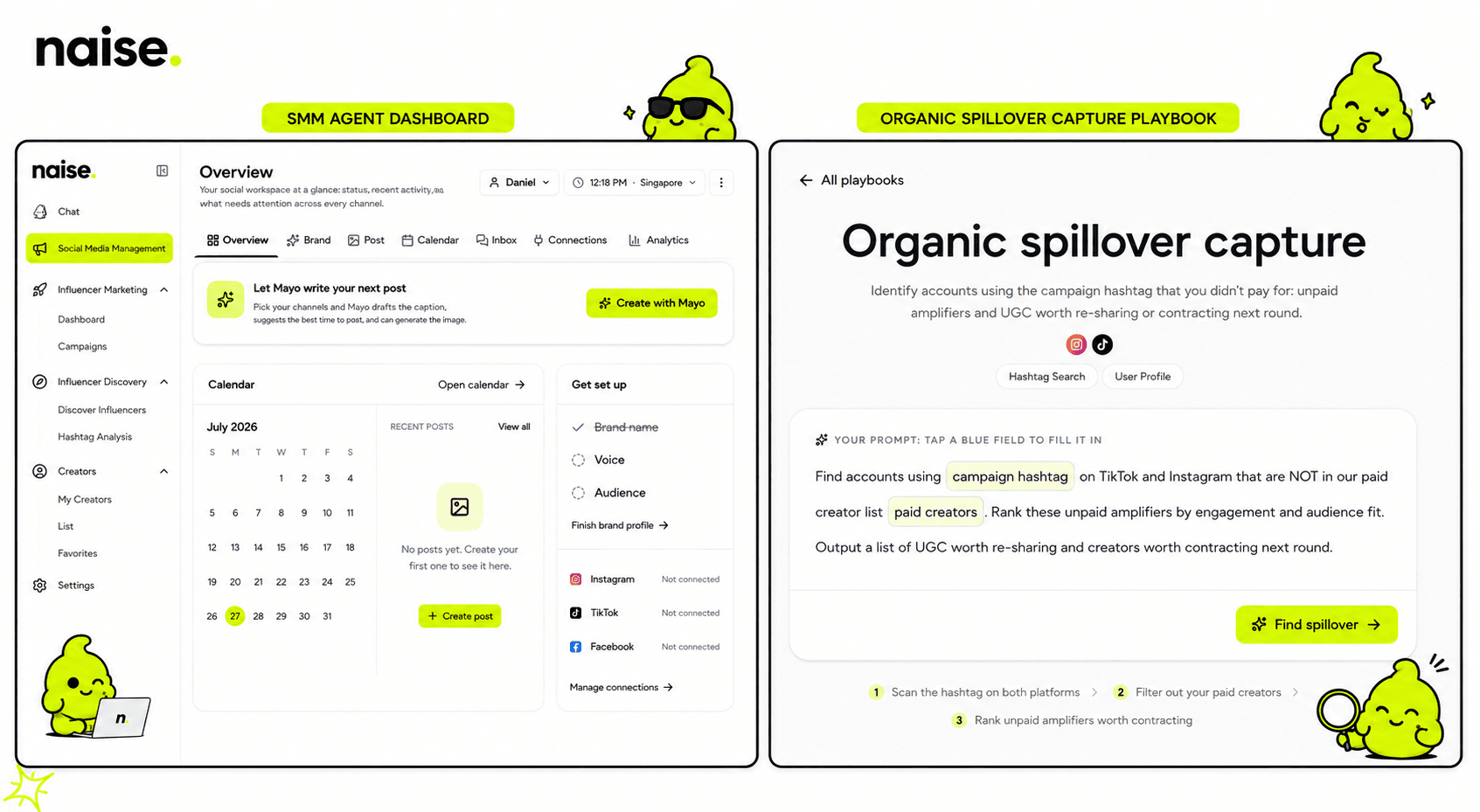
Finding the essential marketing campaign management tools used to mean buying ten different subscriptions and hoping they talk to each other. Today, you just need a system smart enough to handle the execution for you. Let Naise overthink the strategy while you focus on high-level growth. Stop managing software and start launching campaigns.
Ready to see exactly what an AI teammate can do for your brand? Audit your entire social presence instantly. Drop your link and run your Free 60-Second URL Audit right now.
Frequently Asked Questions (FAQs)
Q: What is the best marketing campaign management tool for a small team?
For small teams, a lightweight and highly visual tool like Notion or Trello is ideal for organizing tasks and content calendars. However, for actual campaign execution and content generation, adopting an AI operator like Naise AI is far more cost-effective than hiring extra headcount or buying multiple software subscriptions.
Q: Do I need a dedicated CRM if I only run B2C social media campaigns?
You might not need a heavy B2B pipeline tool like Salesforce, but you absolutely need a database to track your audience. B2C brands should focus on tools like Klaviyo or Mailchimp that combine basic customer data tracking with powerful e-commerce email automation.
Q: How do autonomous AI agents differ from regular generative AI?
Regular generative AI (like a basic chat interface) suffers from prompt fatigue. It forgets your brand voice every time you start a new conversation and requires constant micromanagement. Autonomous agents, like the SMM Agent inside Naise AI, use persistent memory to remember your brand rules and can independently execute multi-step workflows (like drafting, formatting, and scheduling posts).