
Stop refreshing your analytics dashboard because those massive spikes are not a glitch. YouTube just completely flipped the script on how they calculate audience retention and viewership on large screens. You are about to see a massive shift in your public numbers, but you need to know exactly what this means for your actual paycheck.
Starting in November 2026, the platform fundamentally altered the baseline mathematics of video distribution. The living room is now the biggest screen for digital video, and the platform wants public numbers to reflect everyone sitting on the couch. This is a massive win for vanity metrics, but it introduces a lot of noise into your daily workflow.
Creators and marketing managers are scrambling to understand if this breaks their historical data. The short answer is that your old totals are not being rewritten, but new TV views on older videos will get this estimation applied. You need a clear action plan to navigate this shift without losing focus on your core creative strategy.
YouTube Changed The Math On Your View Count
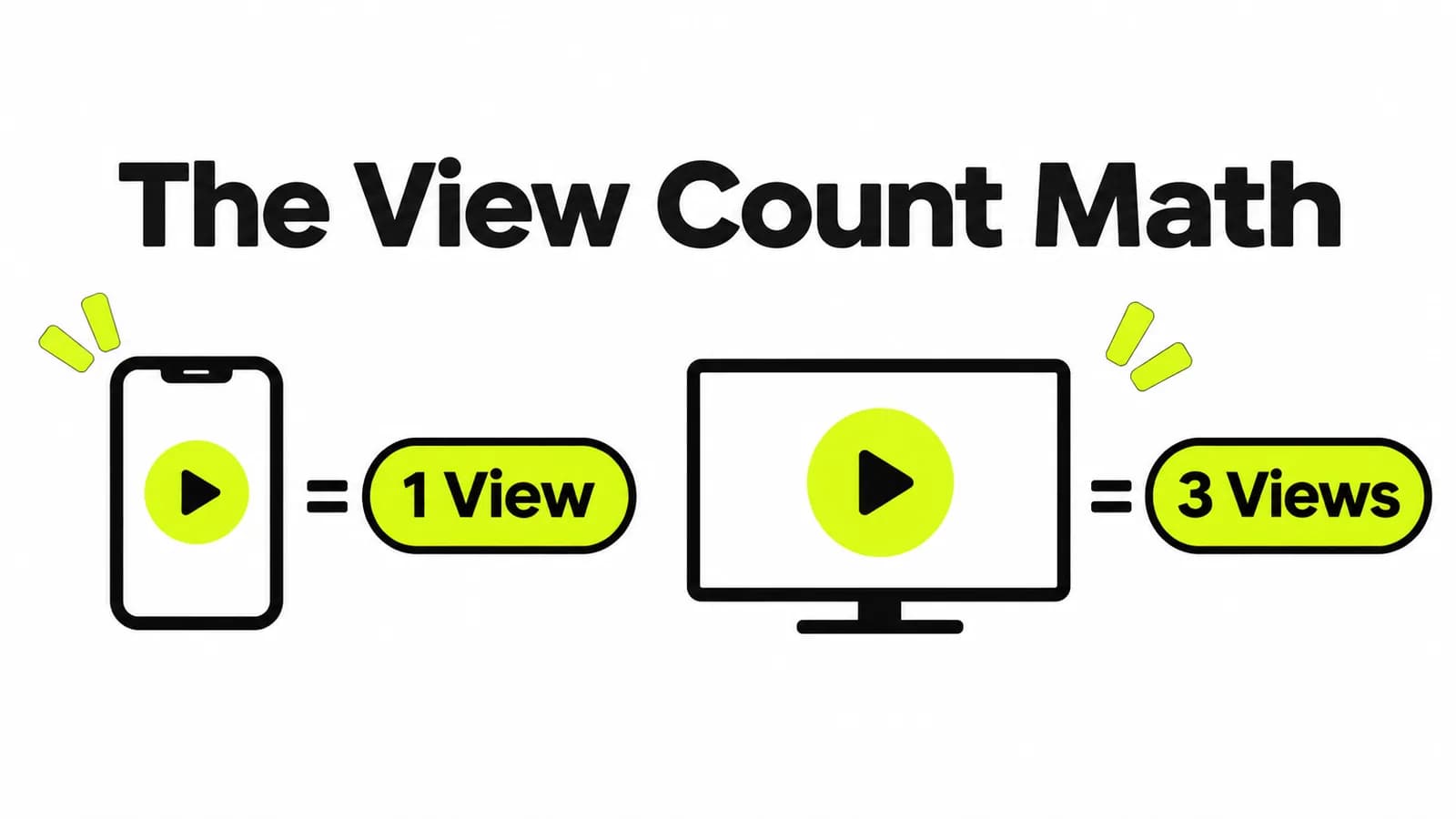
YouTube now counts a single video play on a television as multiple views if their data models estimate several people are watching together.
This new metric is officially known as Co-views. For example, if a family of three sits down to watch your latest vlog on their smart TV, that single session now counts as three distinct views instead of one. However, the rules have not changed for personal devices. Views generated from smartphones, tablets, and desktop computers will continue to count individually as a strict one-to-one ratio.
According to recent confirmations by YouTube, the company never uses cameras, microphones, or device sensors to measure these groups. Instead, they rely on complex estimation models based on historical household viewing behaviors. This ensures user privacy remains intact while still rewarding creators for gathering a crowd in the living room.
This update effectively retires the old method where three people on a couch only earned you one view. Approximately 35% of YouTube viewing time globally now happens on connected TVs, and viewers worldwide stream more than 1 billion hours of YouTube content on TV screens every day. Understanding this shift is critical because it fundamentally changes how you measure the virality of your long-form content.
Why Your YouTube Earnings Are Not Going Up
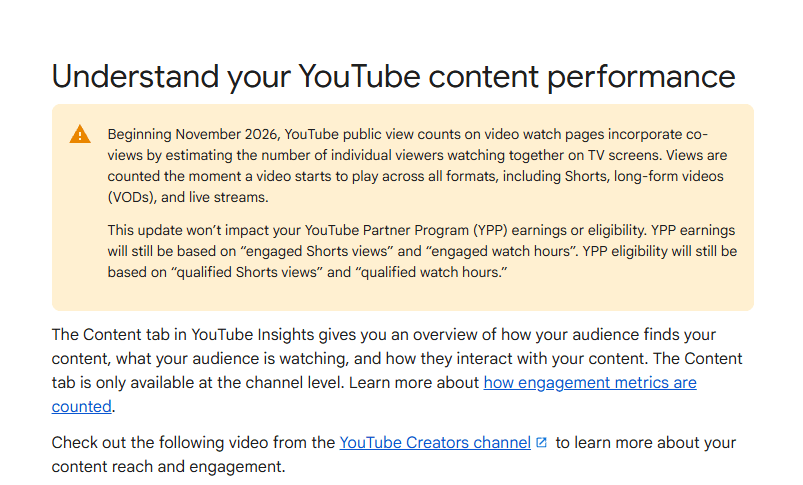
Your public views and watch time will look much higher, but your AdSense revenue and YouTube Partner Program eligibility remain strictly tied to individual engaged viewers.
Seeing a massive jump in public views might make you expect a bigger paycheck at the end of the month. Unfortunately, the monetization algorithms operate on a completely different set of rules. Financial payouts and program eligibility are still based entirely on Engaged Views and qualified watch hours.
Paid views also play by much stricter rules compared to organic content. Organic views count the moment a video starts, but ad views require deeper attention to register. If your video runs as a skippable ad over 10 seconds, it only counts as a view if the user watches 30 seconds or to the end.
Furthermore, non-skippable ads never count as a view under any circumstances. This separation ensures advertisers are only paying for verified, individual attention rather than estimated crowds.
The Hidden Impact On Your Analytics Dashboard
Creators will see a new Co-view Rate metric in YouTube Studio, while the older, separate co-viewed metric is being completely retired.
To make sense of your new numbers, you have to look closely at the Co-view Rate. If you divide your total views by this specific rate, you get your baseline views without the extra couch viewers. For example, if you hit 1.2 million views at a rate of 1.2, your actual baseline is 1 million views.
This change makes year-over-year view comparisons significantly messier. If you are trying to measure growth from last November, comparing your old numbers to these new inflated metrics will give you a false sense of scale. You must use the Engaged Views metric located in the Studio Advanced Mode to get a steady, like-for-like comparison.
You might also notice a small naming shift happening within the backend ecosystem. The help pages have started calling the analytics section YouTube Insights, although the main menu still says analytics. This indicates that the platform is actively overhauling how data is presented to creators.
How Creators Must Adapt Their Strategy Right Now
TV-first content like long-form videos, live streams, and family vlogs will see the biggest public boost, forcing creators to optimize for living room viewing.
If you produce long-form documentaries or sports commentary, you are going to experience the biggest lift in public metrics. The living room audience prefers highly polished, longer content that they can sit back and consume for hours. You should start optimizing your thumbnails and on-screen text to be easily readable from ten feet away.
Live streams are also heavily affected by this new estimation model. Peak and average concurrent viewers now incorporate these group estimates for people watching together on TV screens. You can expect significantly bigger live numbers if your channel heavily attracts a television audience.
The average session length for a user watching video content on a connected TV is approximately 60 minutes. You need to stop obsessing over raw view counts and start focusing on deep engagement. The creators who win this year will be the ones who build loyal communities rather than chasing inflated metrics.
Scaling Your Content Operations Without Losing Your Mind
Managing cross-platform distribution and analyzing new metrics requires an AI teammate to handle the manual execution while you focus on creative strategy.
When platforms change their rules, your workload instantly doubles as you try to adjust your content strategy. You do not have time to sit and manually recalculate your engagement rates or draft new content calendars. This is exactly where Naise AI steps in to handle the heavy lifting for you.
By feeding your brand guidelines into Projects, our system locks in your exact tone of voice and visual identity. You can then deploy the Social Media Agent to autonomously draft, schedule, and optimize your content across every platform. There is absolutely no prompt fatigue involved because our pre-configured Playbooks provide agency-level results instantly.
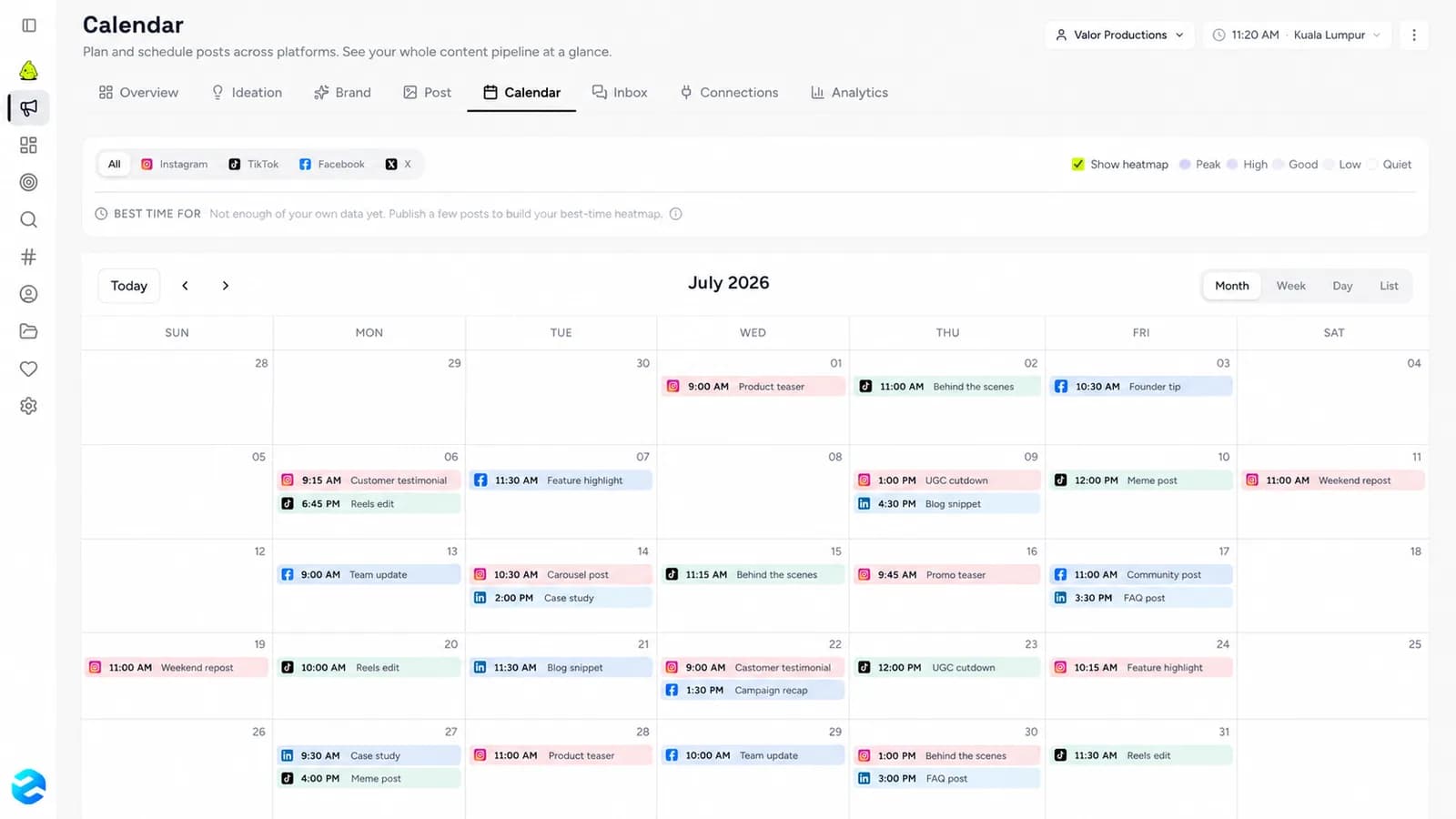
While you spend your time studying your new YouTube Insights, your AI teammate is in the background executing your daily marketing tasks. You can finally focus on recording great videos without the stress of manual distribution.
Conclusion
The era of one-to-one view counting on televisions is officially over. While the inflated numbers look fantastic on your channel page, your true success still relies on retaining individual attention and executing a consistent marketing strategy. Stop wasting hours on manual posting and let smart automation take over your daily operations.
FAQs
Will the new YouTube view count update increase my AdSense revenue?
No. Your public view count will increase due to estimated co-viewers on TV screens, but your actual earnings and YouTube Partner Program eligibility are still based purely on Engaged Views and qualified watch hours.
How does YouTube calculate co-views on a television?
YouTube uses data models to estimate the number of people watching together on a single TV screen. They have explicitly confirmed that they do not use cameras, microphones, or device sensors to measure these audiences.
Do mobile phone views count as multiple views now?
No. The new co-view estimation model only applies to video content played on connected television screens. Views generated from mobile phones, tablets, and desktop computers will continue to count as a single, individual view.
Where can I find my real view numbers in YouTube Studio?
To see your true baseline performance without the inflated television numbers, you should look at the Engaged Views metric located within the Advanced Mode of your YouTube Studio dashboard.