The Breaking Point of Manual Agency Growth
To scale a modern agency, founders must stop paying for redundant software and start building integrated systems.
Running a lean marketing agency usually means juggling five to ten distinct client accounts. Every new client brings a new set of brand guidelines, target audiences, and specific aesthetic rules. Managing this manually requires endless context switching for your team. You end up wasting precious hours just trying to remember the specific tone of voice for an enterprise SaaS client versus a Gen-Z skincare brand.
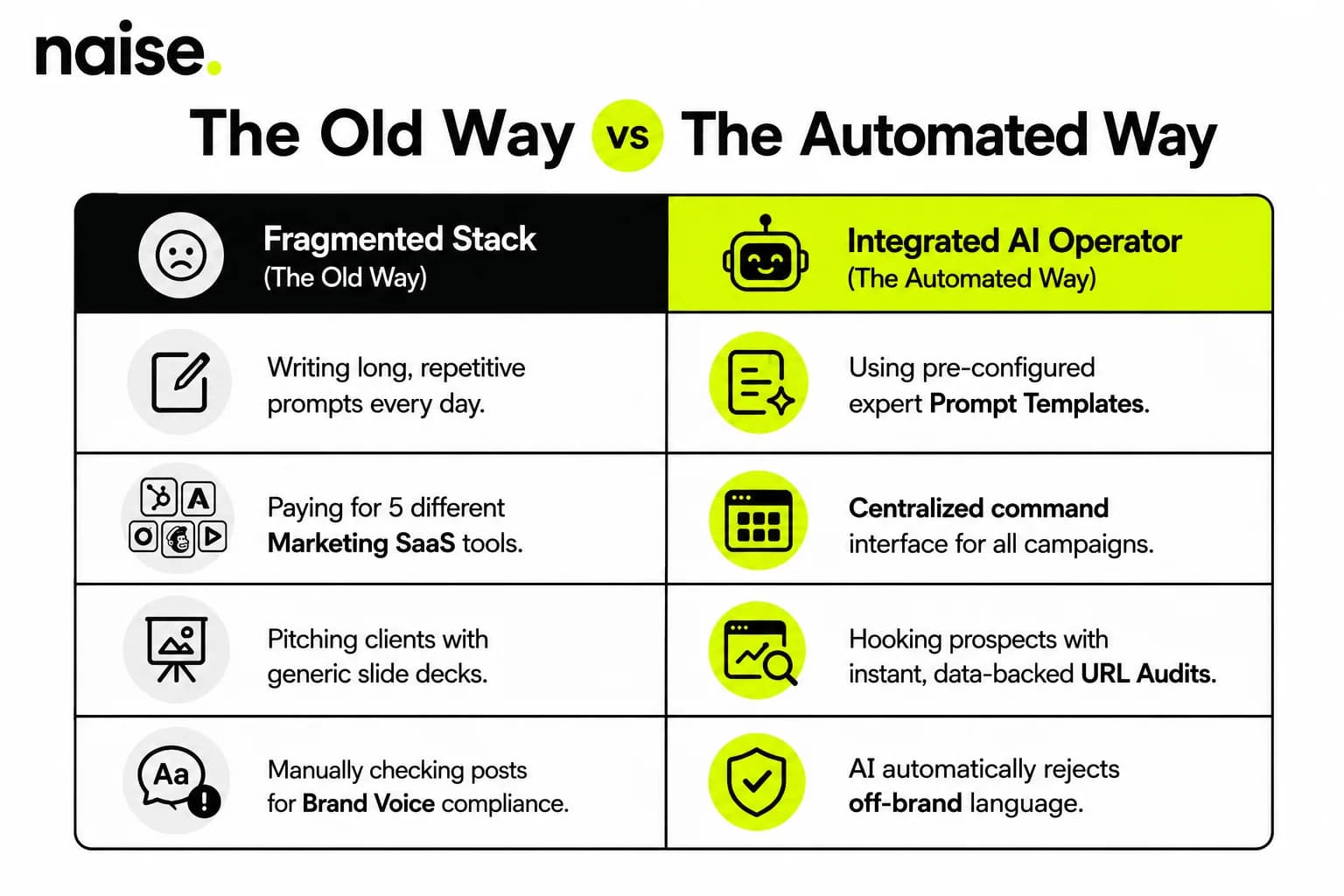
This operational drag destroys profit margins. You likely pay for separate tools covering Social Media Scheduling, Competitor Tracking, and Content Generation. Your team suffers from extreme Tool Fatigue because nothing connects natively.
Growth stalling out is the natural symptom of this chaos. When your account managers spend 80% of their day doing manual grunt work, they have zero bandwidth for high-level Marketing Strategy. You cannot confidently acquire new business when your current pipeline is held together by duct tape and caffeine.
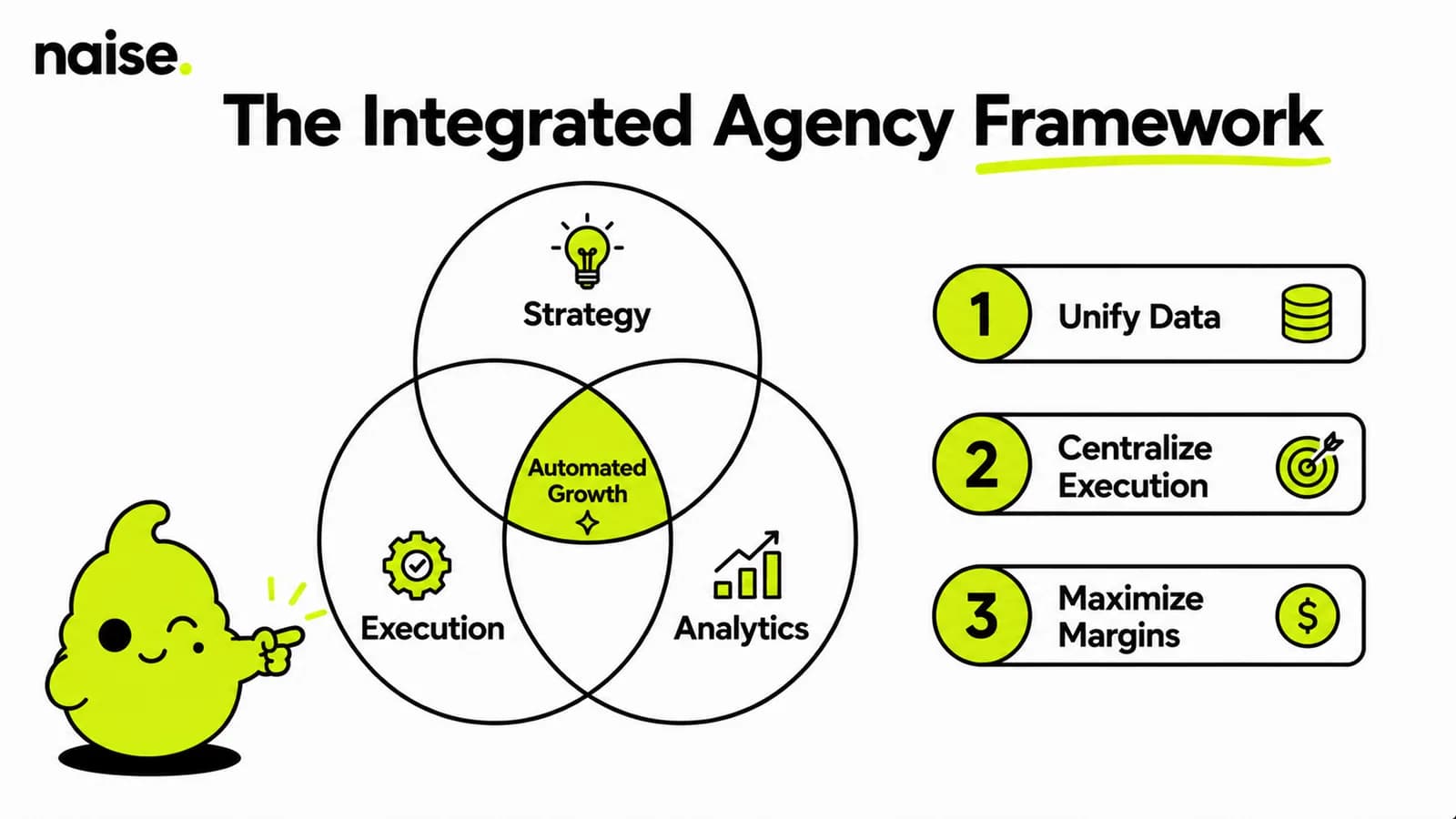
Rethinking Client Acquisition Through Automation
Winning new agency clients requires proving absolute competence before the prospect even signs a contract.
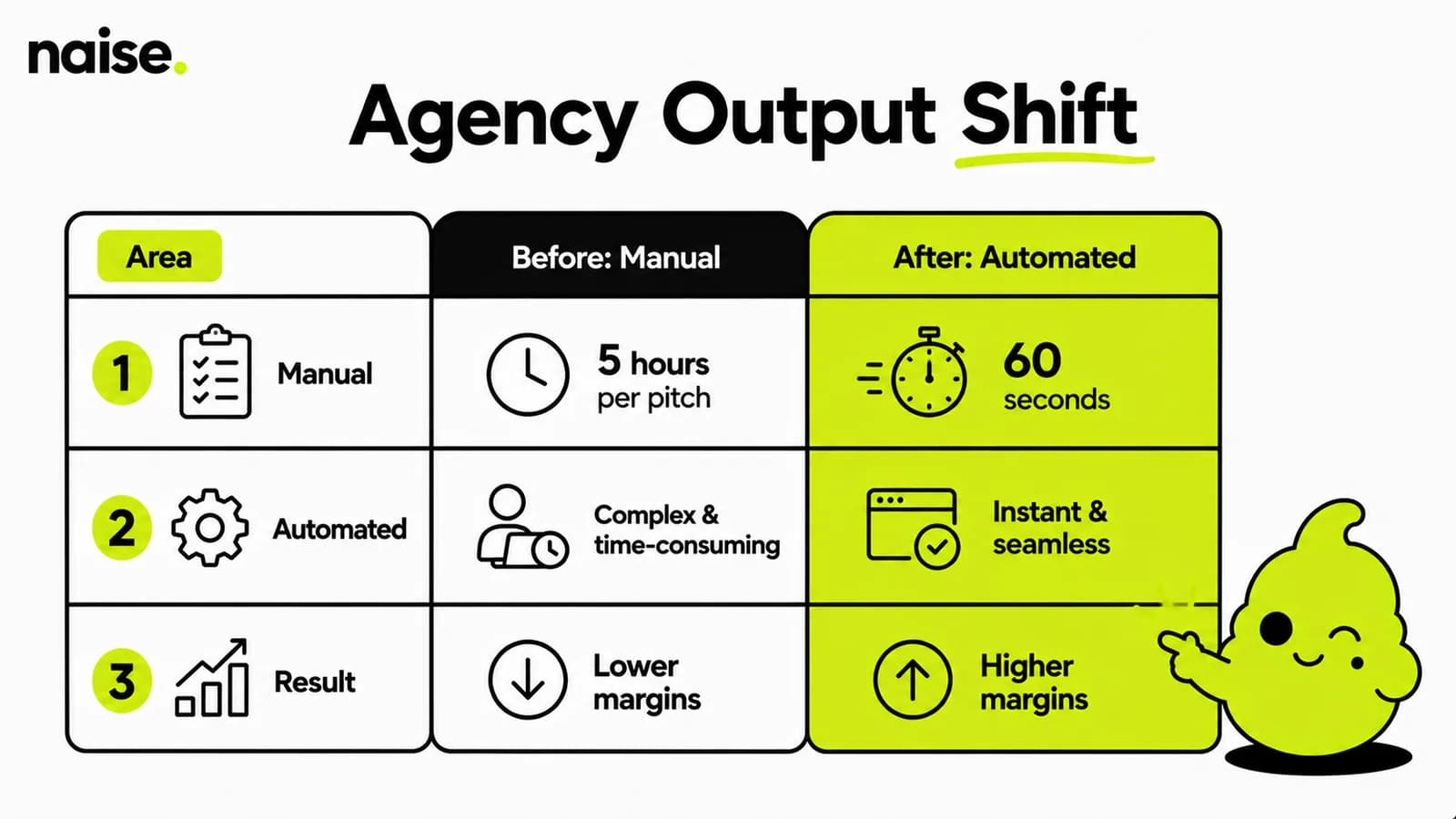
The traditional Client Acquisition playbook relies on generic pitch decks and lengthy proposal periods. Agencies spend days researching a prospect manually just to build a single presentation. This approach is painfully slow and often fails to impress founders who want immediate insights.
Smart agencies now use automated Data Scraping to flip the script. Instead of telling a prospect what you can do, you show them exactly where their current strategy is failing. By generating a complete Brand Audit instantly, you position your agency as a hyper-competent partner from minute one.
This speed creates massive leverage during discovery calls. You hand the prospect a detailed breakdown of their Social Media Presence and direct competitors before they even ask for it. Giving away highly specific, actionable data upfront drastically increases conversion rates.
Standardizing the Creative Pipeline
You must eliminate repetitive prompting to maintain quality control across multiple client accounts.
Generic AI tools like ChatGPT or Claude have a massive flaw for agencies. They suffer from total amnesia. Every time you start a new chat, your team has to re-explain the client's entire brand identity. This leads to Prompt Fatigue, where marketers spend more time arguing with the AI than actually publishing content.
The solution is implementing persistent Memory Banks within your workflow. When you upload a client's Brand Guidelines once, the system should remember the exact emoji policy and banned words forever. This ensures that a junior copywriter and a senior strategist produce the exact same quality of work.
Reclaiming Strategy Over Execution
Agencies hire brilliant creatives to think, not to format spreadsheets.
When you strip away the administrative burden, your team finally gets to focus on revenue-generating ideas. According to Deloitte, AI-driven employee-engagement tools were projected to increase employee retention by up to 25% in 2025. You want your staff obsessing over the psychology of a campaign hook. You do not want them wasting an hour dragging and dropping assets into a Social Media Scheduler
True scalability happens when execution becomes an afterthought. You set the high-level goal, and the technology handles the formatting, scheduling, and reporting. This is how boutique agencies compete with global firms without ballooning their payroll costs.
How to Scale Marketing Agency Operations with AI Using Naise
Naise AI acts as your tireless 24/7 marketing operator, giving your agency enterprise-level output for a fraction of the cost.
Step 1: Hook Clients with the Growth Tool Drop a prospect's website into the Growth feature on the Dashboard. In under 60 seconds, Naise AI scrapes their public data to build a comprehensive brand profile, competitor analysis, and social footprint. You now have a custom, data-rich pitch ready before the discovery call even starts.
Step 2: Lock in the Brand with Projects Once you land the client, convert that research directly into a new workspace under Projects. Upload their PDFs and brand assets here. This persistent memory ensures the system always remembers the client's exact tone, target audience, and banned phrases. You never have to explain the brand twice.
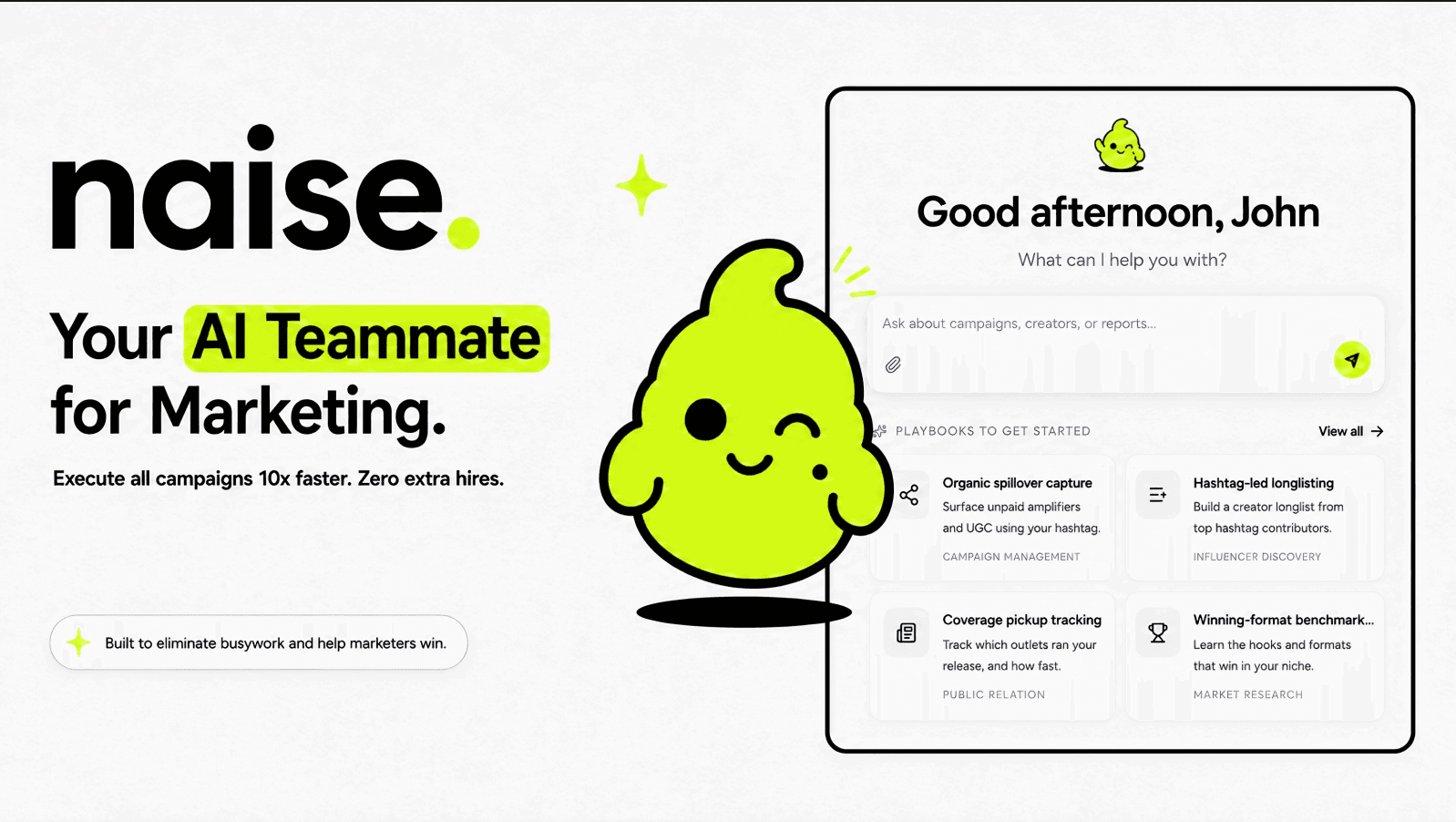
Step 3: Deploy Playbooks via Naise Chat Enter Naise Chat and select from our pre-configured Playbooks. These are agency-level prompt templates built by experts. Need an organic spillover capture or a strategy sprint plan? Pick the playbook, fill in the blanks, and skip the prompt fatigue entirely.
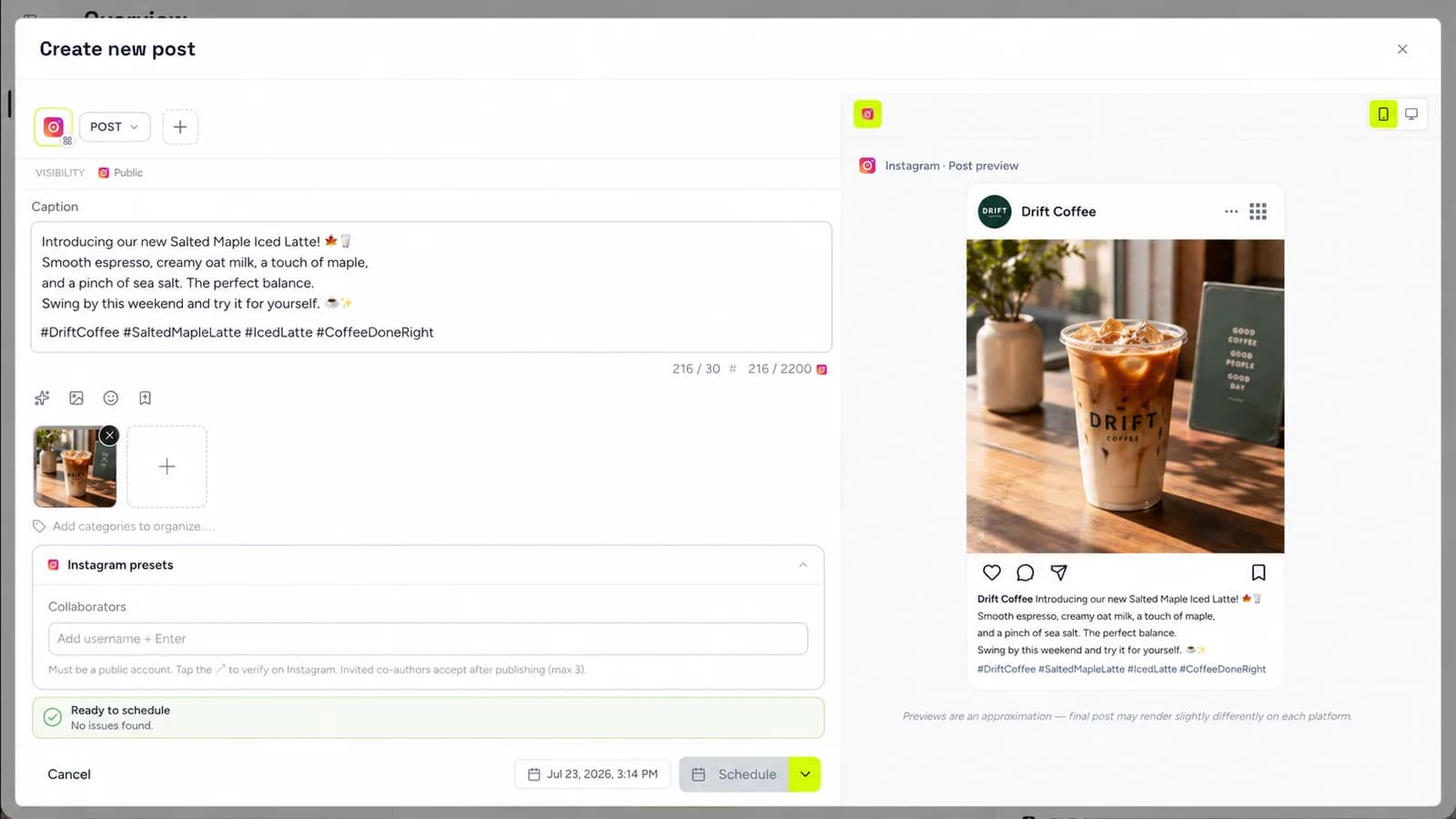
Step 4: Execute with the SMM Agent Let the SMM Agent take over the manual labor. It generates on-brand posts, checks them against your stored brand guidelines, and schedules them directly to Instagram, TikTok, or Facebook. Your team oversees the strategy while the agent handles the heavy lifting.
Scaling an agency no longer requires a massive hiring spree or an unmanageable software budget. You just need the right systems in place. By leveraging instant audits for client acquisition and persistent memory for flawless execution, you can finally focus on strategy. Stop doing manual work for an AI era. Clock out on time and let Naise AI cook your next campaign.
Frequently Asked Questions (FAQs)
How can marketing agencies use AI for client acquisition?
Agencies can use automated auditing tools to instantly scrape a prospect's public data and social footprint. This allows the agency to present a highly customized, data-backed pitch during the first interaction. Showing immediate value and deep understanding of their competitors drastically improves closing rates.
What is the biggest barrier to scaling a marketing agency?
The primary barrier is operational overhead caused by a fragmented tool stack and manual execution. Managing multiple client brand voices requires constant context switching, which limits the number of accounts a team can handle. Replacing disjointed tools with an integrated system removes this bottleneck.
How does AI solve prompt fatigue for agencies?
Advanced AI systems use persistent memory and structured projects to store brand guidelines permanently. Instead of writing long, repetitive prompts to explain a client's tone every single day, teams use pre-configured templates. The AI automatically pulls the stored context, guaranteeing brand consistency with zero extra effort.