The hype surrounding GTA 6 is already dominating the internet, and major global brands are not waiting for the official release date to get involved. By utilizing a highly recognizable visual language of neon sunsets and retro fonts, companies are successfully executing a massive GTA 6 trendjacking marketing strategy. This approach allows brands to tap into gaming culture organically, driving high engagement while completely avoiding tricky licensing agreements.
The Anatomy of a Vice City Trendjack
Trendjacking the GTA 6 release involves brands adopting the iconic Vice City aesthetic—neon sunsets, tropical silhouettes, and 90s-inspired fonts—to align their products with the game's massive cultural hype.
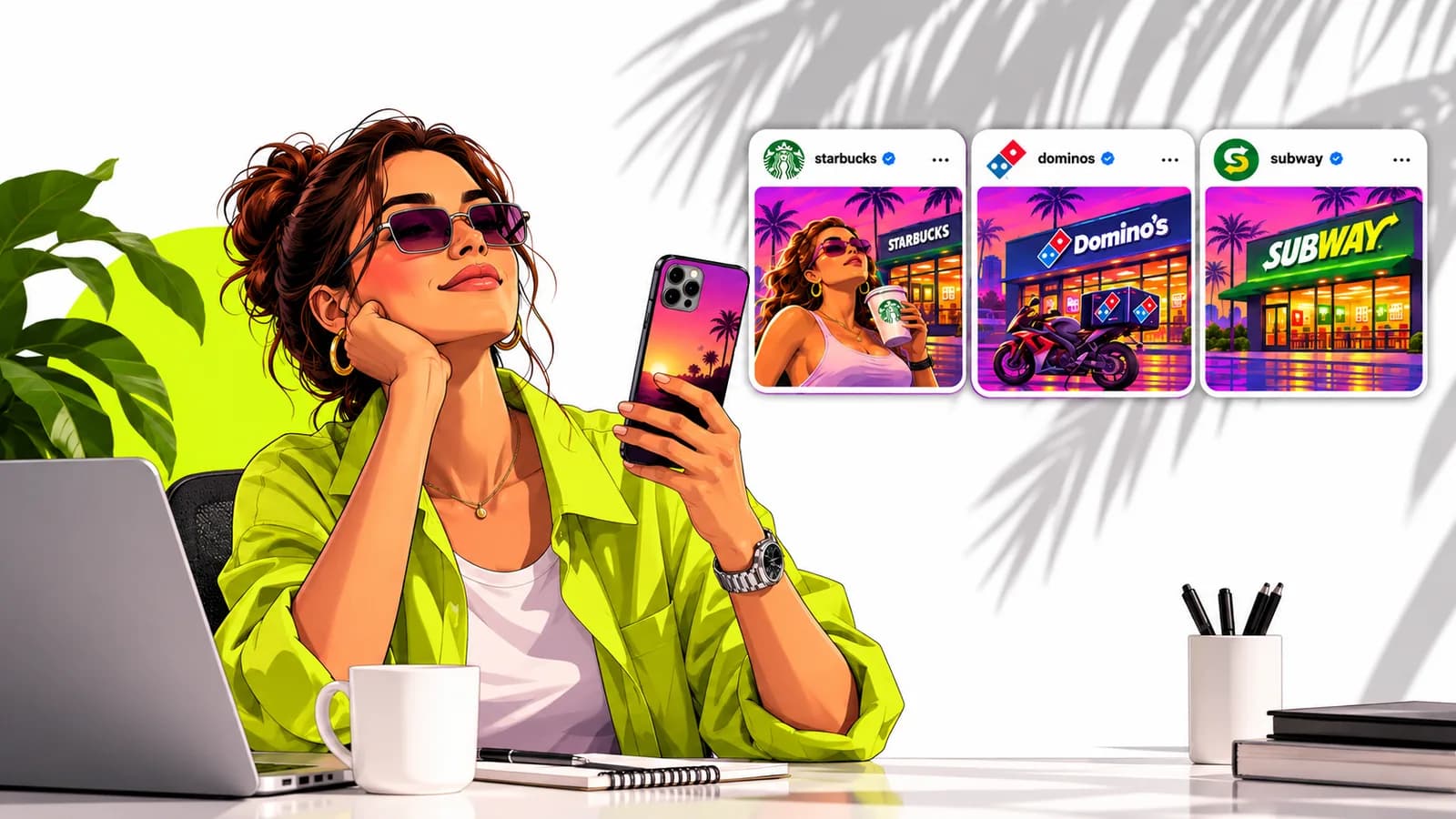
You do not need an official partnership with a video game publisher to ride the wave of their cultural momentum. Major players in the fast-food industry are already proving this concept with brilliant visual execution. Pizza Hut recently showcased an in-game style graphic of a character holding a slice outside a retro storefront. Burger King took a similar route, bathing their classic burger in warm pink and orange neon lighting.
These visuals instantly trigger a connection in the brain of anyone who has seen the recent gaming trailers. The strategy works because the visual cues are universal enough to bypass direct copyright issues. Marketers are essentially borrowing a highly specific color palette to signal to consumers that they are in on the joke.
Automotive brands are uniquely positioned to dominate this specific aesthetic since cars are a central theme of the franchise. BMW recently posted a stunning graphic of a classic red model reflecting palm trees on its hood against a sunset sky. Hyundai followed suit with an aggressive, blocky SUV rendered in a heavily stylized, cel-shaded art style.
Even two-wheelers are getting in on the action, with Suzuki showcasing a sportbike under vibrant purple and blue studio lights. These brands understand that their products fit naturally into the fantasy world consumers are currently obsessing over. By applying a social media aesthetic, they transition from boring corporate accounts to culturally relevant participants.
Why Brands Are Jumping on the Hype Early
Marketers are tapping into the gaming community months before release to capture early search intent and ride the massive organic engagement waves driven by dedicated fan bases.
The traditional rule of marketing dictates that you align your campaigns with actual product launches. However, the modern internet cycle moves much faster, rewarding brands that build anticipation rather than waiting for the climax. The gaming community is currently starved for official information, meaning any content that even vaguely resembles the new release gets immediate attention.
Brands that enter the conversation early benefit from an algorithmic boost on platforms like Instagram and X. When users constantly search for gaming news, the algorithm begins serving them related aesthetic content. GTA VI generated more than 6.3 million social-media mentions in the seven days surrounding its release, while the global gaming audience is projected to reach 3.7 billion players in 2026. This massive audience overlap is simply too lucrative for consumer brands to ignore.
Look at how tech and lifestyle brands are approaching this early window. JBL styled a pair of high-end gaming headphones with sparkling lens flares and a vibrant purple gradient background. It is a simple product shot, but the contextual lighting instantly makes it relevant to the current cultural mood.
They are essentially planting their flag in the minds of consumers who are actively upgrading their gaming setups right now. If a brand waits until the actual release day, they will be drowned out by a million other companies attempting the exact same social media strategy. Early adoption is the only way to stand out in a crowded digital space.
How to Execute Aesthetic Marketing Safely
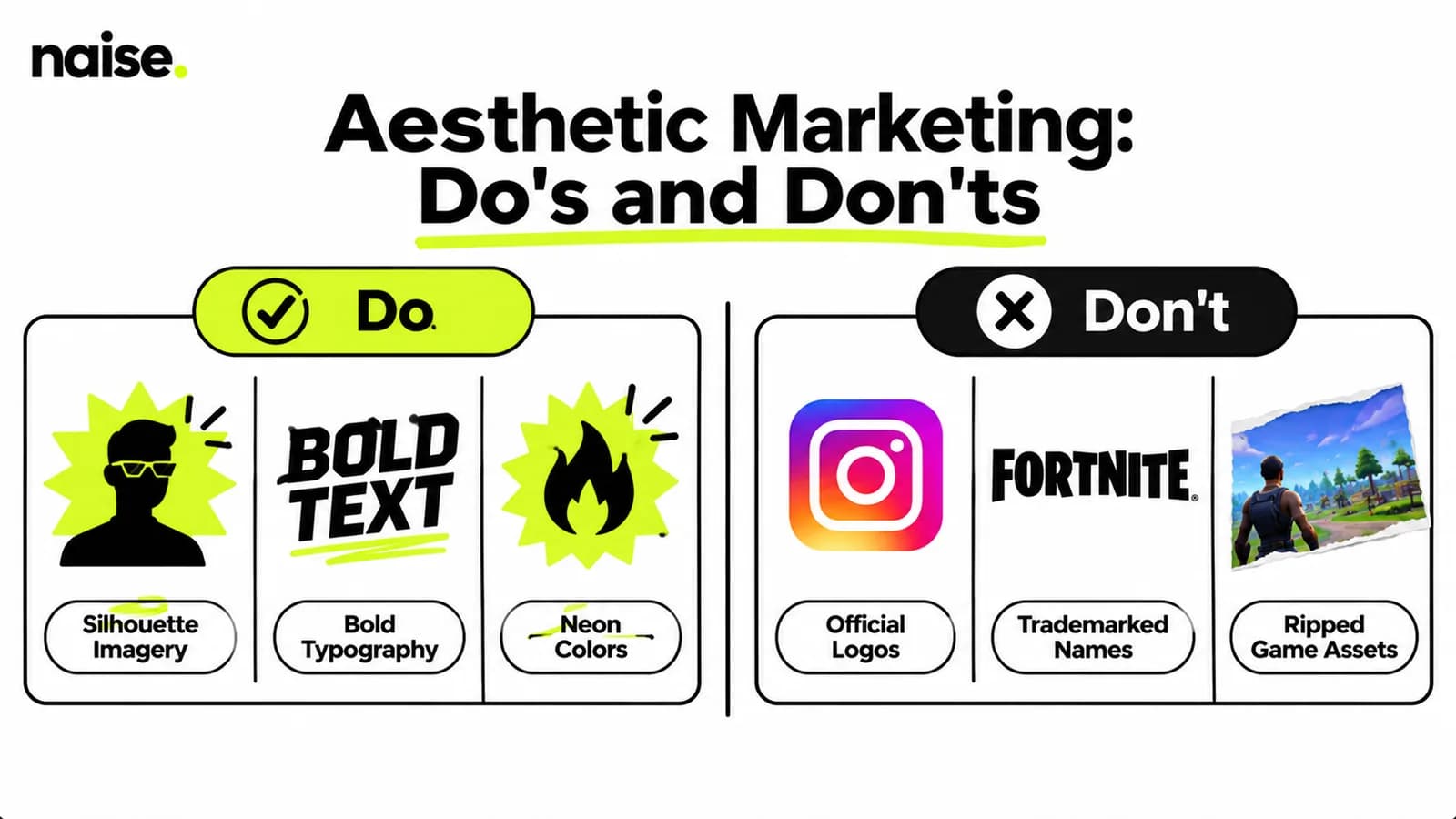
Brands successfully navigate copyright laws by adopting the general vaporwave and Miami-neon art style rather than using official logos, names, or direct game assets.
The biggest fear for any corporate legal team is receiving a cease and desist letter from a massive entertainment studio. This fear usually prevents brands from participating in fun cultural moments. The secret to aesthetic marketing is understanding the difference between inspiration and infringement.
You cannot use the official game logo, characters, or trademarked city names in your promotional material. However, nobody owns the concept of a pink sunset, a palm tree silhouette, or a retro sports car. Paris FC demonstrated this brilliantly by rendering their real-world stadium against a stylized purple sky with sparkling light flares.
They successfully communicated their desire to be featured in the virtual world without ever crossing a legal boundary. Your creative assets should evoke a feeling rather than copying a specific intellectual property. The goal is to make the audience say "I see what you did there" without explicitly stating what you are doing.
This requires a highly skilled design team that understands nuance and subtle visual cues. A clumsy execution will either look like a cheap knockoff or stray too close to copyright infringement. When done well, however, culturally relevant design can substantially strengthen brand engagement: brands with high cultural vibrancy are perceived as 79% more distinctive and 48% more meaningful, while those investing in cultural relevance see 47% higher customer retention than those that do not.
The Shelf Life of Video Game Trendjacking
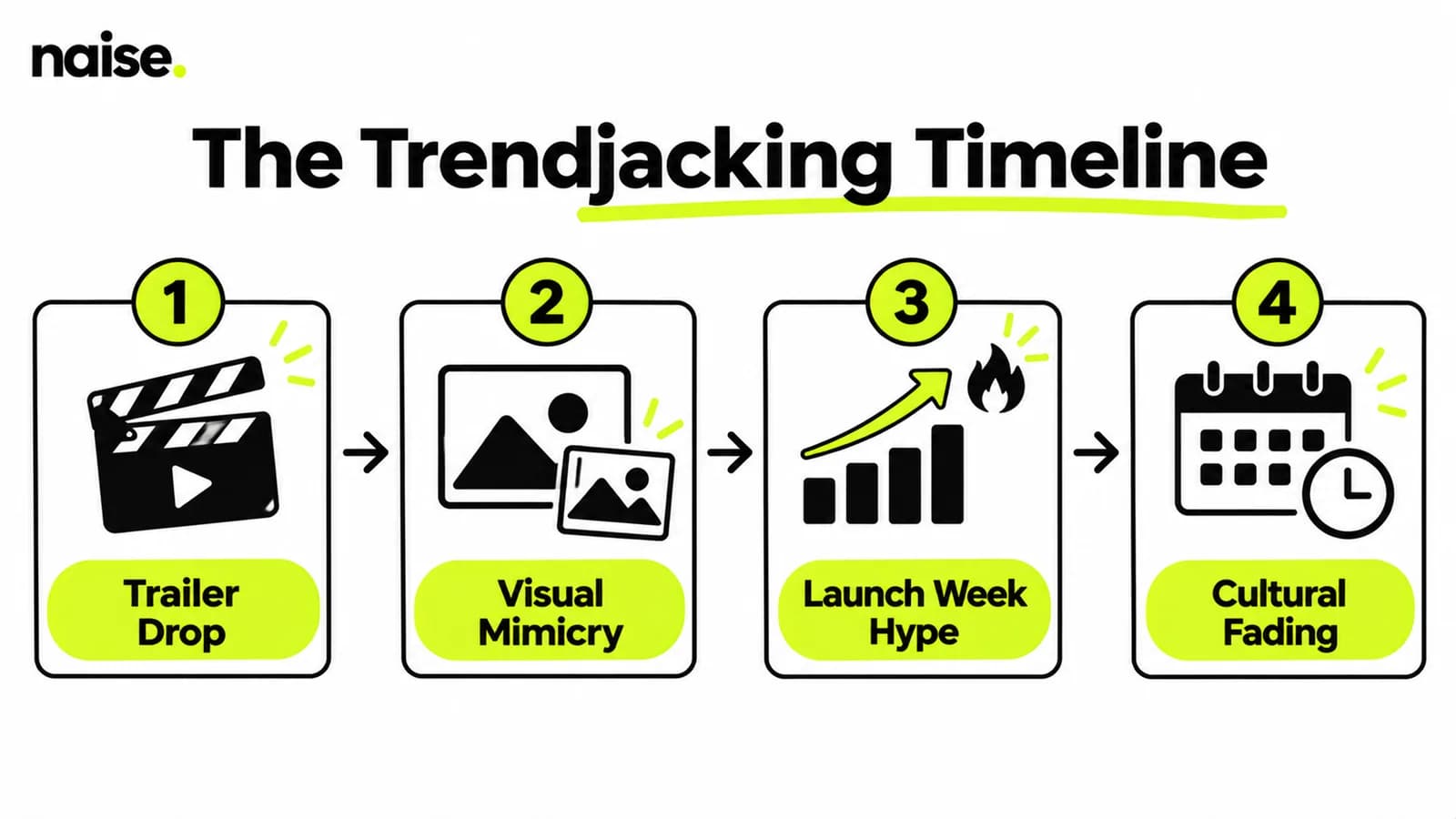
The effectiveness of a video game trendjack spikes dramatically during trailer drops and launch weeks, requiring brands to time their content perfectly to avoid looking outdated.
Digital trends have incredibly short lifespans, and gaming culture is notoriously fickle. What is highly engaging on a Tuesday might be considered annoying corporate pandering by Friday. A marketing campaign based on cultural hype must have a strict expiration date built into the strategy.
Once the game is officially released, the conversation shifts entirely from anticipation to actual gameplay and reviews. If your brand is still posting neon sunset graphics a month after launch, you will look incredibly out of touch. The early bird gets the engagement, but the latecomer gets mocked by the community.
You must treat these aesthetic campaigns as limited-time pop-up events rather than permanent brand pivots. It is a quick injection of relevance meant to spike your social media engagement and attract new eyeballs. Once the hype cycle moves on, your brand must gracefully pivot back to its core visual identity.
The smartest brands are not waiting for permission to join the biggest cultural conversations of the decade. By adopting the right visual aesthetics and understanding the unspoken rules of the internet, you can generate massive engagement without spending a dime on official partnerships. The key is to act quickly, execute the visuals flawlessly, and know exactly when to exit the trend.
FAQs
What is aesthetic trendjacking in marketing?
Aesthetic trendjacking is a marketing strategy where a brand temporarily adopts the visual style, color palette, or typography of a highly anticipated cultural event or media release. This allows the brand to join the conversation and gain algorithmic traction without using trademarked assets.
How do brands avoid copyright issues when trendjacking games?
Brands avoid copyright infringement by using general stylistic elements rather than specific intellectual property. Instead of using official game logos or character models, marketers use adjacent concepts like neon lighting, specific eras of fashion, or retro fonts to evoke the same feeling.
Why do brands start marketing months before a game releases?
Marketers launch campaigns early to capitalize on the massive anticipation and search volume generated by gaming communities. Posting early allows brands to establish a connection with the audience before the digital space becomes overcrowded on the actual launch day.
Can any brand participate in video game trendjacking?
While any brand can attempt it, the strategy works best for products that naturally fit into the context of the game's world. Automotive, fast food, and lifestyle tech brands often see the highest success rates because their products make sense within those virtual environments.