Producing fifty blog posts a week used to be a superpower. Today, it is a massive liability. A couple of years ago, content scale simply meant publishing more pages. Then, basic text generators showed up and made production dirt cheap. The entire industry assumed that more content directly equaled more traffic and growth.
If you look closely at the fastest-growing startups, they are not flooding the internet with generic pages. They are entirely rethinking their operational systems. They moved past using disconnected writing tools and started using autonomous platforms for the entire strategy lifecycle.
This operational shift is the ultimate edge for marketing managers and lean teams. You do not need a massive content department to compete with enterprise brands. You need a cohesive system that runs the full cycle autonomously.
The Illusion Of Infinite Content Production
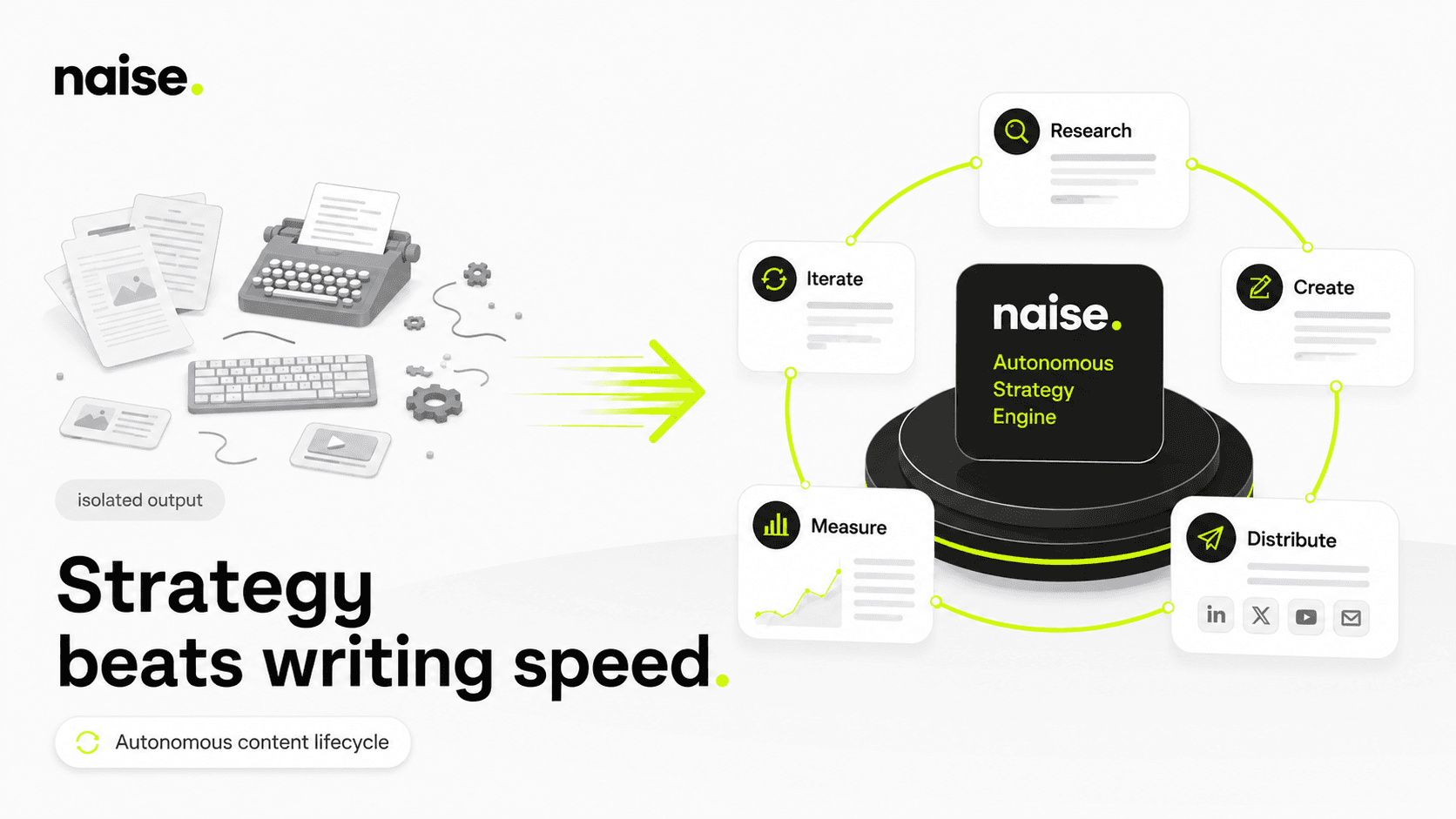
Most people confuse basic AI writing with a true autonomous content strategy. Using standard language models to draft posts is handy. However, it is just one isolated piece of a much larger puzzle. It is the equivalent of buying a faster typewriter and expecting it to write a bestselling novel entirely on its own.
In contrast, a unified strategy weaves intelligence into the full lifecycle. It handles research, creation, distribution, measurement, and iteration without constant human intervention. The actual writing is a minor fraction of the entire process.
This distinction matters because the strategy is the operational engine surrounding the text. You can have the best drafting tool in the world and still fail if you are guessing at topics. You will also fail if you are manually copy-pasting formatting across platforms. When your traffic flatlines, the bottleneck is your strategy and your system, not your writing speed.
Why Standalone AI Writers Break Lean Teams
For mid-sized businesses and overworked marketing directors, time is the most expensive resource. When content production costs drop, you can test more and iterate faster. However, replacing human writers with a dozen different fragmented AI tools creates a new operational nightmare.
You end up paying for a social scheduling tool, an influencer database, a PR scraper, and a standalone text generator. Your team is forced to jump between tabs constantly. You move data manually just to keep campaigns alive.
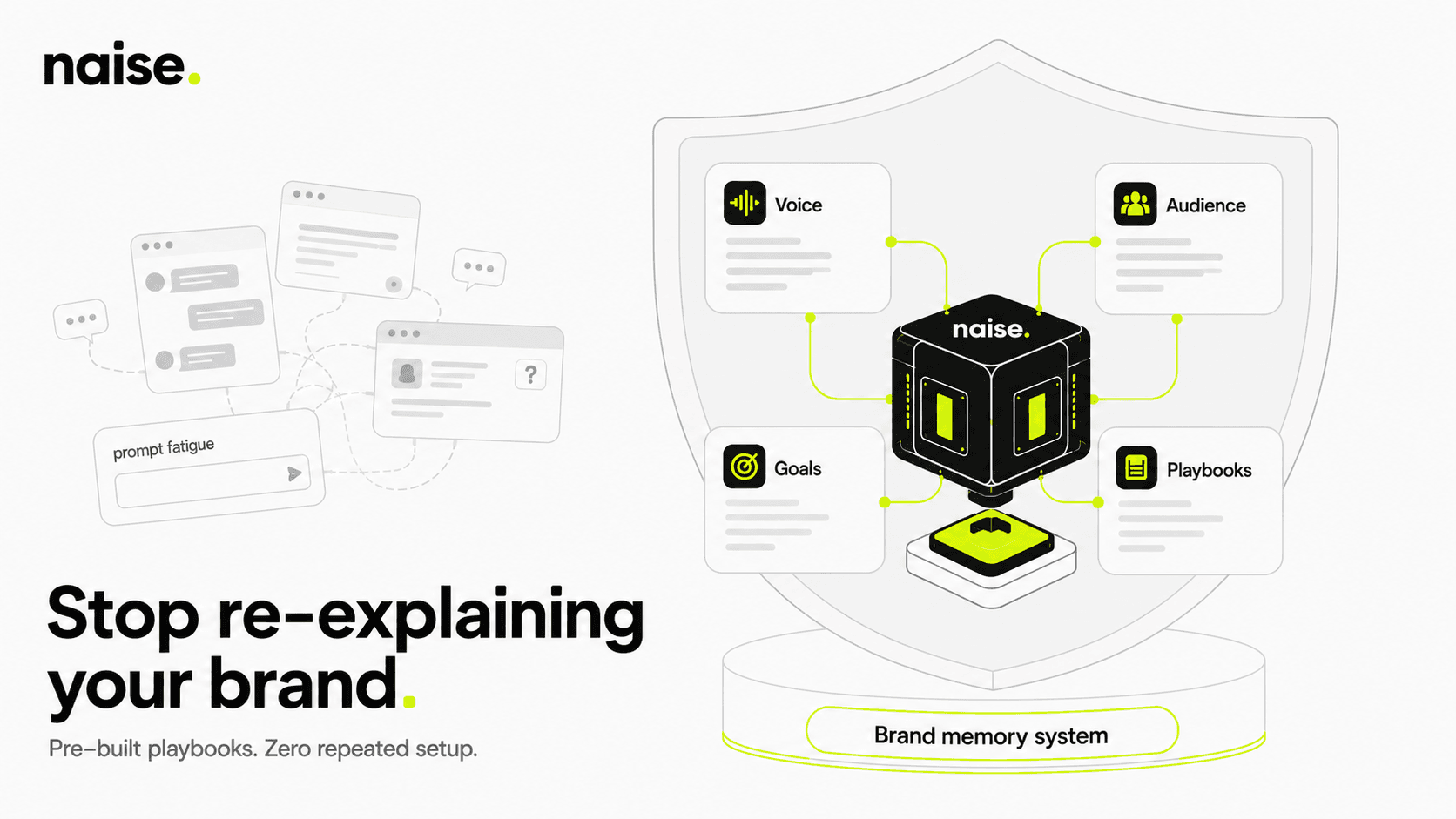
The most silent productivity killer in modern marketing is prompt fatigue. Every time you open a blank chat window, you have to re-educate the tool about your brand voice. You have to explain your target audience and your specific campaign goals again and again.
Lean teams lose hours tweaking instructions just to get a usable output. This constant hand-holding defeats the purpose of automation entirely. True speed comes from eliminating this repetitive setup and relying on pre-built playbooks that require zero prompting.
Building The Autonomous Content Loop
To create outsized growth, you must shift your mindset from content creation to campaign orchestration. Instead of chasing volume, you aim for a connected loop of research, execution, and distribution. A real marketing platform gives you a central command interface to manage this loop.
Establishing Persistent Brand Memory
The foundation of this shift is persistent memory. Before anyone writes a single word, you establish a central knowledge base. You upload your brand guidelines, past successful posts, and product PDFs into a secure project file.
The system absorbs this context once. From that moment on, every piece of content matches your exact tone of voice, emoji policy, and banned phrases. You never have to explain your company to the machine again. This single feature eliminates prompt fatigue entirely and ensures enterprise-level brand safety.
Distributing Assets Across Every Channel
If you publish and fail to distribute, even great content goes unnoticed. Distribution is usually the stage that decides whether your work compounds or disappears. It is also the step that a stretched small team often skips because they are exhausted from the creation phase.
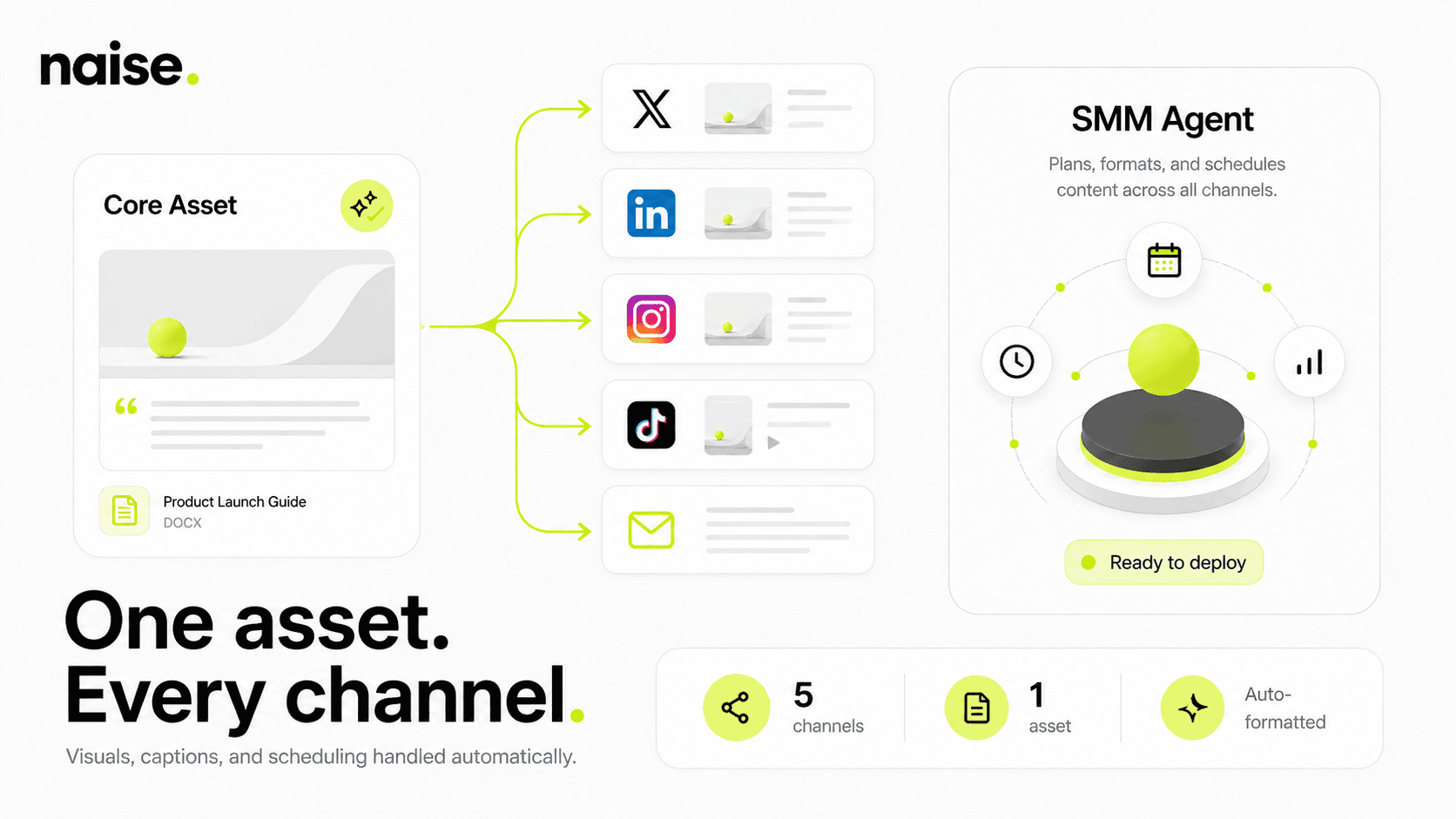
An autonomous system solves this by turning one core asset into posts for multiple platforms automatically. It meets readers on the channels they already use instead of waiting for them to find your blog.
Once your brand memory is locked in, you stop writing and start deploying specialized agents. These are not simple chatbots. They are specialized execution engines designed to handle specific marketing verticals autonomously.
An SMM Agent takes your core message, generates visually aligned assets, and schedules them directly to your platforms. It handles the tedious formatting so you can focus on strategy.
Measuring Conversions And Iterating Fast
This is the measurement stage that completes the content loop. You must look at analytics to see which topics and formats turned into actual signups, trials, or sales. Then, you feed that data straight back into the next round of planning.
Track the posts that get the most visitors and rank well in search. Monitor the pages where people spend the most time and have the lowest bounce rates. Finally, identify which posts are driving the most email signups and demo requests.
You can scale the campaigns that convert and cut the ones that only get empty clicks. This tight feedback loop makes each content cycle sharper. You are never starting from scratch when the next month begins.
Getting Cited In AI Search Summaries
Here is the layer that most marketing strategies miss entirely. A massive share of buyers now start their research with AI search tools. They rely on platforms that quote sources instead of just linking to them.
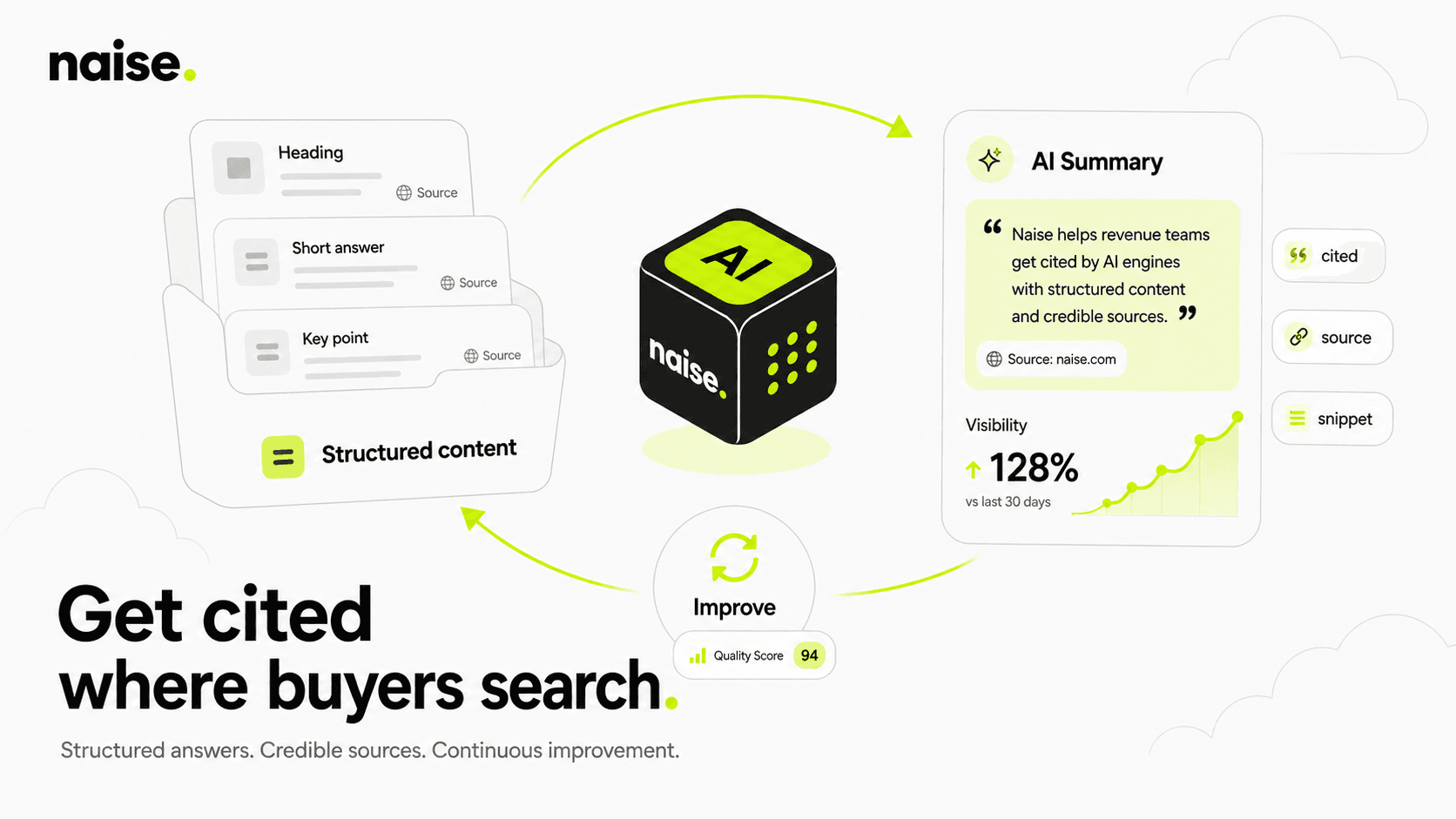
These systems surface the most relevant, credible snippets and present them as direct answers. To get cited, you need to structure your content for this specific reality. This means using a clear structure with proper headings and defined sections.
You must place direct, concise answers near the top of each section. You also need to include credible sourcing and highly original insights that machines cannot fake. If you are not showing up in these AI search summaries, you are invisible to a massive portion of your audience.
The Unified Ecosystem Advantage
Search engines and readers have zero patience for thin, recycled writing. They demand cohesive strategies, original insights, and consistent brand experiences across every single channel.
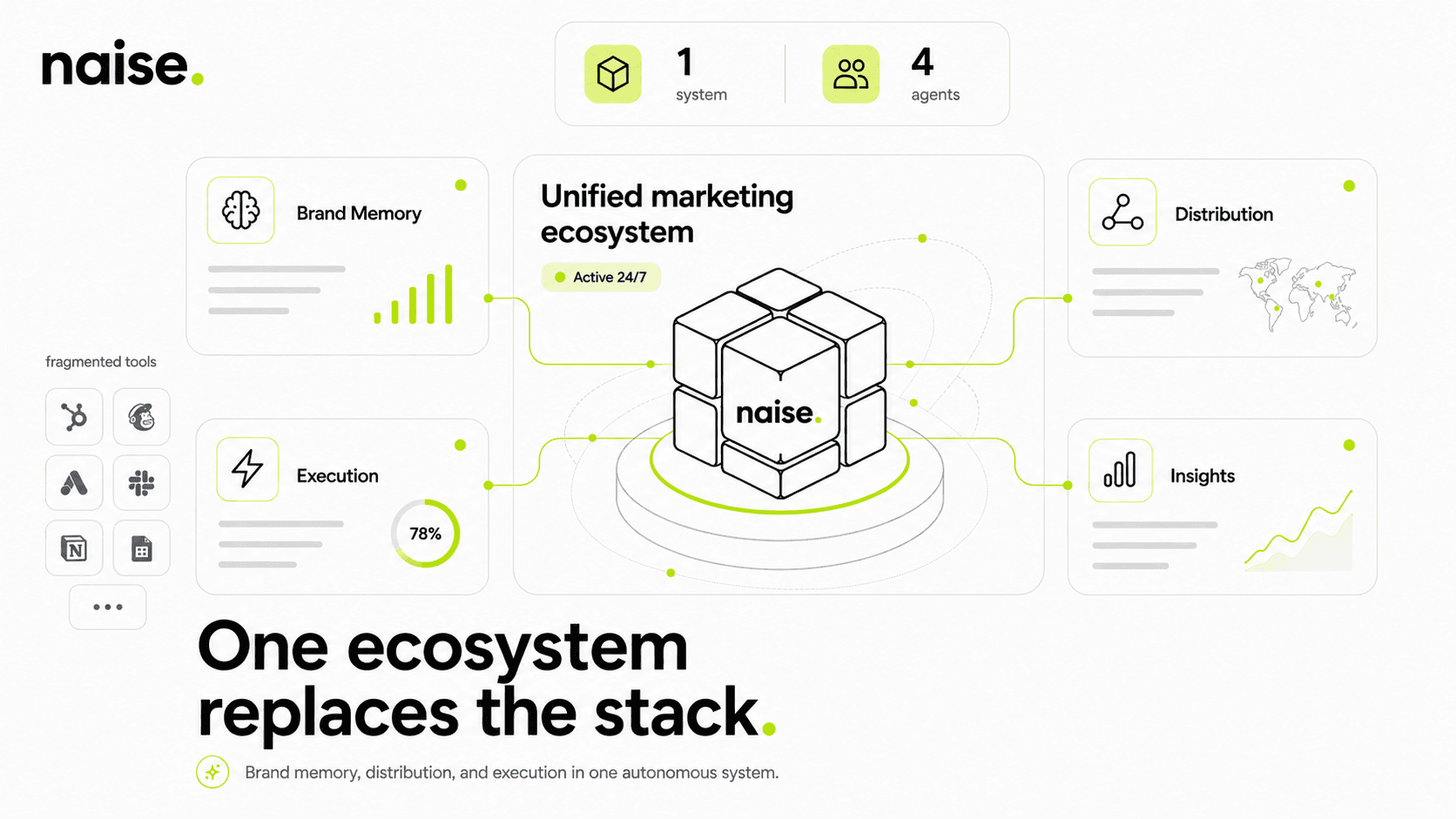
If your platform cannot handle persistent memory, direct distribution, and autonomous execution, you are just buying a very fast typewriter. You will be left doing all the heavy lifting yourself.
Fire your fragmented AI tools and meet Naise, your AI Marketing Operator. Naise replaces disjointed subscriptions with a 24/7 autonomous marketing team that actually understands your brand.
Ready to kill manual tasks and scale your strategy? Book your exclusive platform walkthrough today and see our core agents in action.
Frequently Asked Questions (FAQ)
Q: Will an autonomous AI operator make my brand sound robotic and generic?
A: Not if your platform relies on persistent memory. Naise uses a central Project file where you upload your brand guidelines and past top-performing posts. The system absorbs this context once. Every campaign it executes will match your exact tone and vocabulary, making it indistinguishable from a human writer.
Q: How long does it take to set up this unified marketing system?
A: You skip the tedious onboarding entirely. Traditional tools require weeks of training. With Naise, you start with a 60-second URL audit and select pre-built playbooks. You can launch your first fully autonomous campaign on day one without writing a single prompt.
Q: Do the AI agents publish content without my approval?
A: You always retain complete editorial control. The specialized agents do the heavy lifting (researching, drafting, formatting, and scheduling), but they stage everything for your final review. Nothing goes live until you click approve.
Q: Can I integrate my current social scheduling software with Naise?
A: The goal of an autonomous system is to eliminate fragmented tool subscriptions. You do not need third-party schedulers anymore. The SMM Agent handles creation, visual generation, and direct auto-posting to your platforms from one centralized dashboard.
Q: How do I measure the ROI of these AI-generated campaigns?
A: The platform creates a closed-loop system. It tracks your engagement, traffic, and conversion metrics directly. You see exactly which topics and formats drive actual signups or sales. You then feed this data back into the system to double down on winning strategies and cut dead weight.