Marketing software overload happens when your team spends more time managing tools than executing strategy. This bloat leads to creative burnout, data silos, and a massive drain on your budget. We’ll show you how to quantify this "tech debt" and identify the silent red flags holding your marketing team back.
The Unspoken Reality of Software Bloat
Every week, another AI-powered tool launches with a promise to fix your workflow. The software landscape is exploding, and the pressure to adopt every shiny new object is immense. However, the reality on the ground is starkly different. Marketing stacks are more cluttered than ever, and teams are drowning in a sea of overlapping subscriptions.
The core issue isn't a lack of tools; it's the paralyzing effect of having too many. Most of these platforms aren't pulling their weight. Instead of streamlining operations, they are adding layers of complexity, integration headaches, and steep learning curves. This phenomenon, often referred to as software technology debt, is silently killing your team's productivity and morale.
Think about the compounding effect of this bloat. Every new tool demands a slice of your team's attention. It means more logins, more fragmented data, and constant context-switching. The promise of automation often rings hollow when your team is spending their entire day merely managing the systems meant to automate their work. This is exactly why the industry is shifting toward an AI Marketing Operator model—a single layer that handles the execution rather than adding more disparate tools to the pile.
How to Tell if You Have Too Many Tools in Your Stack
Marketing software overload is characterized by a bloated tech stack where overlapping tools cause confusion, increase costs, and drag down overall team efficiency.
The temptation to build the ultimate, all-encompassing marketing machine is strong. But a bloated stack is a fragile stack. AI has only accelerated this problem. These new tools are incredibly easy to sign up for, yet notoriously difficult to integrate deeply into established workflows.
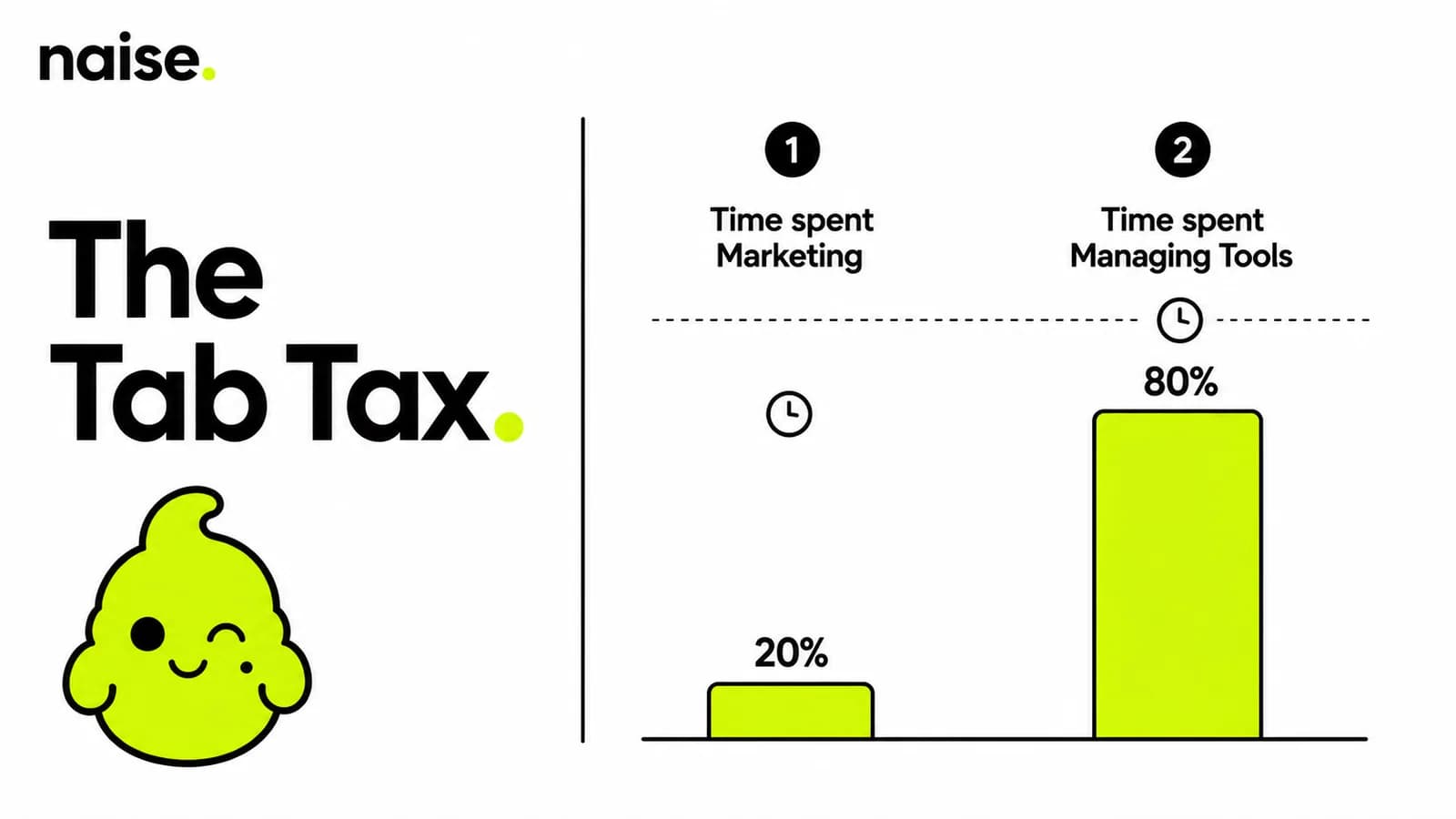
The result is a phenomenon we call the "Tab Tax." This is the quantifiable amount of time your team wastes simply toggling between different applications to find one piece of information.
The average marketing department uses approximately 28 separate marketing tools in 2026, while mid-market B2B teams may use as many as 73 distinct applications—creating more opportunities for duplication, fragmented data, and workflow friction.
When your team spends more time navigating the stack than executing campaigns, you have a critical problem.
This debt doesn't just impact your budget; it drains your team's creative energy. Social media managers, in particular, face severe burnout when their day is consumed by copy-pasting between a drafting tool, an approval software, and a native scheduling app. They don't need another tool; they need a tireless extension of the team to handle the grunt work.
Usage and Adoption Red Flags
Low adoption rates, frequent requests for clarification on which tool to use, and prolonged onboarding times are the primary indicators that your team is rejecting a complicated stack.
If you want to gauge the health of your tech stack, start by looking at adoption. The most obvious red flag is when your team actively avoids using a platform you’re paying top dollar for. They might revert to spreadsheets or rely on unauthorized workarounds because the official tool is simply too clunky.
Consider the "New Hire Ramp-Up Test." How long does it take a new marketer to become proficient with your software suite? If it takes more than two weeks just to learn the tools, before they even touch the actual strategy, your stack is too complex.
Watch out for these specific signs:
The "Which tool for this?" question: If your team frequently asks this, you have overlapping functionality.
Training time > Execution time: When it takes longer to learn a tool than to use it, it's a clear signal to audit.
Integration and Data Red Flags
When data is siloed across multiple platforms, requiring manual extraction and manipulation to create a single report, your integrations have failed.
Data discrepancies are the hallmark of a disjointed stack. If your CRM says one thing, your email platform says another, and your analytics dashboard contradicts both, you are flying blind.
This leads to the dreaded "Franken-stack." This occurs when tools claim to offer native integrations, but the reality involves endless, fragile Zapier workarounds managed by one stressed operations person. If that person takes PTO and the whole pipeline breaks, your infrastructure is fundamentally flawed.
Signs of failed integration:
Manual Data Entry: Entering the same info into multiple systems.
Export/Merge Nightmares: Pulling a simple report requires exporting CSVs from three platforms and merging them in Excel.
Cost and Value Red Flags
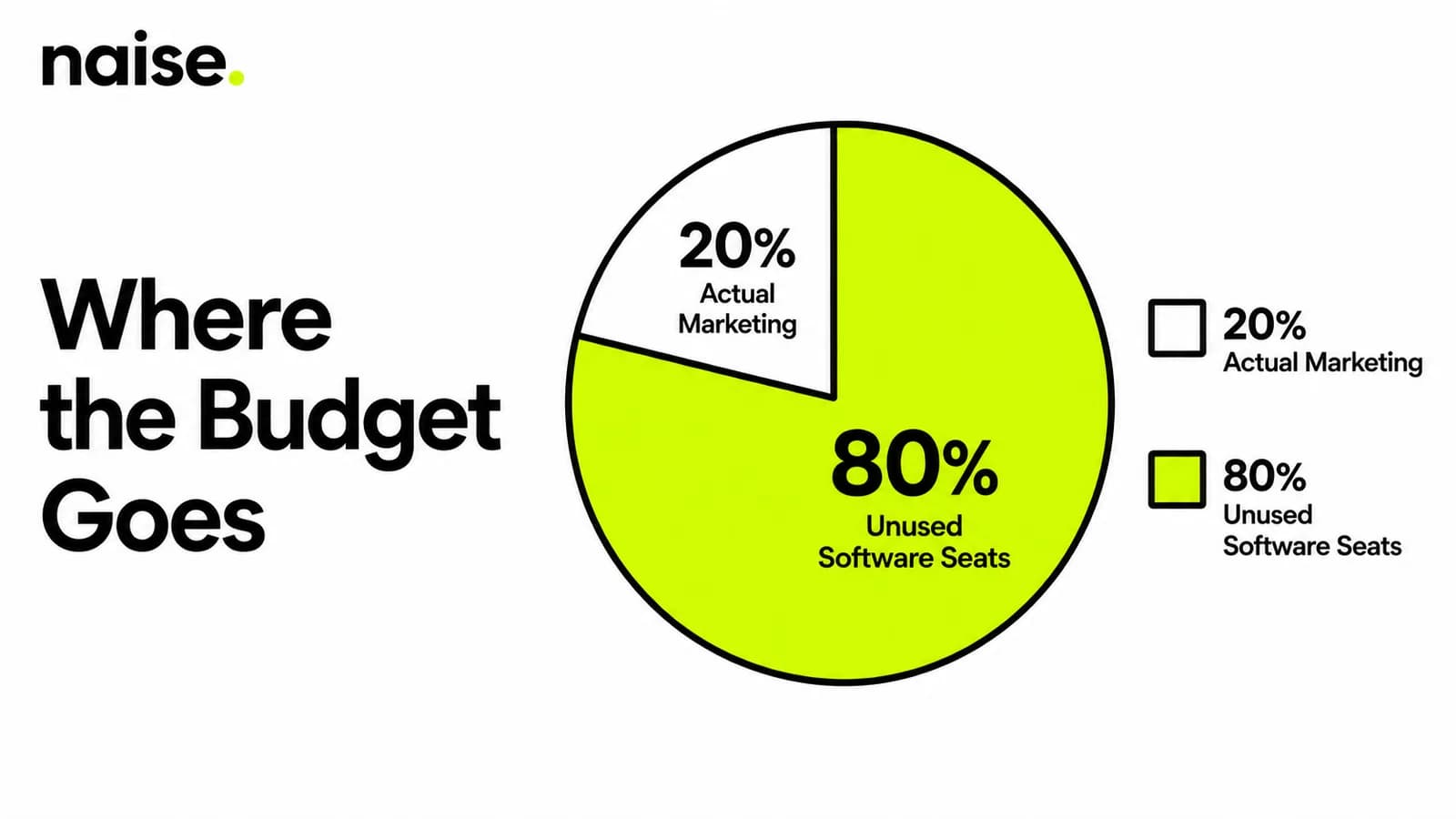
Paying for unused seats, redundant features, and tools that cannot be tied directly to measurable business outcomes indicates severe budget waste.
Financial bloat is often the easiest metric to track but the hardest habit to break. Are subscriptions scattered across different company credit cards and departments? If you aren't completely sure what you are paying for, you are almost certainly overpaying.
A common trap is the "we'll grow into it" justification. If you purchased an enterprise-level tool twelve months ago and are still only using 10% of its features, it’s a wasted investment.
Watch out for:
The Sunk-Cost Fallacy: Holding onto a tool just because you paid for the annual subscription. If there's no clear ROI, it's dead weight.
Orphaned Seats: Paying for accounts of team members who have left.
Strategic and Organizational Red Flags
The presence of 'Shadow IT' and a lack of standardized workflows across the team highlight a breakdown in both strategy and operational control.
When the official tech stack fails to meet the team's needs, "Shadow IT" emerges. Frustrated employees secretly use and often expense unauthorized, simpler tools because the approved software is too convoluted. This fractures your workflow and poses security risks.
Another glaring issue is reactive purchasing. Buying a new tool to slap a band-aid on an immediate problem, without considering the overarching strategy, guarantees future tech debt.
Look out for:
Opaque Performance: If leadership needs a custom, manually built deck to understand marketing performance, the stack is hiding data, not illuminating it.
Access Crises: Someone leaving the company causes panic about who has access to what tool.
The Antidote: Moving from Disjointed Tools to Autonomous Execution
Replacing a bloated stack with an autonomous system shifts the focus from managing software to executing strategy, resulting in massive time and cost savings.
If your team is ticking multiple boxes on those red flags, simply cancelling a few subscriptions won't solve the root problem. The fundamental flaw in the modern marketing workflow isn't just how many tools you have; it's the manual execution required to make them work together. This is where the paradigm needs to shift from adopting more software to deploying autonomous agents.
Imagine the outcome: instead of a social media manager spending four hours jumping between a drafting tool, an asset library, and a scheduler, they spend fifteen minutes defining a strategy. Then, an AI Marketing Operator executes the rest. This isn't about replacing the human; it's about eliminating the "Tab Tax" and the crushing prompt fatigue that comes with generic AI tools.
This approach delivers quantifiable results. Teams utilizing a consolidated, agent-based ecosystem like Naise AI see a drastic reduction in administrative time. By employing specific Playbooks—pre-configured expert prompts—and maintaining persistent brand memory through Projects, the need to constantly re-brief the AI disappears. You aren't just cutting software costs; you are multiplying your team's output without adding headcount.

Marketing software overload is a silent drain on both your budget and your team's sanity. By recognizing the signs of the Tab Tax, the Franken-stack, and the emergence of Shadow IT, you can begin the necessary work of auditing and consolidating your tools. The goal isn't to have the most software; it's to have the most effective workflow.
FAQs
What is marketing technology debt?
Marketing technology debt refers to the accumulated cost, complexity, and inefficiency caused by adopting too many overlapping or underutilized marketing software platforms.
How do I audit my marketing tech stack?
Start by listing every paid tool, identifying the primary users, checking the last login dates, and ruthlessly cutting any platform that isn't actively solving a current problem or driving clear ROI.
What is 'Shadow IT' in a marketing department?
Shadow IT occurs when marketing team members use unauthorized or unvetted software—often free versions or personal purchases—because the official company tools are too difficult or slow to use.
Why do software integrations often fail?
Integrations fail when they rely on fragile, third-party workarounds (like complex Zapier flows) rather than native connections, leading to broken data syncs the moment an API changes.