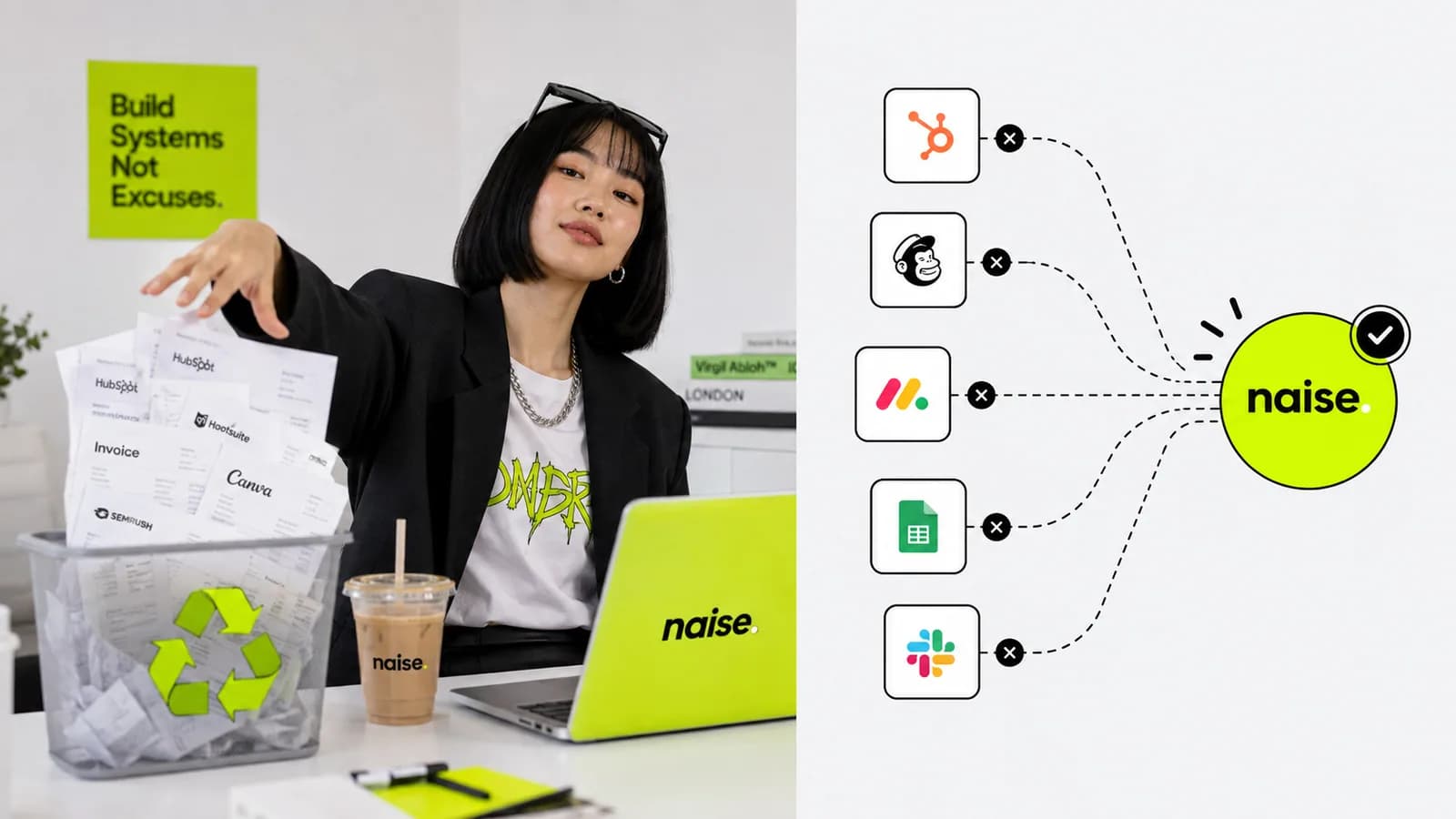
The Profit Bleed in Agency Public Relations
Traditional Media Outreach relies on manual labor that drains agency resources, limits client capacity, and ultimately destroys profit margins.
Running Public Relations for a roster of five to ten clients requires intense context switching. Your team has to master a different Brand Voice for every single account they manage. This means starting from scratch every time a client needs a new press release or a targeted pitch.
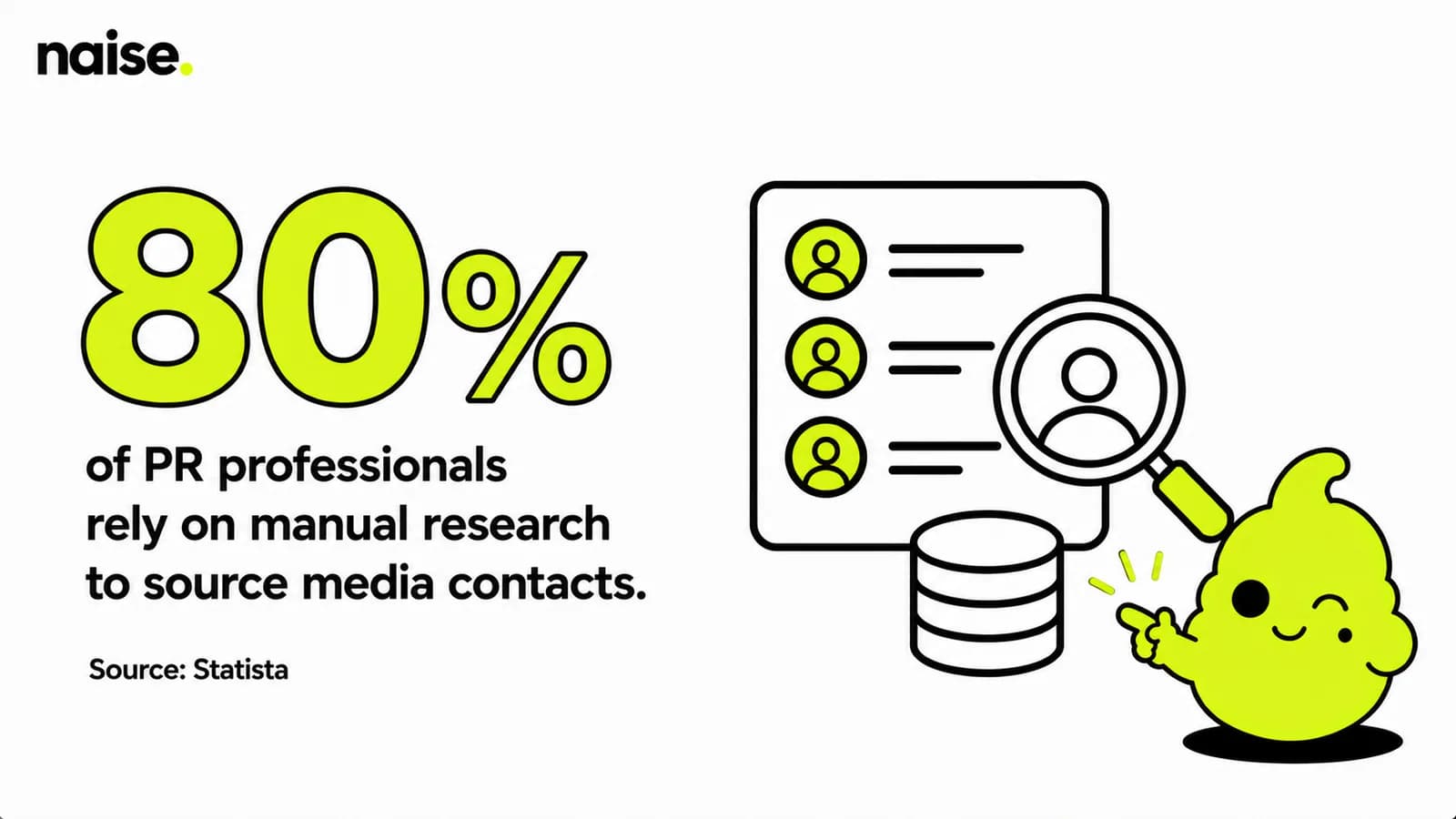
This repetitive manual work is the ultimate agency profit killer. Publicists spend more time formatting documents in Microsoft Word and digging through outdated media lists on Cision than they do building actual relationships.
When your team is bogged down by administrative grunt work, your agency cannot take on new business. You are forced to choose between sacrificing work quality or hiring expensive new headcount. Smart agencies fix this by optimizing their baseline workflows first.
Engineering the Perfect Press Release Fast
Structuring your press releases with modular components allows you to draft compelling narratives rapidly without sacrificing quality.
A strong press release does not require a stroke of creative genius every single time. You just need a rigid, repeatable framework. Start by locking down your core Brand Messaging and client facts before you write a single headline.
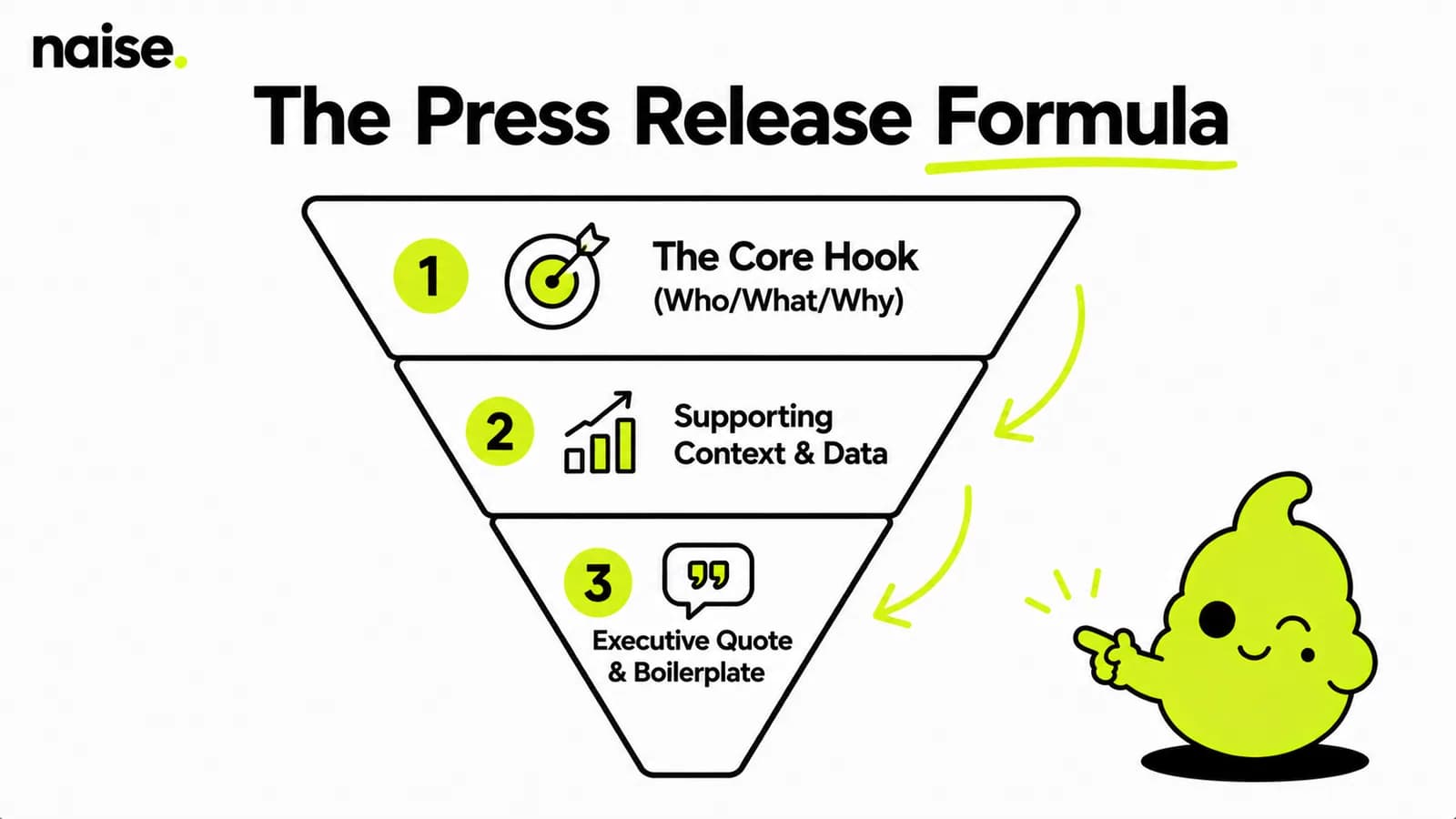
Use the inverted pyramid method to structure your information. Put the most critical, newsworthy hook in the very first paragraph. Journalists will delete an email immediately if they have to scroll to find the actual news.
The Hook: Answer who, what, when, where, and why instantly.
The Body: Provide supporting context and concrete data points.
The Quote: Include one punchy, human-sounding quote from a company leader.
The Boilerplate: Keep a standardized company overview ready to copy and paste.
By keeping these components organized in a central knowledge base, your team avoids staring at a blank page. You just assemble the pieces, refine the tone, and ship it.
Mastering the Art of Trend Hijacking
Monitoring live industry conversations allows agencies to insert their clients into trending news cycles for rapid earned media.
Trend Hijacking is the secret weapon for securing tier-one media placements without a massive product launch. You must monitor live Social Media Trends and breaking news constantly. When a topic relevant to your client explodes, you immediately offer a contrarian take or expert commentary to journalists covering the beat.
The problem is that spotting these trends requires constant vigilance across platforms like X (formerly Twitter) and TikTok. You have to track specific hashtags, analyze the sentiment, and act before the news cycle moves on.
Agencies that rely on manual scrolling will always be too late to the conversation. You need automated systems that flag high-velocity topics the moment they start gaining traction. Once you spot the trend, you can draft a rapid-response pitch and win the coverage.
Scaling Outreach Without Losing the Human Touch
You must balance volume with deep personalization to ensure your media pitches actually convert into published stories.
Mass-blasting a generic press release to a bought email list is a guaranteed way to damage your client's reputation. Reporters use tools like Superhuman to aggressively filter out spam and generic pitches. If you want your email opened, you have to prove you actually read their recent work.
The best outreach strategy relies on hyper-segmented targeting. Group your media contacts by highly specific beats and tailor your angle to their exact audience. Recent analysis of more than 31 million digital PR emails found that smaller, more targeted campaigns averaged a 35.42% open rate, compared with 29.76% for large-scale campaigns, an advantage of 5.66 percentage points, or roughly 19% higher. While campaign size is a proxy for personalization, the data reinforces the value of targeted outreach over generic mass-market distribution.
This is exactly why adopting AI for media pitching is becoming mandatory for competitive agencies. You can use intelligent systems to analyze a reporter's previous articles and match them to your client's unique value proposition. This allows you to send hundreds of highly personalized emails in the time it used to take to write five.
If you want more context on organizing your client data to make this easier.
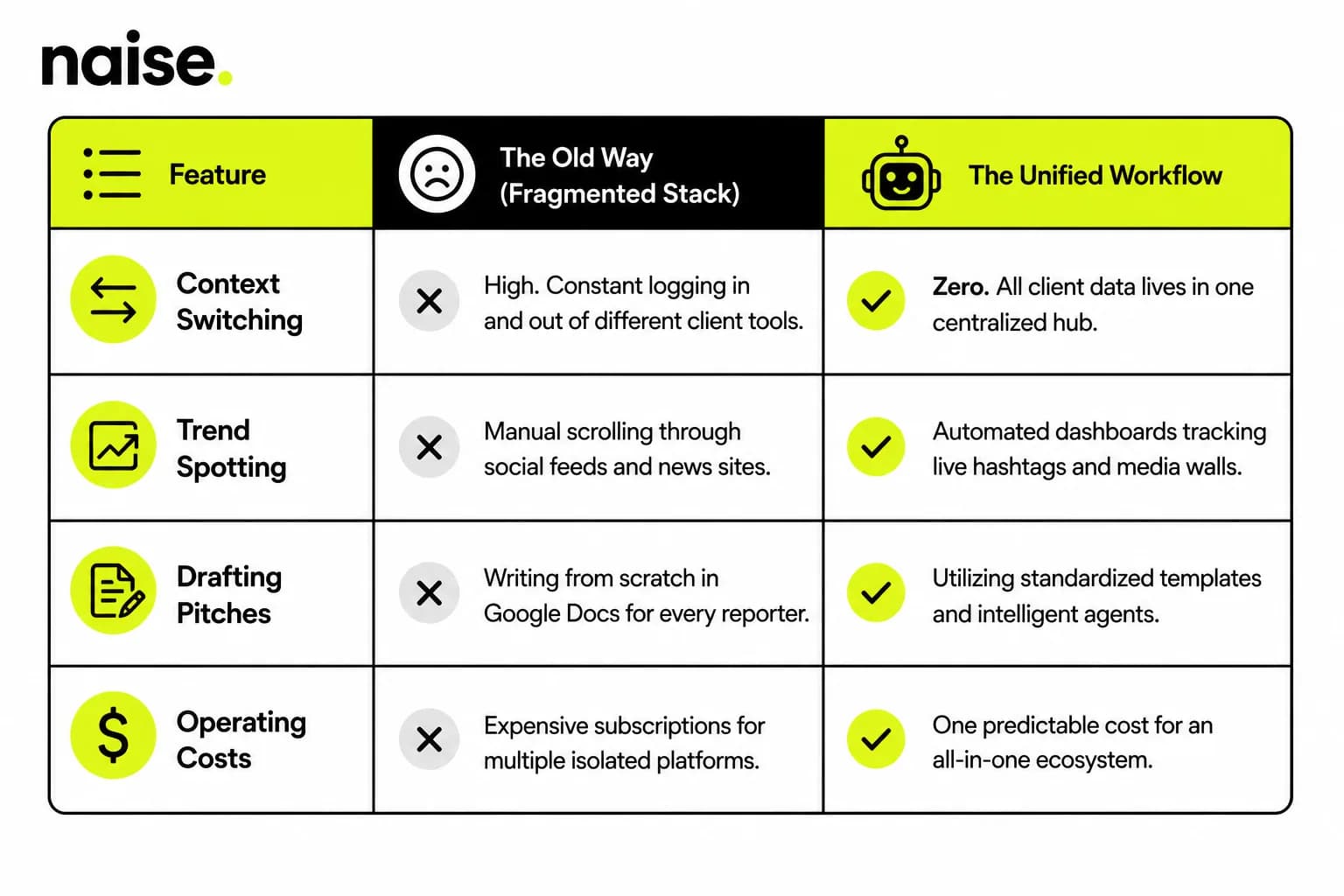
Fragmented Stack vs The Unified Workflow
Consolidating your tools eliminates operational drag and dramatically increases your agency's output capacity.
Execute AI for Media Pitching with Naise AI
Naise AI replaces manual busywork by turning your client context into automated, high-converting media pitches in seconds.
You know the theory behind fast, effective PR execution. Now it is time to actually clock out on time. Naise AI is your 24/7 AI Marketing Operator, built specifically to eliminate prompt fatigue and manual execution. Here is how you run a massive media campaign for a client without breaking a sweat.
Step 1: Upload to Projects. You start by dropping your client's brand guidelines, past press releases, and key facts into Projects. This creates persistent memory. The AI now completely understands your client's exact voice and positioning. You never have to explain the brand again.
Step 2: Command Naise Chat. Open the central Dashboard and access Naise Chat. You simply select a PR Playbook (a pre-built, expert prompt template) to avoid the blank page syndrome.
Step 3: Deploy the PR Agent. Instruct the PR Agent to scan the Media Wall for live trending hashtags in your client's industry.
Step 4: Autonomously Draft & Pitch. The PR Agent instantly spots a trend, cross-references it with the data in Projects, and autonomously drafts highly personalized media pitches ready for your approval.
Running an agency means protecting your time at all costs. You cannot afford to lose hours on repetitive drafting and manual journalist research. By leveraging AI for media pitching, you transform your operation into a high-margin, scalable machine. Let the AI handle the grunt work so your team can focus on closing bigger retainers.
Frequently Asked Questions (FAQs)
Can AI write a good press release?
Yes, AI can write highly effective press releases when given strict guidelines. The key is providing the AI with persistent memory regarding your brand voice and specific company facts. When you supply the right context, tools like Naise AI can generate structured, media-ready press releases in seconds.
How does AI help with media pitching?
AI accelerates media pitching by automating the research and drafting phases. It can analyze live industry trends, identify relevant journalists, and draft personalized email hooks based on a reporter's past work. This allows agencies to scale their outreach volume without sending generic, ineffective spam.
Will journalists penalize AI-generated pitches?
Journalists penalize irrelevant, boring, and robotic pitches regardless of who wrote them. If you use AI to mass-blast a generic message, it will fail. However, if you use AI to craft highly targeted, factually accurate, and well-researched pitches, reporters will appreciate the relevance and clarity of your outreach.
How do PR agencies use AI to save time?
PR agencies use AI to eliminate administrative bottlenecks. Instead of manually tracking social media hashtags or writing boilerplate copy from scratch, they deploy autonomous agents to handle the execution. This frees up human publicists to focus on high-level campaign strategy and direct relationship building.