The Trap of Fragile Automation Stacks
Set-and-forget automation stacks often break due to API updates, leaving agencies with missing data and broken client dashboards.
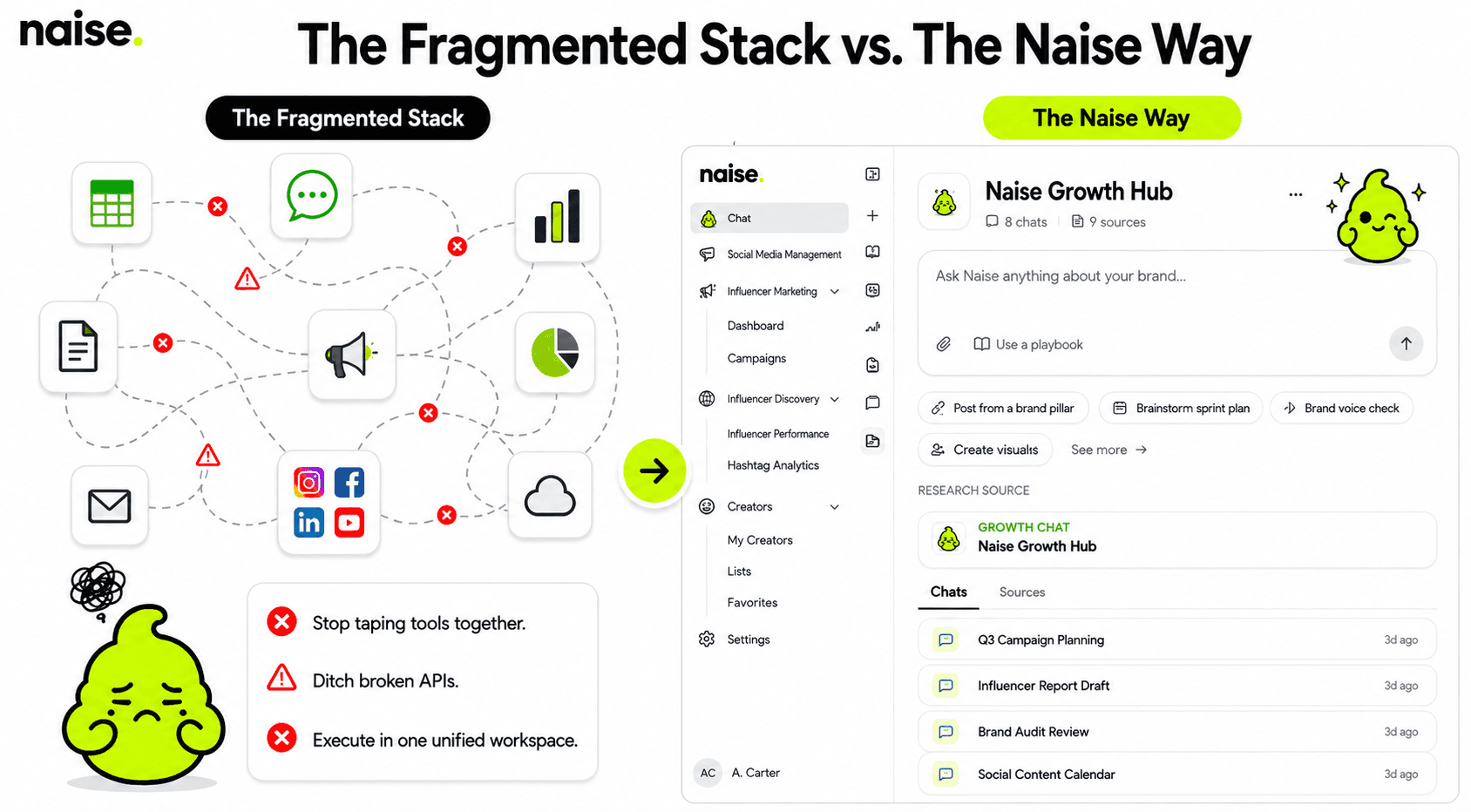
Most agencies try to fix their reporting woes by taping together a messy fragmented software stack. You might use Zapier to pull metrics from Instagram into Google Sheets, and then push that raw data into Looker Studio. This looks great on a whiteboard. In reality, it creates a fragile ecosystem that shatters the moment an API updates.
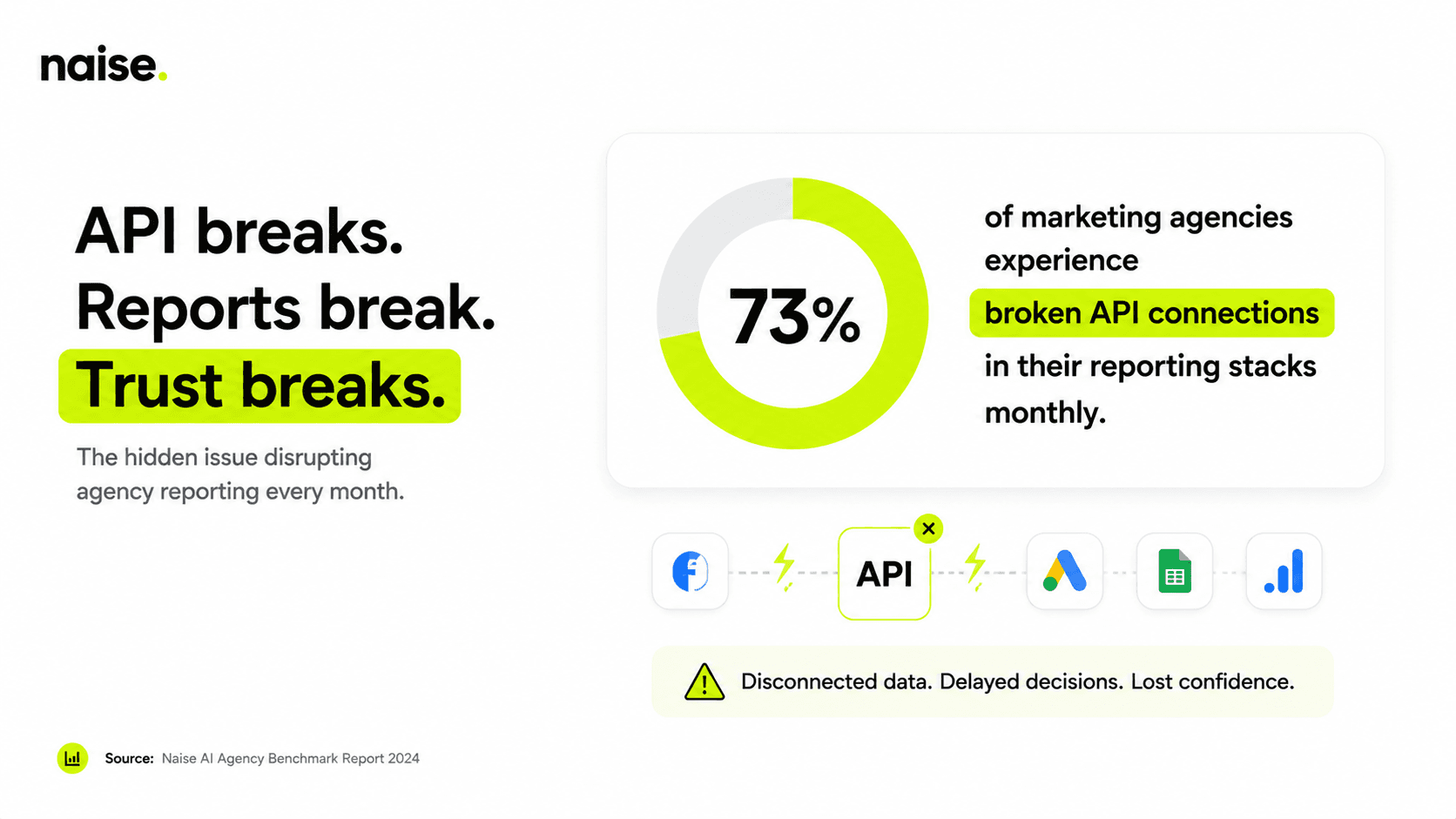
When these connections break, your team panics. Account managers end up spending their Friday nights manually pasting numbers into Canva presentations. This technical reality completely ignores the inherent friction of dashboard fatigue. Clients do not want another login to a clunky portal filled with missing context.
They want clear, actionable operational proof. Relying on a patchwork of disconnected marketing tools guarantees you will eventually drop the ball.
Why Data Dumping Destroys Client Trust
Raw data dumping overwhelms clients, whereas verified operational proof builds genuine trust and justifies campaign ROI.
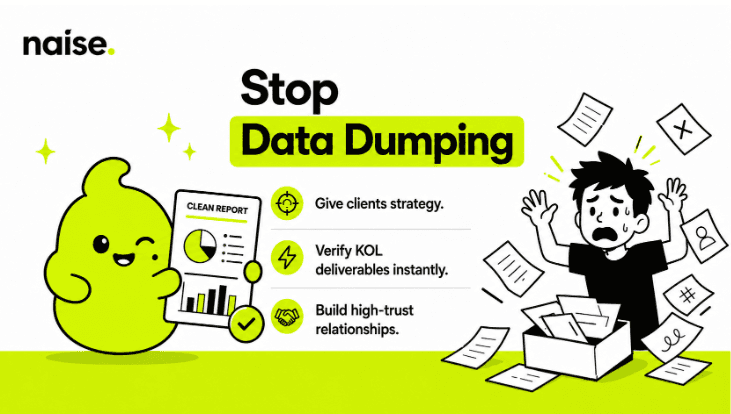
Agencies often confuse a massive spreadsheet with a good report. Sending a client a wall of raw numbers is just data dumping. It forces the client to do the mental gymnastics of figuring out if the campaign actually worked. This approach fails to deliver genuine strategic value.
Your clients need a definitive narrative. They need to know if the KOL deliverables hit the mark and if the engagement rates actually drove sales. An always-on operational engine changes the dynamic entirely. Instead of guessing, you present instantly aggregated, verified performance metrics.
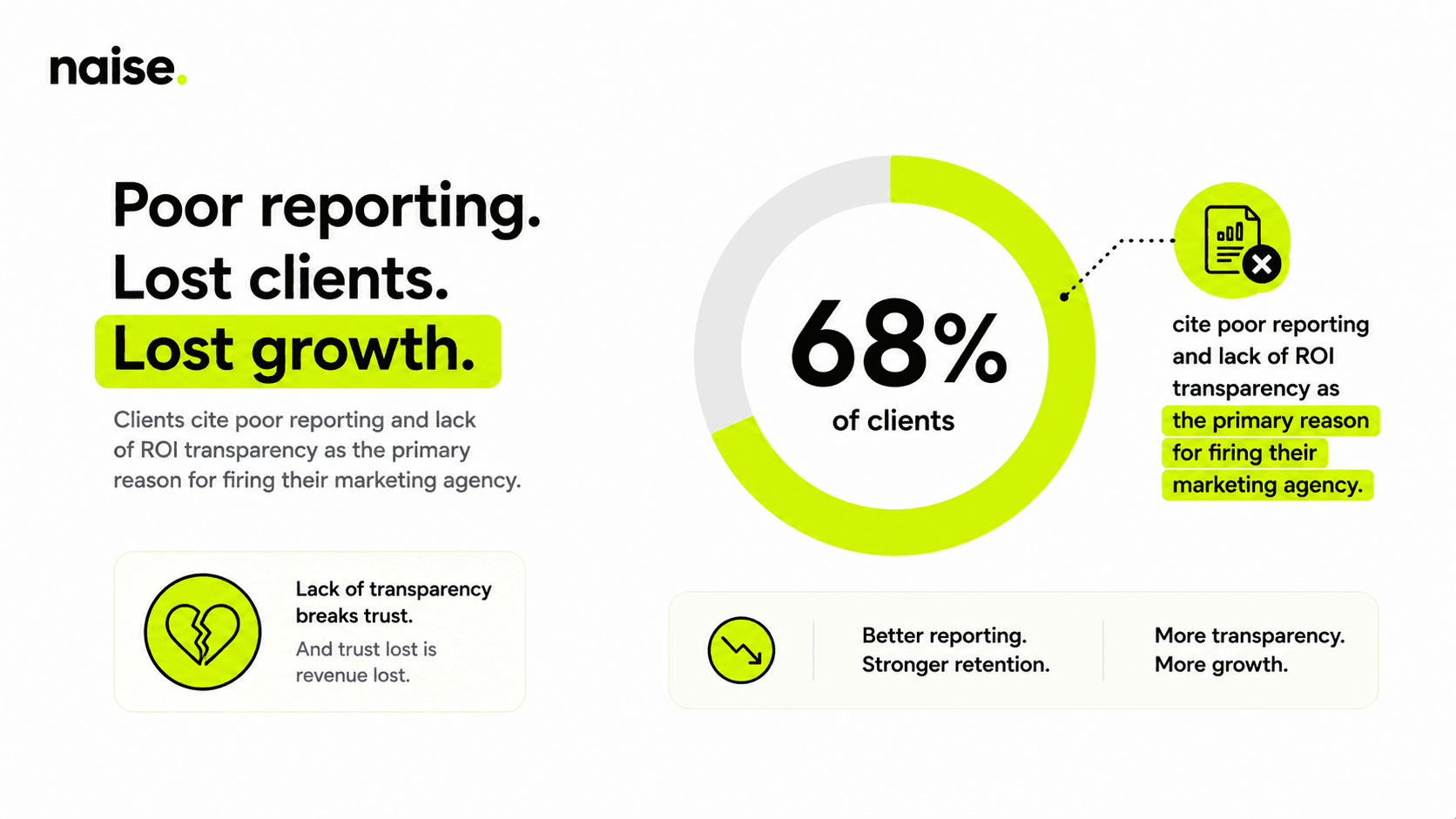
This is the required shift from superficial tracking to building high-trust, data-backed client relationships. When you provide strategic context alongside the numbers, you secure your retainer. You move from being a replaceable vendor to an indispensable partner.
The Old Way vs The Naise Way
Modern agencies replace disconnected reporting tools with unified autonomous AI agents to ensure total data accuracy.
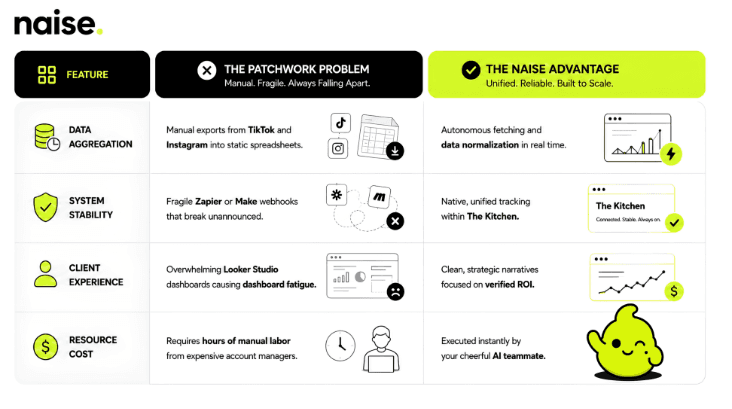
The Naise Workflow: Automate Client Reporting in Minutes
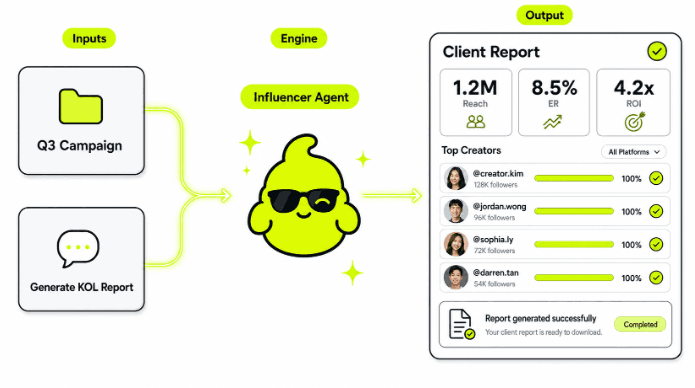
Deploy the Influencer Flavor within The Kitchen to automatically monitor KOL campaigns and generate verified performance metrics instantly.
You do not need to hire another data analyst to fix your reporting. You can automate client reporting for influencer marketing using the native architecture inside Naise AI. Here is exactly how you replace hours of manual work with joyful productivity.
Upload Context to Projects:
First, drop your client's past reports and brand guidelines into Projects. This acts as the persistent memory bank, ensuring the AI perfectly mirrors your agency's unique reporting style.
Open Naise Chat in The Dashboard:
Navigate to The Dashboard and open up Naise Chat. This is your central command center where you talk directly to your AI teammate.
Select a Reporting Playbook:
Choose a pre-configured Playbook for KOL Campaign Monitoring. This eliminates prompt fatigue and gives the system expert-level instructions instantly.
Deploy the Influencer Agent:
Let the Influencer Agent take over. It functions as an always-on operational engine, instantly tracking granular KOL deliverables and formatting them into a beautiful, client-ready narrative.
Conclusion
Stop relying on brittle software connections that leave you scrambling at the end of the month. When you automate client reporting for influencer marketing with autonomous agents, you buy back your team's time. You replace confusing data dumps with crystal-clear operational proof that your clients will actually read.
Let Mayo overthink the strategy while you focus on scaling your agency. Want to see how fast we work? Audit your entire brand's social presence in 60 seconds with our Free URL Audit. Drop your link and let Naise AI get to work.
Frequently Asked Questions (FAQ)
Q: What is the biggest mistake in client reporting?
The biggest mistake is relying on raw data dumping instead of providing strategic context. Agencies often export numbers from platforms like HubSpot or Facebook Ads and send them directly to clients. This causes confusion and requires the client to interpret the success of the campaign themselves. A good report provides verified performance metrics wrapped in a clear strategic narrative.
Q: How do autonomous agents improve influencer marketing?
Autonomous agents provide real-time monitoring of KOL deliverables without manual oversight. Tools like the Influencer Agent act as an always-on operational engine. They track posts, verify engagement metrics, and aggregate data instantly. This eliminates the need to manually check creator profiles and update static spreadsheets.
Q: Why do traditional automation stacks fail?
Traditional stacks rely on fragile API connections that frequently break. Connecting disparate tools using webhooks often results in missing data when one platform updates its code. This technical reality creates a massive headache for account managers who then have to fix the workflow manually. Using a unified ecosystem like Naise AI prevents these breaks and ensures consistent reporting.