
The Hidden Costs of the Fragmented Tech Stack
If you are currently hunting for the best tools for managing multiple clients, you might be tempted to just buy another piece of project management software. But let's be real for a second: stacking disconnected SaaS apps actually creates workflow silos, drains your profitability, and forces your team into an endless, exhausting loop of context-switching between workspaces.
You know the drill. Agencies love buying software. You onboard a new client and immediately spin up a fresh Slack channel, a new Google Drive folder, and a dedicated Asana board. It sounds incredibly organized on day one. But by day ninety? Your team is drowning in notifications across a chaotic ecosystem of disconnected apps.
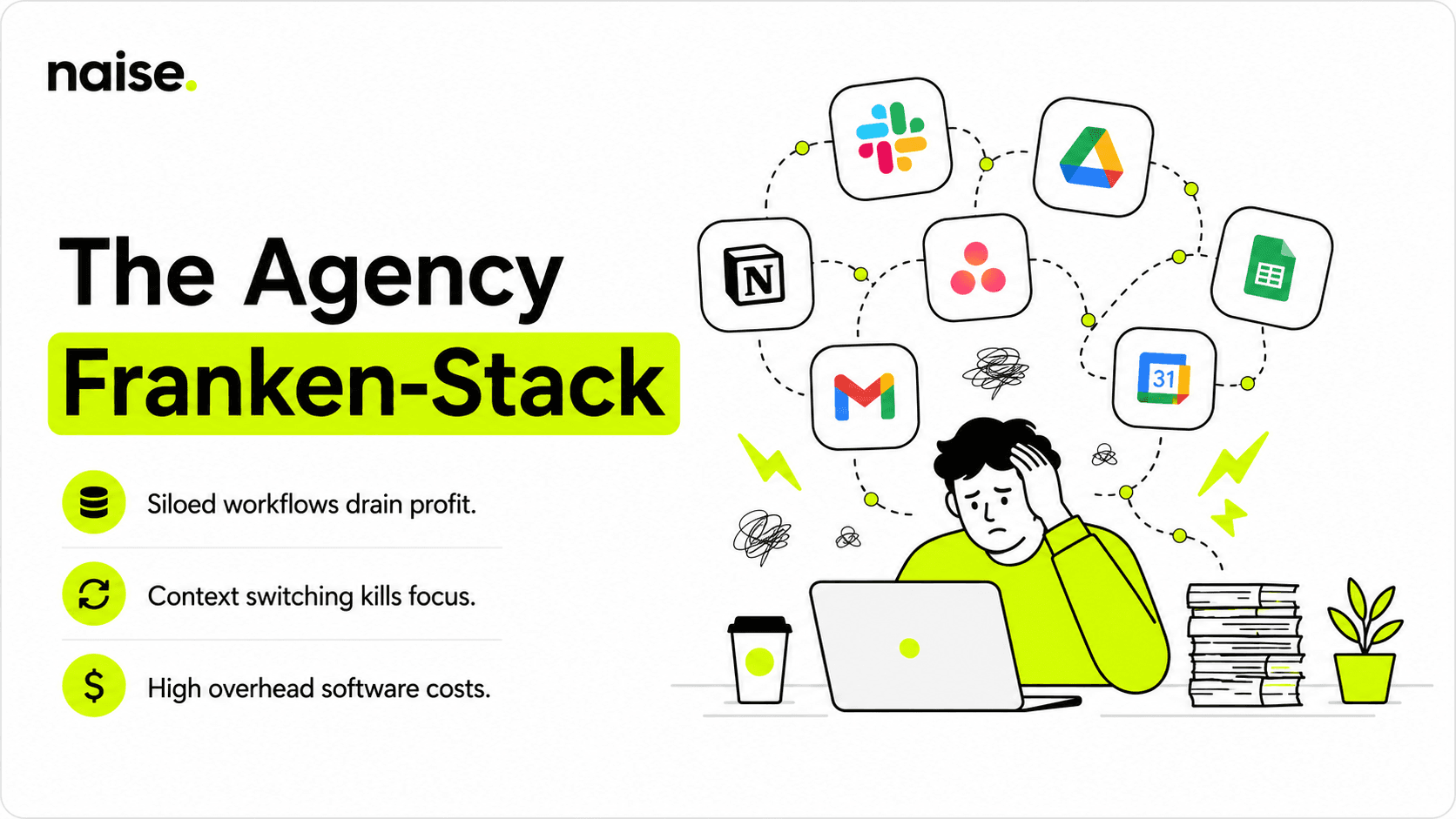
Industry experts call this the "Franken-stack." It happens when you duct-tape dozens of single-function tools together to manage your agency operations.
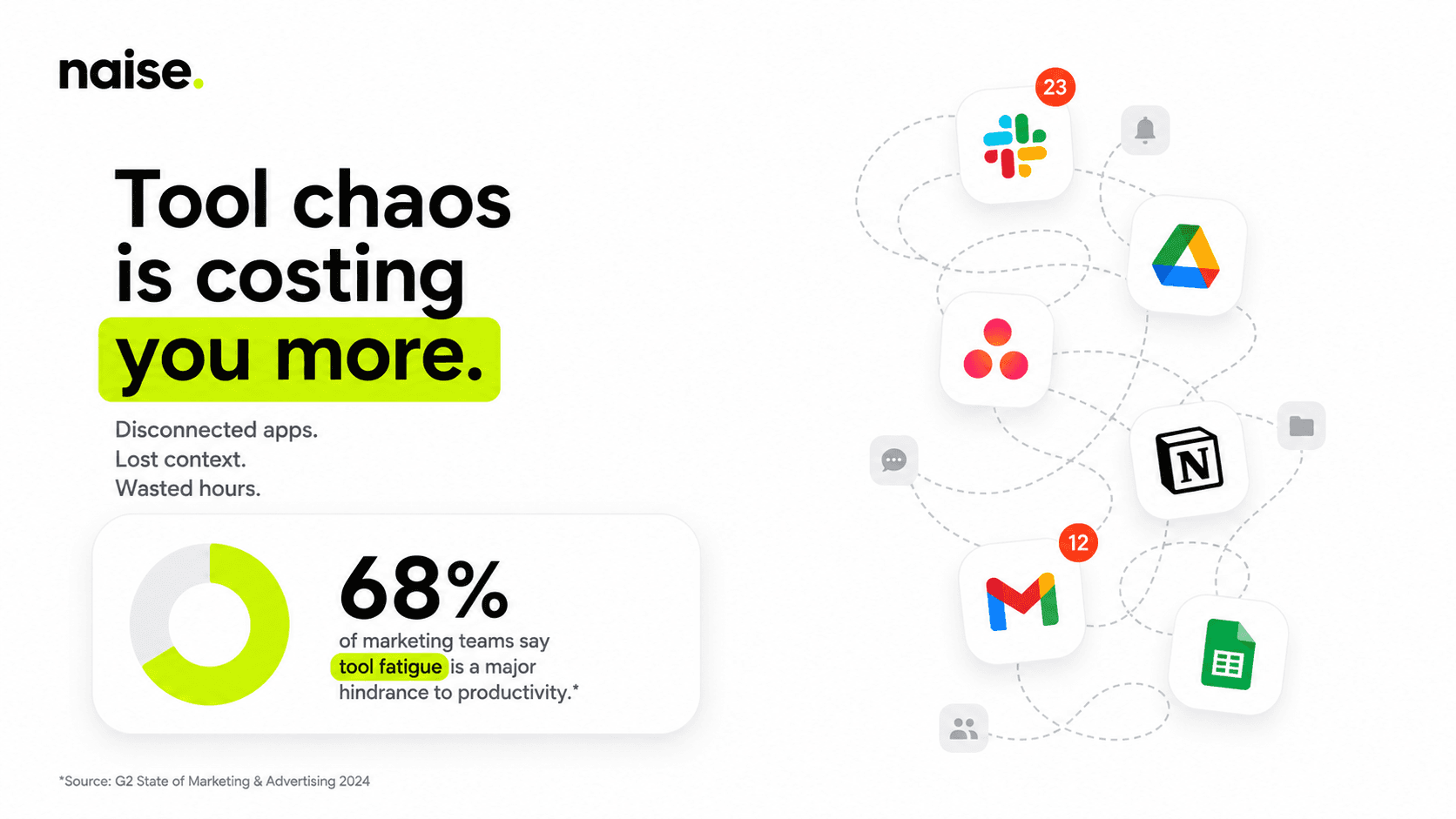
This fragmentation creates massive operational friction. Your Social Media Managers waste hours hunting down specific brand assets because the client uploaded them to Dropbox instead of Notion. You bleed profit margins simply maintaining these complex integrations.
Why Traditional Project Management Fails Agencies
Legacy project management software is fantastic at tracking tasks, but it completely fails to retain core brand context. This forces account managers to repeatedly brief their teams on the exact same brand guidelines.
Platforms like Monday.com, ClickUp, and Trello are great for checking boxes. They tell you when a task is due. But they completely fail to understand how the task should be executed based on the client's unique Brand Voice.
Every time you assign a new campaign in a traditional PM tool, you're essentially starting from scratch. Your team has to dig through past briefs just to remember a client's specific tone, banned phrases, and visual aesthetics. This repetitive, manual input is exactly what causes extreme "prompt fatigue" when using standard generative AI tools like ChatGPT or Claude.
Here is the hard truth: You cannot scale an agency if your core marketing strategy relies on human staff constantly remembering the micro-details of ten different clients. Scaling requires systems that actually remember your inputs.
The Shift to Unified Operational Ecosystems
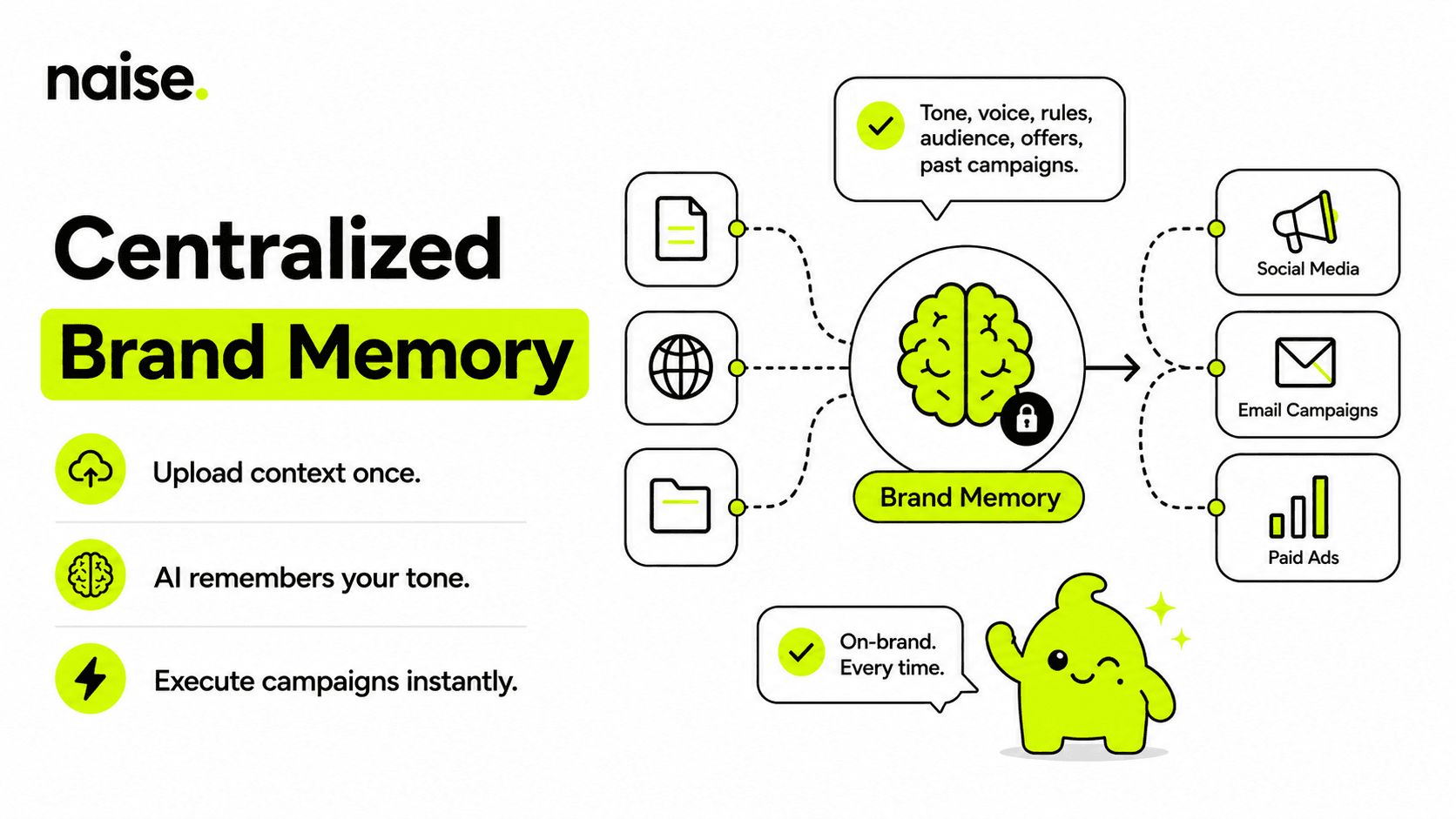
Modern client management demands a centralized system that acts as a persistent memory bank—one that instantly anchors specific brand guidelines to every single executed task.
The industry is rapidly moving away from high-maintenance tool chains. Smart agencies want a single, collaborative environment. They need an ecosystem that holds the client's context and actually does the work.
This is the core philosophy behind Naise AI. We built a system that replaces the chaotic stack with a streamlined, intelligent workflow. You stop managing software, and you start managing actual growth.
How Naise AI Fixes Multi-Client Chaos
Naise AI uses a centralized Kitchen interface and persistent Project memory to completely automate client campaigns without sacrificing those highly guarded, unique brand voices.
Handling five different clients means handling five completely different brand identities. Here is exactly how you manage them all efficiently using our ecosystem.
Step 1: Anchor the Context in Projects
You start by creating dedicated Projects for each client. Think of this as the "Brain" of your operation. You upload their brand guidelines, past PDFs, and website URLs just once. The system builds a persistent vector storage, meaning the AI permanently memorizes that specific client's Tone of Voice and aesthetic.
Step 2: Command the Room in Mayo Chat
Next, you enter The Kitchen, your central command dashboard. Here, you talk directly to Mayo Chat, your cheerful AI teammate. Because you are already inside a specific client's project, Mayo knows exactly who you are working on. You never have to explain the brand rules again.
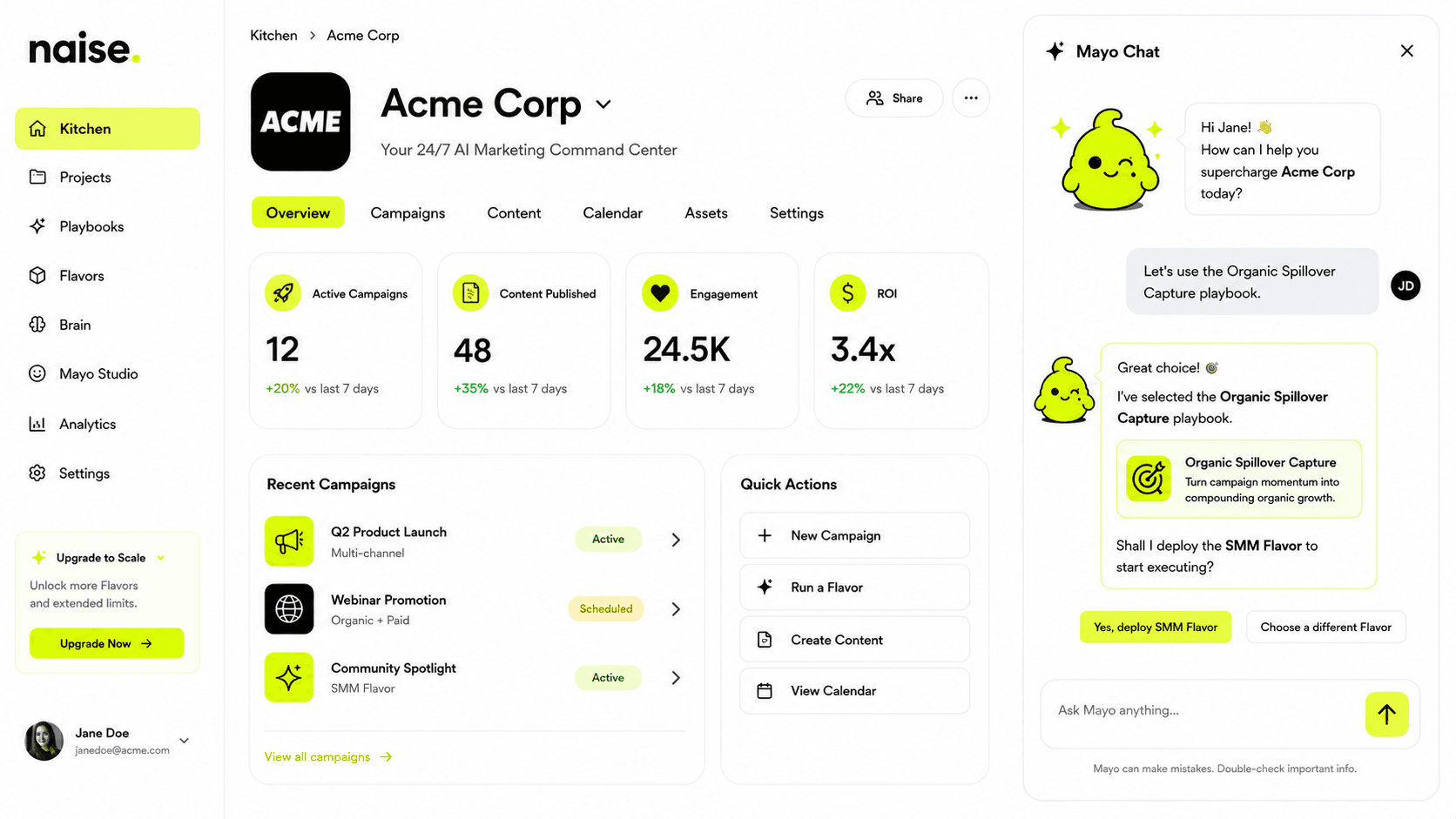
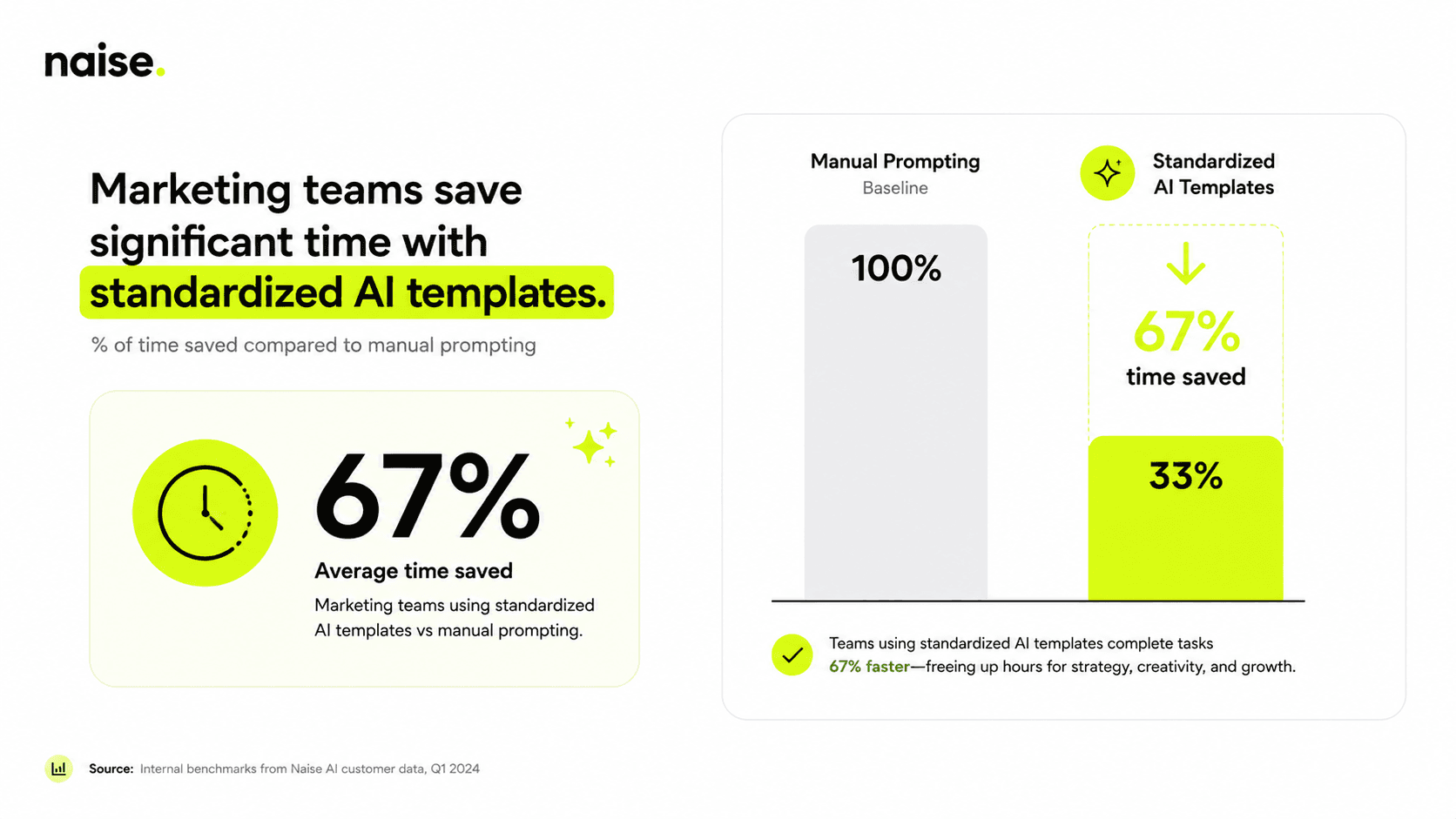
Step 3: Eliminate Blank Pages with Playbooks Instead of typing out complex, exhausting prompts, you simply select one of our pre-configured Playbooks. These are agency-level prompt templates designed by experts for high-converting outcomes. You just click a strategy, and the heavy lifting is done.
Step 4: Execute with Flavors Finally, you deploy The Muscle. You tell Mayo to assign the task to the right autonomous agent, which we call Flavors.
Need social posts? Deploy the SMM Flavor.
Need to find creators? Spin up the Influencer Flavor.
Want to hijack a trending topic? The PR Flavor gets to work.
You review the output, approve it, and actually get to clock out on time.
Conclusion
Finding the best tools for managing multiple clients is no longer about stacking ten different apps on top of each other. It requires building a unified system that remembers your client data and executes tasks autonomously. You need a platform that lets you focus on high-level strategy and client relationships, rather than babysitting disconnected software.
Stop wrestling with your tech stack. Let Mayo cook your next campaign. Audit your entire brand's social presence in 60 seconds. Drop your link and run a Free URL Audit today.
Frequently Asked Questions (FAQ)
Q: What makes a unified ecosystem better than a traditional tech stack?
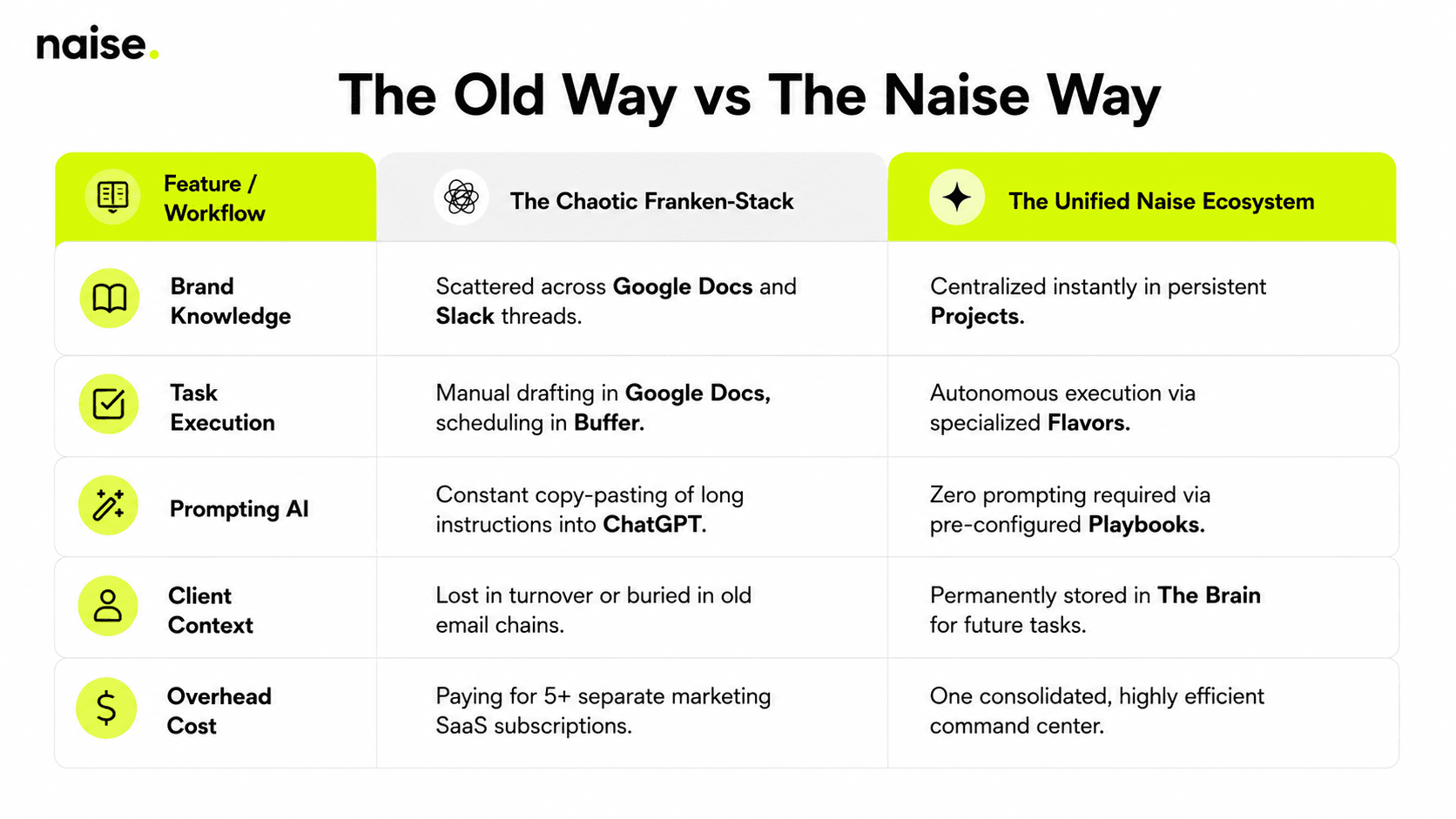
A unified ecosystem centralizes your Brand Memory and workflow into a single hub. Traditional stacks require constant context-switching between different apps like Slack, Asana, and Google Drive. Unified systems reduce overhead costs and eliminate the friction of manually moving data between disconnected platforms.
Q: How does Naise AI remember different client brand voices?
Naise AI uses a feature called Projects to act as a persistent memory bank. When you onboard a client, you upload their specific brand guidelines, documents, and URLs. The system stores this in its "Brain," ensuring that every future campaign generated by our Flavors strictly adheres to that exact tone and style.
Q: Can AI completely replace traditional project management tools?
For marketing execution, yes. While traditional tools track deadlines, AI ecosystems like Naise AI actually execute the deliverables. By combining project memory with autonomous agents, agencies can bypass manual task delegation entirely and move straight from strategy to final approval.