The Real Cost of Skipping Your Weekly Vibe Check
Skipping a routine project audit leads to inconsistent brand messaging, missed deadlines, and ultimately, preventable client churn.
Agency life moves ridiculously fast. You are managing multiple accounts, juggling different tone of voice guidelines, and trying to keep your creative team from burning out. The transition from Friday afternoon to Monday morning often feels like a gamble. You cross your fingers and hope the content pipeline is actually ready to go.
Hope is a terrible business strategy. When you fail to run a structured client project health audit, small errors compound rapidly. A wrong emoji here and an off-brand caption there might seem minor in isolation. However, these tiny inconsistencies destroy brand trust over time.
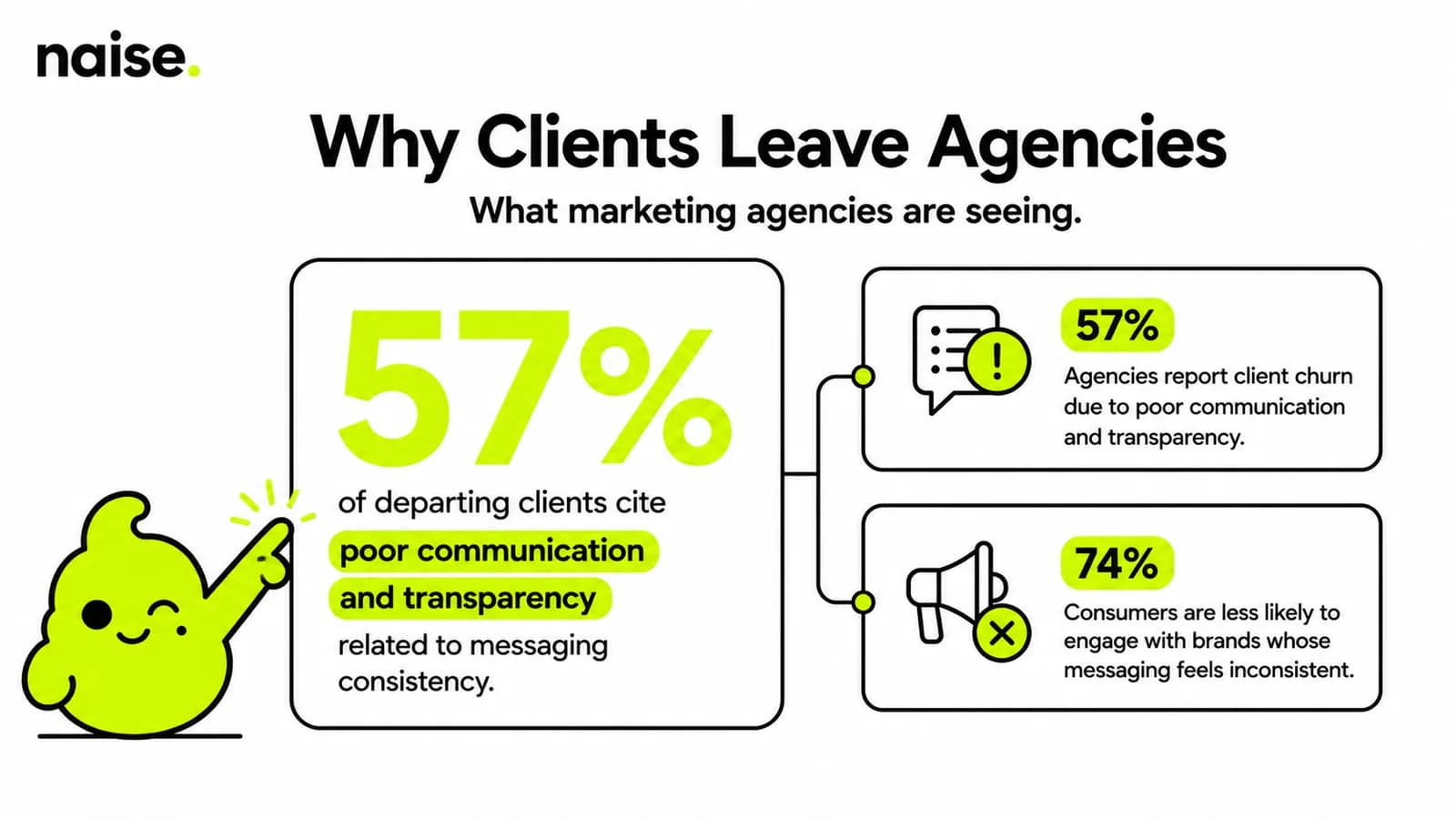
Clients pay agencies to overthink the strategy so they do not have to. When they catch your team making rookie mistakes, they start questioning their monthly retainer. You need a rock-solid system to verify every asset before the new week begins.
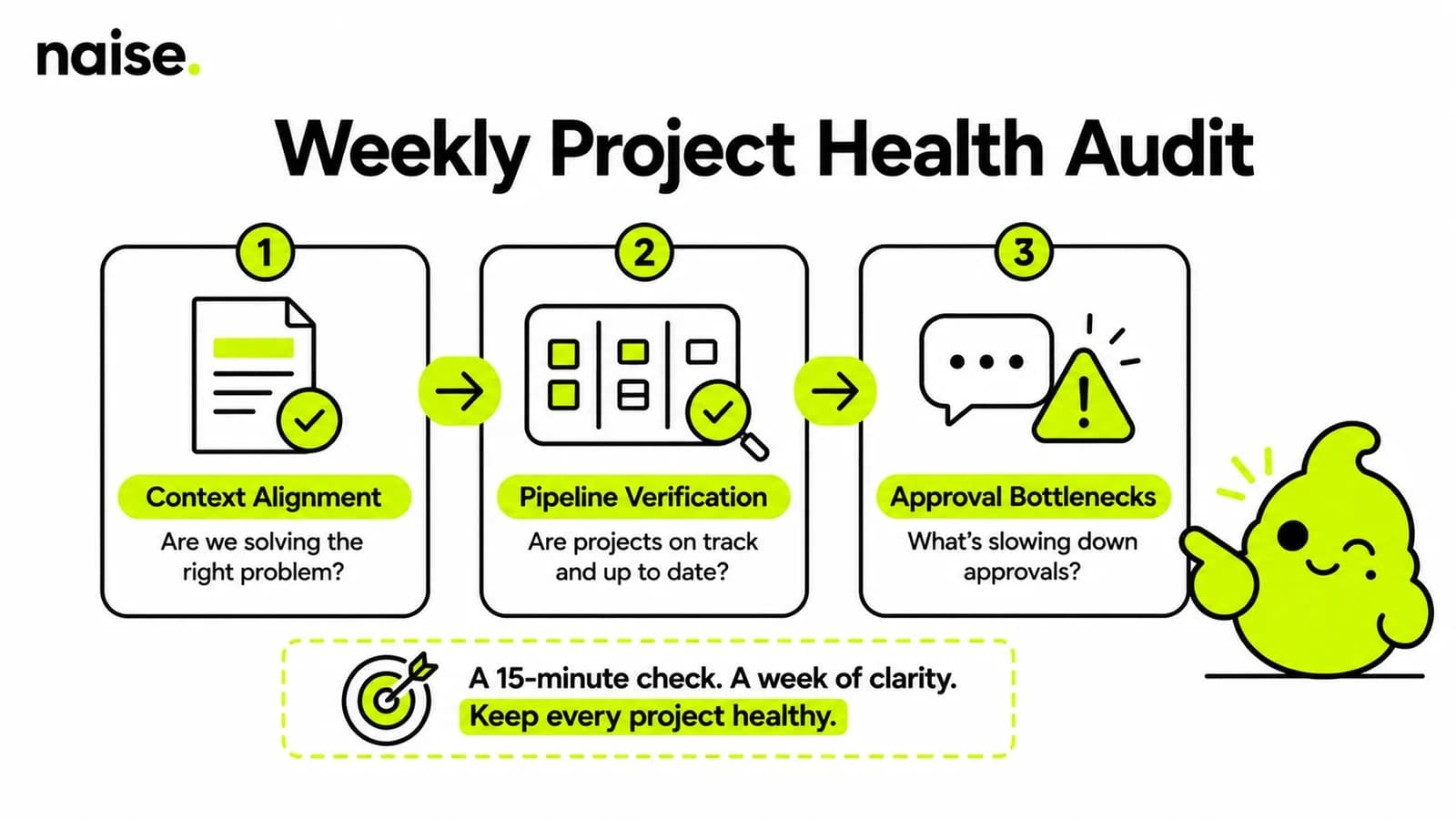
The Ultimate Client Project Health Audit Checklist
A robust audit requires checking context alignment, verifying asset readiness, and clearing approval bottlenecks before Monday morning.
Step 1: Context and Brand Voice Alignment
This is the most critical phase of your audit. You must ensure every piece of scheduled content sounds exactly like the client. Agencies often struggle here because team members jump between drastically different accounts within the same hour.
Review the active Brand Guidelines for any recent updates from the client.
Cross-reference upcoming captions against the client's official Banned Words list.
Verify that the visual aesthetics match the established Design System.
Step 2: Content Pipeline and Asset Verification
Empty calendars cause panic. Your audit must confirm that the upcoming week has enough fuel to run smoothly. You need absolute certainty that the creative team delivered the required assets.
Count the total number of scheduled posts in your Social Media Management platform.
Check that all associated images and videos are rendered in the correct aspect ratios.
Confirm that all tracking parameters and UTM Links are functioning correctly.
Step 3: Clearing the Approval Bottlenecks
Work sitting in draft mode makes zero money. The final step of your client project health audit involves hunting down missing approvals. You must identify exactly who is holding up the deployment process.
Ping the internal Account Manager for any delayed internal reviews.
Send a polite, firm reminder to the client regarding pending Asset Approvals.
Adjust the publishing schedule to accommodate any missing pieces.
Fragmented Stack vs All-in-One Operations
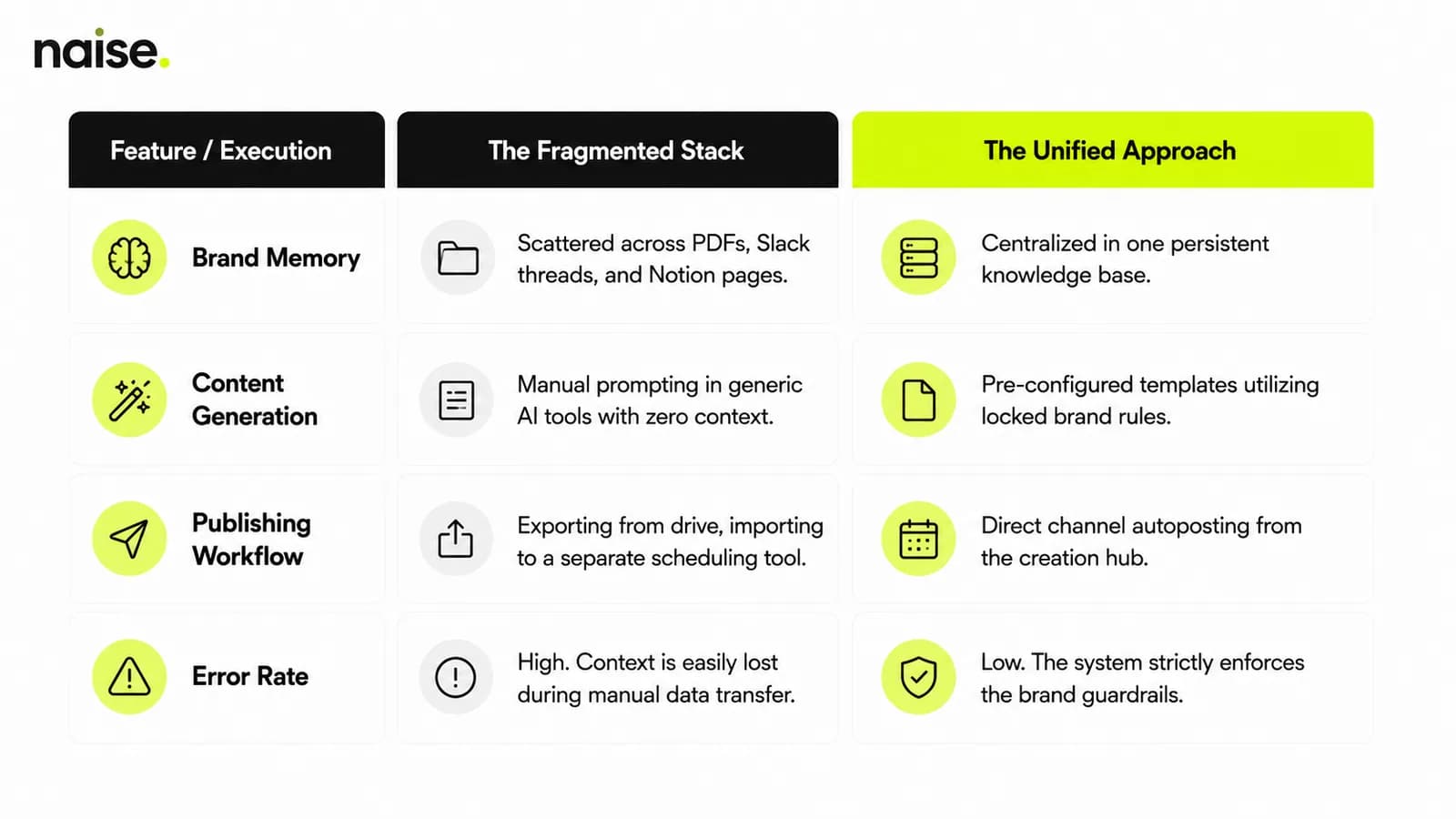
Relying on scattered tools destroys agency profit margins, while a unified ecosystem centralizes context and accelerates execution.
Your team is likely wasting hours copying and pasting information across multiple platforms. You draft in Google Docs, chat in Slack, track tasks in Asana, and schedule in Buffer. This fragmented approach forces your team to constantly switch contexts, killing their focus.
Every time a marketer jumps between tools, they lose a fraction of the brand's unique voice. The mental load required to maintain the specific vibe of five different clients is staggering.
Why Manual Context Switching is Killing Your Margin
Constant tool switching drains billable hours and introduces massive inconsistencies into client deliverables.
Agency profitability relies entirely on efficient execution. When your team spends more time managing tools than doing actual marketing, your margins shrink. The "Frankenstein" software stack requires constant babysitting.
You are paying expensive talent to perform basic administrative tasks. They waste their Friday afternoons hunting down the correct tone of voice document for a specific client. They spend Monday mornings manually formatting posts because the scheduling tool stripped out the spacing. This is not highly strategic work; this is pure operational drag.
Automating the Agency Grind with the Naise AI Workflow
Naise AI acts as your autonomous marketing operator, centralizing client context and executing campaigns instantly to eliminate manual audits.
Running a manual client project health audit is tedious. Naise AI completely transforms this process by turning your static checklists into an automated, error-free workflow. We built this platform to handle the heavy lifting so your agency can focus purely on high-level strategy and client relationship management.
Instead of juggling a fragmented stack, you manage everything from a single, intelligent ecosystem. Here is exactly how you can audit and execute client work instantly:
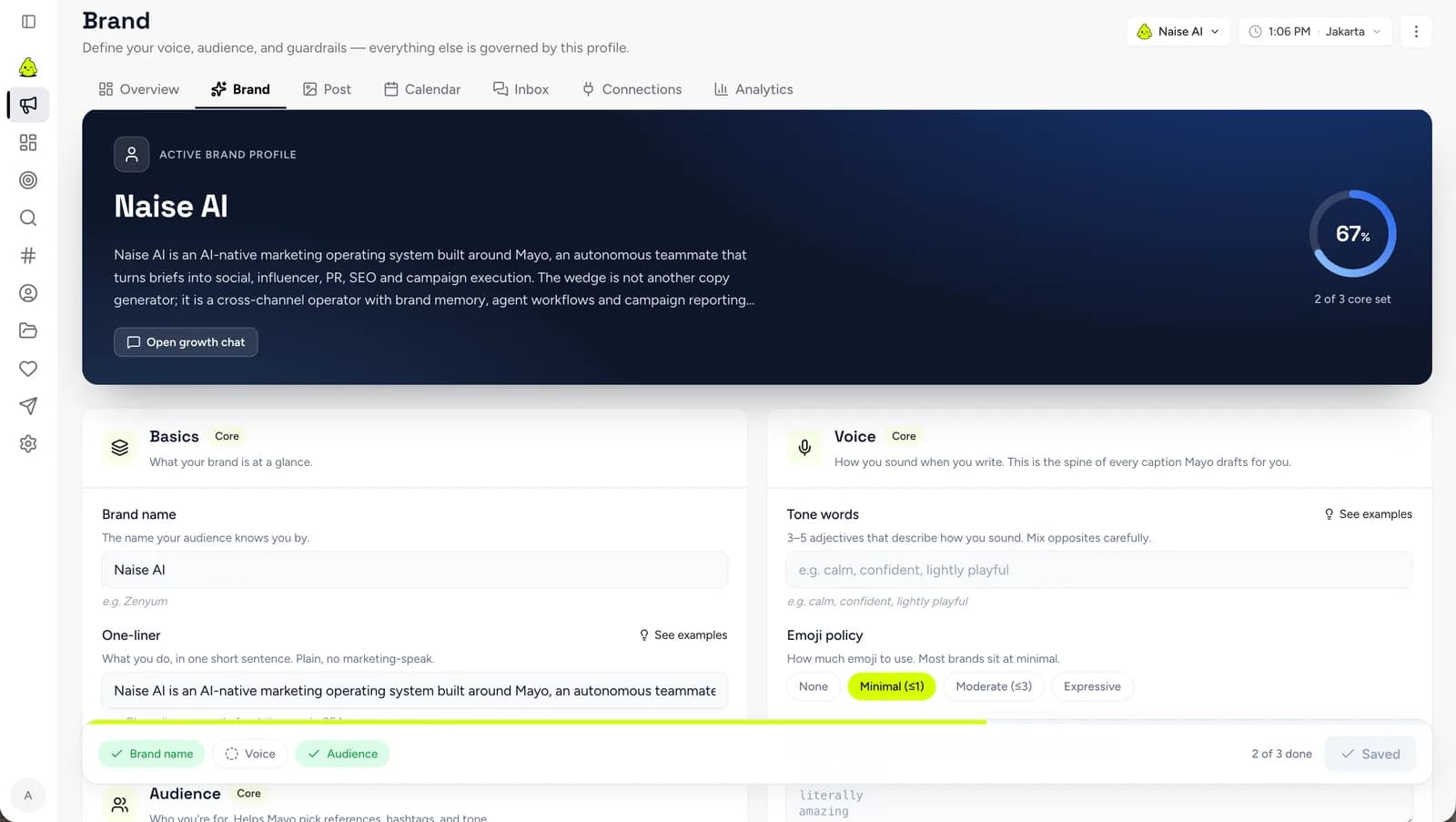
Step 1: Centralize Memory in Projects. Upload your client's brand guidelines, PDFs, and past successful campaigns into Projects. This creates a persistent memory bank. The AI now permanently understands the specific brand voice, eliminating the need to ever explain it again.
Step 2: Command via Naise Chat. Jump into Naise Chat, your central command interface. You no longer need to write convoluted prompts. Simply ask the system to review the upcoming week's content for your specific client.
Step 3: Deploy Expert Playbooks. Select from our library of Playbooks. These pre-configured, agency-level templates solve prompt fatigue instantly. Choose the "Brand Voice Compliance Check" playbook to automatically score drafted content against the client's locked guidelines.
Step 4: Execute with the SMM Agent. Hand the finalized strategy over to the SMM Agent. This autonomous operator locks in the tone of voice, enforces your emoji policy, and schedules the content directly to the connected social platforms.
A rigorous client project health audit protects your agency's reputation and bottom line. You can continue doing it the hard way by wrestling with a fragmented tech stack and praying nothing breaks over the weekend. Alternatively, you can centralize your operations and let an autonomous system handle the grunt work. Build your client's memory, deploy expert playbooks, and actually clock out on time this Friday.
FAQs
What exactly is a client project health audit?
It is a routine operational check performed by agencies to verify that all upcoming client deliverables are on-brand and on schedule.
A client project health audit is a systematic review of active marketing retainers. Agencies typically run these audits late in the week to ensure everything is prepared for the following Monday. The process involves checking the Content Calendar, verifying the Tone of Voice, and ensuring all assets are fully approved by the client.
Why do agencies struggle with brand voice consistency?
Agencies struggle because their creatives are forced to constantly switch contexts between completely different brands throughout the day.
Maintaining consistency is incredibly difficult when using a fragmented tool stack. A copywriter might jump from drafting a playful B2C TikTok script to writing a highly technical B2B whitepaper in the same afternoon. Without a centralized Knowledge Base that actively enforces rules, human error naturally creeps in, resulting in off-brand messaging.
How does persistent memory improve agency efficiency?
Persistent memory eliminates the need to repeatedly explain a client's brand guidelines to AI tools, saving hours of prompt refinement.
When a system utilizes persistent memory, like Projects, you upload the client context exactly once. The system retains the target audience, the banned phrases, and the specific writing style. Every subsequent task automatically references this data, meaning you get perfectly aligned, ready-to-publish assets on the very first try.