
Mastering content marketing storytelling requires more than just good writing. You must structure your narrative to trigger algorithmic retention signals. By analyzing cross-platform data and using automated execution, you can consistently produce high-converting stories without the manual grind.
Why Traditional Storytelling Fails on Modern Social Media
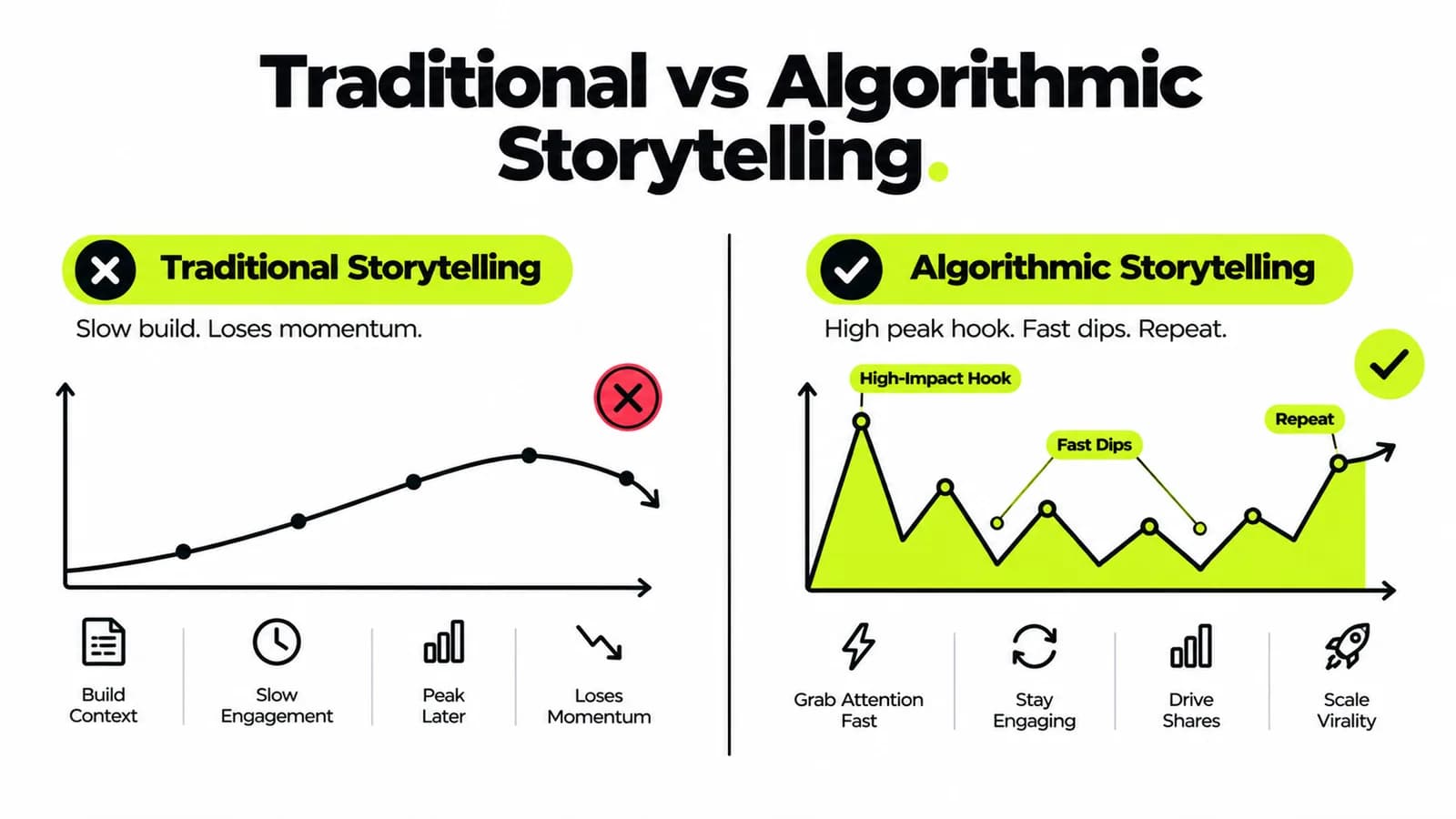
Traditional storytelling focuses on slow build-ups, which immediately kills algorithmic reach on modern platforms that prioritize instant hook retention and rapid pacing.
Marketers often confuse brand history with actual content marketing storytelling. You might have a beautiful origin story about your founder. However, modern social media platforms do not care about your corporate timeline. They care exclusively about keeping users on the app.
The algorithm acts as a ruthless editor for your narrative. If your story takes twenty seconds to get to the point, the user will scroll away. Roughly 70% of viewers disengage within the first 3 seconds if a social video does not immediately capture their attention. This drop-off signals to the platform that your content is boring, immediately throttling your reach.
You need to flip the traditional narrative arc upside down. Start with the climax or the most painful problem right in your Hook Opening. This forces the viewer to stick around to see how you resolve the tension. The algorithm rewards this high retention by pushing your post to broader audiences.
We constantly see brands wasting budget on highly polished videos that flop. They focus on production value instead of Format Fit. A raw, compelling story shot on a phone will mathematically outperform a boring corporate commercial every single time.
Decoding the Algorithm: Structuring High-Retention Stories
High-retention stories rely on aggressive hooks, rapid format pacing, and a tight alignment with proven content pillars that historically drive engagement.
To win the algorithm, your storytelling must be treated as a data science project. The platforms look at specific conversion metrics to decide if your story is worth sharing. The most critical metric is the Engagement Rate, specifically how many viewers are compelled to leave a comment or share the post.
You cannot rely on gut feeling to structure your content. You must map out your Content Pillars logically. These pillars categorize the core topics your brand speaks about. If your data shows that educational stories drive the most shares, you must pivot your production to match that demand.
This is where many marketing agencies struggle when handling multiple clients. They lose track of which narrative structures work best for each specific niche. You must measure your Post Consistency and ensure you maintain a steady rhythm of high-value stories.
The best modern stories also switch up their visual pacing. If you are telling a story via a carousel, each slide must act as a mini-hook to push the user to swipe. The algorithm tracks these micro-interactions. Every swipe, pause, and click tells the machine to amplify your reach.
Finding Proven Story Frameworks Without Guessing
You can reverse-engineer viral content by tracking cross-platform trends and adapting successful narrative frameworks to your specific niche.
You do not need to reinvent the wheel every time you sit down to plan a campaign. The smartest marketers study Viral Posts across different platforms to see what structures are currently dominating. A storytelling format that works on TikTok will often translate beautifully to Instagram Reels.
The problem is the sheer amount of manual labor required. Spending hours scrolling through competitor feeds to find a good hook is an incredible waste of time. You need a way to filter cross-platform content by specific virality levels. This allows you to spot narrative trends before they become saturated.
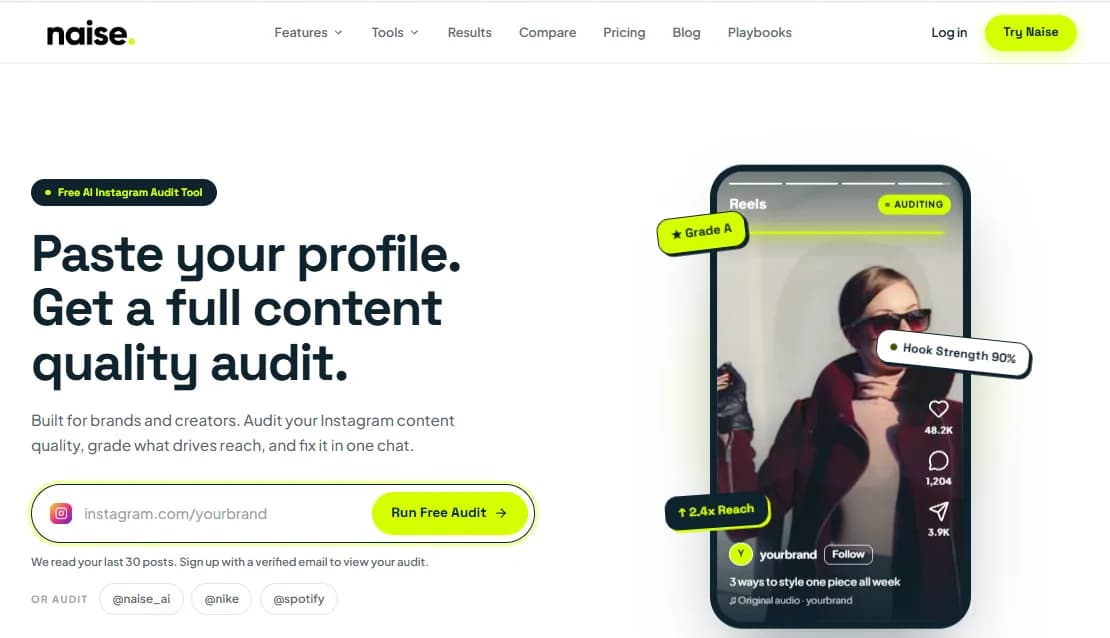
This is exactly why we built the Naise AI Social Audit. Instead of guessing, you can drop any Instagram URL into the tool. It instantly scans the last 30 posts and provides a comprehensive diagnostic of your narrative performance. It reveals your Content Pillar Strength so you know exactly which stories are actually resonating.
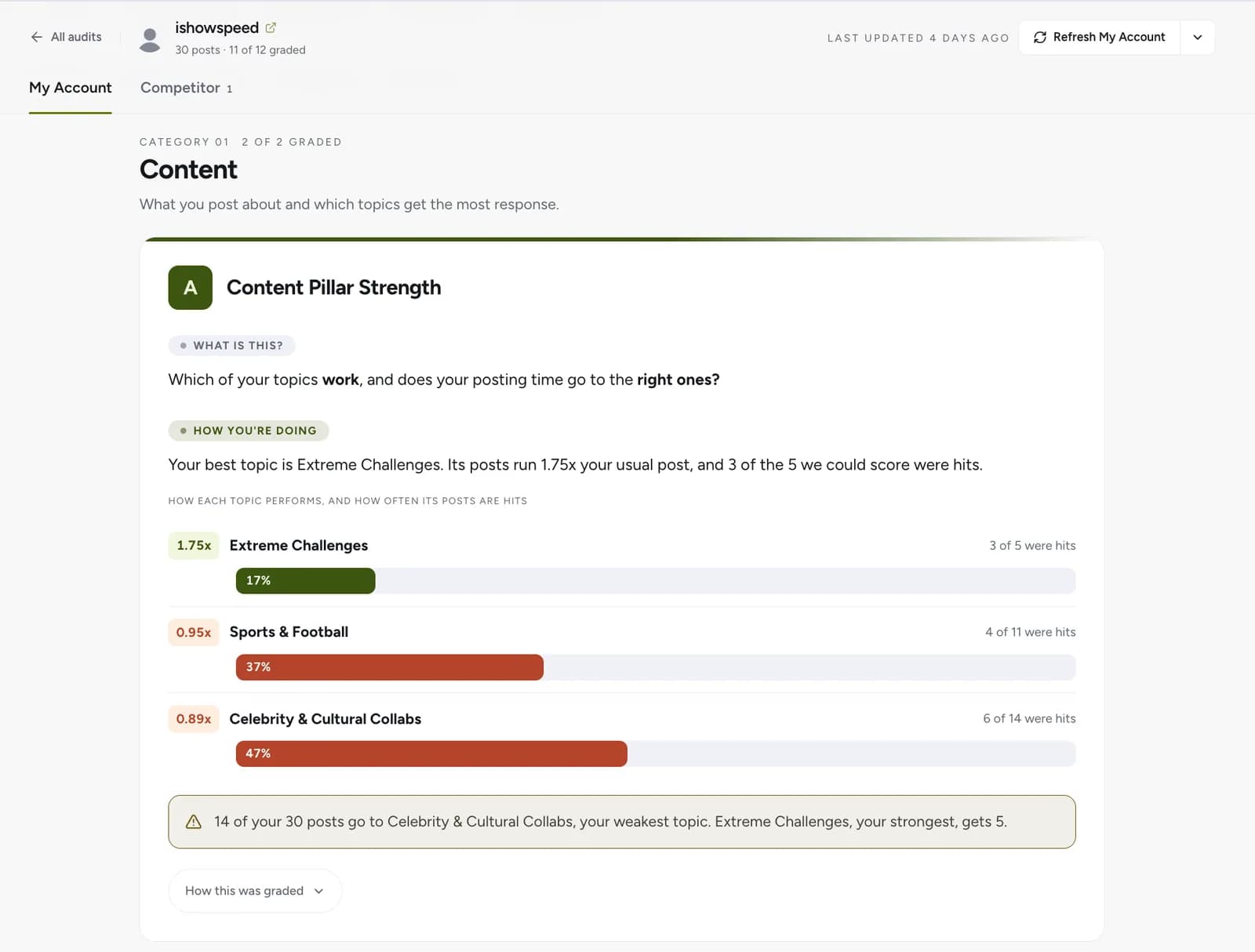
You can even run a head-to-head competitor benchmark. The audit analyzes the Hook Opening of your rivals. If their stories are capturing more attention, you will see the exact structural differences. It is about working smarter and letting the data dictate your creative direction.
Translating Raw Data into an Executable Content Strategy
Use AI agents to instantly convert your audit data into a scheduled, brand-safe content calendar, eliminating the gap between strategy and execution.
Knowing what stories to tell is only half the battle. The real friction happens when you have to actually write, design, and schedule the content. Most teams suffer from prompt fatigue when trying to force generic text generators to sound like their brand. This leads to robotic copy that completely ruins the authenticity of the story.
You need a persistent memory system to lock in your brand voice. By utilizing Projects within your marketing stack, you can upload your brand guidelines once. The system remembers your specific tone, banned phrases, and exact target audience.
Once your voice is locked, you can move from analysis to instant execution. Inside the Naise AI Social Audit, you simply click "Build this strategy in chat". This hands all the contextual data directly to your Social Media Agent. You completely bypass the blank page syndrome.
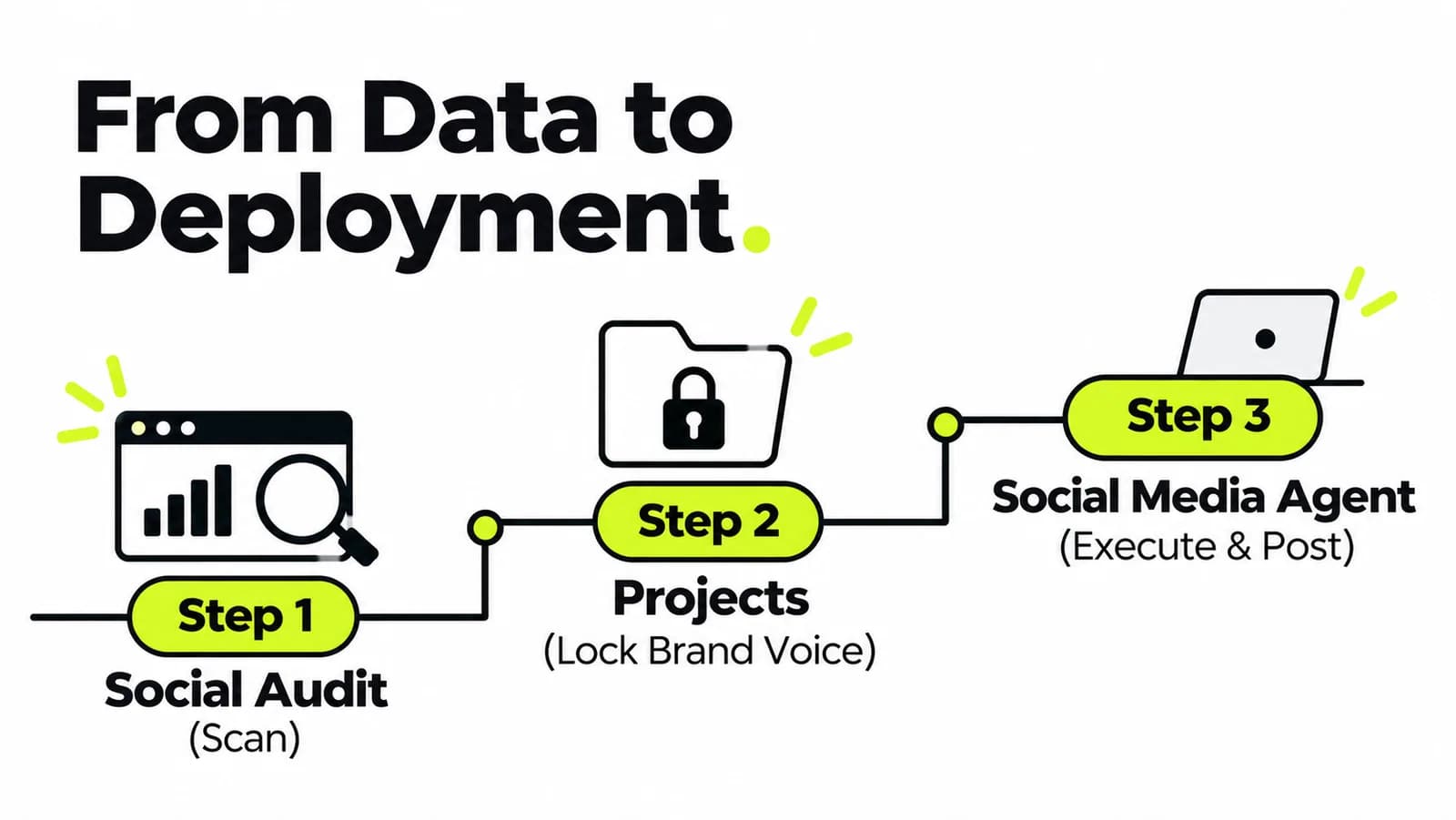

The Social Media Agent will autonomously draft your captions and structure your visual assets. You can deploy pre-configured Playbooks to ensure the narrative follows the exact viral frameworks you discovered during the audit. You get to oversee the strategy while the agent handles the heavy lifting.
Stop Guessing, Start Scaling Your Brand Narrative
True scalability in content marketing happens when you combine data-driven storytelling with autonomous AI execution.
The most successful brands treat content marketing as an engineered system. They do not wait for inspiration to strike. They find the exact stories the algorithm wants to promote and they execute them flawlessly. You need to eliminate the guesswork from your creative process.
Manual research and fragmented tool stacks are draining your profit margins. If you are managing multiple accounts, the overhead cost of content creation is likely your biggest bottleneck. You need an integrated ecosystem to manage the entire lifecycle of a story.
You deserve to clock out on time. Let a dedicated AI teammate overthink the strategy and handle the tedious formatting. You should be focusing on top-level growth and client relationships.
Conclusion
The algorithm is not a mystery, it is just a math equation. When you align your content marketing storytelling with the right data, your reach will multiply effortlessly. Stop wasting hours on manual competitor research and fragmented drafting tools.
FAQs
What is content marketing storytelling?
It is the strategic use of narrative frameworks to communicate a brand's value proposition. It focuses on solving audience pain points through engaging, structured stories rather than direct sales pitches.
Why is audience retention important for algorithms?
Algorithms prioritize content that keeps users on the platform longer. High audience retention signals that your story is highly engaging, prompting the algorithm to push your post to a significantly larger audience.
How do I find viral content for my niche?
You can use tools like the Naise AI Social Audit to scan cross-platform data. It filters recent viral posts on platforms like TikTok and Instagram, allowing you to reverse-engineer successful narrative frameworks.
Can AI help write brand stories?
Yes, but you must use systems with persistent memory. Tools like Naise AI use Projects to lock in your specific brand voice and guidelines, ensuring the AI generates authentic, brand-safe narratives without sounding robotic.