Most agency owners treat tech PR like a numbers game, blasting generic pitches that destroy domain reputations. You can automate PR outreach for startups effectively by combining smart scraping tools with highly personalized, context-aware AI drafting. By ditching fragmented software and utilizing a centralized PR Agent, you secure top-tier coverage on autopilot without hiring a massive in-house team.
How to Automate PR Outreach for Tech Startups: The Ultimate Agency Playbook
Most agency founders treat media relations like a chore they will get to after setting up the latest ad campaign. Then they wonder why their client's domain authority stagnates and nobody on X (Twitter) is talking about their recent launch. The core issue is not a lack of effort from your team. It is that outreach done manually simply does not scale across a roster of five to ten demanding startup clients.
By 2026, roughly 80% of successful B2B media placements involve some form of automated assistance. High-performing outbound PR campaigns are hitting open rates well above what most manually managed cold email sequences ever achieved. That is not because the software is magic, but because smart systems handle the parts humans constantly rush.
This guide covers how the modern PR workflow actually operates and where the real leverage sits for tech startups specifically. We will break down exactly which tools are worth your budget, based on funding stages. Finally, we will show how platforms like Naise AI fit into the picture for agencies who want to eliminate the fragmented tech stack entirely.
Why Manual PR Outreach Breaks Down at Startup Scale
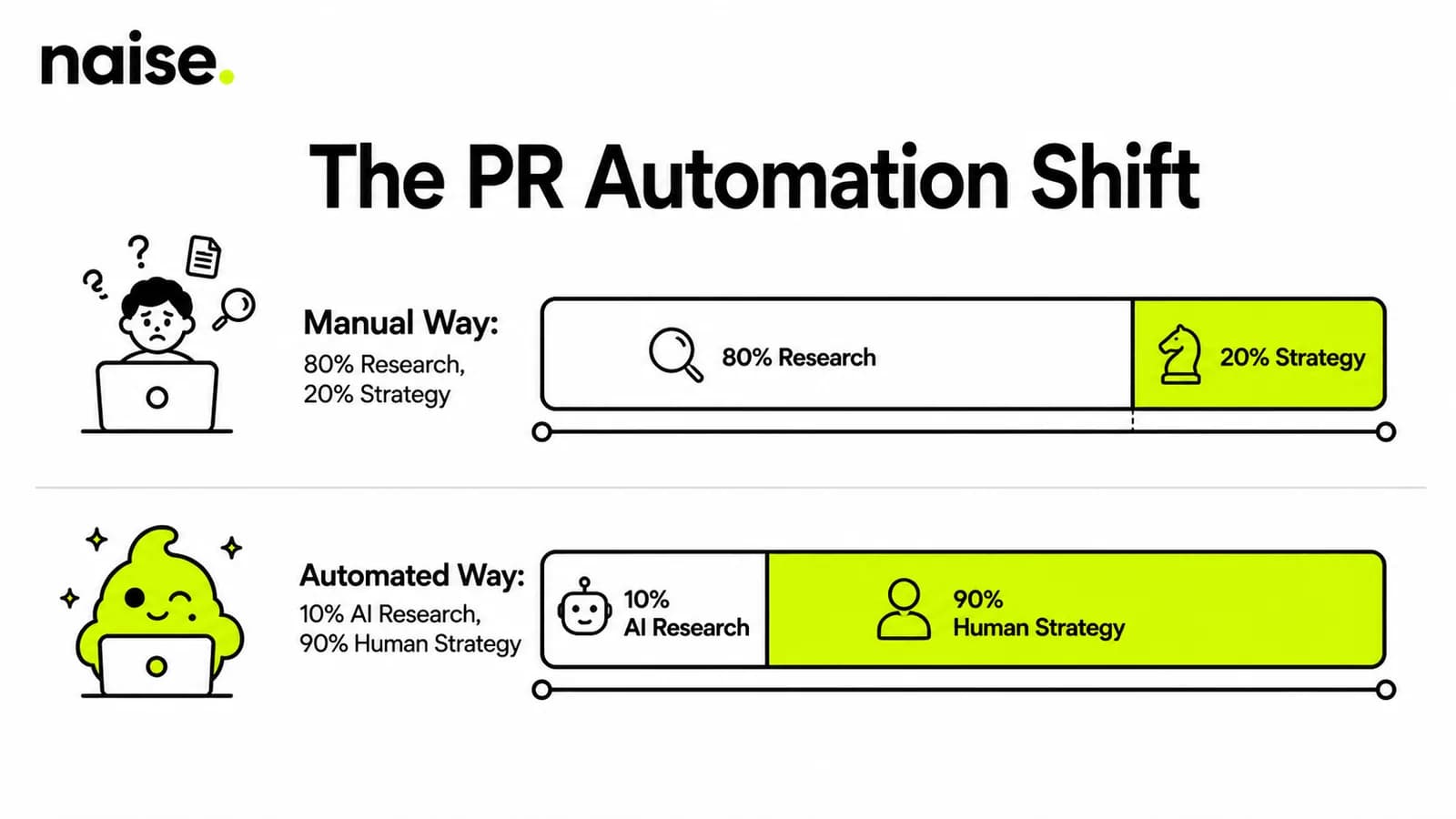
Manual PR outreach fails at scale because agencies waste hours on prospect research and list filtering rather than high-level relationship building. Automating the discovery and relevance scoring allows your team to focus strictly on campaign strategy.
Picture a solo agency owner trying to secure tech press for a newly launched B2B SaaS product. They spend three hours hunting down 20 journalists who might care, write 20 slightly different emails, and get exactly one reply. That is a 5% reply rate, which sounds acceptable until you realize those three hours yielded zero actual articles. Repeat that grind across six different clients every week. You quickly build a chaotic, unprofitable operation that fails to move the needle.
The real bottleneck is rarely the actual writing of the emails. The friction sits entirely in the upstream work of Media Prospecting. This intense research layer is exactly where most account managers give up and resort to sending generic blasts. Automation handles the grueling prep work so you don't have to:
Identifying Topical Relevance: Scraping platforms to find writers who actively cover your specific tech niche, not just broad "business" topics.
Filtering for Recency: Ensuring the prospect actually published a relevant piece in the last 30 days, avoiding dead inboxes.
Inbox Hunting: Tracking down the correct, active email address rather than dropping a pitch into a generic website contact form.
A scraping tool handles these steps in minutes. A Relevance Scoring system then ranks them by topical alignment and engagement signals. None of that early-stage filtering requires human attention.
The Exact Tech Startup PR Workflow (From Prospecting to Placement)
A successful automated PR workflow moves through four stages: identifying target journalists via intent signals, scoring relevance, generating highly personalized hooks, and managing follow-up sequences.
To successfully automate PR outreach for startups, your operations must run in four highly distinct stages. Knowing exactly where each stage sits helps you avoid buying redundant software that only covers one fraction of the job.
Stage 1: Prospect Discovery: You need a system that surfaces target journalists based on very specific tech niches, competitor coverage, and recent funding announcements.
Stage 2: Relevance Scoring: Not every reporter who writes about artificial intelligence wants to hear about your client. You can use platforms like Clay integrated with OpenAI to scrape recent articles and determine if a journalist actually covers early-stage launches.
Stage 3: Personalized Outreach Generation: Your automation must draft a pitch that references a specific, recent article the journalist wrote. This proves you actually did the homework and establishes instant credibility.
Stage 4: Follow-Up Sequencing: Most placements happen on the second or third touchpoint. Automated sequences ensure your pitch stays at the top of their inbox without requiring manual tracking.
A tool like Lemlist handles these multi-step sequences effortlessly, optimizing deliverability so you never land in the dreaded promotions folder.
Tech PR is High-Stakes Relationship Building (Not Just Cold Sales)
Unlike cold sales, a bad PR pitch can get your client permanently blacklisted by top-tier tech publications. You must use automation to augment personalization, offering strategic embargoes and exclusives rather than generic spam.
Cold Email Outreach for sales and media relations use identical infrastructure, but they have drastically different failure modes. In sales, a weak email simply costs you one single reply from a random prospect. In tech PR, a lazy pitch can get your entire agency domain flagged as a spam sender by editors at TechCrunch or The Verge. These are the exact gatekeepers you absolutely need long-term relationships with.
That is why the AI-plus-human hybrid model matters more in tech public relations than anywhere else. You are starting a delicate relationship with a content lead who will instantly remember if you sent them a generic pitch featuring a broken merge tag.
The most effective approach for tech launches involves using AI to handle the volume, while your agency steps in to manually provide strategic nuance. You can elevate your pitches by:
Offering Media Embargoes: Giving top-tier writers a head start on a funding announcement before the press release goes public.
Pitching Exclusives: Guaranteeing a major publication the first right to publish a highly anticipated product launch.
Adapting for Niche Channels: Tailoring the messaging format specifically for communities like Product Hunt and Hacker News.
PR Stack Reality Check: Bootstrapped vs. Series A Tools
Your automation stack must match your client's funding stage, ranging from affordable Zapier and Lemlist integrations to premium $10k+ enterprise databases like Muck Rack.
The market for marketing automation tools is incredibly crowded, but a few specific setups stand out depending on your agency's budget. You cannot justify a massive enterprise software bill if you are strictly representing bootstrapped founders.
Here is how the modern PR tech stack divides based on startup funding:
The Bootstrapped Stack: Combine Apollo.io for contact discovery with Zapier to push leads into a sequencing tool. Add Instantly for high volume under $50 a month, and use Clay to enrich the data with personalized article hooks.
The Series A Stack: Rely on legacy giants like Muck Rack or Cision. These enterprise tools cost tens of thousands of dollars annually, but they provide pristine, real-time media databases for heavily funded startups.
While premium databases solve the contact data problem, they still leave you handling the actual drafting and sequencing manually. This is where centralized AI operators begin to bridge the gap for modern agencies.
Red Flags Your Automated Pitches Are Just Glorified Spam
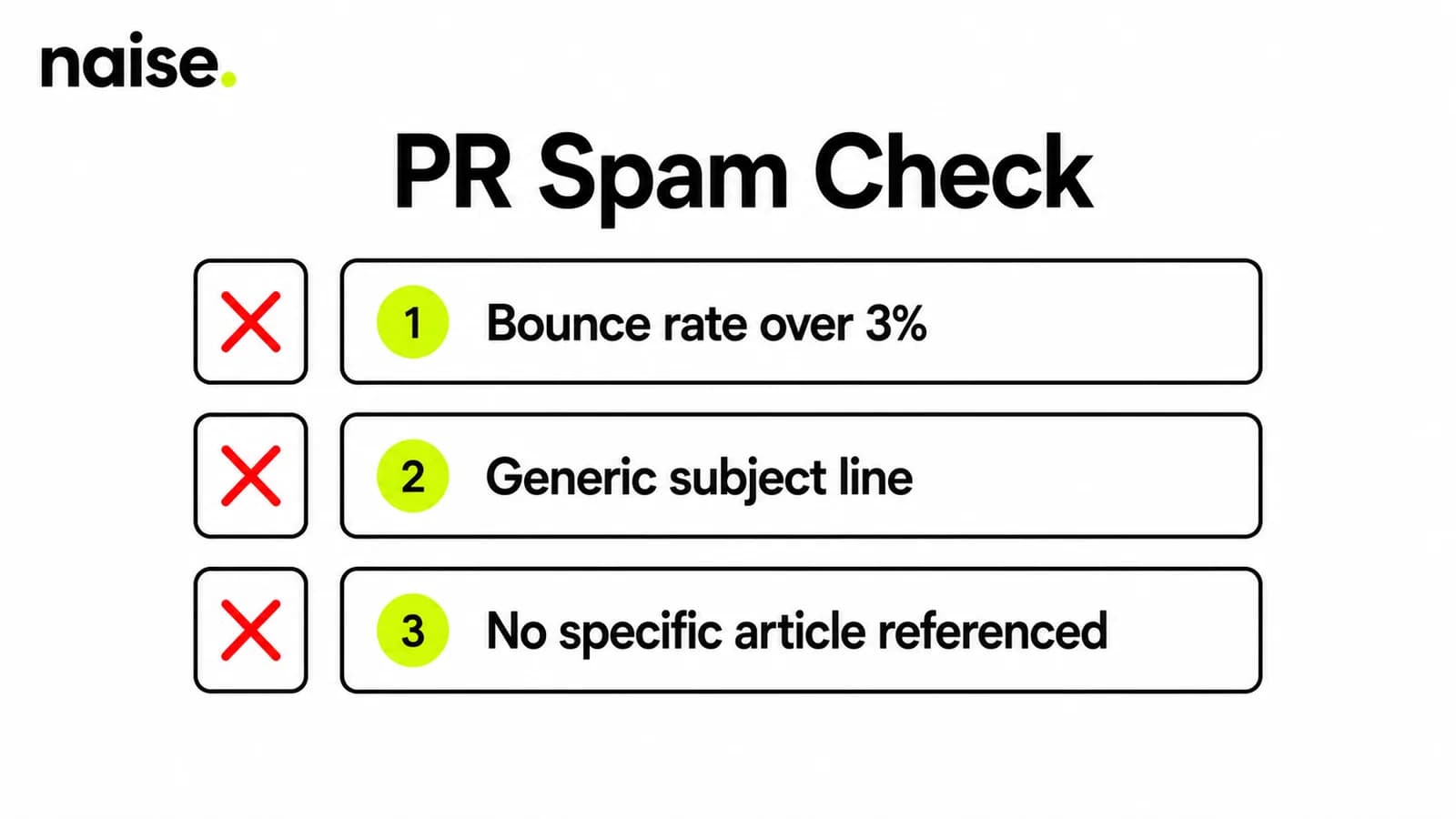
High bounce rates, cosmetic personalization, and a lack of actual placed articles indicate your automated PR system is failing and damaging your sender reputation.
Volume is incredibly easy to confuse with quality when running an agency. The first major red flag that your automated system is broken is a dismal reply rate. A healthy, highly personalized media campaign should hover around a 3-5% positive response rate.
If your sequences are pulling under 1%, your system is failing. You must obsessively monitor your campaigns for these critical failure points:
High Bounce Rates: Anything above a 3% bounce rate means your journalist data is stale and your verification step is missing. You will get domain throttled.
Cosmetic Personalization: If you cannot instantly tell which specific publication the email was written for, your AI is writing generic fluff. True personalization references a specific gap in their recent coverage.
Zero Actual Placements: A reply that leads to nothing is not a win. If you aren't tracking actual published articles, you are optimizing a fundamentally broken funnel.
How to Ditch the Fragmented Stack with Naise AI's PR Agent
Naise AI replaces a dozen fragmented tools by combining persistent brand memory, expert PR playbooks, and an autonomous agent to draft and track media pitches securely.
The standard approach to scaling an agency involves stitching together a fragile stack of software. You buy a prospecting tool, a sequencing tool, an AI writing wrapper, and a reporting dashboard. Every single tool requires its own costly subscription, its own login, and its own steep learning curve. For an agency owner trying to scale profit margins, that is the worst possible trade.
Naise AI takes a radically different approach to media operations by combining these fragmented layers into one fluid ecosystem:
Projects (The Memory Bank): Upload your client's press kit into the central Dashboard. This creates a persistent memory bank, locking in the exact brand voice and technical jargon. You never have to re-explain the product.
Playbooks (The Expert Setup): Eliminate prompt fatigue entirely. Select from pre-configured playbooks for Series A announcements or product launches, ensuring the system knows exactly what context is required.
PR Agent (The Executioner): Finally, you deploy the PR Agent to handle the heavy lifting. The agent autonomously manages the most time-consuming aspects of media relations, ensuring you only step in to handle the final human approval:
Media Listing: Seamlessly find contacts of relevant PR media and execute targeted outreach campaigns directly from the dashboard.
Brand News Monitor: Automatically track recent press and mentions about your brand across the web, keeping a pulse on your public reputation.
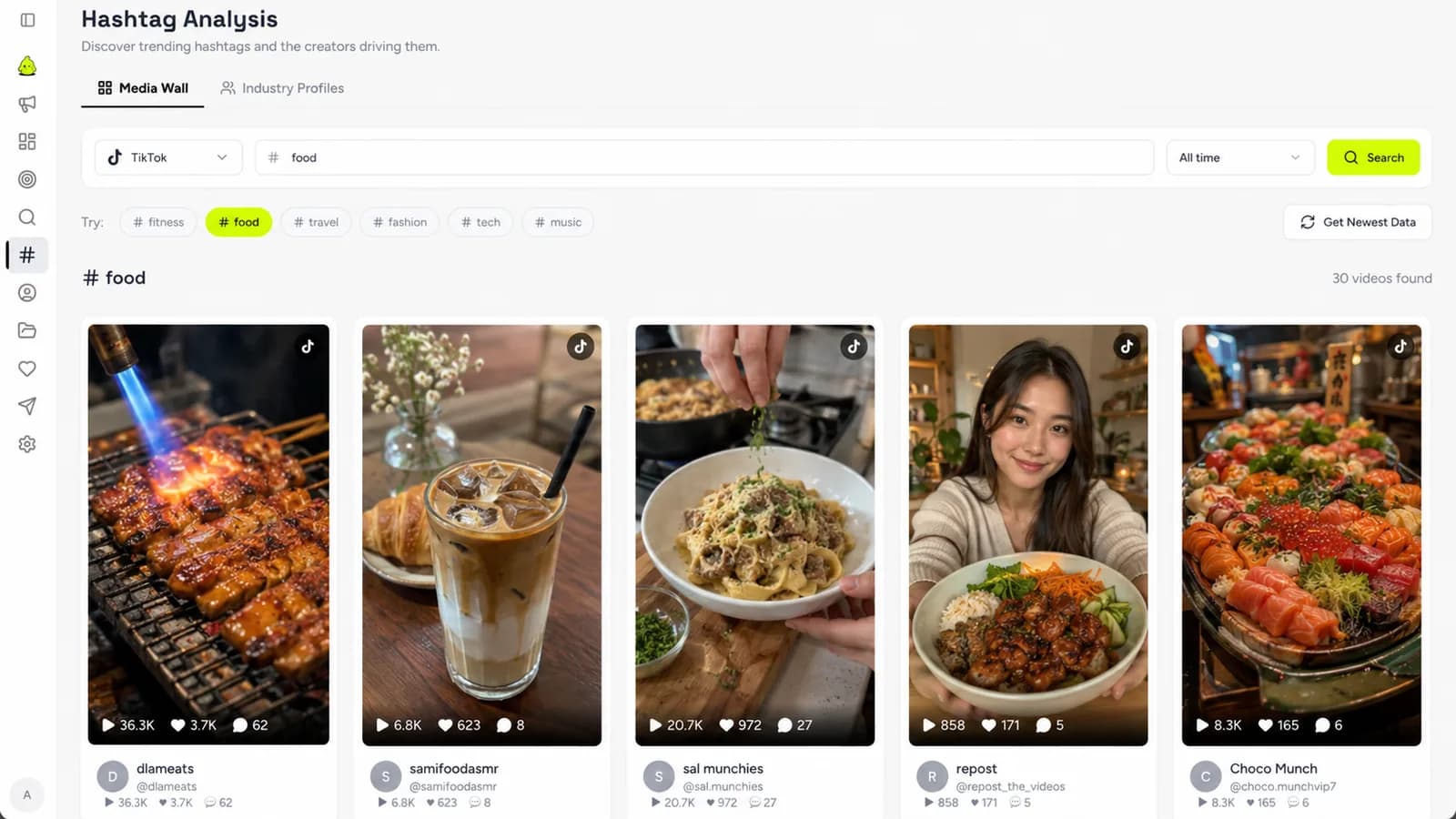
Hashtag Analysis: Discover trending industry hashtags and the creators driving them to identify quick "trend hijacking" opportunities.
Scaling your agency's PR offerings does not require hiring an army of junior publicists or paying for ten different software subscriptions. By centralizing your workflow with a dedicated AI operator, you protect your client's reputation while securing top-tier tech coverage on autopilot.
FAQs
How do I build a media list for a tech startup automatically?
You can build a media list automatically by using scraping tools like Clay to search for journalists who recently published articles containing your target keywords. Combine this with contact databases like Apollo.io to find their verified email addresses, filtering out anyone who hasn't written about your specific tech niche in the last six months.
Does automated PR outreach ruin domain authority?
Automated PR outreach only ruins domain authority if you blast generic, unverified emails that result in high bounce rates and spam complaints. If you use automation to research specific journalists and generate highly personalized pitches sent in small, targeted batches, your domain reputation remains perfectly safe.
What is the difference between cold sales emails and PR pitches?
Cold sales emails focus on pitching a product to a potential buyer to generate revenue, allowing for higher volume and broader targeting. PR pitches are sent to journalists and editors to secure media coverage, requiring significantly deeper personalization, understanding of their editorial beat, and relationship-building tactics.
How does Naise AI help agencies with PR?
Naise AI helps agencies by acting as a 24/7 automated PR operator. It uses Projects to remember each client's unique brand voice, Playbooks to provide expert PR templates, and a dedicated PR Agent to autonomously draft personalized media pitches and track industry trends.