The most critical element of any social media campaign is the first three seconds. If you want to master viral hook structures, you must stop relying on creative intuition and start reverse-engineering the psychological triggers that force users to stop scrolling. Modern marketing teams achieve massive reach by combining proven verbal, visual, and pacing hooks, eventually scaling this research through autonomous AI platforms.
The Anatomy of a Scroll-Stopping Hook
A successful viral hook is a calculated combination of visual disruption, clear auditory pacing, and a verbal psychological trigger that immediately promises value or provokes curiosity.
Many marketers mistakenly believe that a hook is just the first sentence spoken in a video. This is a fundamentally flawed approach to modern Content Strategy. A true hook is a multi-sensory experience designed to break the user's subconscious scrolling habit. It requires visual, verbal, and auditory elements working in perfect synchronization.
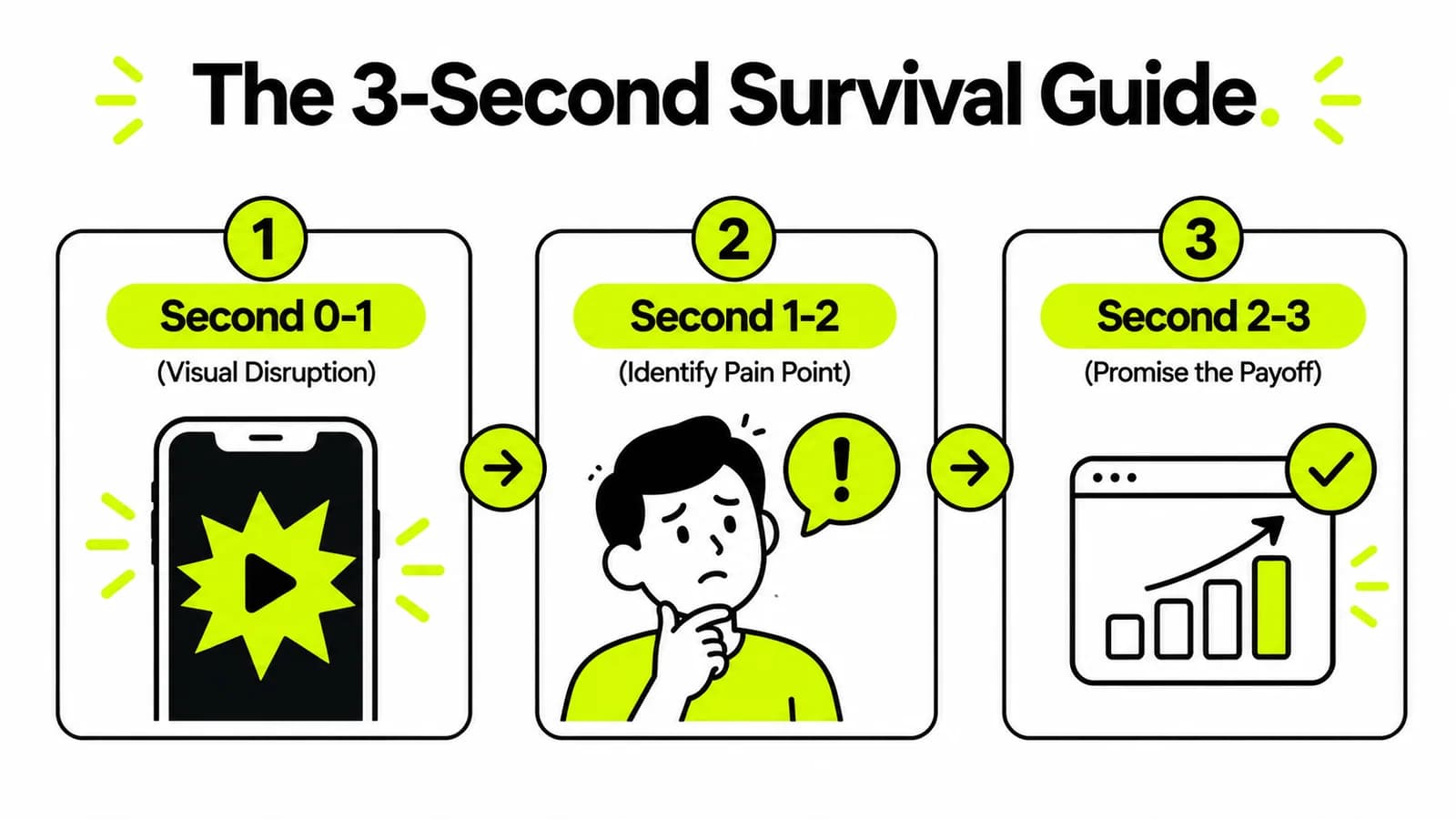
The visual hook happens before the user even processes the audio. This could be a sudden movement, a striking text overlay, or an unusual camera angle that disrupts the expected feed aesthetic. You are not competing with other brands in the feed. You are competing with highly stimulating creator content, meaning your visual opening must be instantly arresting.
The verbal hook then delivers the psychological payload. It must establish the stakes, identify the target audience, and promise a specific payoff within a handful of words. If your opening sentence requires context to be understood, it is not a hook. It is simply an introduction, and introductions destroy your Retention Rate.
In 2026, if the core topic isn’t visually and verbally established within the first 1.5 seconds, roughly 60–70% of viewers will swipe past—TikTok averages ~70% scroll-away by 1.5s, while Reels and Shorts see major reach caps once early swipe rates exceed 60–70%.
The 3-Second Window: Why Most Hooks Fail
Most hooks fail because marketers take too long to get to the point, prioritizing brand introductions over immediate audience value, causing massive viewer drop-off in the first three seconds.
The platform algorithms across TikTok, Instagram, and YouTube Shorts are ruthless. They judge the quality of your content almost entirely on the initial retention graph. The three-second mark is the ultimate filter. If you lose the audience here, the algorithm will instantly bury the video, regardless of how valuable the remaining ninety seconds might be.
The most common mistake lean marketing teams make is the "corporate throat-clearing" approach. They start videos with phrases like "Hi guys, today we are going to talk about..." or "Welcome back to our channel." These phrases carry absolutely zero value. They trigger the viewer's subconscious filter, signaling that the content is slow-paced and highly skippable.
To survive the three-second window, you must apply the "So What?" framework to your opening frames. Every element on the screen must directly answer why the viewer should care right now. If your opening frame does not present a clear problem, a controversial stance, or an undeniable benefit, you are essentially begging the user to scroll away.
Reverse-Engineering Proven Hook Frameworks
Marketers perfect their hooks by studying and replicating specific frameworks like the Negative Hook, the Hyper-Specific Callout, and the Curiosity Gap, adapting them to their specific brand voice.
You do not need to reinvent the wheel every time you sit down to write a script. The most prolific creators rely on a set of proven viral hook structures. By studying these frameworks, you can turn chaotic brainstorming into a predictable, repeatable science. The goal is to plug your unique brand value into a psychological structure that already works.
The Negative Hook is arguably the most effective structure in B2B and educational marketing. Human psychology is hardwired to avoid mistakes. Opening with "Stop doing X if you want to achieve Y" creates immediate anxiety that can only be relieved by watching the video. It frames your brand as the necessary solution to a problem the viewer might not even know they had.
Another powerful framework is the Hyper-Specific Callout. Instead of trying to appeal to everyone, you intentionally alienate the masses to hyper-target your exact buyer persona. Opening with "If you are a SaaS founder struggling with churn..." guarantees that your actual target audience will stop scrolling. The views might be lower overall, but the conversion rate will be significantly higher.
Finally, mastering the Curiosity Gap is essential for broader reach. This involves presenting a highly unusual outcome or a massive claim without revealing the method. This forces the viewer to stay until the end to connect the dots. Studying these frameworks across different industries allows you to build a swipe file of structural concepts that you can deploy on demand.
Across 52 DTC accounts, brands that replaced generic benefit-led/educational hooks with negative, problem-first hooks saw 10–40% lower CAC on cold prospecting campaigns—equivalent to roughly 11–67% higher conversion rates at the same spend, with direct-contradiction hooks (“Stop buying X”) driving the largest lifts (25–40% CAC reduction).
Automating Hook Research with Naise AI
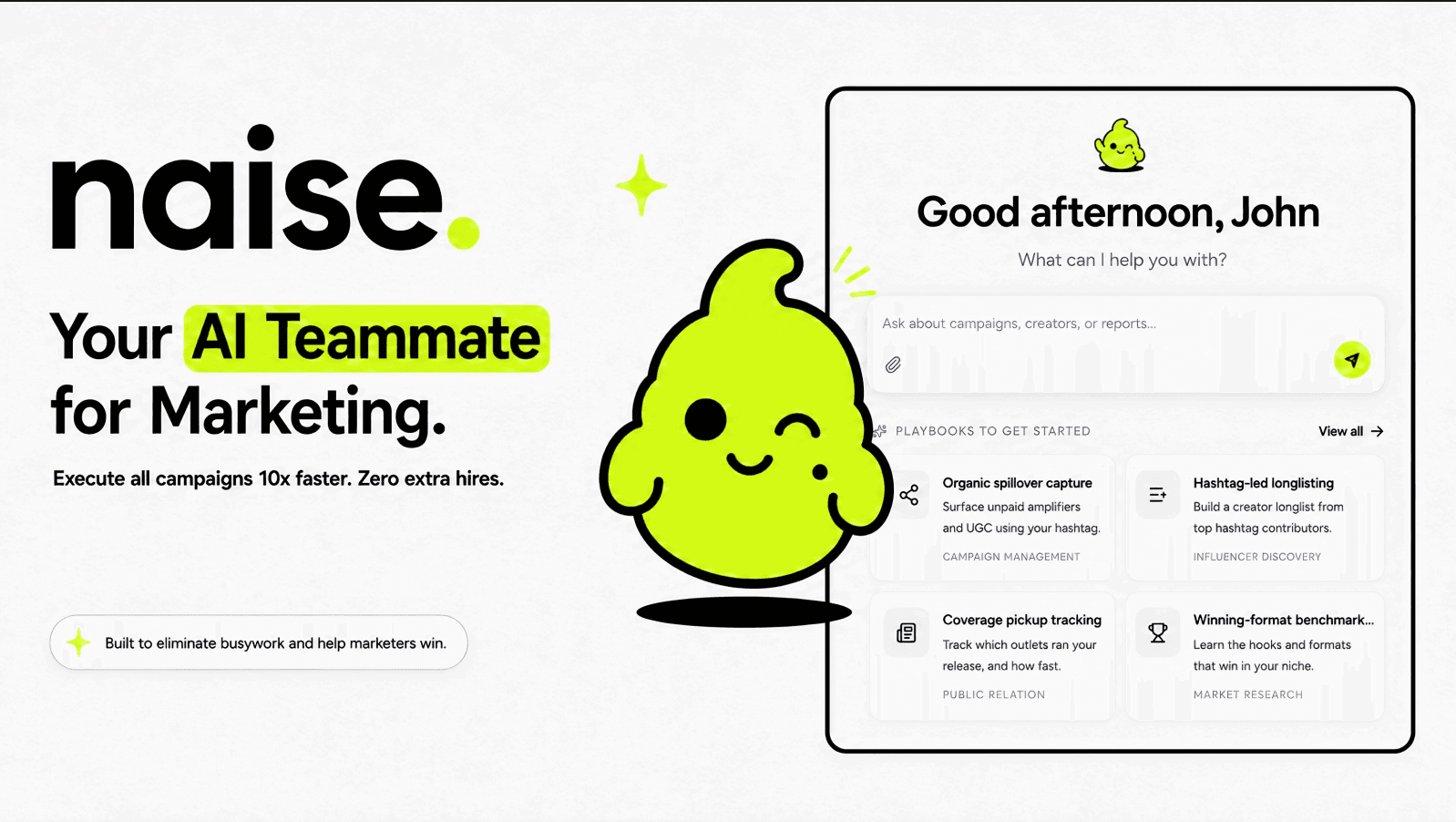
Naise AI eliminates the manual labor of studying viral trends by using the SMM Agent to autonomously scan your niche, benchmark winning formats, and generate proven hooks.
Understanding the psychology of a great hook is crucial. However, manually scrubbing through hundreds of TikToks to identify the current trending structures is a massive drain on your resources. You have to analyze the pacing, transcribe the text, and map the visual changes all by yourself. This manual research process is exactly why lean teams struggle to maintain a high publishing velocity.
You do not need to spend hours doom-scrolling for research. You need an autonomous operator that can benchmark the market for you. This is where a fragmented tech stack fails, and where Naise AI takes over your creative heavy lifting.
Instead of guessing which hooks are currently winning in your specific niche, you let our ecosystem handle the analysis. Here is how you automate your viral research in minutes:
Lock in the Context: Upload your target audience profiles and brand guidelines into your Projects folder. Naise AI instantly understands who you are trying to reach.
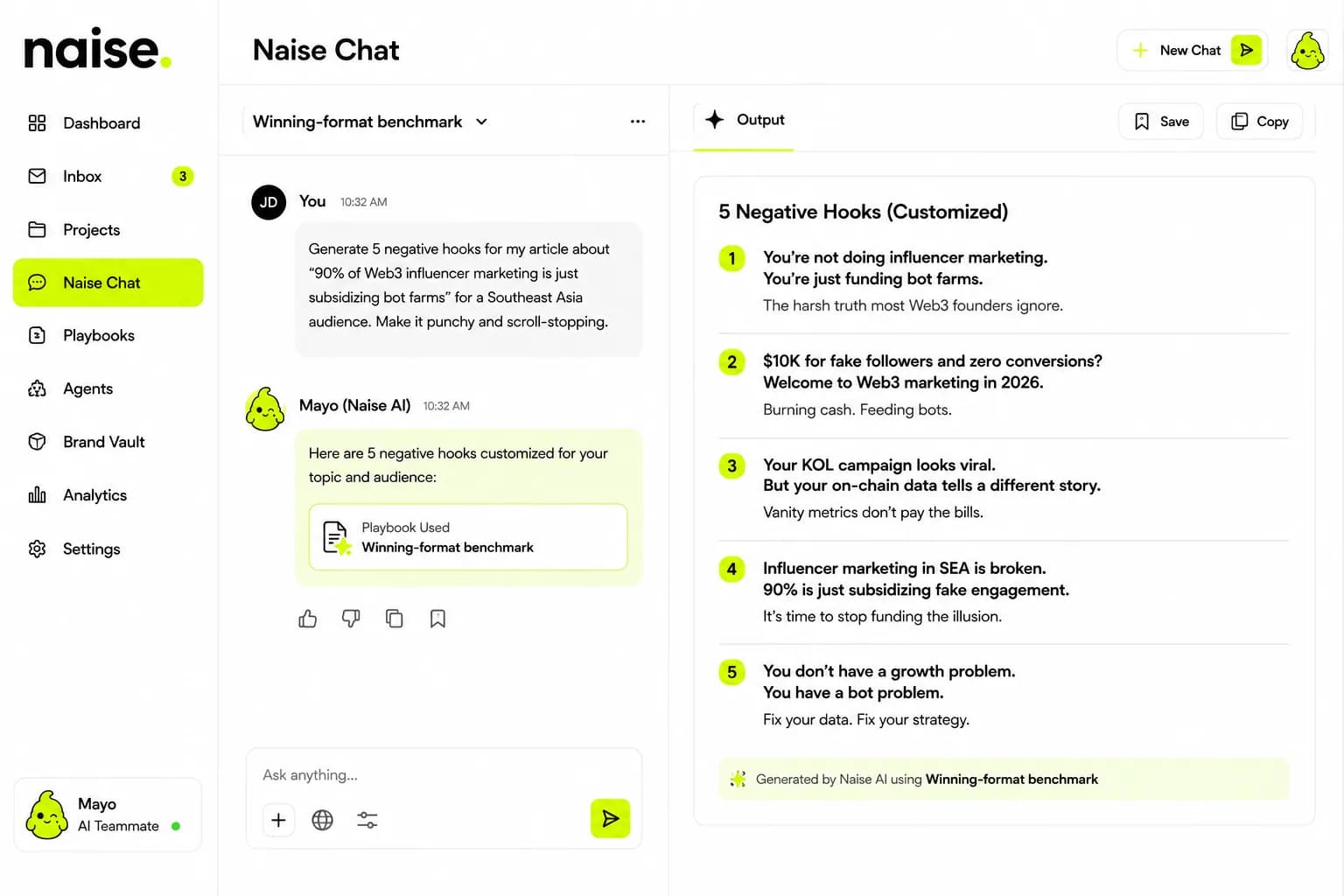
Open the Dashboard: Navigate to the central command and select the pre-configured "Winning-format benchmark" Playbook.
Deploy the Agent: You simply define your niche, and the SMM Agent autonomously scrapes the current top-performing content, extracts the exact viral hook structures they are using, and rewrites them to match your locked-in brand voice.
Clock out on time: You review a fully generated list of data-backed, scroll-stopping hooks ready for your next production day, while the AI does the tedious research.
Mastering the art of the hook is the single highest leverage activity a marketer can do today. By understanding the psychology behind the first three seconds and reverse-engineering proven structures, you can dramatically increase your campaign reach. However, you cannot scale this process if you are manually digging for trends. Stop wasting hours on manual research and generic AI prompts. Let our autonomous agents benchmark the market and draft your high-converting scripts so you can focus on the overarching strategy.
FAQs
What is a viral hook structure?
A viral hook structure is a proven, repeatable framework used in the first three seconds of a video to capture attention. It relies on specific psychological triggers, such as identifying a pain point or creating a curiosity gap, to prevent the user from scrolling past the content.
Why is the first three seconds of a video so important?
Social media algorithms heavily weigh the initial retention rate of a video. If a user swipes away within the first three seconds, the algorithm assumes the content is low quality and stops distributing it, making a strong hook essential for reach.
What is a Negative Hook in marketing?
A Negative Hook is a structure that captures attention by highlighting a mistake or a potential loss. Phrases like "Stop doing this" or "The biggest mistake you are making" trigger a psychological response to avoid danger, compelling the user to watch the video for the solution.
How can marketers research trending hooks faster?
Marketers can speed up research by abandoning manual scrolling and utilizing autonomous AI tools. Platforms like Naise AI use specific Playbooks to automatically benchmark top-performing content in a niche and extract the winning hook structures for immediate use.