The Truth About Marketing Agency Client Collaboration Software
Every agency reaches a breaking point where managing the work takes longer than doing the work. You invest in marketing agency client collaboration software hoping for a silver bullet. You imagine clean dashboards, instant approvals, and clients who happily follow your carefully mapped processes.
The reality looks completely different. Your team is still chasing approvals through deep Gmail threads. Clients ignore the expensive portal you built for them. You are managing a messy web of disconnected apps just to get a single social campaign out the door.
We need to address the massive information gap in how the industry talks about Client Communication Tools. The standard advice ignores human behavior, treats fragmented tools as a cohesive strategy, and completely misses the hard financial metrics that keep agencies profitable.
The Client Adoption Barrier: Why Portals Fail
Clients naturally resist learning new software interfaces and will default back to familiar channels like email or direct messaging platforms, rendering expensive client portals useless.
Software developers assume your clients will eagerly abandon their established routines to use a shiny new portal. This is a massive miscalculation. Your clients are busy running their own businesses. They do not want to memorize another login for a Client Portal.
When you introduce friction during Client Onboarding, you lose engagement immediately. If a client finds your system confusing, they will simply revert to tagging you in Slack or sending vague feedback via Outlook. This forces your team to manually copy data back into your official system.
Based on recent industry data, approximately 55–67% of marketing agency clients still default to email for project feedback and communication, even when agencies provide a dedicated project management portal.
The right approach does not force clients to change their habits. It adapts to them. We need systems that process approvals where the client already lives instead of forcing them through artificial hoops.
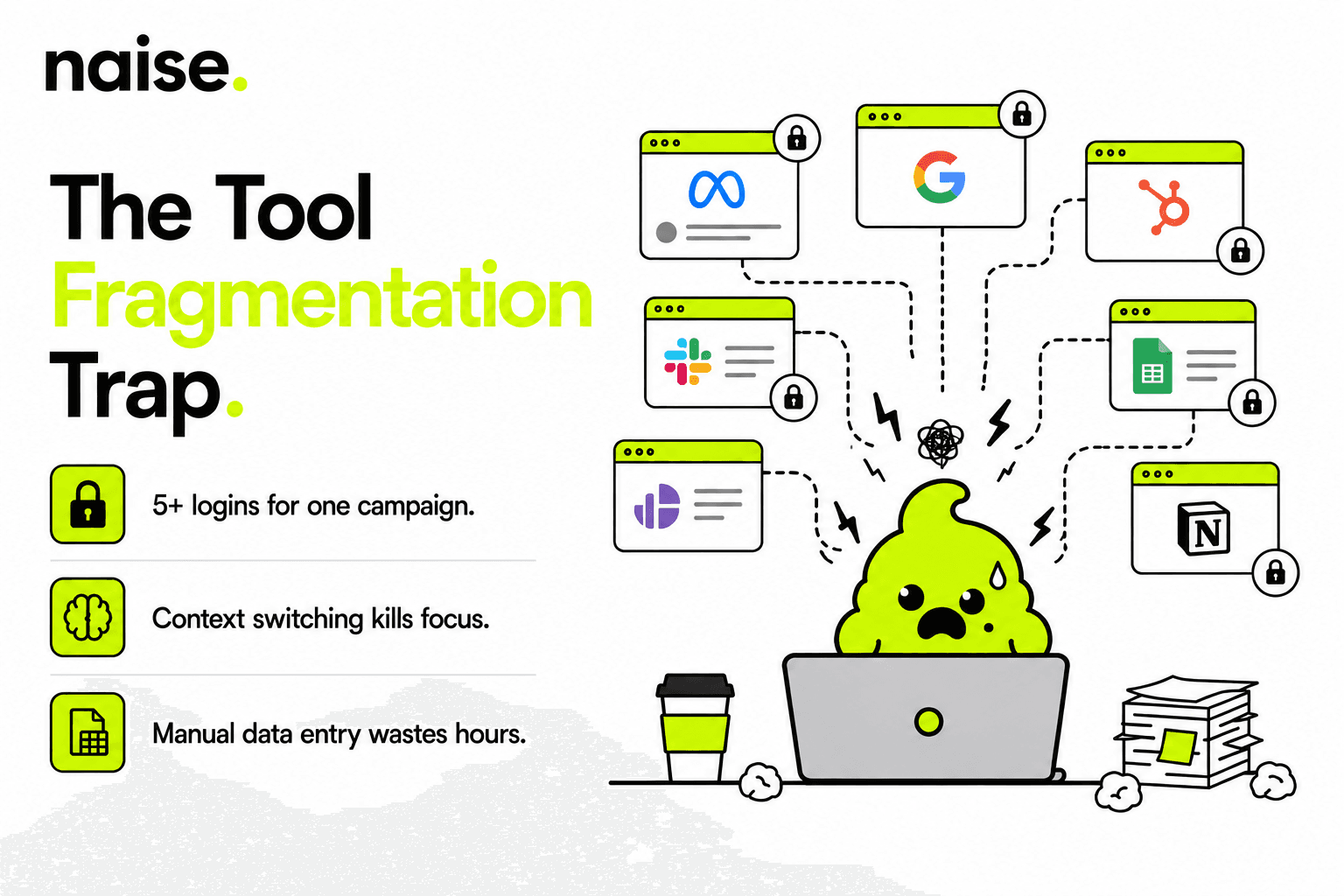
The Tool Fragmentation Illusion
Stitching together multiple specialized apps creates a disjointed software stack that drains productivity and obscures true project visibility.
Agencies love to brag about their Marketing Tech Stack. They use Asana for task management, Harvest for timesheets, Figma for design, and Sprout Social for publishing. They mistakenly call this a streamlined workflow.
This is the tool fragmentation illusion. A fragmented stack is not a single solution. It is a massive operational liability. Your team spends hours switching contexts, copying links between platforms, and praying the integrations do not break.
Every new tool introduces another potential failure point in your Campaign Execution. Jumping between six different tabs just to launch a basic influencer push destroys your team's creative momentum.
The Transparency Risk: Permission Gates Are Mandatory
Giving clients unfiltered real-time access to projects invites micromanagement, triggers scope creep, and damages team morale.
Many software vendors heavily promote 100% transparency as a core feature. They encourage you to give clients live access to your raw Project Management Dashboards. This is a terrible idea for agency profitability.
Unfiltered client access is the fastest way to trigger Scope Creep. When a client watches your team draft concepts in real-time, they will start giving feedback before the work is actually ready for review. This derails your internal process and forces creatives to defend unfinished ideas.
You need strict Permission Gates. Effective collaboration requires presenting polished deliverables at scheduled milestones. Your internal messiness (the brainstorming, the rejected ideas, the messy drafts) must remain hidden behind secure internal walls.
The Lack of Hard Business Metrics
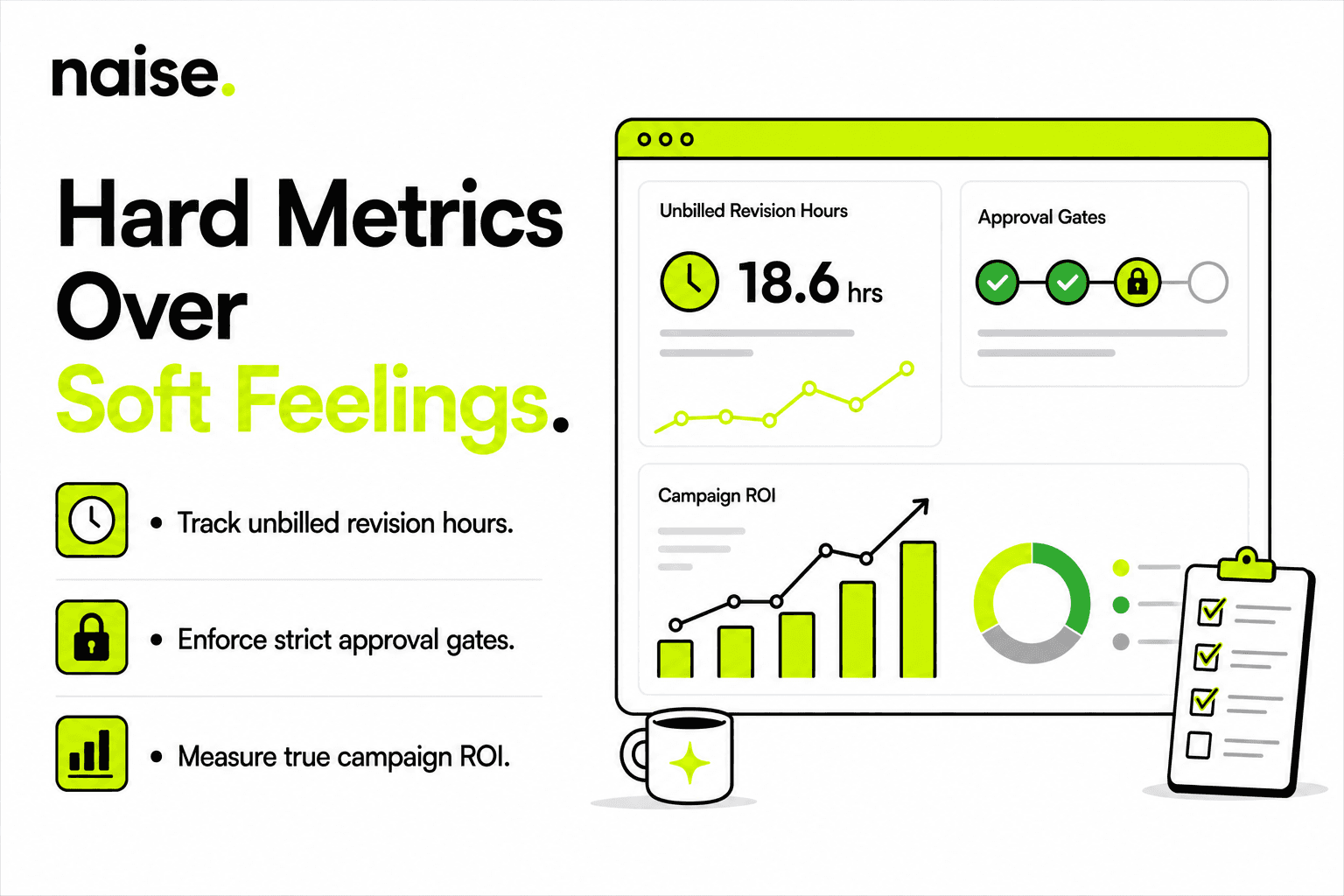
Collaboration tools must move beyond soft metrics like 'trust' and directly impact your bottom line by preventing unbilled revision cycles.
The industry focuses too much on how a tool makes clients "feel" and ignores how it impacts the agency's bank account. Client Trust is nice. Getting paid for your time is better.
Your software must secure ironclad Approval Tracking. If a client requests a fourth revision on a project scoped for two, your system needs to flag that instantly. You cannot afford to give away free work because an account manager lost track of a verbal request.
Protecting your ROI means stopping unbilled cycles before they start. Every extra hour spent deciphering messy feedback is an hour you cannot bill to another client.
Fragmented Stack vs The Autonomous Ecosystem
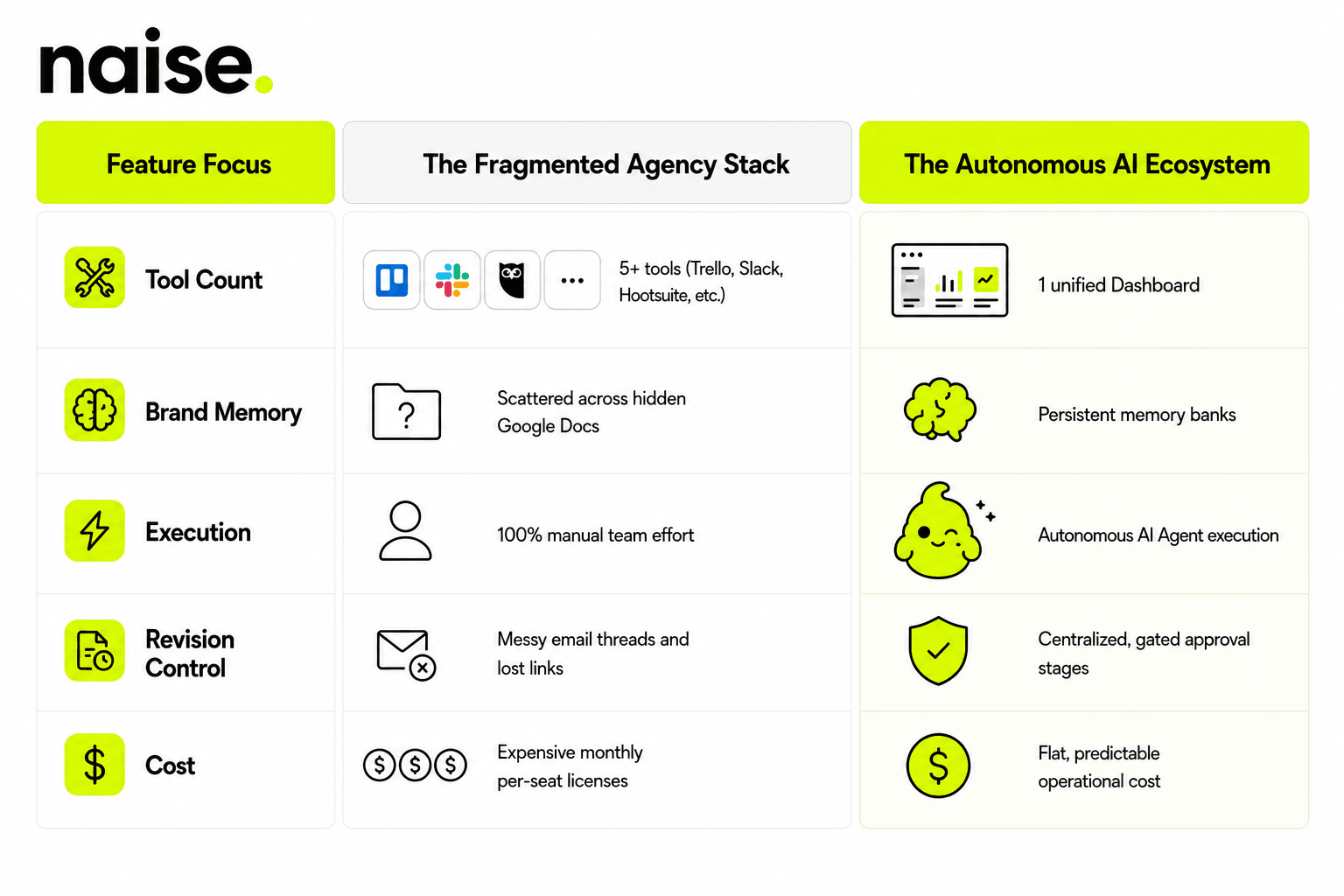
How Naise AI Fixes the Collaboration Crisis
Naise AI replaces bloated tech stacks with an autonomous ecosystem that handles the heavy lifting, ensuring your team only presents presentation-ready work to clients.
You do not need another place to chat with your clients. You need an extension of your team that actually does the work. Naise AI completely rethinks agency operations by moving from manual coordination to autonomous execution.
We built a system that understands the realities of agency life. Instead of forcing you to manage tools, we built an ecosystem that manages the campaigns. Here is exactly how it transforms your daily operations.
Establish the Brain: You start in the Dashboard. You open Projects and upload your client's specific context (brand guidelines, past PDFs, URLs). This creates a persistent memory bank. The AI now knows the client's exact tone of voice permanently.
Eliminate Prompt Fatigue: You drop into Naise Chat (your central command). Instead of staring at a blank screen, you select one of our expert Playbooks. These are pre-configured prompt templates designed by senior marketers to guarantee high-converting outputs.
Deploy the Muscle: You hand the strategy over to the Agents. Need social content? The SMM Agent generates on-brand visuals and captions. Launching a creator push? The Influencer Agent discovers and vets talent autonomously. Chasing earned media? The PR Agent handles trend analysis and pitching.
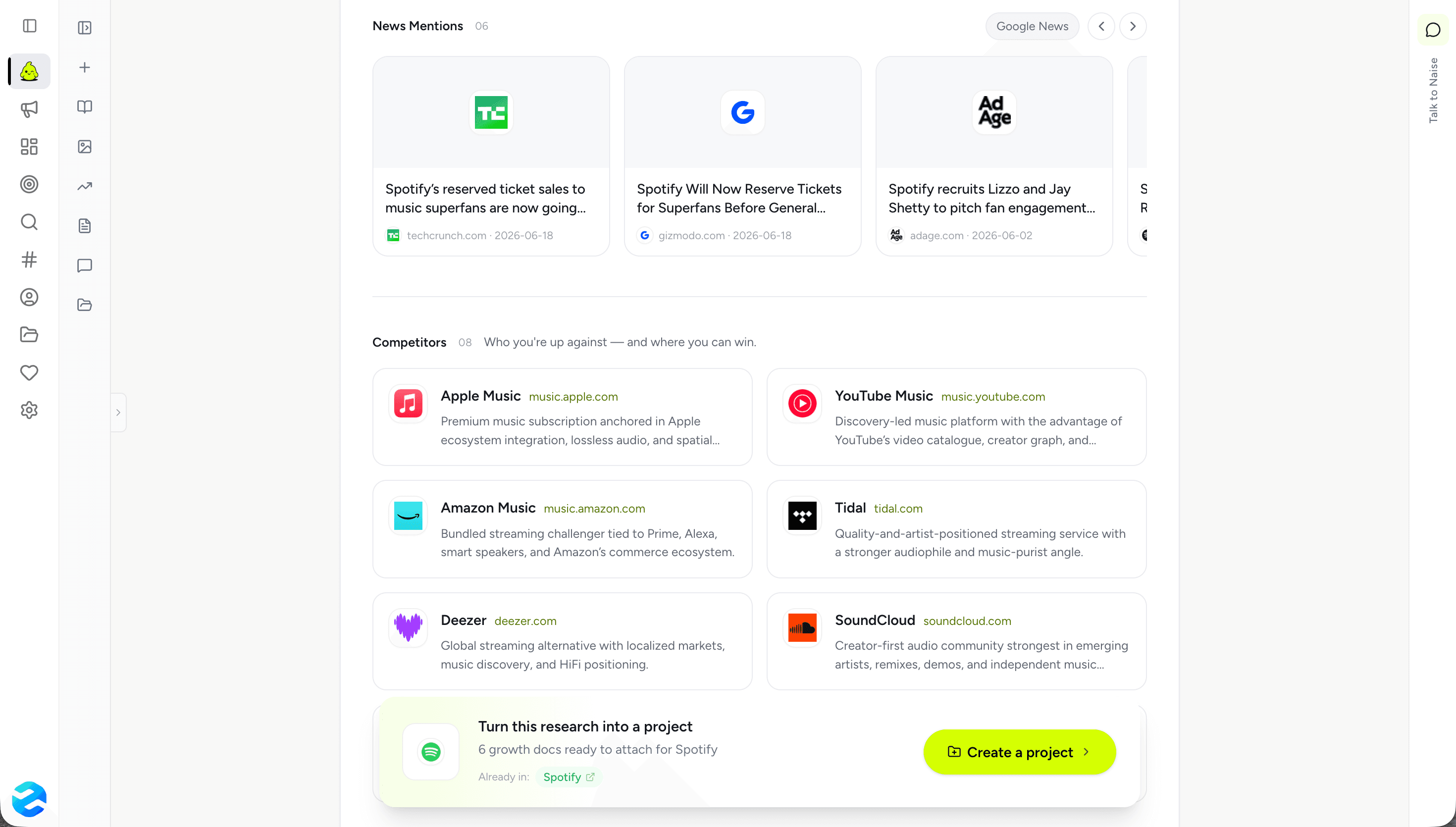
Your team reviews the final, polished output. You present a flawless campaign to the client. You keep your internal process completely secure and gated.
Reclaim Your Margins Today
The old way of running an agency relies on burning out your team with manual admin tasks and chasing clients through fragmented software. Modern agencies are choosing joyful productivity over operational chaos.
Naise AI is the ultimate antidote to the fragmented stack. It is time to eliminate prompt fatigue and manual execution so your team can focus purely on high-level strategy and client growth. Stop paying for bloated software that your clients refuse to use. Claim your Free Trial today or drop your client's link into our Free 60-Second URL Audit to see the autonomous difference instantly.
Frequently Asked Questions (FAQs)
Q: Why do clients resist adopting agency portals?
Clients experience portal fatigue and prefer to centralize their own communications. Every vendor a client works with asks them to join a different portal. This creates immense friction. Clients prefer to manage their days inside their own Inbox or company messaging systems. Forcing them outside of their ecosystem usually results in poor adoption, delayed feedback, and frustration for both parties.
Q: How do permission gates prevent scope creep?
They force structured reviews instead of casual, constant critiques. When clients have 24/7 access to live documents, they often provide feedback on unfinished concepts. This wastes creative time. Permission gates ensure clients only see work when it is officially ready for review. This structured approach allows account managers to firmly track the number of revision rounds against the original contract.
Q: How does AI replace traditional project management tools?
AI shifts the focus from tracking manual tasks to actually doing the work autonomously. Traditional Project Management Software just gives you a place to write down what human workers need to do. A system like Naise AI uses its Agents to actually execute those tasks. Instead of creating a ticket for a team member to draft a social post, the AI drafts, formats, and schedules the post based on the rules stored in its Projects memory.