Most advice on how to manage multiple client accounts sounds great in a vacuum. Gurus tell you to color-code your calendar or block out focus time. They completely ignore the harsh reality of agency life.
You are dealing with overlapping crises, mismatched tech stacks, and clients who think every minor update is a five-alarm fire. Standard time management hacks crumble under the weight of real-world client demands.
We need to address the actual information gaps killing your team's productivity. Let us look at the operational strategies that actually protect your profit margins.
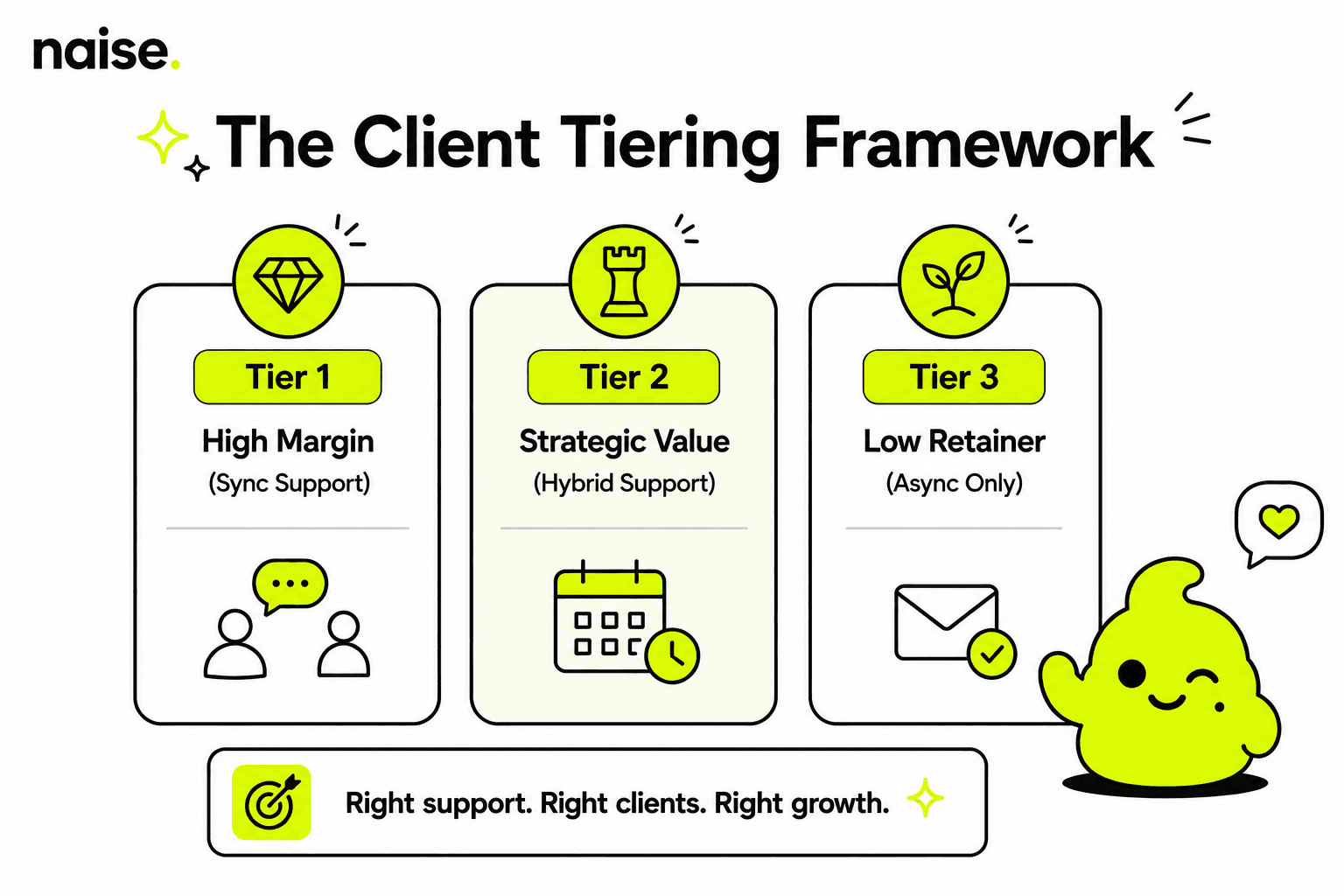
Stop Treating Every Retainer Equally (The Client Tiering Mandate)
You must segment your roster based on profitability, strategic value, and retainer size to allocate your team's hours effectively.
A common mistake is assuming all clients deserve an equal slice of your day. This absence of client tiering drains your most valuable resources on your lowest-margin accounts. You have to rank your clients based on their actual business impact.
High-tier clients with massive retainers get priority synchronous support and rapid response times. Lower-tier accounts must be restricted to asynchronous updates and strict service limits. If you treat a $2,000 project the same as a $20,000 retainer, you actively sabotage your own agency growth.
Tiering dictates exactly where your senior talent spends their time. Junior staff or autonomous systems can handle the execution for lower-tier tasks.
Cure the Fragmented Tech Stack Illness
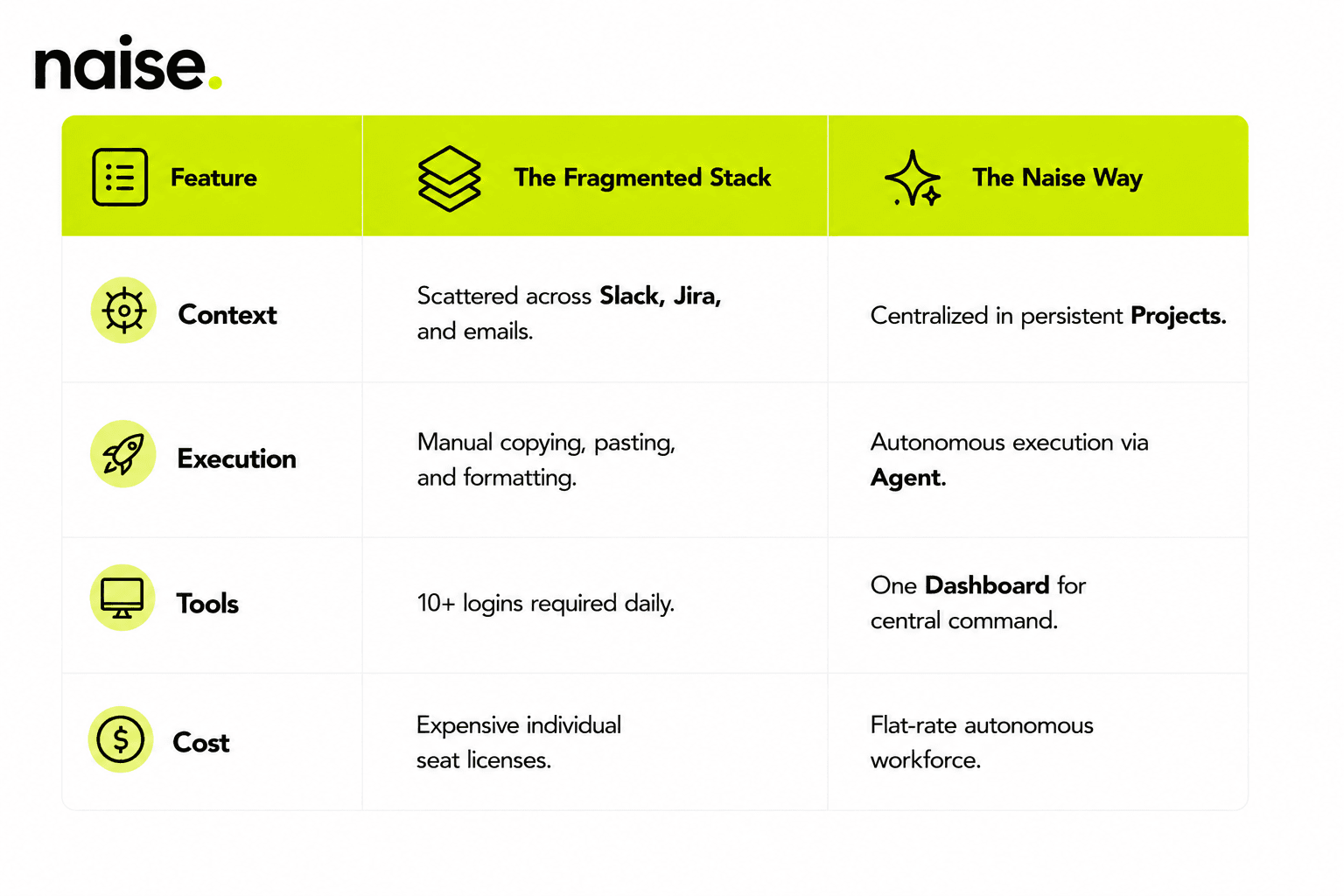
Forcing your team to bridge client-mandated tools like Slack, Asana, and Jira manually destroys productivity and scatters context.
Agencies rarely get to choose their own software. Client A forces you into Microsoft Teams and Jira. Client B demands updates in a shared Slack channel and tracks progress in Monday.com. This extreme tech fragmentation causes major friction.
Your team spends hours just copying data from a HubSpot CRM over to an internal Notion board. A recent BCG-based report says 26% of marketers report “AI brain fry,” a form of mental fatigue from overseeing too many AI tools. You cannot just advise your team to "stay organized" when the infrastructure itself is broken.
You need an integrated ecosystem to centralize the context. Every time you switch tabs to manually update a client's specific Asana board, you bleed billable hours.
Kill Scope Creep Before It Kills Your Schedule
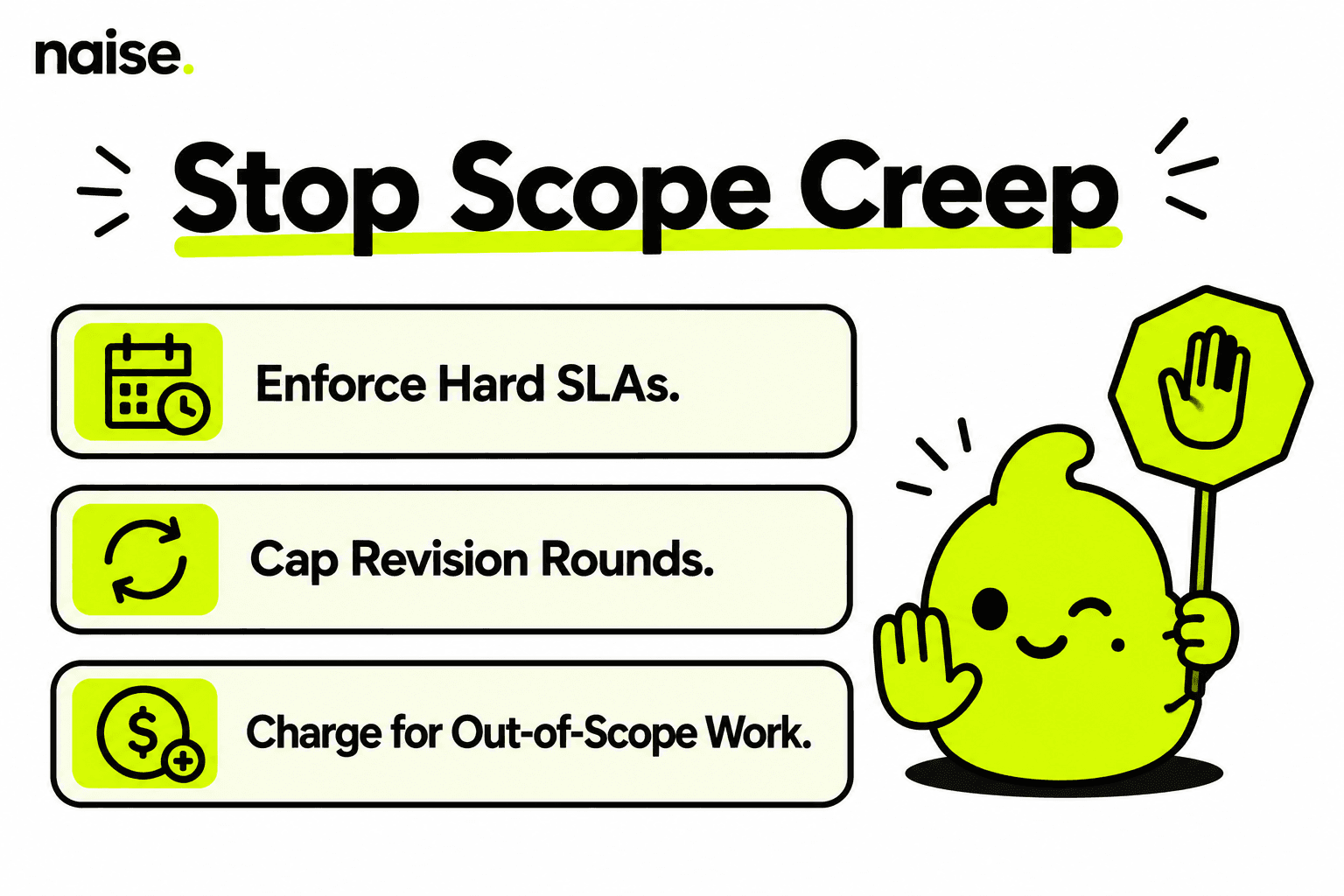
Enforcing strict Service Level Agreements (SLAs) and hard contractual revision limits is the only way to protect your scheduled time blocks.
Blown schedules rarely happen because a team member works too slowly. They happen because agencies fail to enforce scope limits. A client asking for "one more quick change" on an asset completely derails the timeline for your other accounts.
You must build rigid SLAs into every single contract. Specify exactly how many revision rounds are included before hourly billing kicks in.
If you do not document the boundary, the client will cross it. Make the rules clear during onboarding so you never have to apologize for protecting your team's time.
Write a Ruthless Communications Charter
Establish clear boundaries between synchronous emergencies and asynchronous updates to block constant pings from derailing deep work.
Most productivity advice ignores the vital difference between synchronous and asynchronous communication. If a client can reach your team on WhatsApp at 8 PM, your workflow is fundamentally broken. You need a formal communications charter.
This charter dictates exactly how and when clients can reach you. Reserve synchronous channels like Zoom or phone calls strictly for emergencies or high-tier strategy reviews. Push all standard updates, approvals, and reporting into asynchronous channels like email or a dedicated client portal.
When you eliminate constant interruptions, your team can actually focus on the work. Deep work requires long blocks of uninterrupted time.
Triage Framework for Overlapping Crises
Build a conflict-resolution hierarchy to dictate exactly which client gets priority when multiple emergencies hit at the exact same time.
Theoretical time management assumes a perfect week. The reality is that Client A's website goes down the exact same morning Client B faces a PR crisis on X. You need a triage framework ready before the chaos hits.
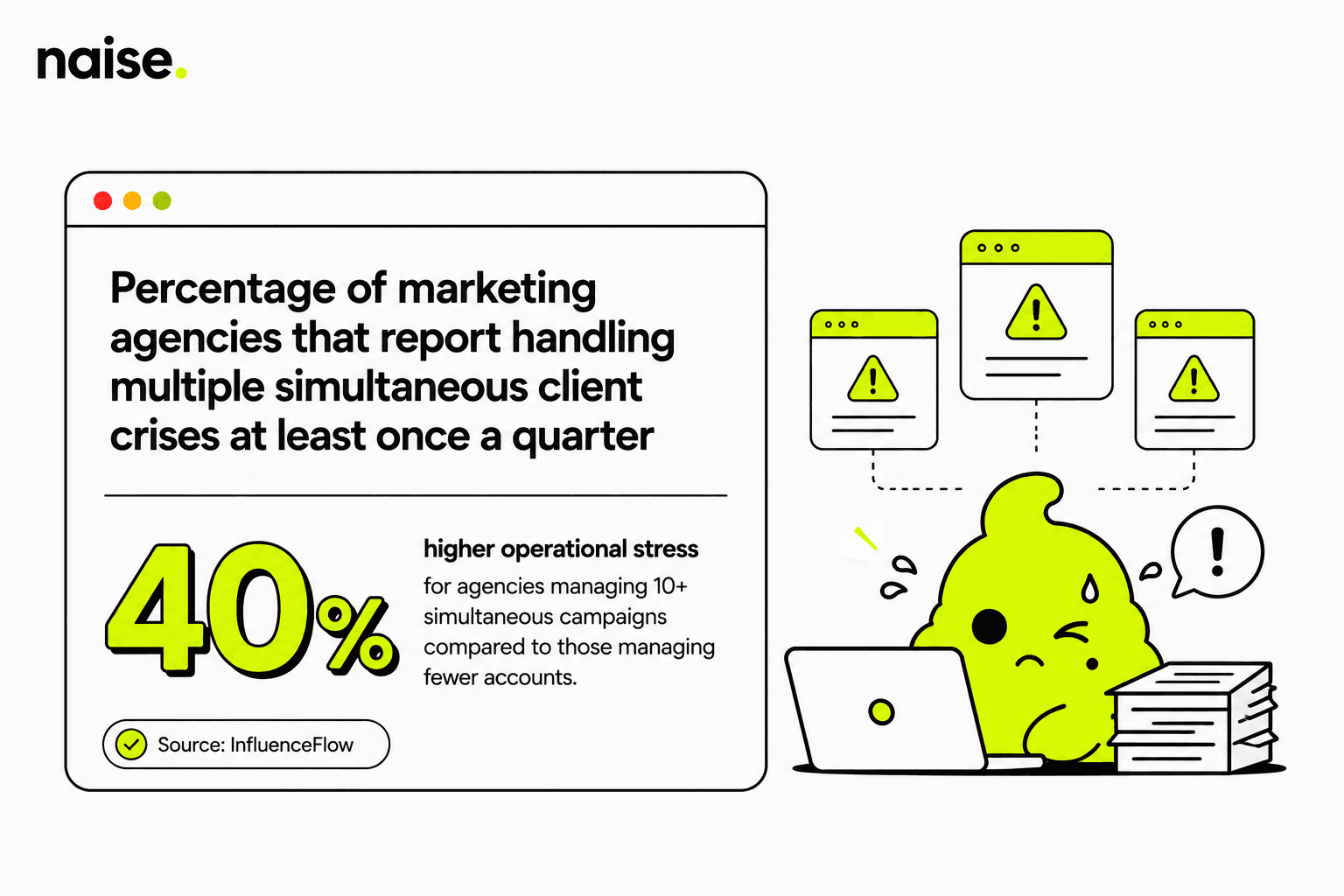
When everything is on fire, your team needs an objective rulebook to decide who gets attention first.
Base this triage on your client tiering system and the actual severity of the issue. A revenue-blocking bug always trumps a delayed social media post. Remove the emotion from the decision-making process.
How to Automate the Chaos with Naise AI
Naise AI replaces manual administrative work with autonomous agents, acting as your central command to execute client strategies instantly.
Managing the fragmented stack manually drains your profit margins. You need an antidote to the endless copying, pasting, and context switching. Naise AI acts as your autonomous marketing operator to handle the heavy lifting.
Here is the exact architectural flow to reclaim your time:
Initialize The Brain: Upload a client's brand guidelines, past performance PDFs, and tone of voice docs into Projects. This creates persistent memory. The AI always remembers the exact brand voice for that specific client.
Command the Room: Open Naise Chat from your main Dashboard. This is your central command interface to direct the AI without jumping between five different tools.
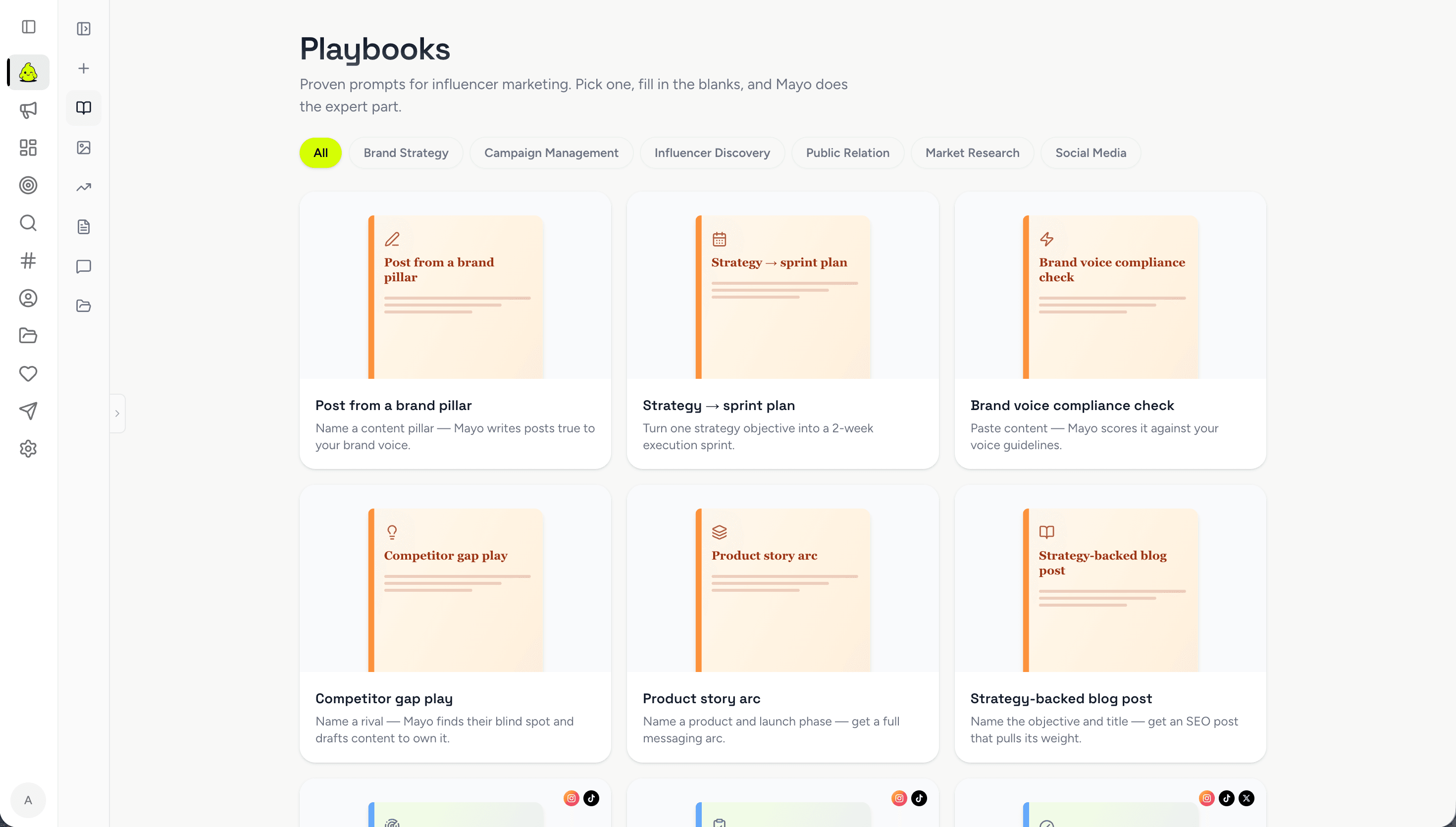
Cure Prompt Fatigue: Stop guessing how to instruct the AI. Select pre-configured expert prompt templates from our Playbooks to guarantee agency-level outputs instantly.
Deploy The Muscle: Hand the execution over to our autonomous Agents. Assign the SMM Agent to draft and schedule posts natively. Deploy the Influencer Agent to vet creators based on ER%. Let the PR Agent draft formatted media pitches while you focus on high-level strategy.
Clock Out On Time
You cannot manage multiple client accounts by just working harder. You have to work differently. Enforce your client tiers, protect your scope, and deploy systems that actually handle the grunt work.
The fragmented tech stack is stealing your time. Stop paying your senior strategists to do data entry across different client platforms. Let Naise AI eliminate the prompt fatigue and manual execution.
Ready to see how fast your agency can move? Audit your client's entire brand presence instantly with our Free 60-Second URL Audit, or jump straight into a Free Trial today.
Frequently Asked Questions (FAQs)
Q: How do you prioritize tasks when you manage multiple client accounts?
You prioritize tasks by implementing a strict client tiering system. Rank your clients based on their retainer size, profitability, and strategic value to your agency. High-tier clients receive priority for urgent, synchronous tasks, while lower-tier accounts are managed through scheduled, asynchronous workflows to protect your team's bandwidth.
Q: Why do standard time management tools fail for marketing agencies?
Standard tools fail because they ignore tech fragmentation. Clients often mandate specific platforms like Slack, Asana, or Jira, forcing agencies to jump between disjointed systems. This constant context switching causes massive friction, which is why an integrated ecosystem like Naise AI is necessary to centralize command.
Q: How can I stop clients from causing scope creep?
You stop scope creep by writing ironclad Service Level Agreements (SLAs) into your initial contracts. Clearly define the maximum number of revision rounds and the exact deliverables included in the retainer. When a client requests extra work, you point back to the SLA and immediately provide a quote for the out-of-scope task.