Mark Zuckerberg is writing checks up to $500,000 to lure YouTube creators over to Instagram without even demanding exclusivity. This sudden rollout of the 90-minute Features format means the algorithm will temporarily pump organic impressions into horizontal video to stimulate user adoption. However, dumping desktop YouTube cuts onto your mobile grid without checking your audience data will destroy your retention score. Run a quick diagnostic on your core Content Pillars first so you do not waste production budget chasing a format your followers never asked for.
The $500,000 Bribe: Why Meta Is Courting YouTube Creators
Instagram is paying select YouTube creators between $50,000 and $500,000 to post widescreen horizontal videos up to 90 minutes directly to its new Features format. The cash initiative represents a direct assault on long-form video ad inventory where short-form mobile clips fail to retain premium advertiser spend.
Mark Zuckerberg has a screen-time problem. Short-form clips keep thumbs twitching, but 7-second attention spans do not command premium advertising rates from Fortune 500 media buyers. That is why Meta is writing six-figure checks to lure elite creators away from YouTube and onto Instagram.
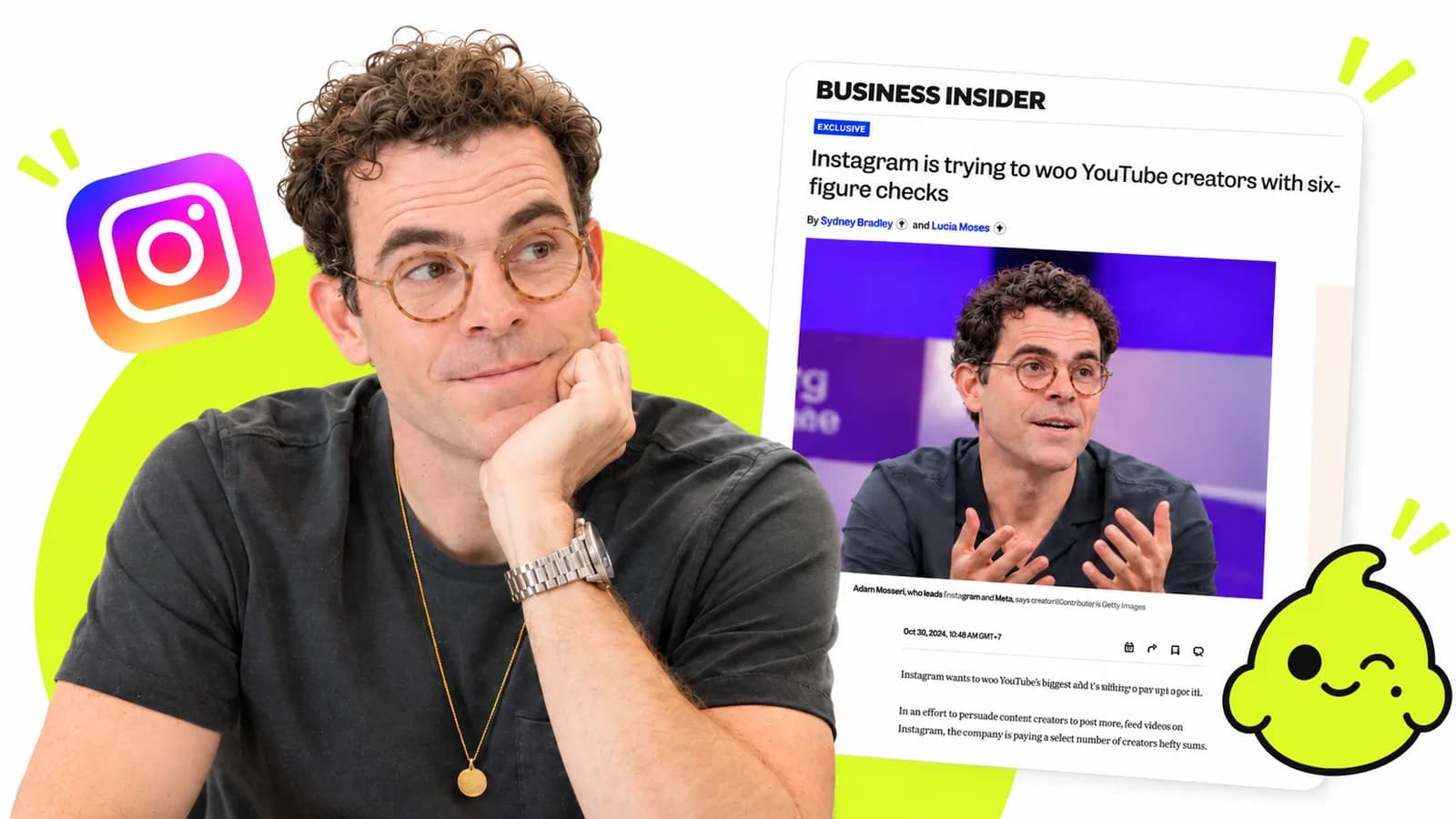
Business Insider revealed that deals for the new Features product range from $50,000 up to a cool $500,000. Instead of asking creators to film bespoke mobile concepts, Instagram wants them to dump their existing horizontal catalog straight into the feed. Videos can run up to 90 minutes, officially resurrecting the widescreen ambitions of the retired IGTV app.
If you manage organic growth for a brand, pay close attention to this cash splash. When a platform burns venture-sized capital to push a resurrected format, the engineers behind the curtain are instructed to pump organic impressions into that format.
The Non-Exclusive Loophole: What the Deals Reveal About Meta's Urgency
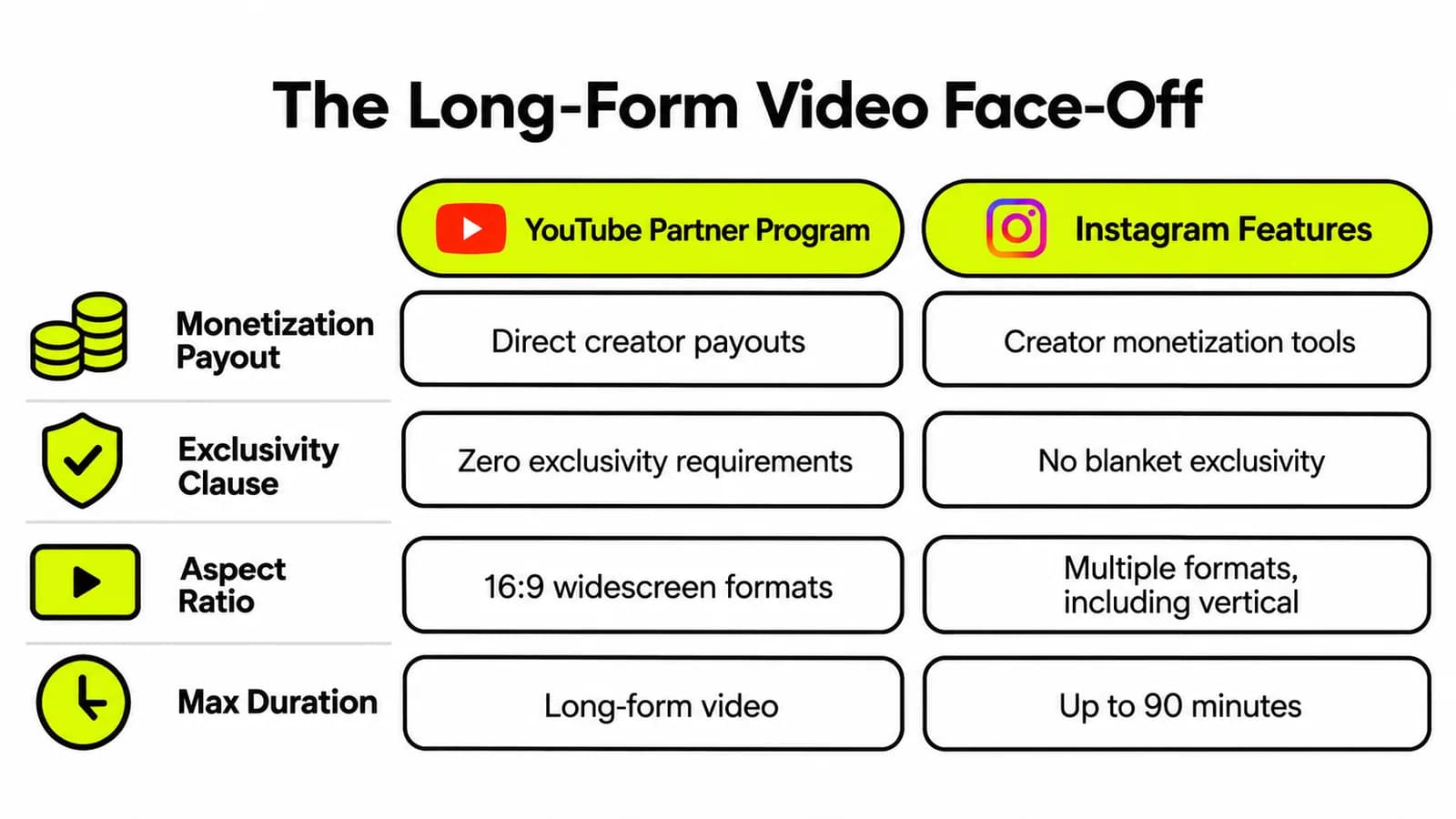
Meta does not require exclusivity for its six-figure video deals, allowing creators to upload the exact same video to YouTube and Instagram on the same morning. This non-exclusive arrangement proves that the platform's immediate priority is solving an acute shortage of horizontal content rather than securing proprietary IP.
Platform exclusivity used to be mandatory when tech giants fought for creator talent. When Microsoft tried to challenge Twitch with Mixer, they bought exclusive streamer contracts for tens of millions of dollars. Meta is taking the exact opposite route here, offering $500,000 checks while demanding zero platform exclusivity.
Creators simply have to post their horizontal YouTube cut to Instagram on the same day it goes live. This concession reveals that Meta is suffering from a massive deficit of native horizontal content. Advertisers want mid-roll placements, yet almost nobody opens Instagram to watch a 45-minute documentary unless the platform forces it onto the feed. In 2025 and 2026, full-screen vertical Reels ads have averaged $6.80 to $12.50 per thousand impressions, while mid-roll inventory in 10-plus-minute horizontal video has typically cleared around $5 to $8 per thousand impressions, giving advertisers a materially cheaper way to buy sustained attention in long-form.
The gap also explains Meta’s incentive to import YouTube-style catalog rather than build it organically. A single long-form video can serve multiple mid-roll slots, so even at a lower per-impression CPM it can generate more monetizable inventory per viewer than a 15-second Reel.
Because Meta still lacks a predictable monetization engine like the YouTube Partner Program, they are bridging the gap with raw capital. Adam Mosseri publicly admitted on X that long-form economics are tricky and remain under active development. Until a permanent rev-share model launches, these upfront checks are the only way to kickstart supply.
Algorithmic Favoritism: How Brand Marketers Can Ride the New Wave
Whenever Instagram introduces and funds a new media format, its recommendation engine temporarily grants that format algorithmic priority to stimulate user consumption. Marketers who test horizontal video early can capture elevated organic reach without paying for creator sponsorships.
Every seasoned social media marketer remembers when Reels first launched. In 2020, you could post a mediocre 10-second clip and wake up to 500,000 views because the feed was desperate for vertical content. Reza Izad, co-CEO at Underscore Talent, pointed out that early adopters get disproportionate algorithmic preference whenever a major platform rolls out a fresh format.
Right now, the ratio between horizontal content supply and user demand is wide open. Your competitors are still burning 20 hours a week editing snappy vertical clips with dancing captions. If you test horizontal breakdowns, customer case studies, or high-value founder chats, you are competing against a fraction of the content volume.
This algorithmic window will not stay open forever. Once Meta signs enough creators and automates its mid-roll ad delivery, the organic faucet will tighten up just like it did with photos, Stories, and Reels. If you want to ride the wave, you have to move while the feed is still hungry.
Why Blindly Repurposing Horizontal Videos Will Tank Your Engagement
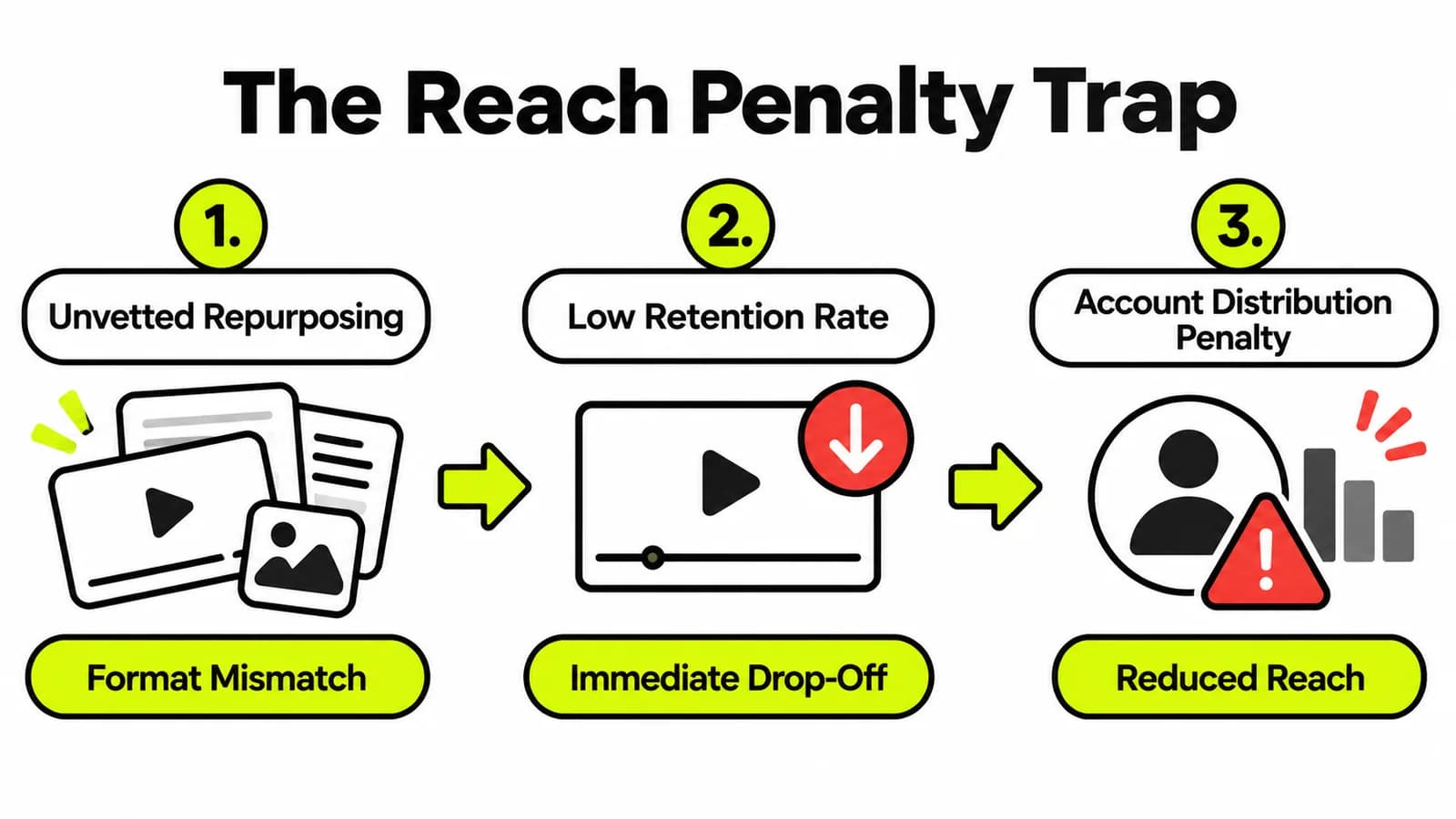
Publishing long-form video without verifying format compatibility can destroy your average view duration and signal to the algorithm that your profile lacks value. Mobile users interact through fast physical gestures, and their tolerance for slow introductions is virtually zero.
Before you grab your company's latest 40-minute webinar and dump it onto your grid, take a breath. Desktop YouTube viewers sit back with a coffee, full-screen monitors, and patience for a two-minute intro monologue. Mobile Instagram users operate on twitch reflexes, ready to swipe away if you do not deliver value within three seconds.
When thousands of mobile users skip past your widescreen video after four seconds, your Retention Rate falls off a cliff. The Instagram Algorithm reads this rapid drop-off as a negative quality signal. Instead of getting rewarded with viral reach, your account gets slapped with an engagement penalty that drags down your carousels and static posts as well. When a new video’s retention falls below the account’s typical retention line, platforms can reduce its distribution within the first 24–48 hours, making early watch-through one of the strongest predictors of organic reach.
Chasing platform headlines without reviewing your historical audience data is a fast track to burnout. If your followers follow you for clean design graphics, forcing 30-minute videos down their throat will spike unfollow rates. Every format test must align with your established Content Pillars.
The Strategic Fix: Diagnosing Your Account Before Chasing the Trend
Before investing production resources into horizontal long-form video, you must run a structural audit to determine your current engagement benchmarks and format gaps. Establishing baseline performance metrics prevents your team from chasing short-lived social trends that drain your creative budget.
Most marketing teams suffer from reactive decision fatigue. The marketing director reads a tech blog about $500,000 creator payouts and immediately calls an emergency brainstorm to script 20-minute widescreen shows. Two months later, the team has spent thousands on freelance editors only to generate 180 views and zero pipeline.
Real strategy starts with diagnostic data, not hype cycles. Before you touch a widescreen camera, you need objective answers across five foundational areas:
Content: Which specific topics on your feed generate actual discussions rather than empty double-taps?
Creative: Does your Format Fit show that your followers prefer visual carousels, quick vertical tips, or extended educational breakdowns?
Profile: Does your profile bio pass the five clarity checks, giving visitors a compelling reason to stick around for long videos?
Engagement: What is your actual Reel Engagement Rate when measured against accounts in your specific niche?
Publishing: Has your team maintained an unbroken 12-week Post Consistency cadence, or are you already struggling to publish twice a week?
Instead of spending three days compiling manual spreadsheets to calculate these metrics, you can automate the entire diagnostic in one click. The Social Audit from Naise AI scans your last 30 posts, calculates your mathematical ratios, and hands you concrete letter grades from A to F across all five pillars.
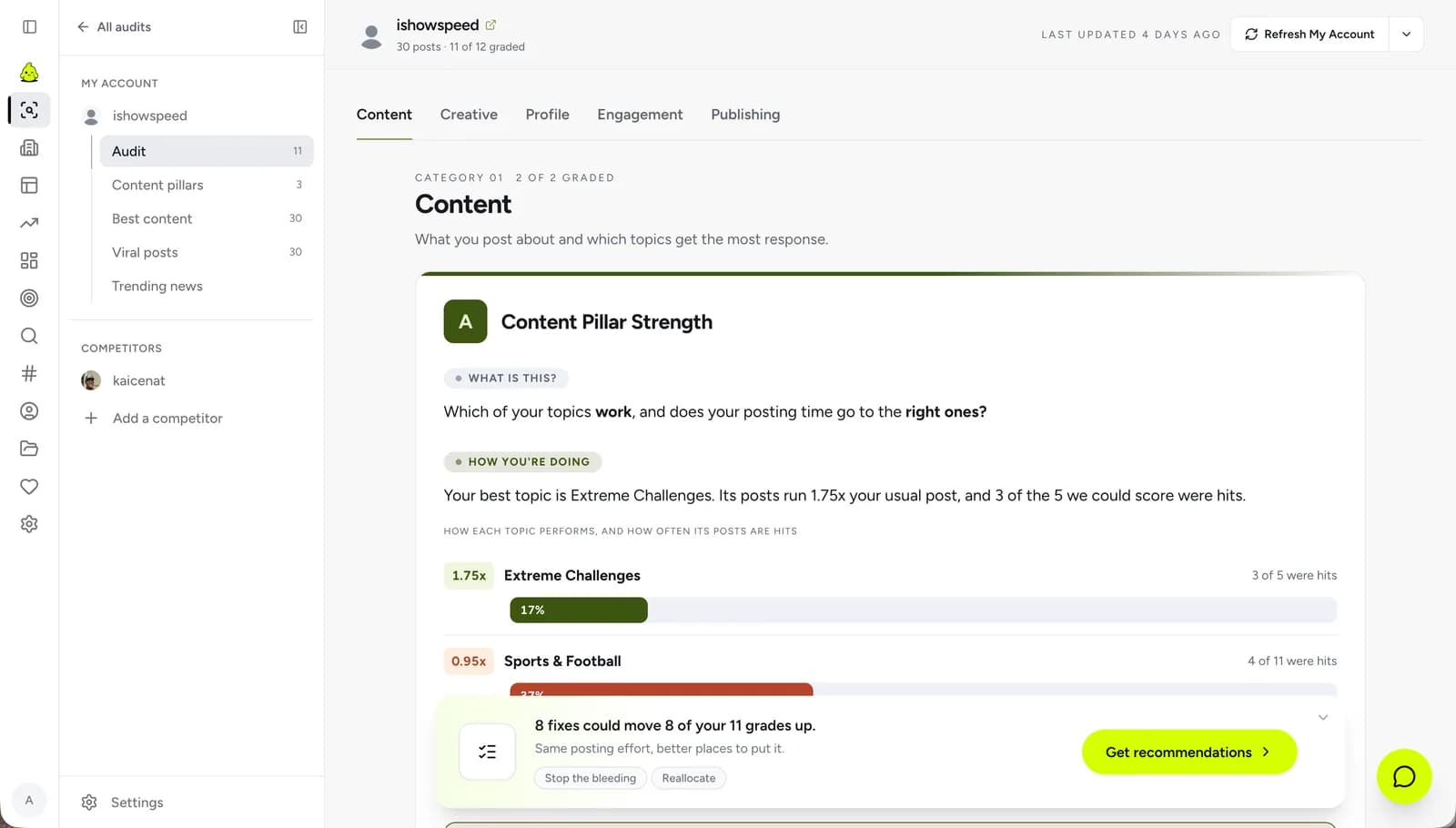
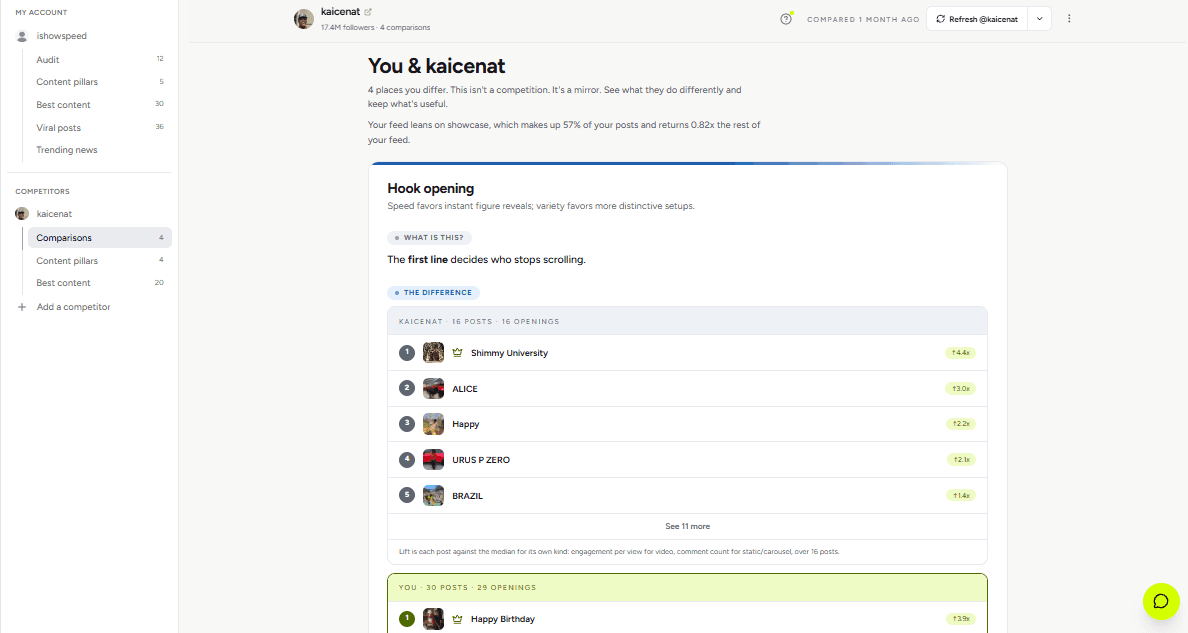
The audit even runs head-to-head competitor benchmarking against rival accounts. It compares your Hook Opening retention, your Format Rhythm, and your Posting Cadence so you know exactly where your competitors are out-executing you. You can see your Content Pillars mapped by share of feed versus median interactions, exposing whether your high-effort formats actually pay off.
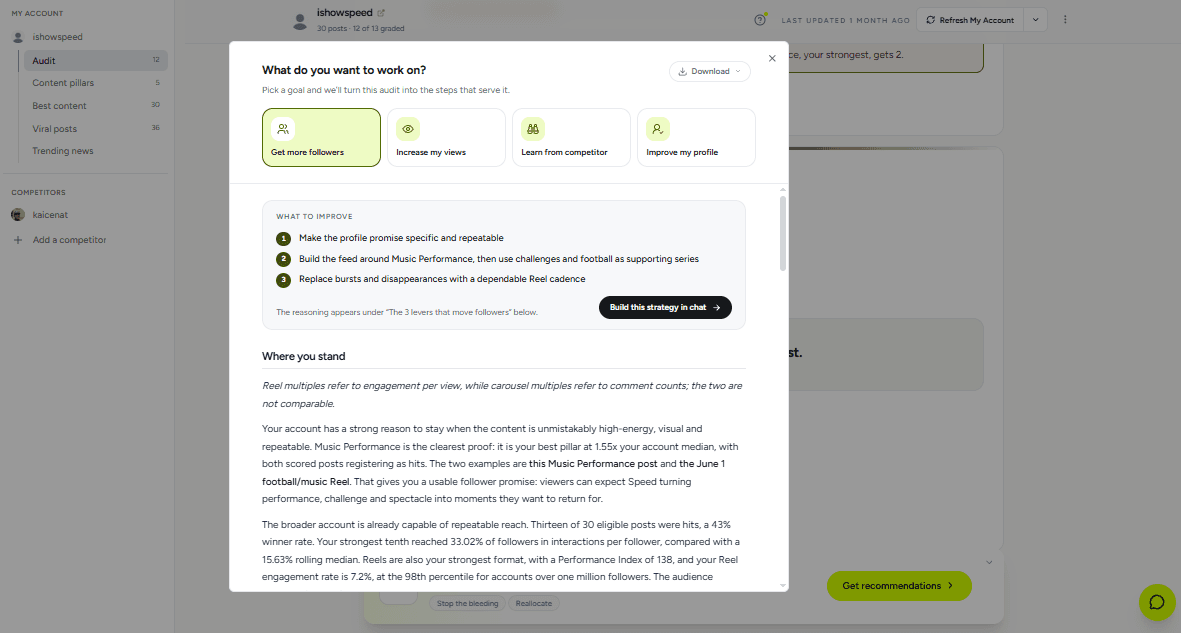
The best part is that you do not get stuck with a static PDF report that gathers dust in your downloads folder. Inside Naise AI, you simply click "Build this strategy in chat". The diagnostic context instantly transfers to the Social Media Agent, which starts drafting captions, generating visual prompts, and assembling an episodic content calendar that balances short-form hooks with long-form authority.
No prompt fatigue, no expensive agency retainers, and no guessing games. You clock out on time while your AI teammate handles the heavy lifting.
Conclusion & Next Steps
Meta is investing millions to challenge YouTube on widescreen video territory, creating an algorithmic opening for brands that move with calculated precision. However, chasing platform trends without clear data is the fastest way to dilute your brand voice and burn out your creative team.
Diagnose your current feed, verify your audience's format preferences, and build a sustainable publishing rhythm that actually converts attention into pipeline.
Audit Your Instagram Strategy for Free
FAQs
What is the new Instagram Features video update?
Instagram Features is a dedicated widescreen video format that allows creators to upload horizontal videos up to 90 minutes in length directly to the Instagram app. It represents Meta's latest push to compete with YouTube for long-form video viewership and higher-value advertising revenue.
Why is Meta paying creators up to $500,000 for long-form video?
Meta is offering upfront non-exclusive payouts to quickly populate the platform with high-quality horizontal video inventory. Because a permanent creator ad-revenue sharing model is still being developed, these direct financial incentives lure established YouTube creators to cross-post their content.
Do Instagram Features deals require content exclusivity?
No, the current deals offered by Meta are strictly non-exclusive. Creators are permitted to publish the identical video to both YouTube and Instagram on the exact same day without contractual penalty.
Should my brand start posting horizontal long-form videos on Instagram?
You should only post horizontal long-form videos if an account audit reveals strong format retention and clear demand for in-depth educational content. Use a diagnostic tool like the Naise AI Social Audit to evaluate your engagement rate and format fit before altering your publishing workflow.