
Microsoft just suffered a catastrophic global outage in 2026, instantly paralyzing millions of corporate workflows. Key lifelines like Outlook, Teams, and Copilot went completely dark due to massive internal network failures. This is not a minor glitch; it is a massive digital blackout across 74 countries that exposes exactly how vulnerable our cloud reliance actually is.
The Day the Cloud Crashed: What is Happening to Microsoft?
In a massive 2026 infrastructure failure, Microsoft services experienced a total global blackout, triggering over 138,000 panic reports and halting business operations worldwide.
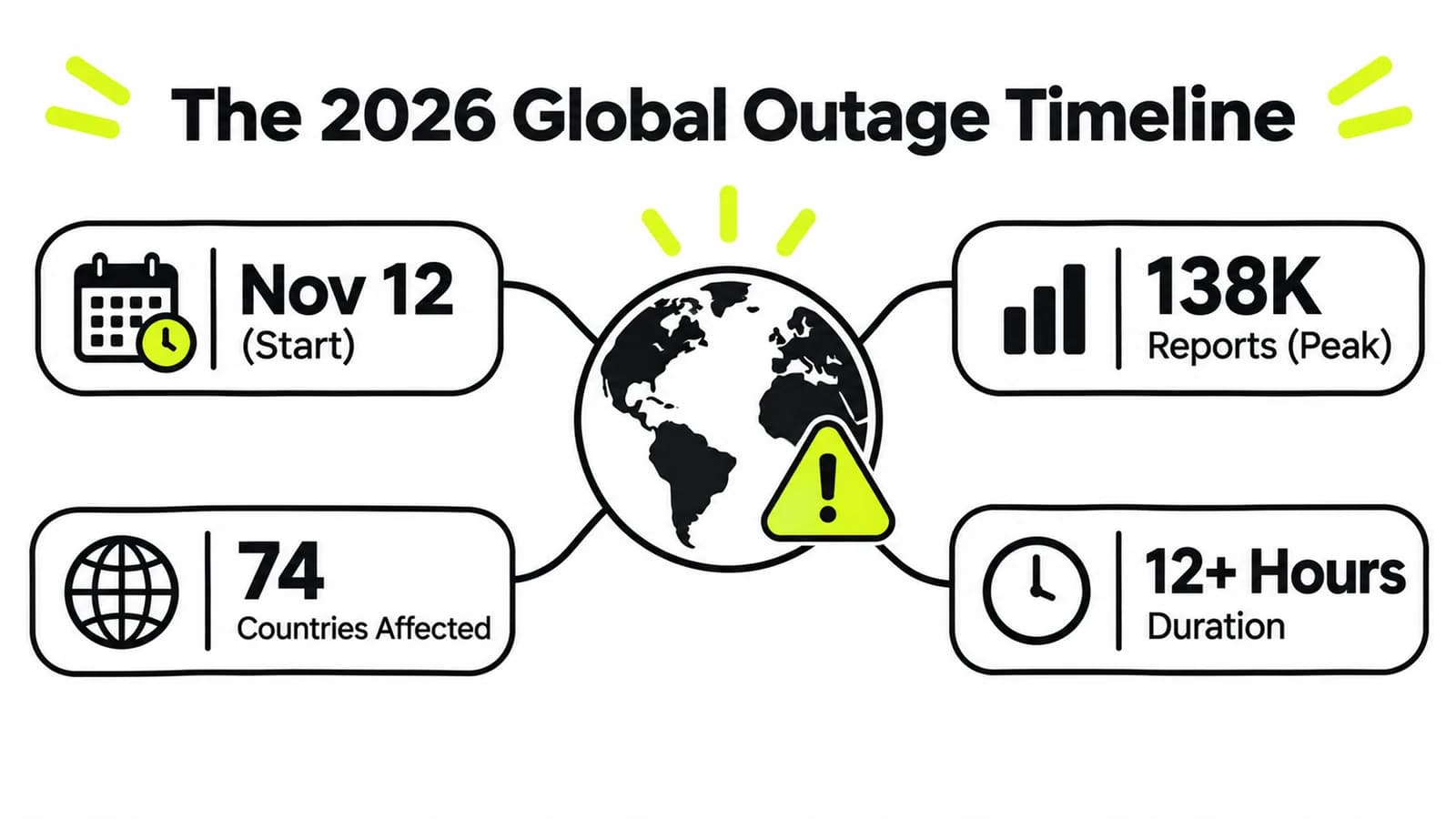
Panic. That is the only word to describe the morning of November 12, 2026. You opened your laptop, tried to load your morning emails, and hit a digital brick wall. This was not a localized Wi-Fi hiccup or a forgotten password. The entire Microsoft ecosystem suffered a catastrophic failure, instantly bringing global corporate operations to a dead stop.
The sheer scale of this blackout is terrifying. Within hours, Downdetector exploded with a peak of 138,058 outage reports pouring in from panicked professionals. This disruption did not stay contained to a single server farm or a bad local server rack. It violently ripped through 74 different countries and territories.
For over 12 agonizing hours, the modern workplace simply ceased to exist. Urgent client emails bounced, virtual boardrooms vanished, and millions of workers were left staring at endless loading screens. When a tech monolith like this crumbles, the global economy immediately feels the shockwave. Anderson Economic Group estimated that the November 2026 Microsoft outage could cost US$7 billion in lost productivity—a staggering price for the sudden disappearance of everyday digital tools.
Which Essential Services Went Dark?
The 2026 outage completely disabled core tools like Microsoft 365, Teams, Outlook, Azure, and Copilot, while triggering secondary crashes on external platforms like AWS and Zoom.
When the servers finally blinked, it was not just a single app that failed to launch. The core suite of Microsoft 365 services went down hard and fast. Outlook stopped sending critical client approvals. Microsoft Teams channels went completely silent in the middle of active pitches. Even OneDrive and the Microsoft Store became entirely inaccessible to the millions desperately trying to log in.
Perhaps the most frustrating loss for modern marketers was the sudden disruption of AI tools. Microsoft Copilot was completely offline, leaving agencies who rely on automated assistance totally stranded. When your AI teammate suddenly clocks out without warning, you quickly realize how much heavy lifting the algorithm actually does for your daily workflow.
Interestingly, the chaos did not stay confined to the Microsoft ecosystem. The internet is a deeply interconnected web, and this 2026 crash proved it. Reports immediately surfaced that other massive cloud platforms, including AWS, Cloudflare, and GoDaddy, experienced severe secondary friction. Even rival communication platforms like Zoom and Google Workspace felt the aftershocks of the massive traffic reroutes.
The Root Cause: A Broken Cable or a Cyber-Attack?
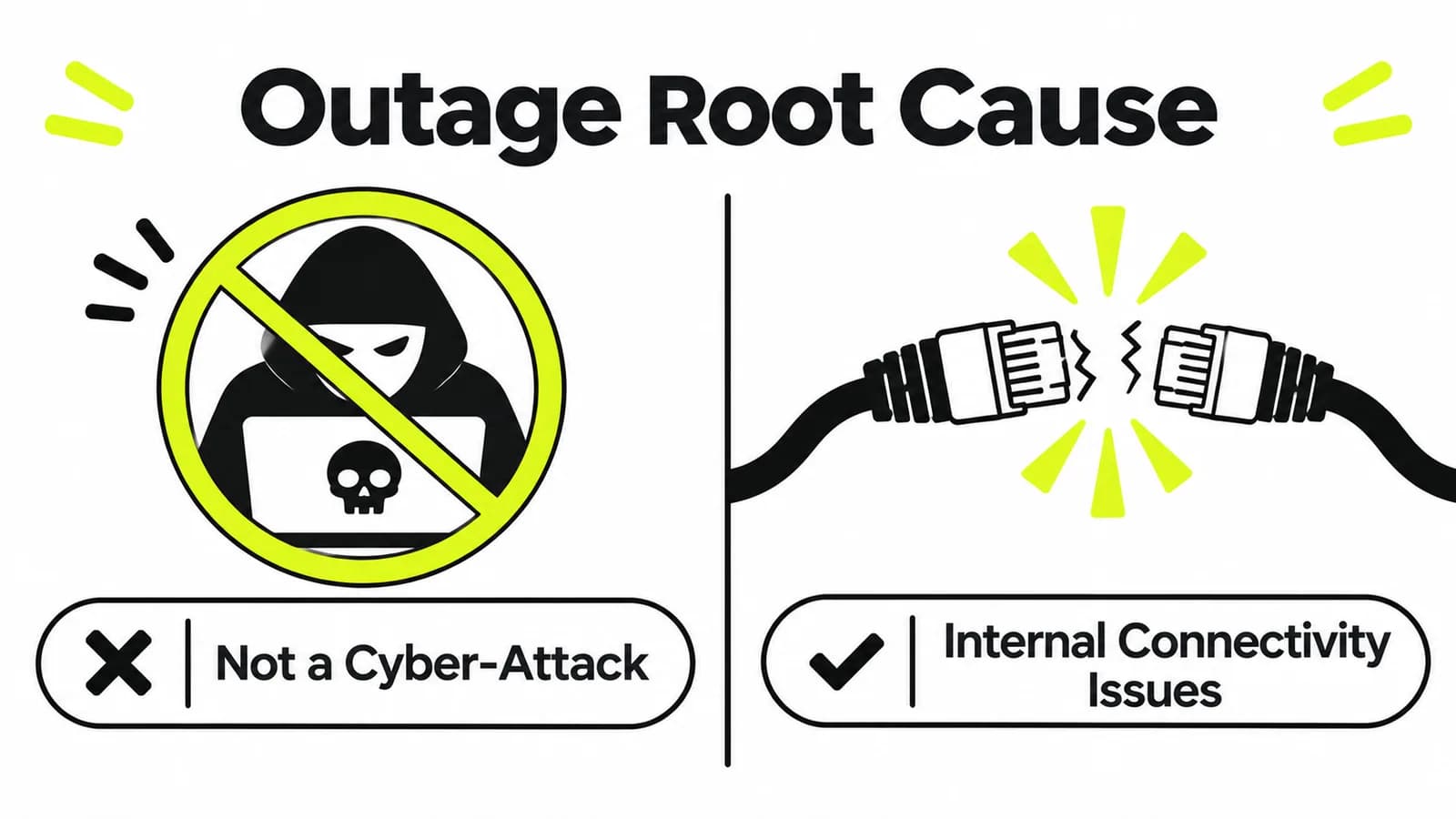
Microsoft officially confirmed the 2026 global disruption stemmed from severe internal network connectivity problems, completely ruling out a malicious cyber-attack.
Whenever a screen goes dark on a global scale, the collective internet immediately jumps to worst-case scenarios. Is this a massive cyber-attack? Has sensitive client data been compromised by a foreign entity? The immediate panic is entirely understandable given the high stakes of modern digital security.
Fortunately, Microsoft was quick to extinguish the rumors, indicating that the outage was highly unlikely to be the result of a malicious actor. Official statements pointed directly toward internal "connectivity problems" affecting their core systems. It was a massive structural plumbing issue, not a sophisticated digital heist.
However, fixing that internal plumbing proved to be incredibly messy. The company publicly admitted that their initial attempts to restore service were "not going as expected." The massive disruption, which began on a Thursday, awkwardly dragged right into Friday operations, forcing companies to scramble for immediate offline workarounds.
The Global Ripple Effect: 74 Countries Paralyzed
The downtime spread across 74 countries, heavily impacting regional tech hubs like Singapore, where morning workflows were entirely derailed by dead email servers.
To understand the absolute scale of this crash, you have to zoom into specific regional hubs. Take Singapore, a major financial and tech center. Reports of the 2026 outage began hitting local servers around 2:00 AM on November 13. By the time normal business hours kicked in, the panic was widespread across the central business district.
In Singapore alone, localized reports peaked at around 1,130 specifically for Outlook at 9:15 AM. While the numbers slightly eased up by the early afternoon, the damage to the morning workflow was already done. Several major organizations were severely disrupted, mainly losing their ability to process urgent email communications.
The reaction across social media, however, was a wild mix of frustration and profound relief. On platforms like Instagram and X, professionals quickly embraced the chaos. Comments like “Don’t rush, take your time” and “Enjoy your weekend” flooded the timelines of tech news accounts. When your primary digital tools break down right before the weekend, sometimes the universe is just telling you to step away from the keyboard. After all, knowledge workers lose an average of 33 hours of productive time per year to IT outages, breakdowns, and hardware or software failures, so a brief unplanned break may be more welcome than it first appears.
How to Bulletproof Your Agency Before the Next Crash
Protect your business operations by decentralizing your software stack, keeping offline backups of active campaign assets, and establishing emergency non-cloud communication channels.
This catastrophic 2026 disruption serves as a brutal wake-up call for agencies everywhere. Putting all of your operational eggs into one digital basket is a massive risk. If your email, file storage, chat, and AI tools are all housed under one roof, a single connectivity issue can entirely paralyze your business.
The first step to bulletproofing your workflow is establishing clear communication redundancies. If Microsoft Teams or Slack goes down, your team needs an immediate, pre-agreed secondary channel. Whether that is a secure WhatsApp group or a secondary Google Chat, having a backup protocol prevents total internal silence.
Secondly, critical active campaign assets should never live exclusively in the cloud. If you are launching a major social media push on a Friday, those final video files and copy documents must have localized, offline backups. You cannot afford to miss a sponsored posting deadline just because OneDrive refuses to sync.
Ultimately, we must accept that massive downtime is an inevitable part of the modern digital landscape. No server is truly invincible. The most successful teams are not the ones who never experience outages, but rather the ones who can seamlessly pivot their workflows when the cloud inevitably crashes.
Conclusion
The great Microsoft outage of 2026 was a massive stress test for the global digital workforce. It brutally reminded us that behind every seamless app and instant message lies a complex, highly fragile infrastructure. Staying informed is the absolute best way to stay prepared for the next digital blackout.
Want to stay ahead of the curve on the latest tech crashes, viral marketing news, and massive industry shifts?
Subscribe to our Newsletter for Viral Tech Updates
FAQs
What caused the Microsoft global outage in 2026?
Microsoft officially attributed the massive 2026 widespread outage to internal network connectivity problems. They explicitly stated that the disruption was a structural failure and not the result of a cyber-attack or external security breach.
Which Microsoft services were most affected by the 2026 crash?
The primary services that went dark included Microsoft 365, Outlook, Teams, Azure, OneDrive, the Microsoft Store, and the AI assistant Copilot. The outage heavily impacted both internal corporate communication and critical file-sharing capabilities.
Did the 2026 Microsoft outage affect other platforms like Google and AWS?
Yes. Due to the deeply interconnected nature of global web infrastructure, the massive Microsoft disruption caused secondary friction, traffic jams, and connection issues for external platforms like AWS, Cloudflare, Zoom, and Google Workspace.
How long did the 2026 Microsoft services stay down?
According to Downdetector and global network reports, the core disruption lasted for more than 12 agonizing hours. Microsoft noted that their initial internal attempts to restore services took much longer than originally expected.