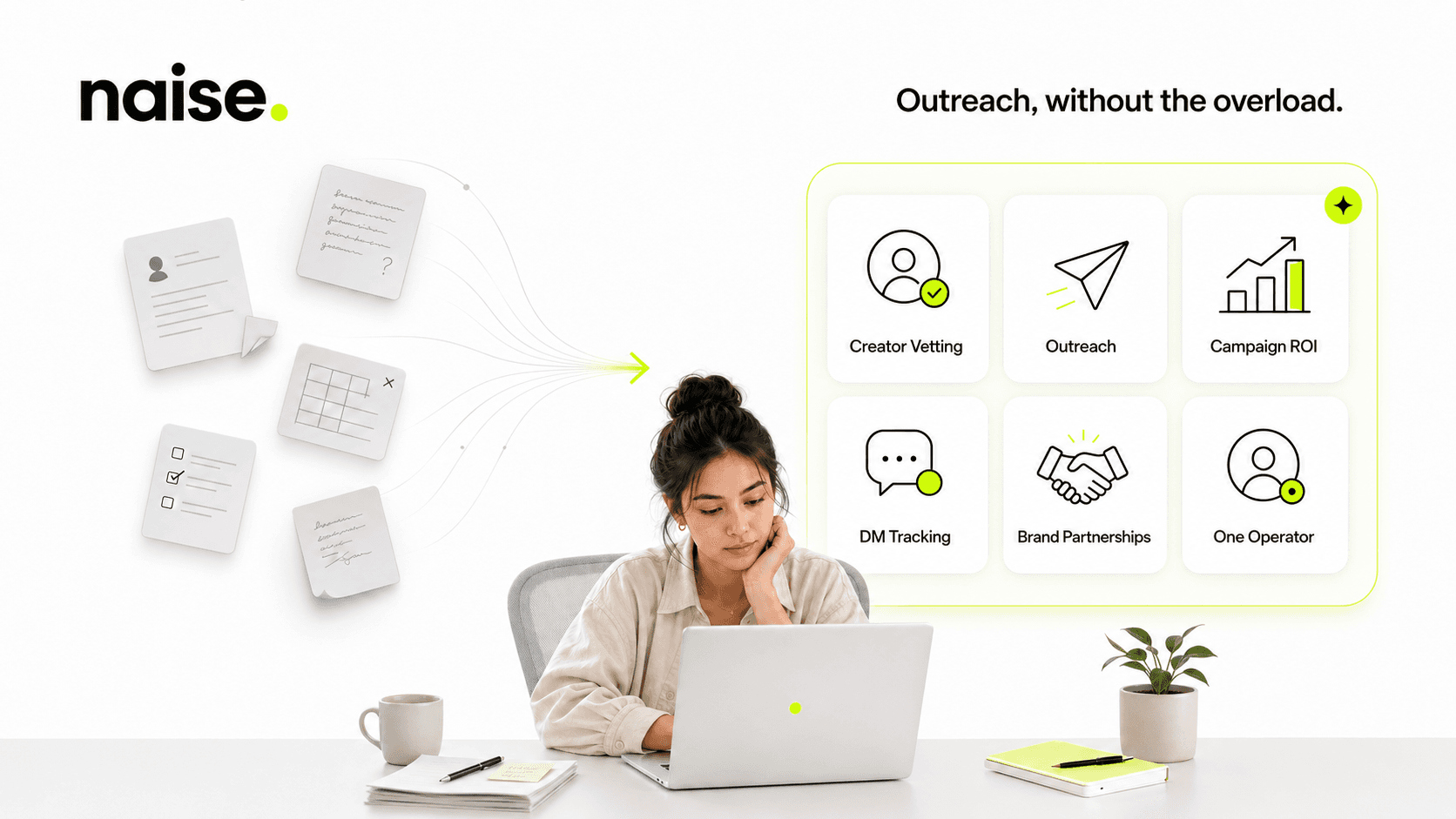
The Outdated Advice: Why Spreadsheets Kill Profit Margins
Multi-client KOL campaign tracking is often misunderstood by generic online guides that simply suggest building a slightly better Microsoft Excel or Google Sheets tracker. They might even recommend piecing together a combination of Zapier and Airtable. This mindset completely overlooks the reality and pace of modern agency life, as relying on basic spreadsheets to manage hundreds of creator deliverables creates administrative bloat that slowly chips away at your profit margins.
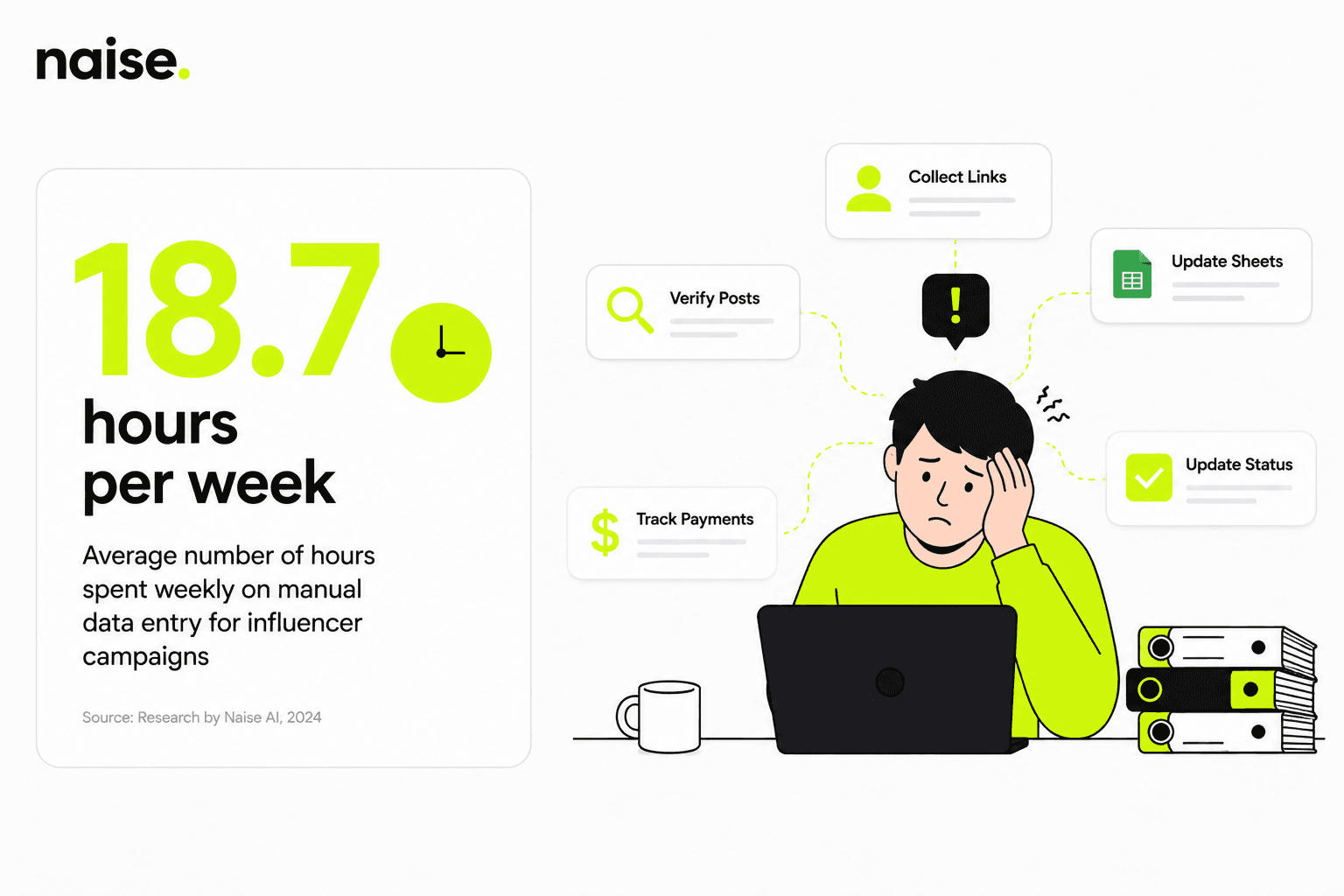
When you manage five to ten different clients, manual tracking becomes a full-time job. Your account managers spend hours chasing creators for links, verifying live posts, and updating cell colors from red to green. This manual execution directly eats into your bottom line.
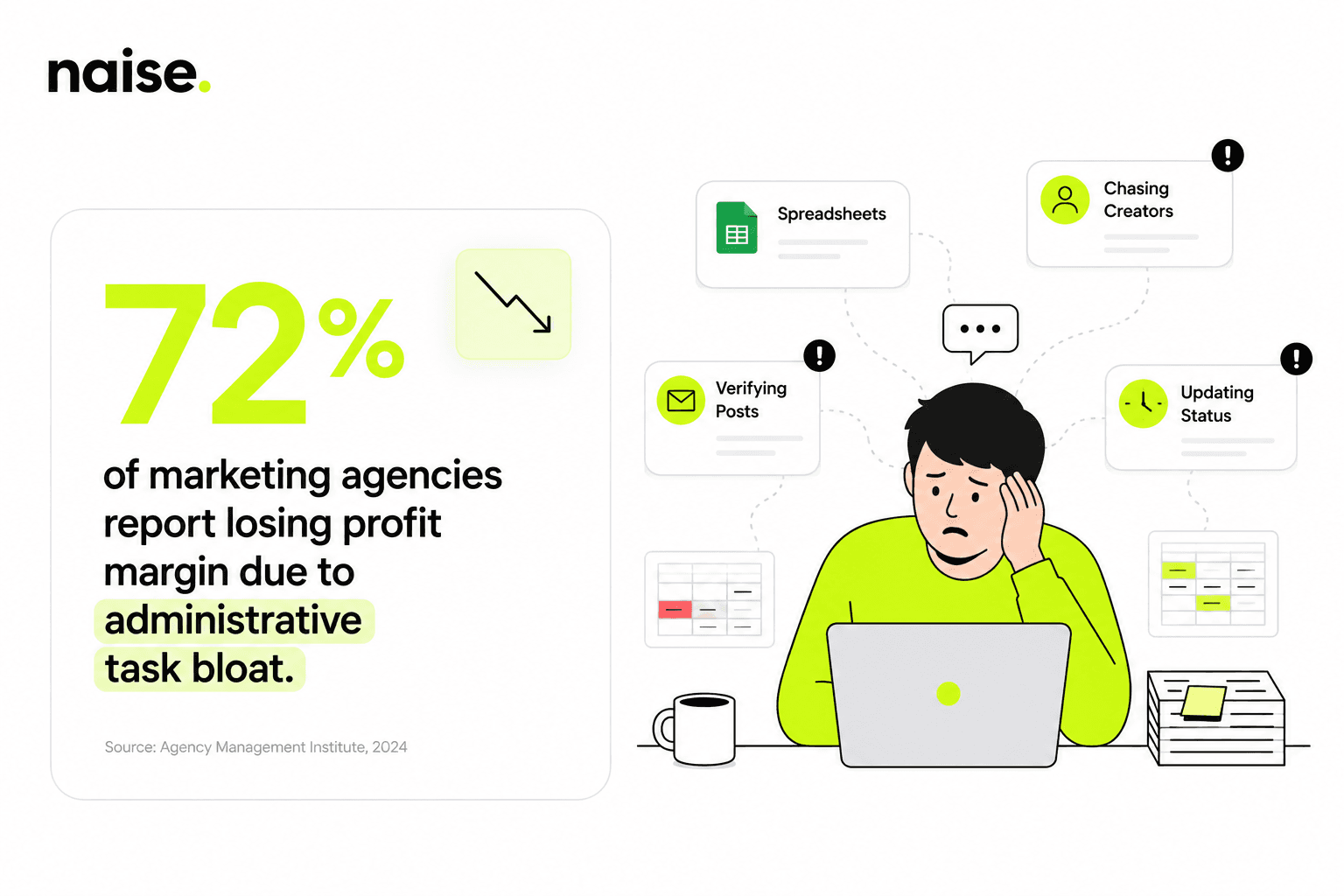
To protect your margins, you must abandon manual tracking entirely. You need a system that updates automatically when a creator hits their deliverables. You need tools that give you back your time.
Separating Financial Invoicing from Marketing Execution
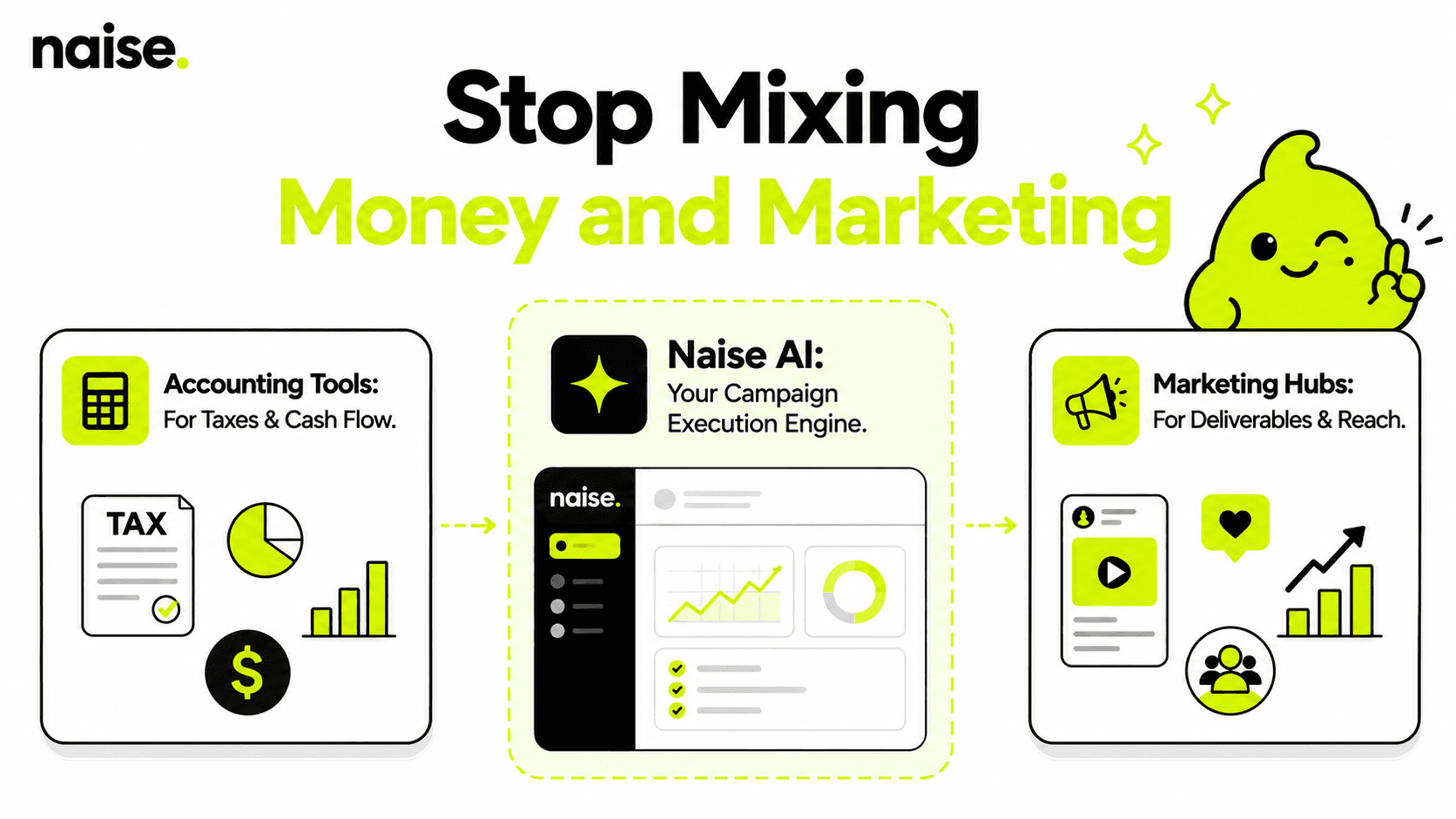
Dedicated accounting software should handle your taxes and actual cash flow, while a specialized marketing operator must handle campaign deliverables and live performance tracking.
Many teams make the critical mistake of trying to force marketing metrics into financial tools. QuickBooks, Xero, and FreshBooks are incredible for official bookkeeping and tax compliance. They are absolutely terrible at tracking whether a TikTok creator actually posted the agreed-upon video.
Actual financial invoicing belongs in dedicated accounting software. However, the administrative chaos of marketing execution must live in a totally separate environment. You cannot evaluate a creator's Engagement Rate or Total Reach inside a general ledger.
When you try to combine these two distinctly different functions into one fragmented stack, things break. Invoices get paid before the content is approved. Creators get ghosted because an email got lost in a crowded inbox. You end up relying on a broken system to handle high-stakes client budgets.
Trading the Bloated Tech Stack for Joyful Productivity
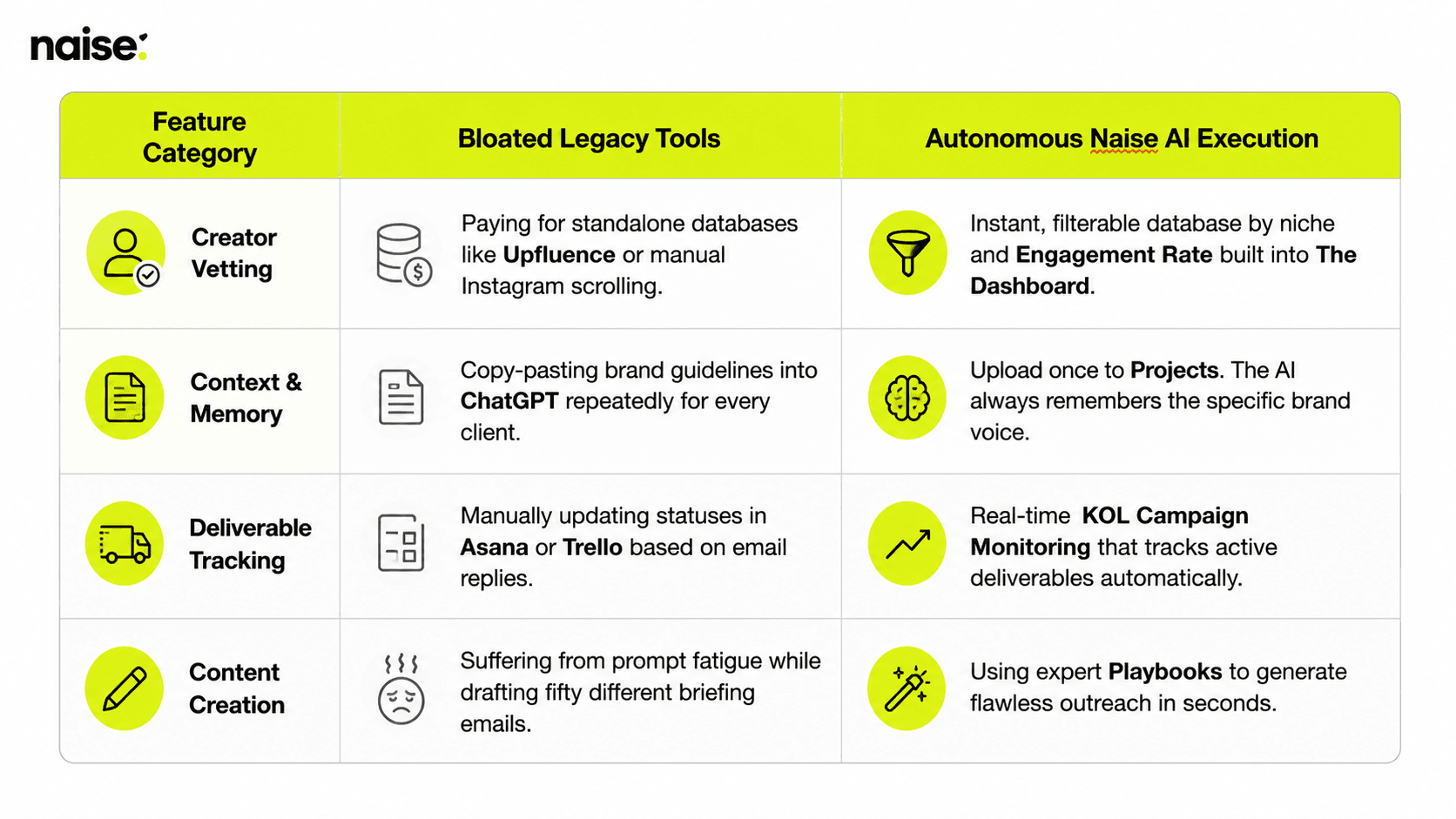
Traditional methods require multiple expensive subscriptions and manual labor, whereas the Naise AI ecosystem consolidates everything into one autonomous workflow.
Modern agencies need to streamline their operations to survive. Relying on a fragmented mix of tools forces your team to jump between email, task managers, and standalone analytics dashboards all day. This context-switching drains energy and creates massive blind spots in your multi-client KOL campaign tracking.
We built Naise AI to be the ultimate antidote to this chaos. By centralizing your workflow, you eliminate the overhead costs associated with bloated software subscriptions.
Mastering Multi-Client KOL Campaign Tracking
A centralized dashboard provides real-time visibility into active campaigns, deliverables, and total reach across every single client portfolio simultaneously.
Managing multiple brands requires strict boundaries and flawless organization. You cannot afford to accidentally send Client A's messaging to Client B's influencer roster. A unified dashboard solves this by keeping everything isolated yet easily accessible from one main view.
This is exactly where Naise AI shines. You get a clear, top-down view of every active campaign across your entire roster. You can instantly see which creators are pending approval, which ones are live, and who is driving the best Return on Investment.
You stop guessing about performance. You start making data-driven decisions that actually move the needle for your clients. You finally get to clock out on time.
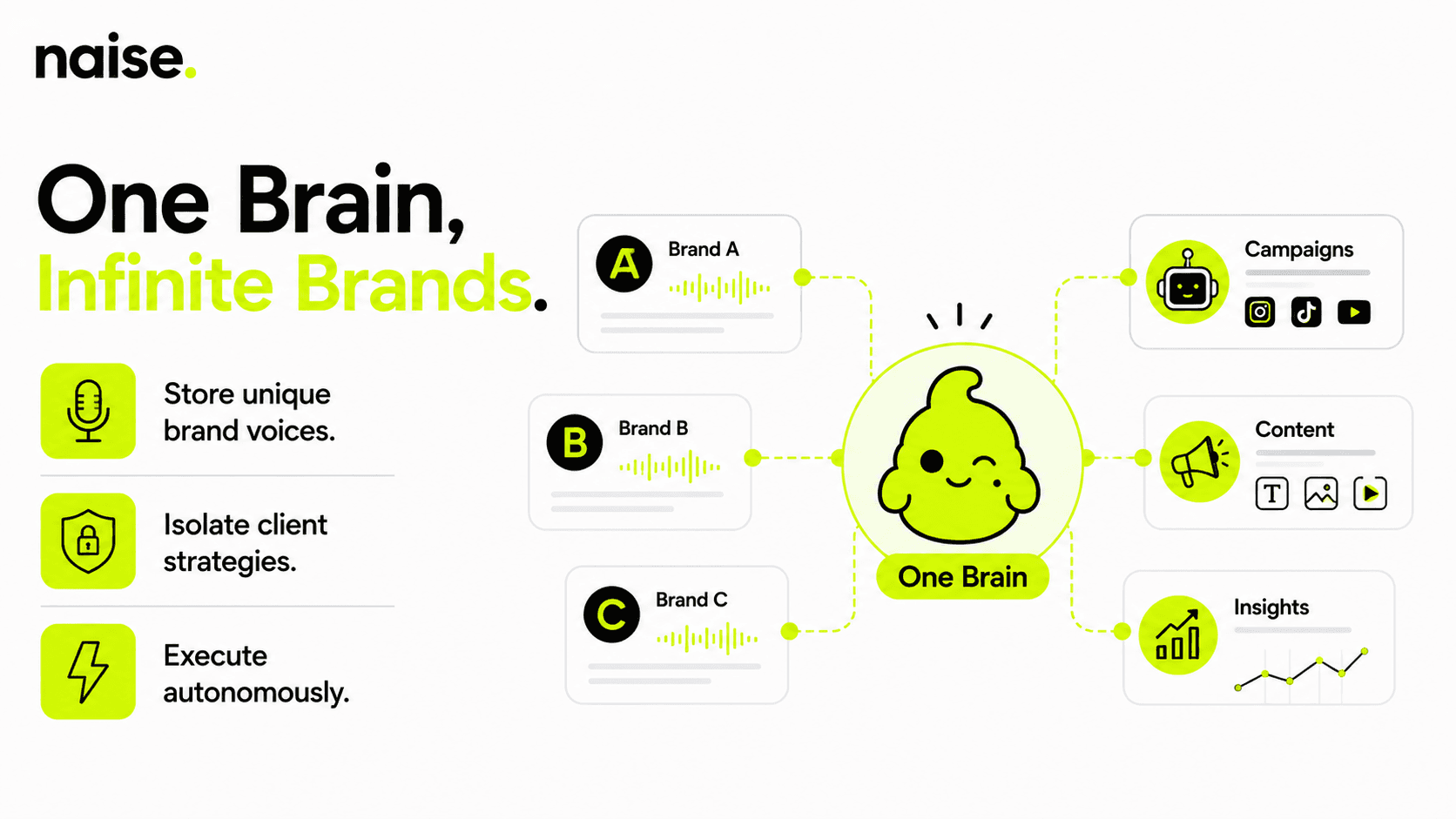
You can completely automate your influencer management by passing client context to Mayo, selecting a pre-built strategy, and letting the autonomous agents execute the heavy lifting.
Ready to see how this actually looks in practice? We designed our architecture to be completely frictionless. Here is exactly how you handle multi-client KOL campaign tracking using our integrated ecosystem.
Upload Context to Projects: First, you head into The Dashboard. You create a dedicated workspace for your new client and upload their brand guidelines, tone of voice documents, and past performance PDFs into Projects. This acts as the persistent memory bank so our system never forgets who it is speaking for.
Talk to Mayo Chat: Next, you open up Mayo Chat. You simply tell Mayo that you need to launch a new product campaign for this specific client. Mayo acts as your central command, analyzing the stored context to understand exactly what you need.
Select a Playbook: Instead of staring at a blank screen, you select one of our pre-configured Playbooks. You might choose the "Organic Spillover Capture" template. This completely eliminates prompt fatigue and loads an expert, agency-level strategy instantly.
Deploy the Influencer Agents: Finally, you hand the execution over to the muscle. You deploy the Influencer Agents to automatically vet creators, draft the outreach emails, and populate your real-time KOL Campaign Monitoring dashboard.
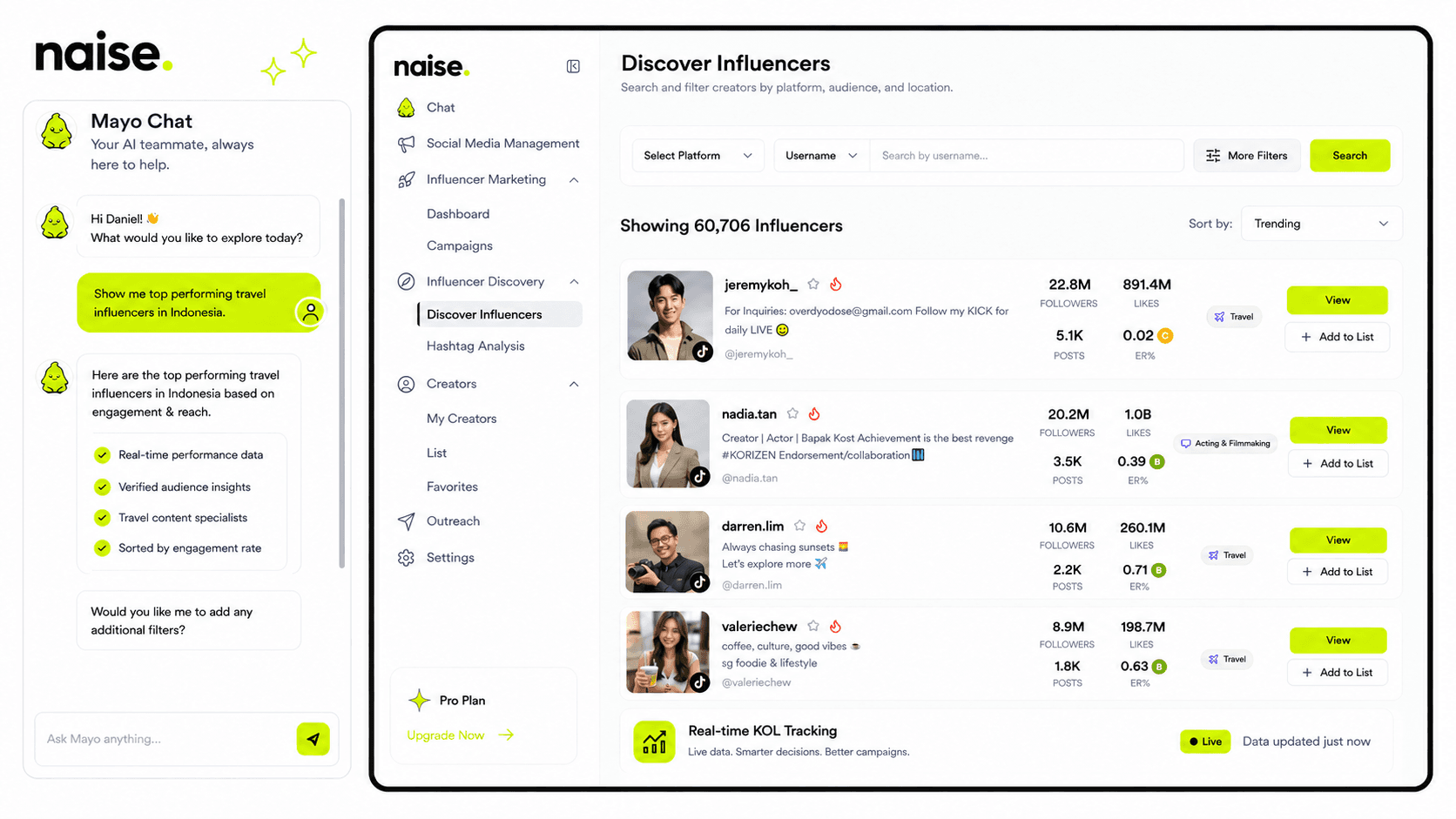
You handle the high-level strategy and approvals. The AI handles the grueling administrative execution. This workflow is the secret to taking on more clients without increasing your headcount.
Relying on spreadsheets for multi-client KOL campaign tracking is a fast track to burnout and shrinking profit margins. You need to separate your rigid financial tools from your dynamic marketing execution. By stepping into The Dashboard and utilizing autonomous agents, you can completely eliminate manual tracking and focus on what actually matters: strategy and growth.
Ready to stop babysitting your spreadsheets and start scaling your agency? Let Mayo cook your next campaign. Drop your link below to run a Free URL Audit and audit your entire brand's social presence in under 60 seconds!
Frequently Asked Questions (FAQs)
Q: How does multi-client KOL campaign tracking improve agency margins?
Multi-client KOL campaign tracking directly improves profit margins by eliminating the need for manual data entry. When account managers stop acting like administrative assistants chasing down links in spreadsheets, they can handle larger client portfolios. This increased capacity allows agencies to scale their revenue without needing to hire additional full-time employees.
Q: Can I integrate my financial accounting software with marketing execution tools?
While some basic integrations exist via third-party connectors, it is highly recommended to keep financial invoicing separated from marketing execution. Tools like Xero are built for tax compliance and cash flow management, not tracking TikTok views. Using a dedicated AI operator like Naise AI for the deliverables ensures your marketing team stays agile without messing up the official company ledger.
Q: What is the advantage of using Playbooks over standard AI prompts?
Standard AI prompts require constant tweaking and often suffer from "prompt fatigue," resulting in generic, robotic outputs. Playbooks are pre-configured, expert-level templates designed specifically for high-converting marketing campaigns. They pull directly from your persistent Projects memory, ensuring every output perfectly matches your specific client's brand voice on the very first try.