
If you want to understand how to grow on social media faster, stop burning out on daily content volume. Sustainable organic traction relies on repeatable format consistency, optimizing for high-intent saves rather than vanity shares, and treating idea generation as 95% of the battle. Pinpointing your account blind spots with a structured Social Audit allows you to turn raw diagnostics into autonomous campaign execution.
Most marketing directors and agency leads treat organic social media like a high-stakes slot machine. They force their creative teams to churn out four random videos a day across Instagram, TikTok, and YouTube Shorts, praying an unpredictable algorithm blesses them with viral distribution.
When views stagnate and profile visitor conversion drops to zero, the immediate reaction is almost always to produce more noise. That brute-force playbook is entirely broken.
The top accounts scaling their audiences in 2026 do not work harder; they operate with extreme editorial discipline. If you want to stop guessing and figure out how to grow on social media faster, only three core mechanisms actually move the needle.
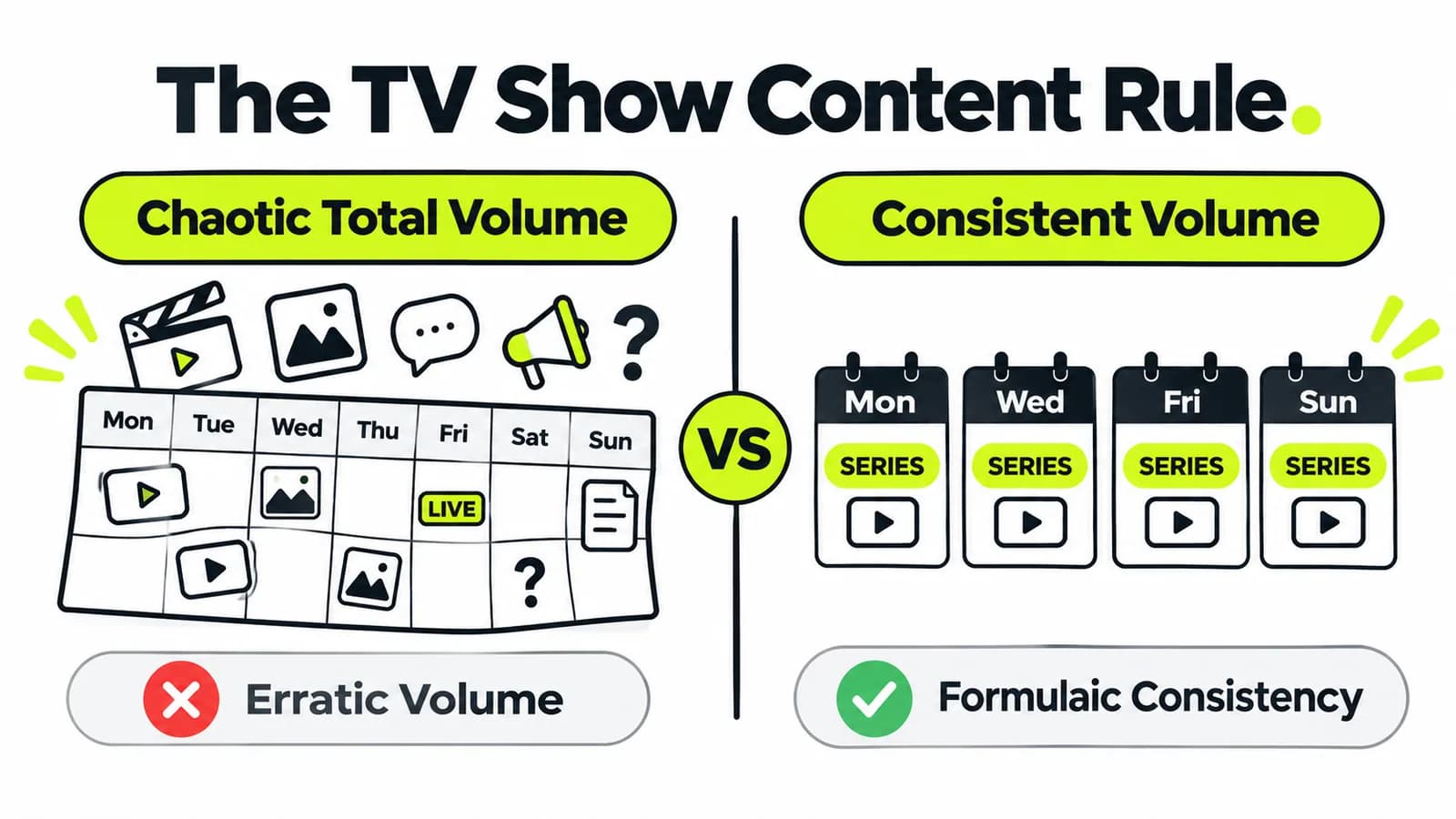
1. Consistent Volume Beats Total Volume (The TV Show Rule)
Consistent volume means repeating standardized content formats, topics, and visual templates on a predictable schedule rather than publishing random, sporadic posts. This trains both your audience and social recommendation engines to recognize your core value proposition instantly.
The most common trap in social media management is shotgunning erratic, uncoordinated posts across random topics. One day you publish an industry meme, the next day a technical carousel, and on Friday an unrehearsed behind-the-scenes talking head. This fragmented approach destroys retention because prospective followers cannot tell what they are signing up for.
Viewers treat social media channels like recurring television series. When people tune in to an episodic comedy like The Office, they look forward to familiar characters, established narrative pacing, and predictable visual framing. Your social channels require the exact same structural predictability.
In fact, 66.99% of social-media users say they unfollow a brand after encountering posts they perceive as irrelevant to the brand, making inconsistent or off-theme content a direct risk to audience retention.
Fast-growing profiles discover one or two winning content formulas and execute them with ruthless consistency. When you standardize your visual layouts, hook placements, and core themes, your audience recognizes your content in their feed before reading the handle. Predictability builds audience familiarity, and familiarity drives retention.
2. Shares Trigger Viral Reach, but Saves Drive Follower Growth
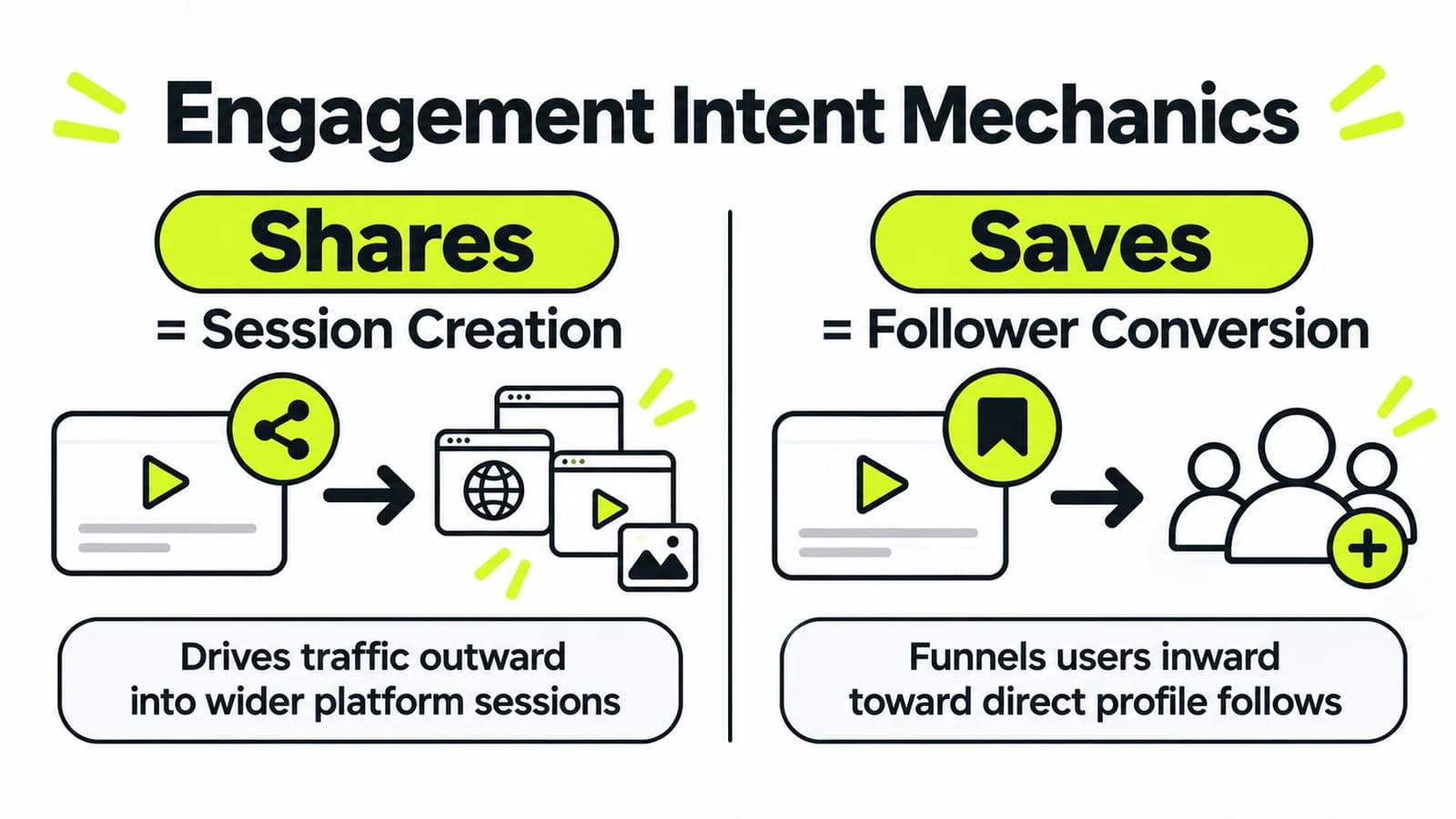
Shares expose your content to new user networks and trigger algorithmic reach, while saves signal personal utility and intent, acting as the primary conversion catalyst for profile follows.
Marketers often lump all engagement metrics into one generic bucket. In reality, every platform button triggers a completely distinct algorithmic and psychological reaction. Knowing which metric to target dictates whether your post generates fleeting views or long-term brand equity.
When a viewer shares your video into a direct message group or onto their personal story, they initiate a new user session. Platform algorithms reward this behavior generously because it brings dormant users back into the app, triggering rapid viral distribution. If broad brand awareness is your primary marketing goal, optimize your creative hooks for shareability.
Saves, however, obey a completely different psychological principle. When someone saves your post, they are declaring that your insight contains enough practical value to reference in the future. That mental bookmark carries the exact same psychological commitment as tapping the follow button.
To convert passing profile visitors into permanent subscribers, structure your content around actionable utility. Checklists, workflow teardowns, and step-by-step SOPs generate massive save rates because users treat them as digital reference libraries.
3. Idea Development Outweighs 95% of Post Production
The creative idea, core topic angle, and unique information value account for the vast majority of social media performance, while editing, dynamic captions, and technical production are secondary execution layers.
Creative marketing teams routinely spend twenty hours perfecting audio mixing, keyframing kinetic subtitles, and color-grading footage. Yet, when the video launches, it flatlines within an hour. The painful truth is that cinematic polish cannot save an uninspired, derivative premise.
The traditional 80/20 rule is actually a 95/5 rule in modern social algorithms. The core concept, contrarian thesis, and substantive value account for 95% of your post performance. Everything else, including your editing software, sound effects, and thumbnail adjustments, remains strictly downstream of the original concept.
Hook-led, creator-style content outperforms high-budget polished production by 31% on hook rate and 33% on click-through rate, reaching a 34% hook rate and 1.88% CTR versus 26% and 1.41% for polished studio creative on Meta.
Elite content operations spend the vast majority of their working hours mining ideas, reading industry discussions, and hunting for fresh angles on persistent problems. Master the underlying topic before opening your video editor or content scheduler. When the foundational angle is undeniable, even a plain-text screenshot will rack up thousands of interactions.
4. The 5-Pillar Account Diagnostic: Finding What Truly Converts
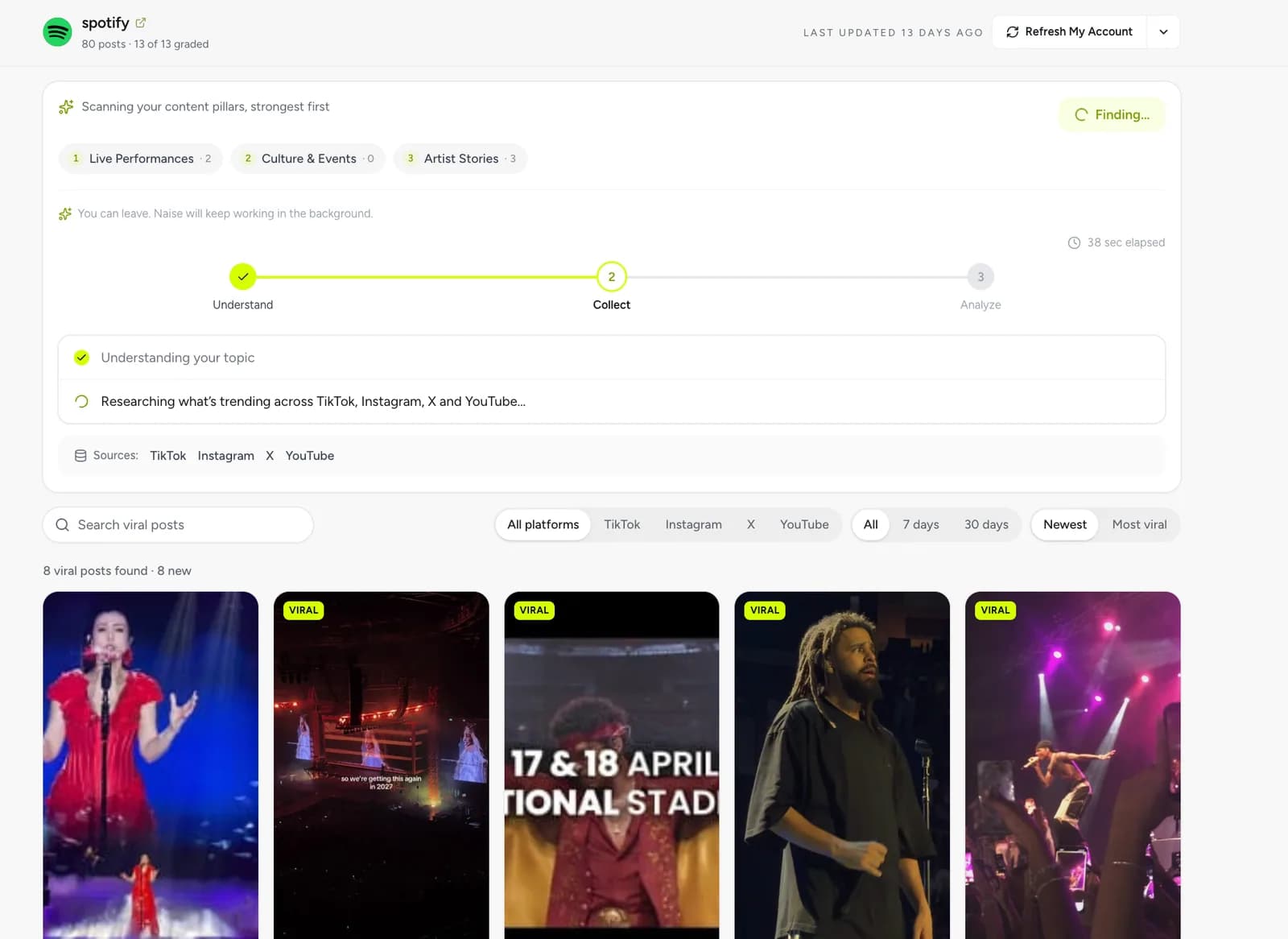
A comprehensive feed diagnostic audits five key performance pillars: Content Pillar Strength, Format Fit, Profile Clarity, Reel Engagement Rate, and Post Consistency to isolate operational bottlenecks.
You cannot implement a winning content strategy if your account suffers from foundational leaks. Running an objective Social Audit strips away subjective creative bias and reveals exactly why your audience bounces instead of following.
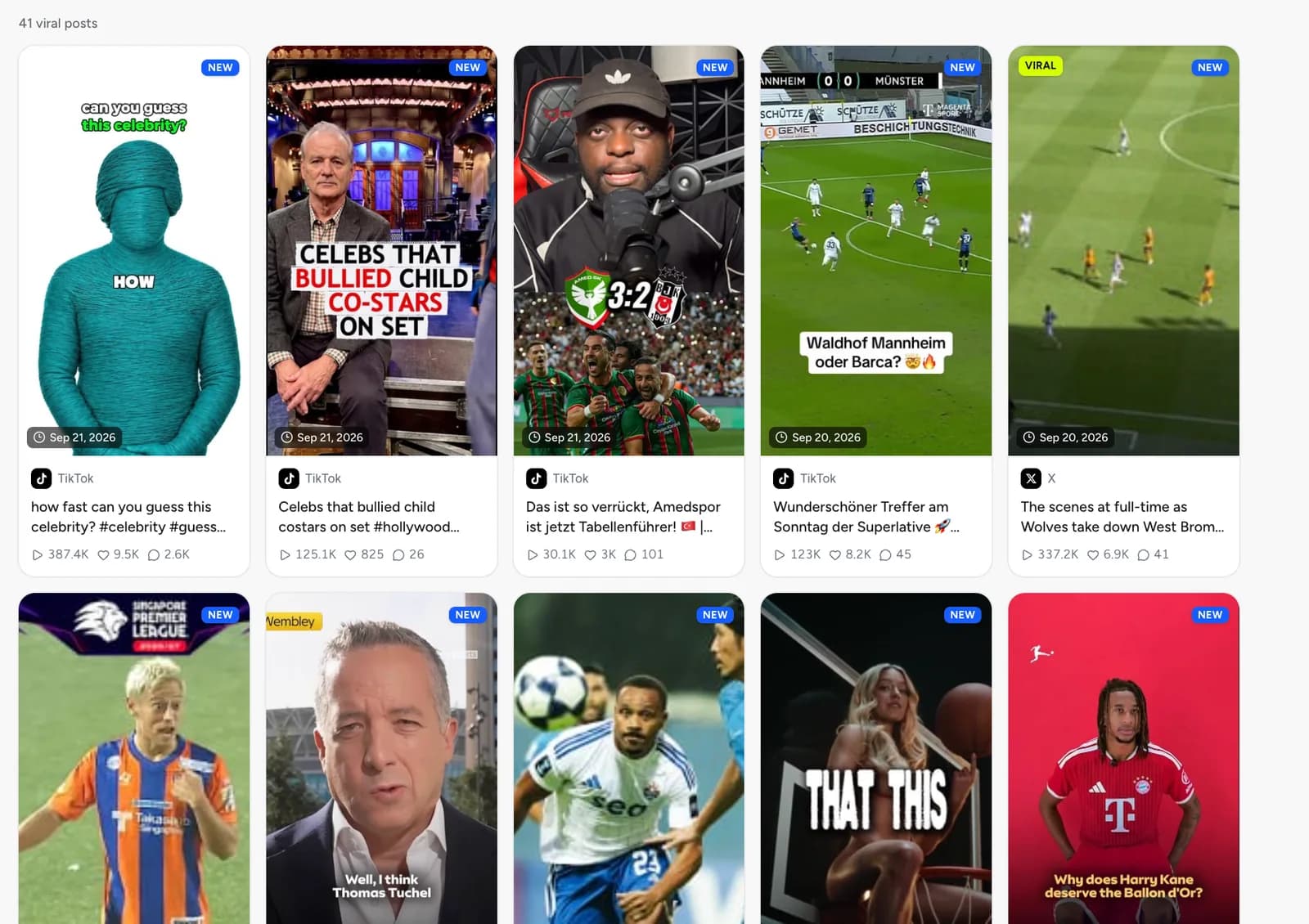
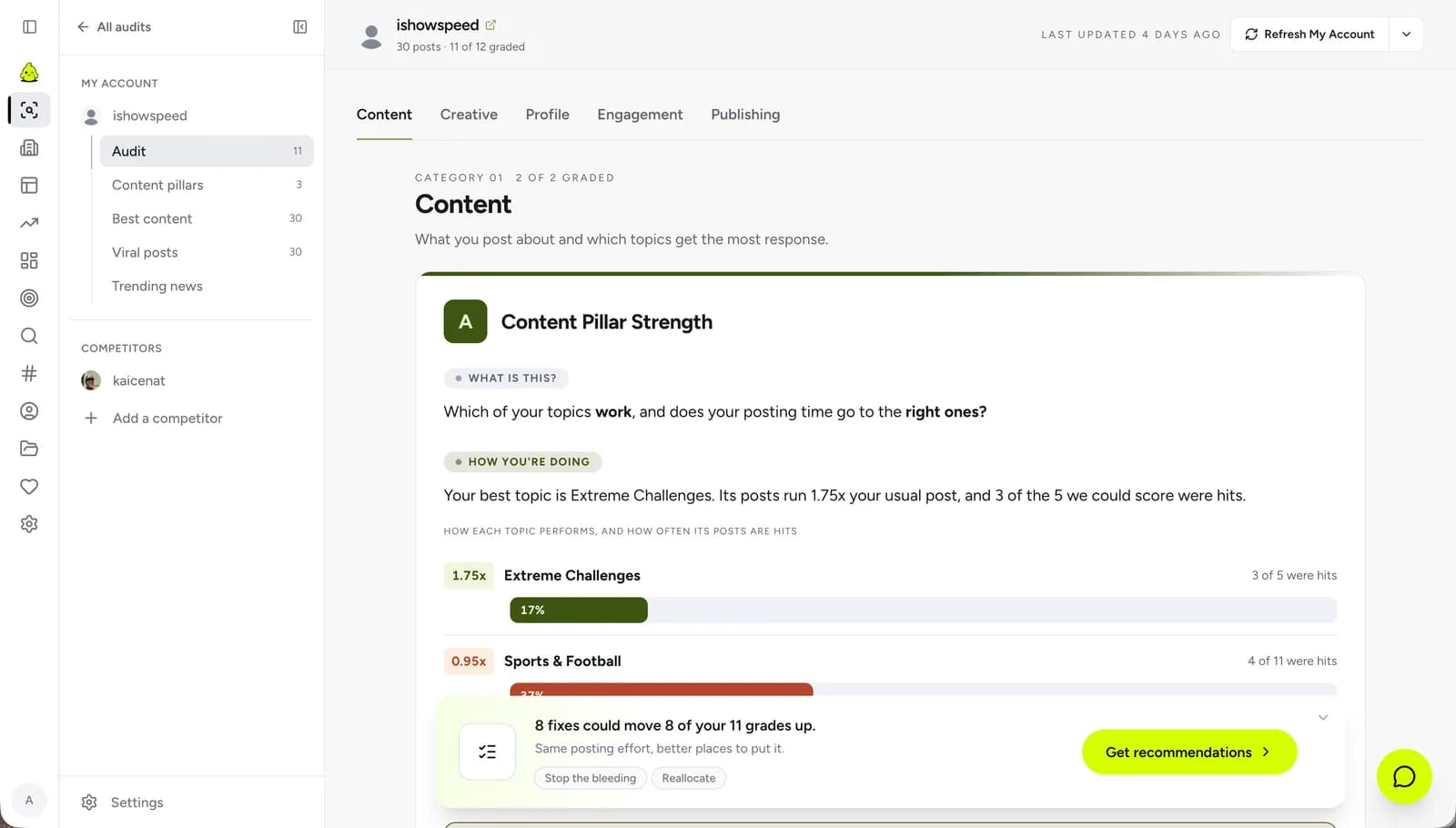
Evaluating Content Pillar Strength exposes the dangerous gap between what you like posting and what your target market actually consumes. Many brands dedicate half their publishing schedule to topics that generate almost zero interactions, cannibalizing resources that belong to their top-performing themes.
Simultaneously, you must evaluate your Format Fit across Reels, static graphics, and multi-slide carousels. If your carousels drive heavy save rates while your short-form videos struggle for retention, forcing an all-video strategy actively harms your growth trajectory.
Pair these format insights with strict Profile Clarity checks to ensure your bio and headline communicate an explicit follow promise.
5. Turning Social Diagnostics into Execution with Naise AI
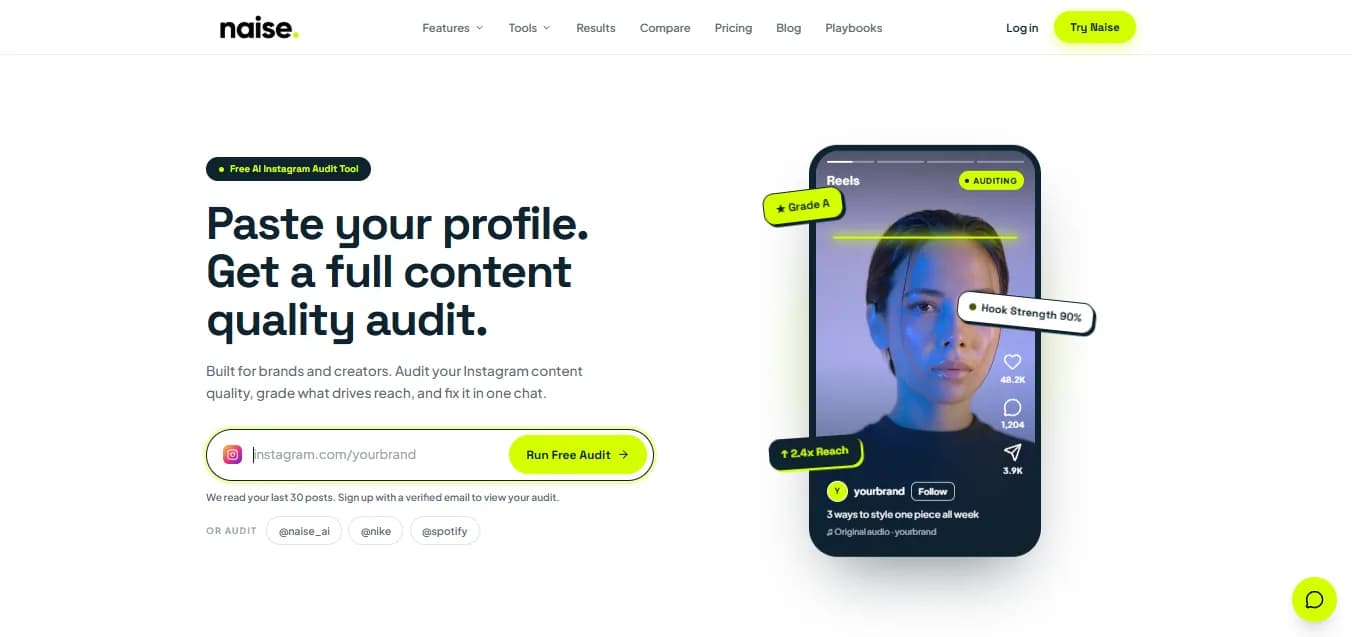
Naise AI automates the social auditing process across 30 recent posts, grades your 5 performance pillars, and instantly pushes the diagnostic blueprint into your Social Workspace for autonomous execution and analytics tracking—all without leaving the app.
Auditing an account manually requires scraping spreadsheets, calculating engagement ratios by hand, and reviewing competitor feeds line by line. For a lean marketing department or an agency juggling multiple clients, this fragmented stack of diagnostic tools and separate scheduling apps drains your team of creative energy.
The Naise AI Social Audit solves this friction instantly. By analyzing your last thirty posts, the platform grades your exact performance across the five core pillars: Content, Creative, Profile, Engagement, and Publishing. But instead of just handing you an intimidating PDF report, it turns this raw data into an immediate production engine.
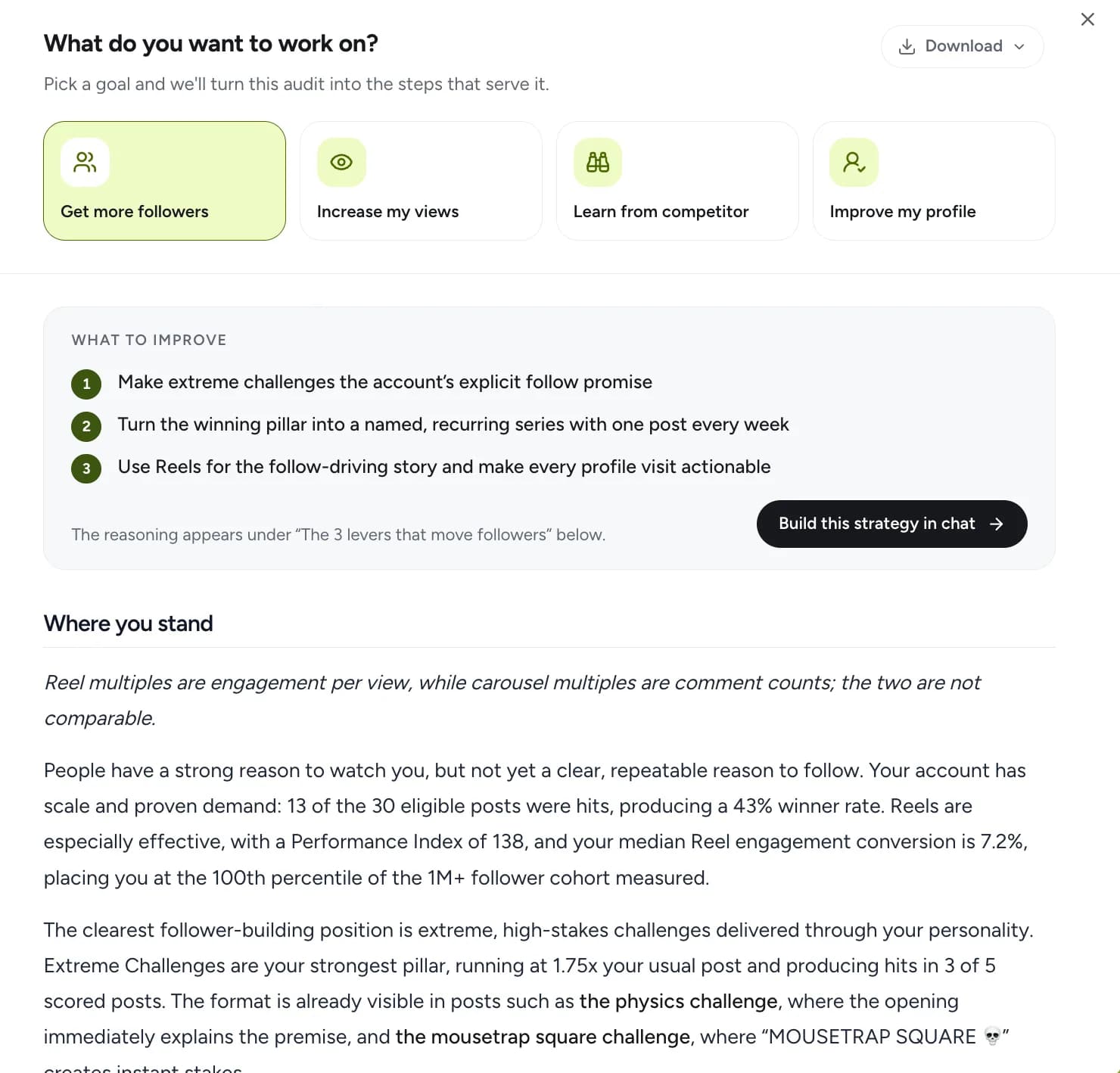
Once you review your pillar grades, clicking "Build this strategy in chat" instantly bridges the gap between diagnosis and action. Naise AI passes your complete audit context directly into the Social Workspace. You never have to switch apps or copy-paste prompts. Inside the workspace, your autonomous Social Media Agent takes over immediately—scripting new hooks, generating visual assets, and mapping out a content calendar tailored to fix your specific blind spots.
Finally, as your newly optimized content goes live, you can monitor the exact ROI of your adjustments directly from the built-in Analytics tab. From diagnosing your feed to executing the strategy and tracking the results, the entire workflow lives in one seamless loop. You maintain absolute strategic oversight, eliminate manual execution, and empower your team to clock out on time.
Stop Guessing Your Content Strategy
Stop burning your team out on chaotic posting schedules and unvalidated topics. Run a full diagnostic on your brand accounts, identify your high-converting formats, and let autonomous execution handle the heavy lifting.
FAQs
What is the most important factor to grow on social media faster?
The most important factor is refining your core idea and angle before starting post production. Identifying high-intent topics that resonate with your specific target audience dictates 95% of your post reach, while technical editing and captioning play secondary supporting roles.
Why do shares get views while saves get followers?
Shares trigger social algorithms to distribute content more broadly because sending a post to external users creates new app sessions. Saves reflect personal value and utility, which mirrors the psychological intent required for a user to follow your account for future reference.
How often should a brand publish content to maintain growth?
Publishing frequency matters far less than posting consistency across formats, visual layouts, and themes. Brands that maintain a reliable, repeatable series with standardized production templates routinely outgrow accounts that publish erratic, unstructured posts at higher daily volumes.
What are the five core pillars of a social media audit?
A structured social media audit evaluates Content Pillar Strength, Format Fit, Profile Clarity, Reel Engagement Rate, and Post Consistency. Auditing these five areas highlights strategic mismatches and reveals which content formats drive actual follower conversion.