The Hidden Cost Trap in Agency Software Pricing
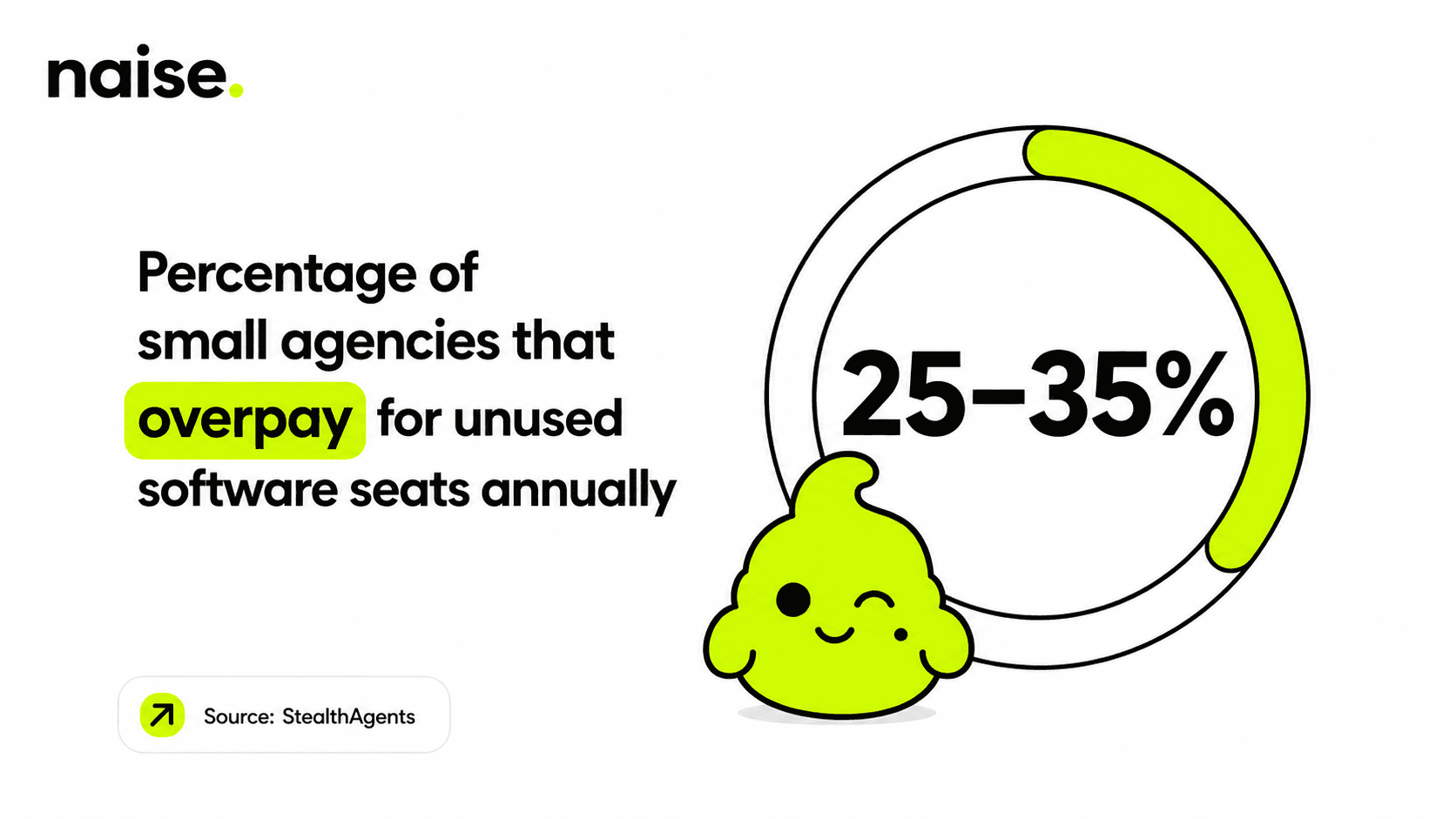
When hunting for affordable agency management systems, you've probably noticed a glaring issue right away: software vendors often advertise a low per-user baseline price but sneak in a mandatory minimum seat count, drastically inflating your actual starting cost.
Consider this common scenario: you see a software tool advertised at $26 per user. You calculate the cost for your three-person agency and think it looks like a steal. You hit the checkout page and suddenly face a five-seat minimum requirement.
This pricing illusion is the most common trap for growing teams. Vendors mask their enterprise-level base fees by forcing small agencies to buy ghost seats. You end up paying for phantom employees just to access basic time tracking and client reporting features.
To protect your margins, you must read the fine print on pricing pages. Always look for the tiny asterisk next to the monthly fee. Ask the sales rep explicitly about minimums before committing to a demo.
Freelancer Tools vs. True Agency Platforms
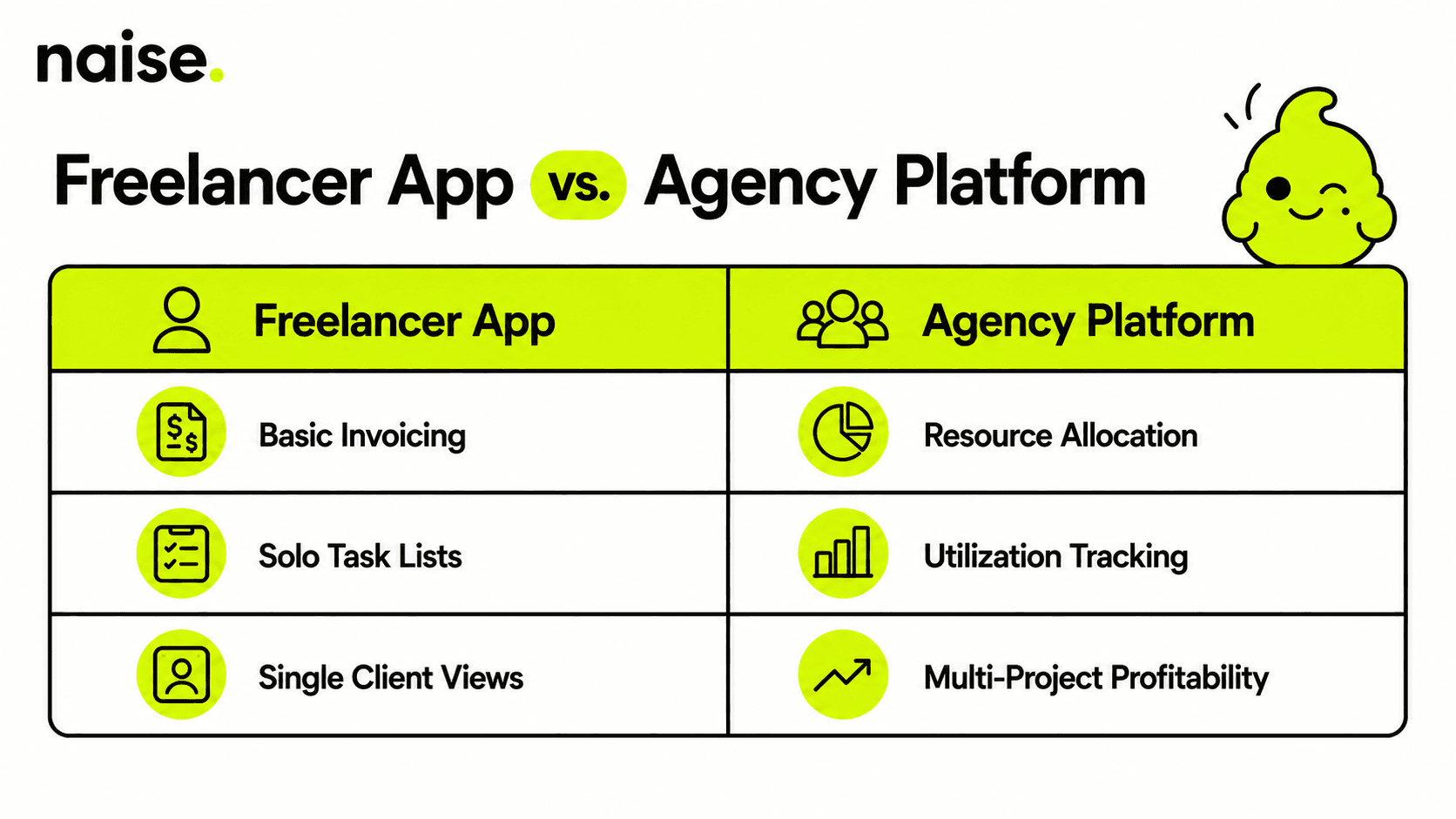
Grouping solo freelancer platforms with true agency systems creates operational chaos because solopreneur tools lack multi-project profitability tracking.
A quick search for agency tools usually returns platforms like HoneyBook or Bonsai. These are incredible products for solo operators and independent contractors. They completely fall apart when you need to manage a team of five creatives working across ten different client accounts.
True agency management requires robust resource allocation, utilization tracking, and multi-project profitability metrics. You need to know if your senior designer is overbooked or if a specific retainer is secretly draining your profit margin. Platforms like Productive and Scoro handle these complex workflows naturally.
Stop trying to force a solo tool to do a team's job. Upgrading to a slightly more expensive, purpose-built agency platform actually saves money by preventing scope creep.
The Tech Stack Tax (Why "Lightweight" Costs More)
Buying an overly simplistic management tool forces you to purchase supplementary software, creating a fragmented and expensive tech stack.
Choosing the cheapest software option almost always triggers the Tech Stack Tax. You buy a lightweight tool for project management but quickly realize it lacks robust invoicing. Now you have to buy a separate billing software. Then you realize neither tool handles proofing, so you buy a third subscription.
Every new tool adds subscription fees, integration headaches, and login fatigue. Your team wastes hours switching between tabs and manually moving data.
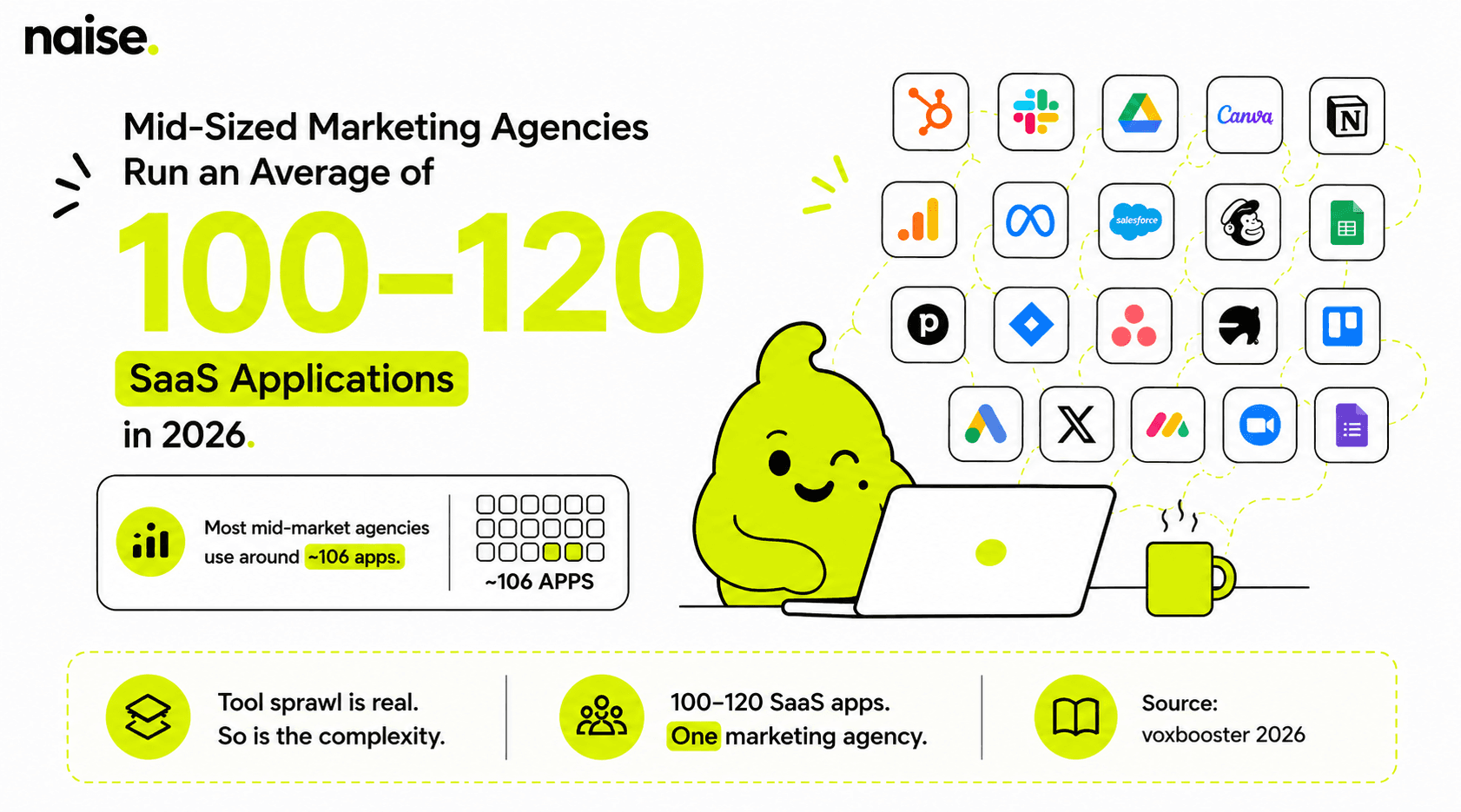
Consolidation is the ultimate cost-saving strategy for lean agencies. Paying $50 a month for one comprehensive tool is fundamentally cheaper than paying $15 a month for four disconnected apps.
Overlooked Freemium Giants for Small Teams
Highly customizable freemium platforms often provide the most robust and affordable foundations for small, resourceful marketing agencies.
The loudest software companies have the biggest advertising budgets. The actual budget champions often hide in plain sight. Platforms like Notion, ClickUp, and Monday.com offer incredibly generous freemium tiers.
These tools require more upfront elbow grease to set up. You have to build your own dashboards and configure your own workflows. Once you dial in the structure, you possess a highly customized agency operating system for a fraction of the cost of niche software.
Your geographic location and specific niche also dictate tool viability. A boutique PR firm in Europe requires different GDPR compliance features than a local social media agency in Asia. Evaluate these flexible platforms against your exact regional requirements before buying rigid software.
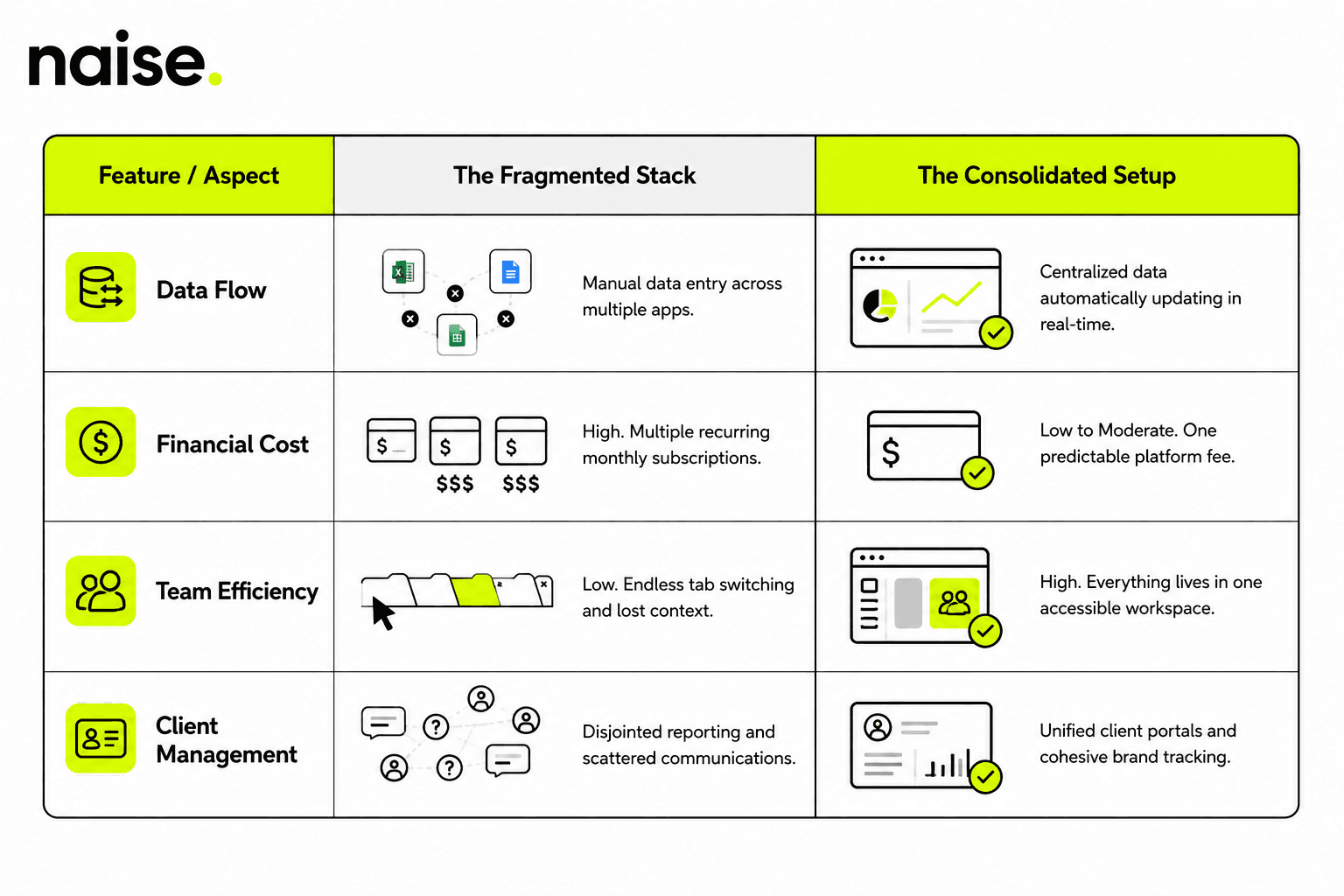
Fragmented Stack vs. Consolidated Setup
Understanding the difference between a disconnected workflow and a unified ecosystem is critical for protecting agency profit margins.
How to Ditch the Fragmented Stack with Naise AI
Naise AI acts as your all-in-one autonomous marketing operator, replacing disconnected tools with a unified ecosystem that executes campaigns for multiple clients instantly.
Running a lean agency means you cannot afford to waste time on manual execution or juggling ten different client voices across fifteen different tools. Naise AI is the antidote to the Tech Stack Tax. We built an integrated marketing ecosystem that actually does the work for you.
Here is how you handle multiple clients seamlessly without burning out your team:
Step 1: Build the Brain in Projects. Upload your client's brand guidelines, past PDFs, and tone of voice docs into Projects. This creates persistent memory. You do this exactly once, and the AI never forgets the client's specific voice.
Step 2: Command via Naise Chat. Open Naise Chat in your Dashboard. This is your central command interface. You simply tell the AI which client you are working on today.
Step 3: Select Your Playbooks. Stop writing prompts from scratch. Grab one of our pre-configured Playbooks. These are expert, agency-level strategies ready for instant deployment.
Step 4: Deploy the SMM Agent. Hand the strategy off to the SMM Agent. It autonomously generates visual assets, drafts the copy matching the exact client tone, and auto-posts directly to your social channels.
Stop paying mandatory minimums for basic features and ditch the bloated tech stack. True affordable agency management systems prioritize automation, consolidation, and execution. You need a teammate that actually does the heavy lifting so you can clock out on time. Let us handle the grunt work while you handle the strategy. Run Free 60-Second Brand Audit now!
Frequently Asked Questions (FAQs)
Do I really need a dedicated agency management system?
Yes, if you manage more than three clients or have a team larger than two people. Relying on spreadsheets or basic to-do list apps creates massive bottlenecks as you scale. Dedicated systems provide crucial visibility into resource allocation and profitability metrics. Without these insights, you risk overworking your team and losing money on retainer accounts.
Why are per-user pricing models sometimes misleading?
Vendors use low per-user prices as bait but enforce mandatory minimum seat requirements in the fine print. A tool might advertise a $15 per month cost, but require you to purchase a block of ten seats minimum. This instantly turns a seemingly affordable $15 monthly expense into a rigid $150 commitment. You must verify seat minimums before migrating your agency data to a new platform.
Can freemium tools actually support a growing agency?
Yes, highly customizable tools like Notion or ClickUp can easily support growing teams if configured correctly. These platforms require you to build your own infrastructure, which takes time initially. Once your dashboards and workflows are established, they rival expensive legacy software. They are the ultimate budget hack for technical founders willing to put in the setup time.