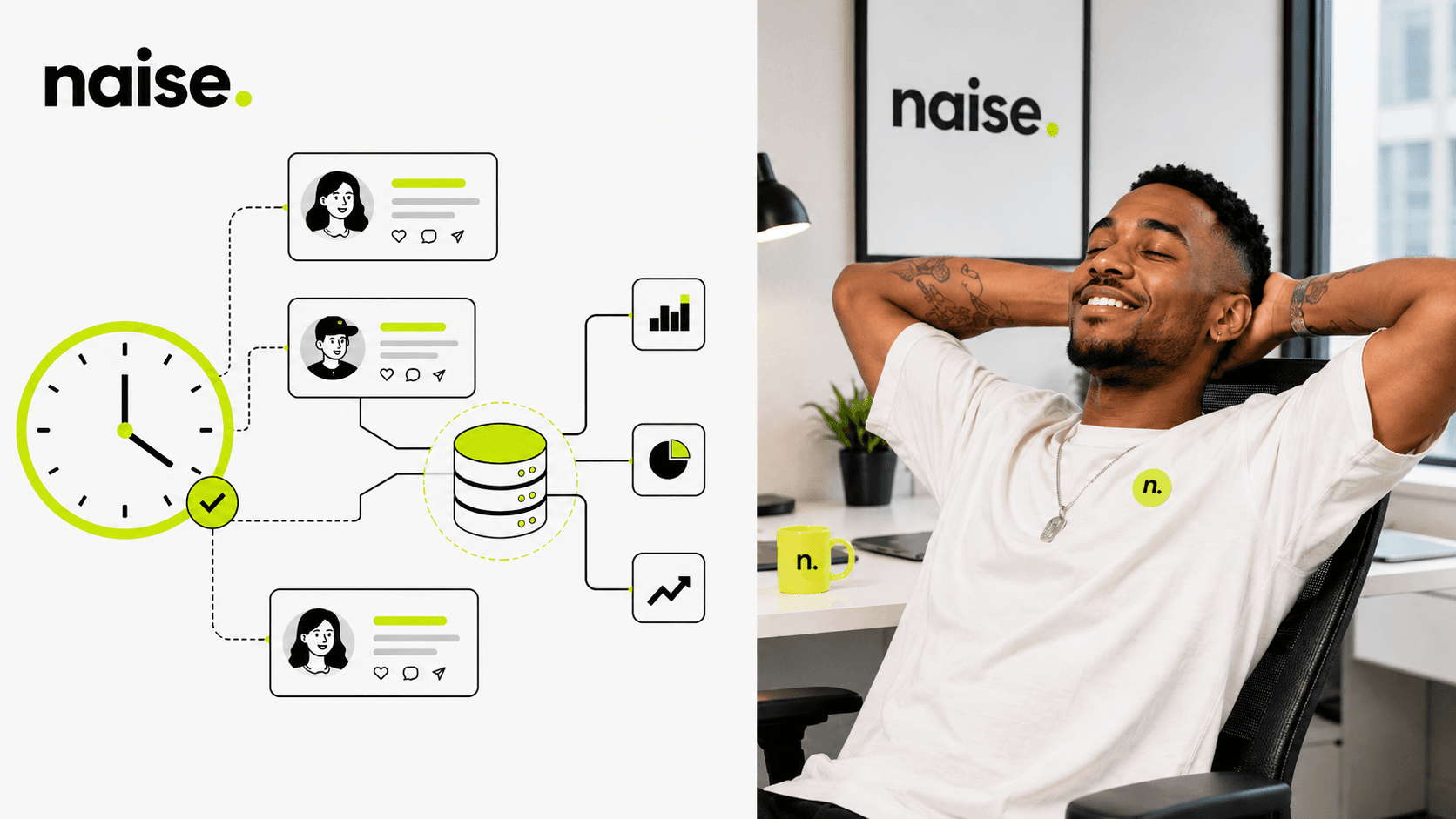
The Flawed Financial Math of "Affordable" SaaS
Finding truly affordable tools for scaling a design agency requires ignoring base prices and calculating the compounding cost of per-seat licensing.
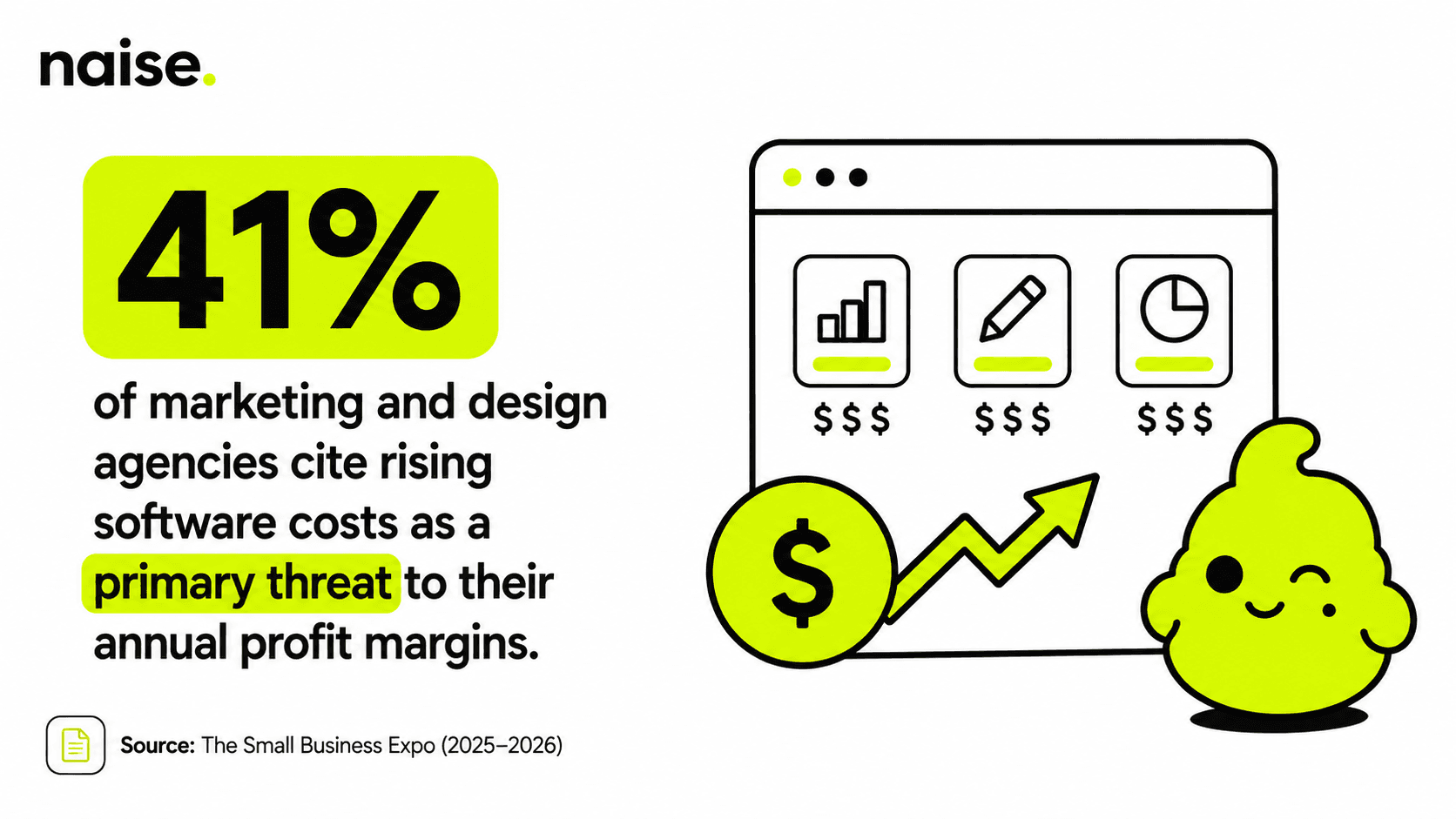
Generic software advice often claims you can run an entire agency on a $50 to $150 monthly budget. This math is entirely fictional for any team ready to scale. The moment you move past the solo-freelancer phase, Per-Seat Pricing destroys your profit margins. Adding a single new designer suddenly means paying for another seat in your Project Management Software, your Cloud Storage, and your Communication App.
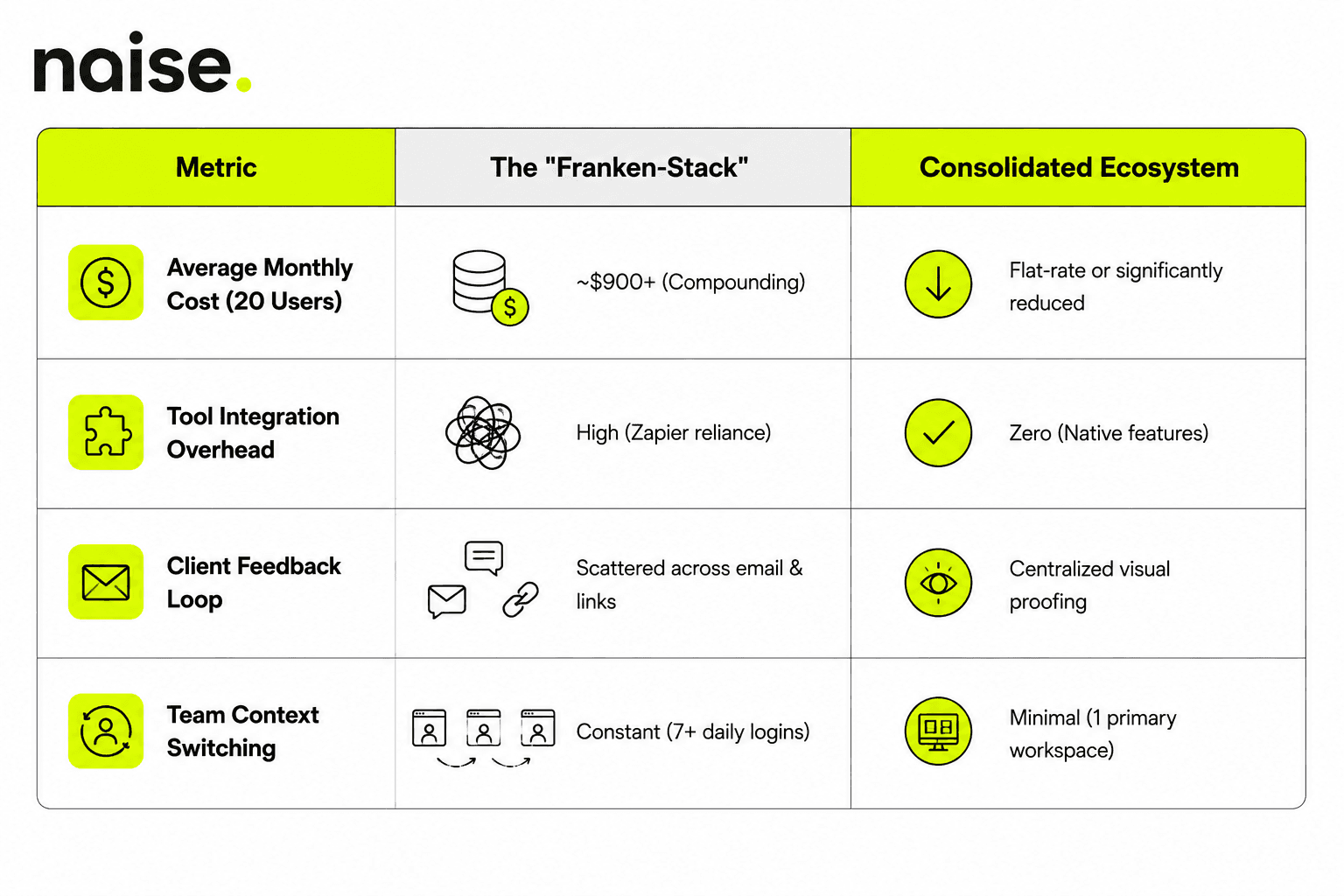
Let's look at the reality of a 20-person agency. Stacking multiple "cheap" tools quickly balloons your overhead closer to $900 per month. You are essentially being financially penalized for growing your team. Smart agencies avoid this trap by seeking out platforms offering flat-rate pricing or unrestricted team access.
The "Franken-Stack" Contradiction
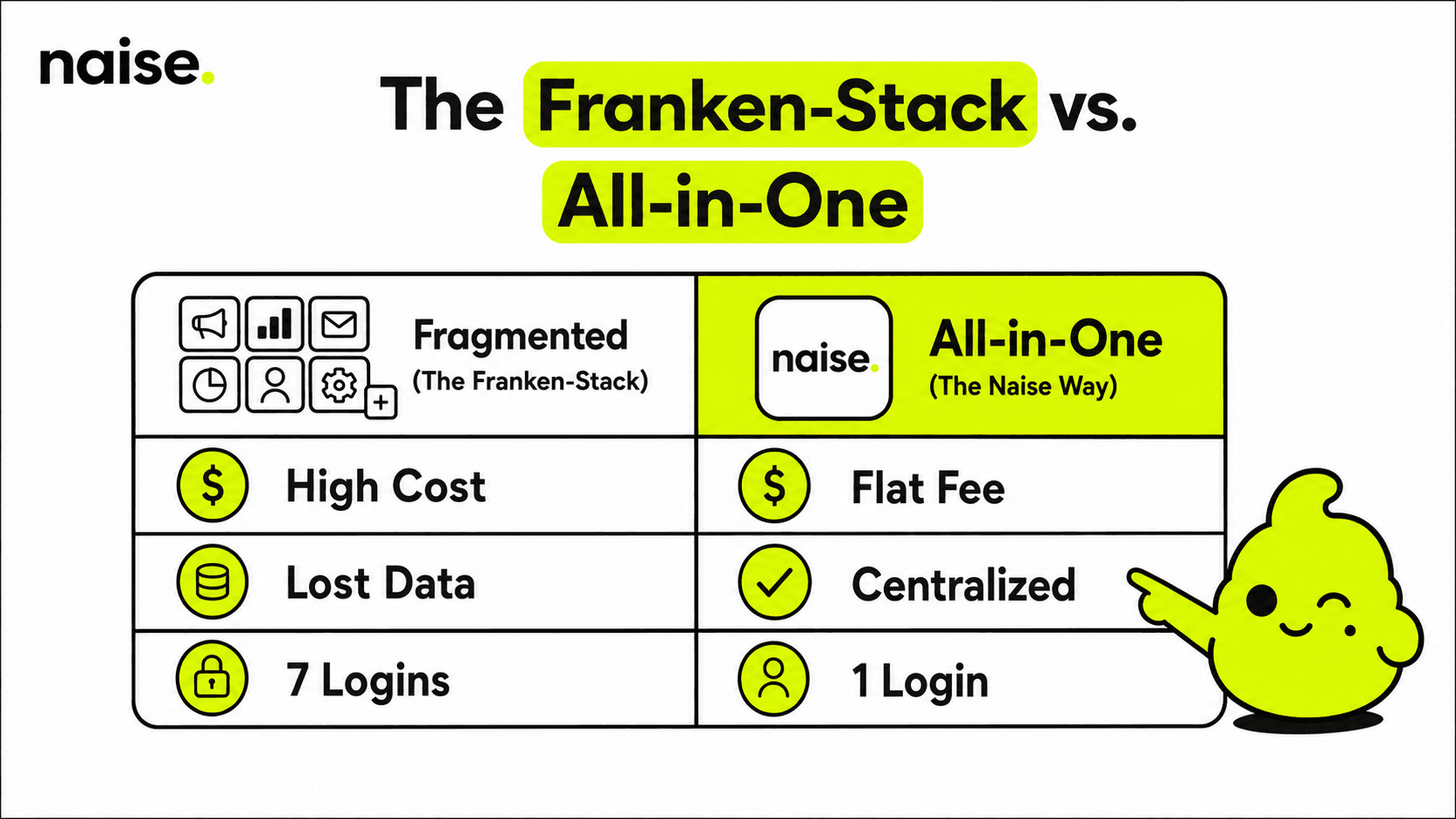
Connecting seven different affordable tools creates massive integration overhead that kills your team's daily productivity.
A massive contradiction exists in modern agency advice. Experts tell you to avoid software fragmentation, yet they recommend a complex 7-tool ecosystem to manage your daily operations. Cobbling together Slack for chat, Asana for tasks, and Google Drive for files creates a nightmare of scattered information. Your team ends up spending more time managing the tools than doing the actual design work.
This "Franken-stack" requires constant manual data entry to keep different platforms synced. Information gets lost in transit, and client feedback slips through the cracks. Modern All-in-One Agency Management Platforms solve this by centralizing your communications, files, and tasks into a single workspace.
Blindness to Specific Creative Needs
Generic tech stacks fail design agencies by completely omitting necessities like high-volume asset storage and visual client-proofing.
Many software roundups treat design agencies like generic IT consultancies. They recommend standard task trackers that completely fail when handling heavy Creative Assets. A text-based project management tool is useless when you need to review a 4K video render or a massive raw image file. Design agencies have highly specific operational requirements that generic software ignores.
You need infrastructure built for High-Volume Asset Storage without extortionate overage fees. You also require integrated Visual Client-Proofing workflows. Sending a client a Dropbox link and asking for time-stamped feedback over email is an outdated, friction-heavy process. Your tech stack must allow clients to click and comment directly on the visual deliverables.
The Trap of Irrelevant Regional Advice
Avoid software recommendations that enforce strict geographic limitations or steep scaling penalties on international agencies.
Scaling an agency often means hiring global talent and taking on international clients. Unfortunately, many "top-tier" software lists recommend platforms that actively punish this business model. For example, suggesting Wave Accounting is useless for a massive portion of the world due to its strict geographic limitations regarding payments. You need financial tools that support multi-currency invoicing and global payment gateways.
Similarly, platforms like HubSpot offer enticing entry-level pricing but hit you with steep scaling penalties as your contact list grows. This forces lean agencies into a corner where they must either purge their hard-earned leads or pay astronomical upgrade fees. Always read the fine print on scaling limits before committing your agency's data to a new platform.
The Old Way vs The Consolidated Way
Consolidating your tech stack reduces overhead, minimizes context switching, and accelerates client delivery times.
Fixing the Stack with Your AI Teammate
Naise AI replaces your fragmented social media marketing stack by giving you an autonomous agent that handles strategy and execution.
When you are scaling a design agency, managing your own social presence (or your clients' accounts) usually requires another three or four expensive tools. You end up paying for a scheduling app, an AI writing assistant, and a reporting dashboard. Naise AI eliminates this entirely by acting as your consolidated, 24/7 marketing operator. We strip away the cluttered interfaces so you can focus on creative strategy.
Here is how you execute a flawless social campaign without the heavy software overhead:
Centralize Your Brand: Upload your specific brand guidelines, tone of voice, and visual assets into Projects. This acts as persistent memory, so the AI never breaks character.
Skip the Prompting: Open Naise Chat in your Dashboard and select one of our expert Playbooks. These pre-configured templates solve prompt fatigue instantly.
Deploy the Muscle: Assign the task to the SMM Agent. It autonomously generates on-brand visual assets, drafts the copy, and schedules the posts directly to your connected social channels.
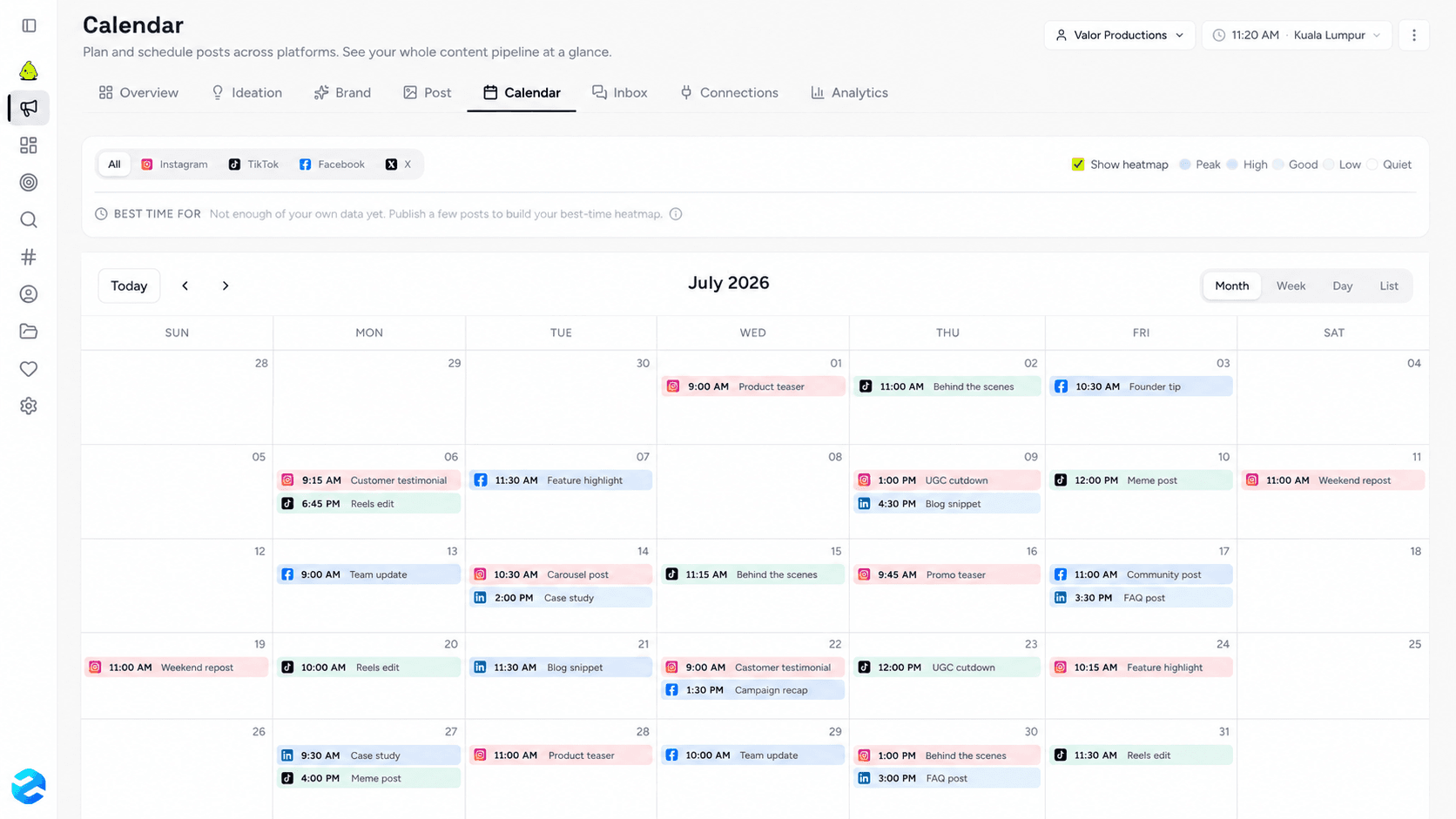
Stop letting per-seat pricing and fragmented software drain your agency's profit margins. Finding affordable tools for scaling a design agency means ditching the manual grunt work and adopting a consolidated, AI-driven approach. You need tools that work as hard as you do, without punishing you for growing your roster.
Let your new AI teammate handle the heavy lifting while you focus on delivering incredible design work. Ready to see the difference a consolidated workflow makes for your agency's visibility? Run Free 60-Second Brand Audit now!
Frequently Asked Questions (FAQs)
Why is per-seat pricing bad for growing design agencies?
Per-Seat Pricing penalizes growth by increasing your monthly software bill every time you hire a new employee or add a freelancer. For a scaling design agency, this quickly turns "affordable" tools into massive financial liabilities, draining profit margins that should be reinvested into the business.
What is a Franken-stack in agency management?
A "Franken-stack" refers to a disconnected ecosystem of multiple single-purpose software tools (like using separate apps for chat, storage, and tasks). This setup creates massive administrative overhead, forcing teams to waste time transferring data between apps instead of focusing on billable creative work.
How does Naise AI help design agencies save money?
Naise AI replaces multiple expensive marketing tools (like dedicated schedulers, AI writers, and reporting dashboards) with one unified platform. By utilizing the autonomous SMM Agent, agencies can manage their own marketing or offer social media services to clients without increasing their headcount or software budget.