
The True Cost of Manual Data Pulling
Relying on manual data entry drains your team's energy, introduces human error, and stalls critical strategic decisions.
You already know the drill at the end of every month. You open Google Analytics, export a CSV from HubSpot, and manually screenshot engagement metrics from native social apps. This fragmented approach destroys productivity. You spend more time formatting cells in Microsoft Excel than actually analyzing what the numbers mean for your upcoming campaigns.
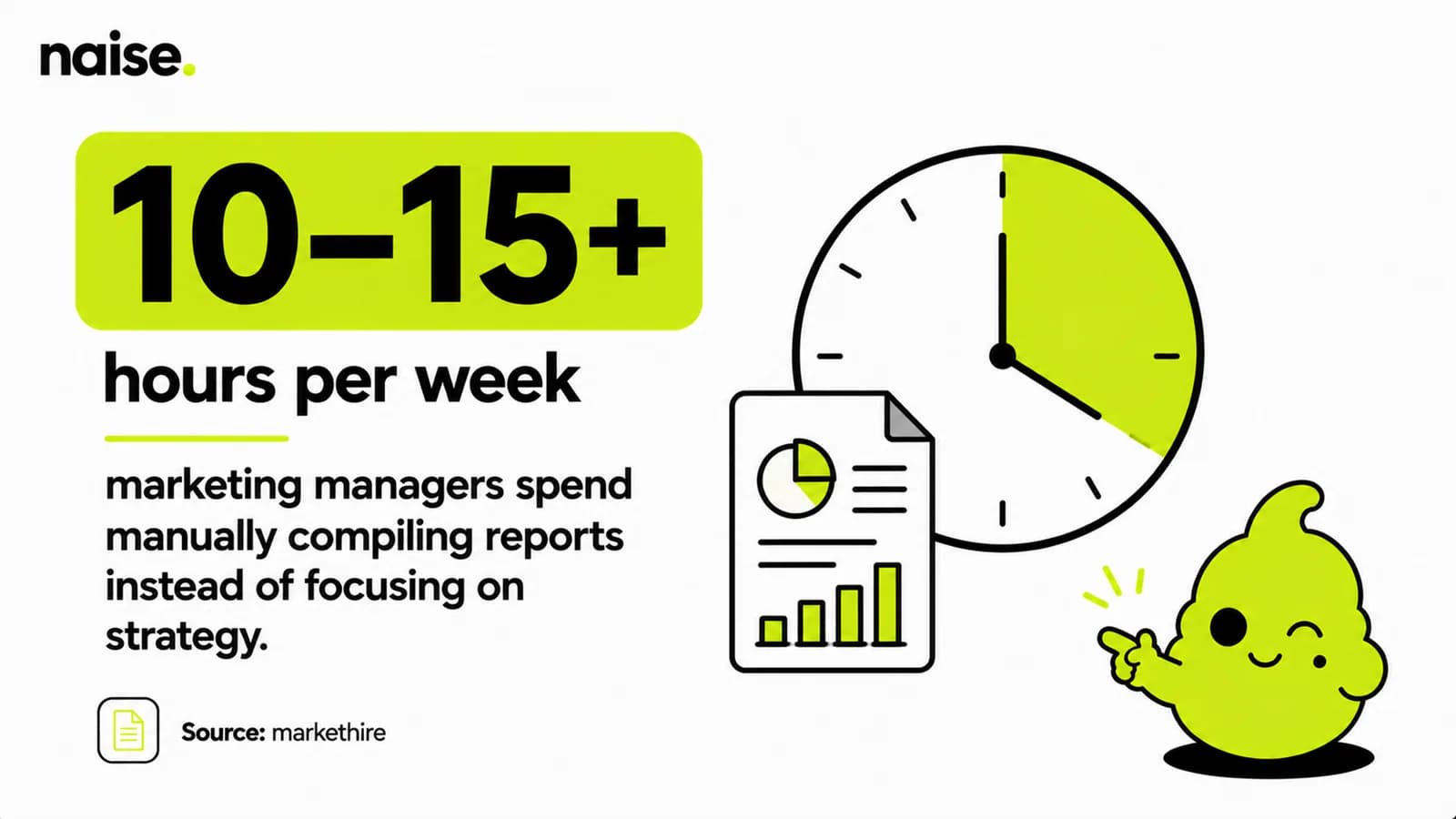
Data fragmentation creates a massive blind spot for marketing leaders. When your metrics live in isolated silos, you cannot quickly pivot your strategy based on real-time performance. Building an automated marketing KPI tracking system solves this exact bottleneck. It transforms your raw data into immediate, actionable insights without the manual grunt work.
Architecting a Centralized Data Memory
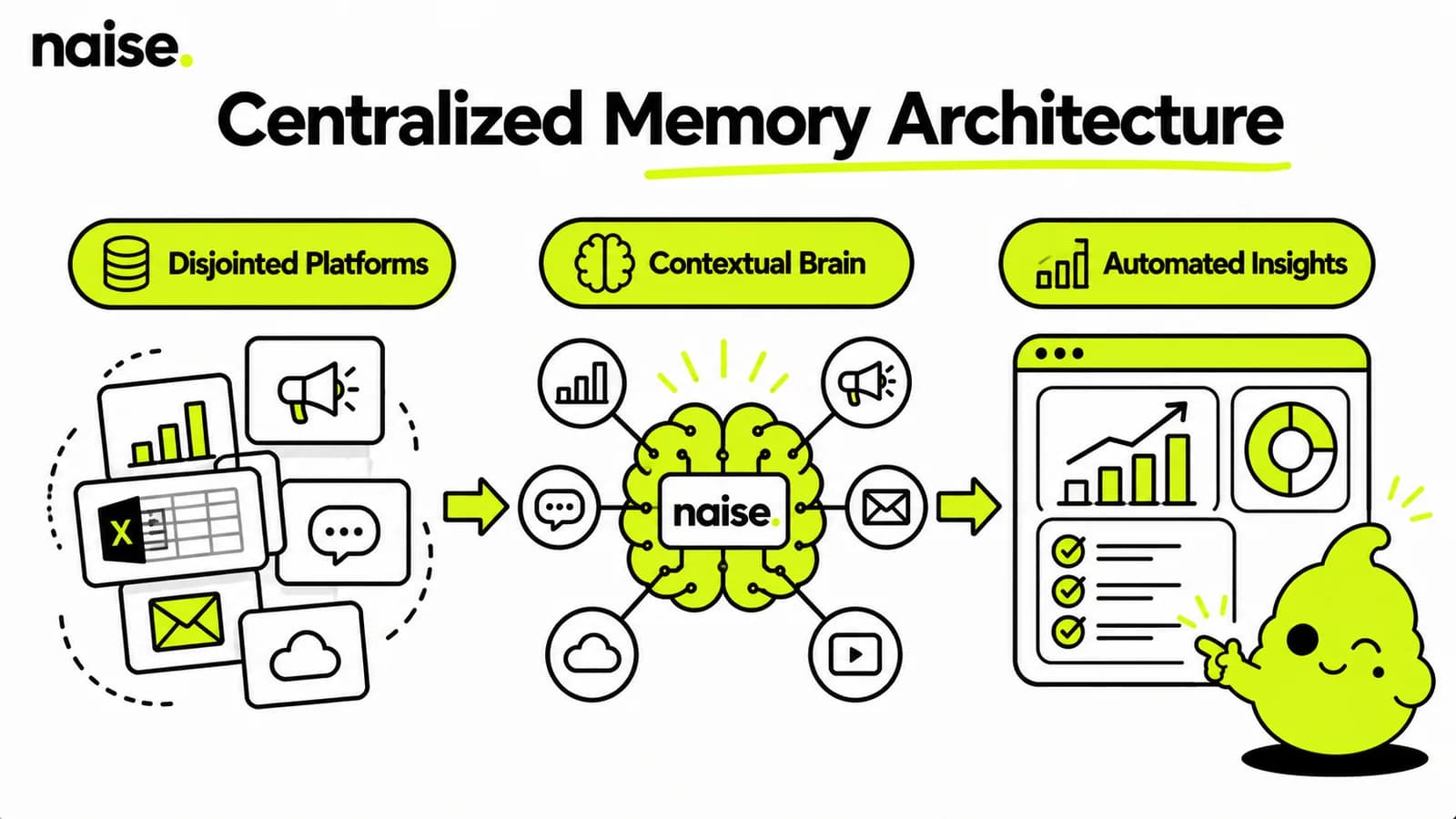
A smart tracking system requires a persistent memory bank to benchmark current performance against historical data.
Most reporting tools fail because they lack historical context. They show you a sudden spike in traffic but cannot automatically cross-reference it with your specific brand goals from last quarter. To fix this, your tracking ecosystem needs a centralized storage hub. This hub must digest your past performance reports, current OKRs, and overall Growth Strategy.
When you feed this historical context into an automated marketing KPI tracking system, the technology actually understands your specific definition of success. It knows that a 2% conversion rate is a win for your high-ticket B2B product, even if industry averages look different.
Standardizing Your Reporting Cadence
Consistency is the foundation of any reliable metric tracking framework.
You cannot measure growth if you change your reporting parameters every two weeks. Standardizing your workflow means deciding exactly which metrics matter for each specific funnel stage. Top-of-funnel campaigns require strict tracking on Unique Reach and Click-Through Rates (CTR). Bottom-of-funnel initiatives demand rigorous focus on Customer Acquisition Cost (CAC) and Lead Conversion.
Companies that successfully align their sales and marketing data tracking report up to 208% higher marketing-sourced revenue than those with poor alignment, underscoring the payoff of unified metrics and shared dashboards.
Once you standardize these parameters, you feed them into your tracking architecture. The system then runs on a loop. It checks the new data against your established baselines and highlights the anomalies. You get a clear, objective view of your Marketing ROI without writing a single complex spreadsheet formula.
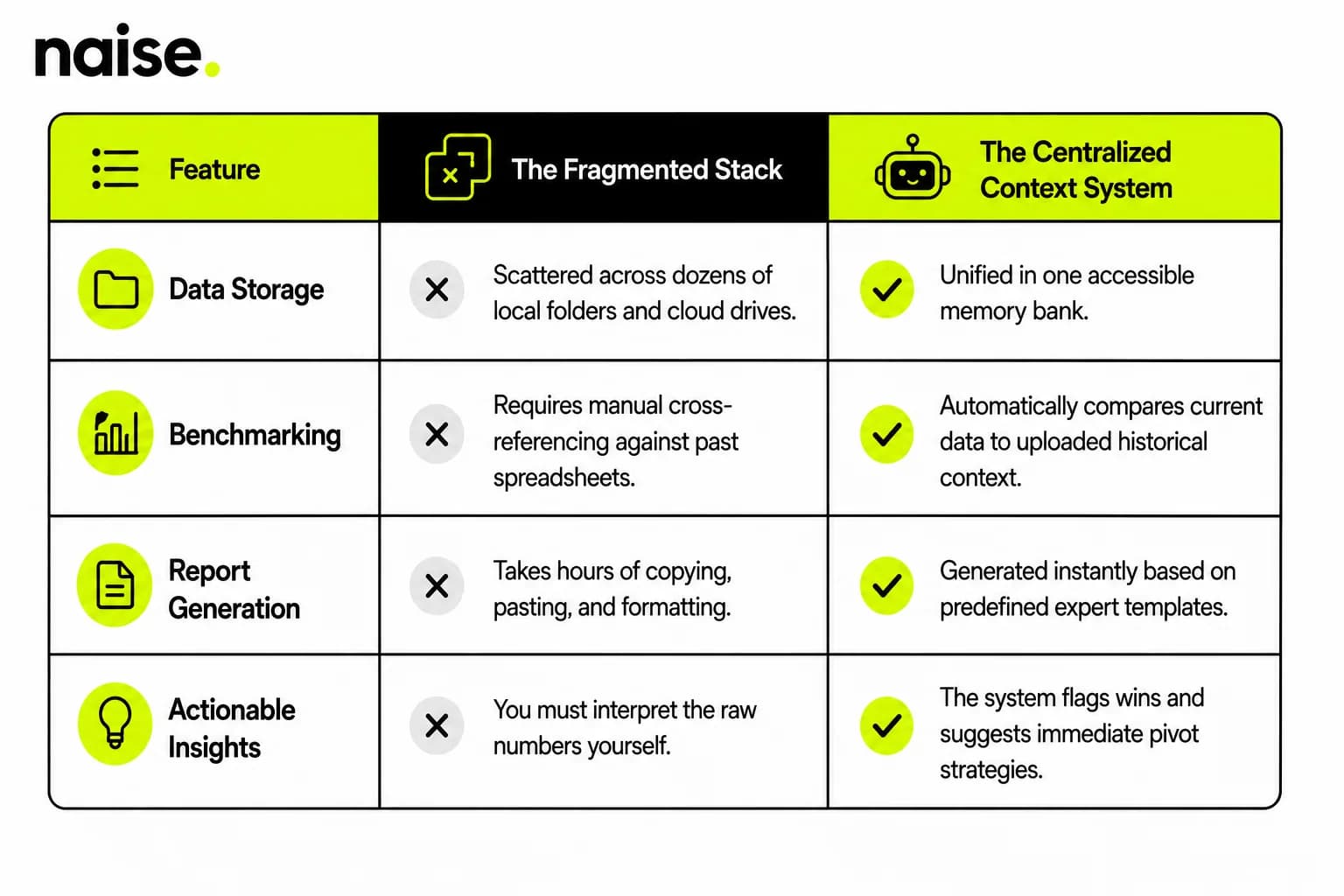
Fragmented Stack vs Centralized Context
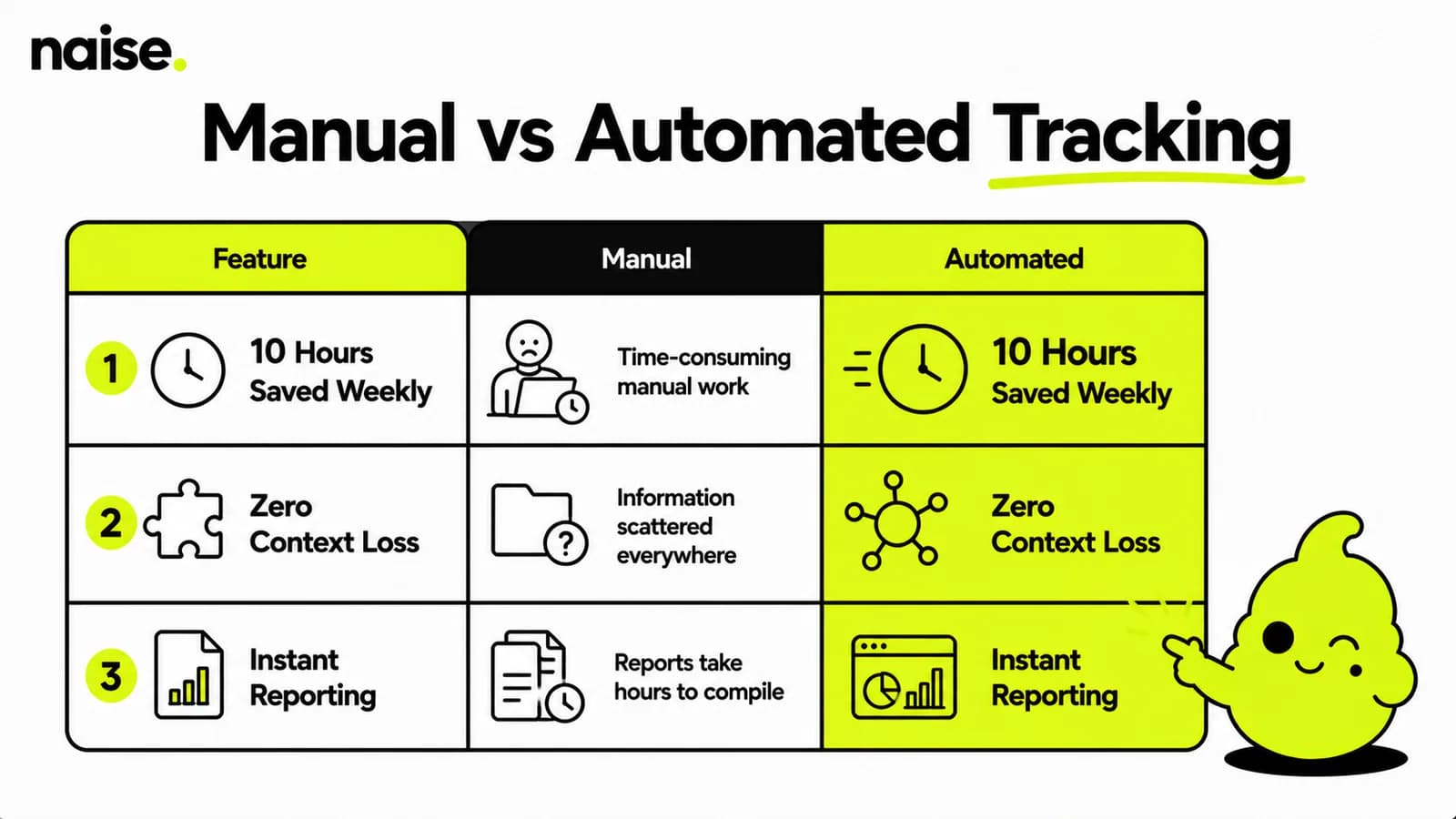
Consolidating your workflow reduces overhead costs and eliminates the friction of jumping between multiple software logins.
How to Track KPIs on Autopilot with Naise AI
Naise AI centralizes your historical data and automates your reporting so you can clock out on time.
Building an automated marketing KPI tracking system sounds complicated until you bring Naise AI into your workflow. We built this platform to eliminate prompt fatigue and manual reporting overhead. You no longer have to spend your Fridays staring at pivot tables. You just let your AI teammate handle the heavy lifting.
Here is the exact workflow to automate your KPI tracking:
Step 1: Build Your Persistent Memory. Head into your Dashboard and open Projects. Upload your historical performance reports, brand guidelines, and current OKRs. This step ensures the AI completely understands your unique baselines.
Step 2: Command the AI. Open Naise Chat and tell the system what you need to track. Because the context is already saved in Projects, you never have to repeat your goals.
Step 3: Deploy a Strategy. Select one of our pre-configured Playbooks (like the "Social Media Report" template). This gives the AI a perfect, expert-level prompt framework instantly.
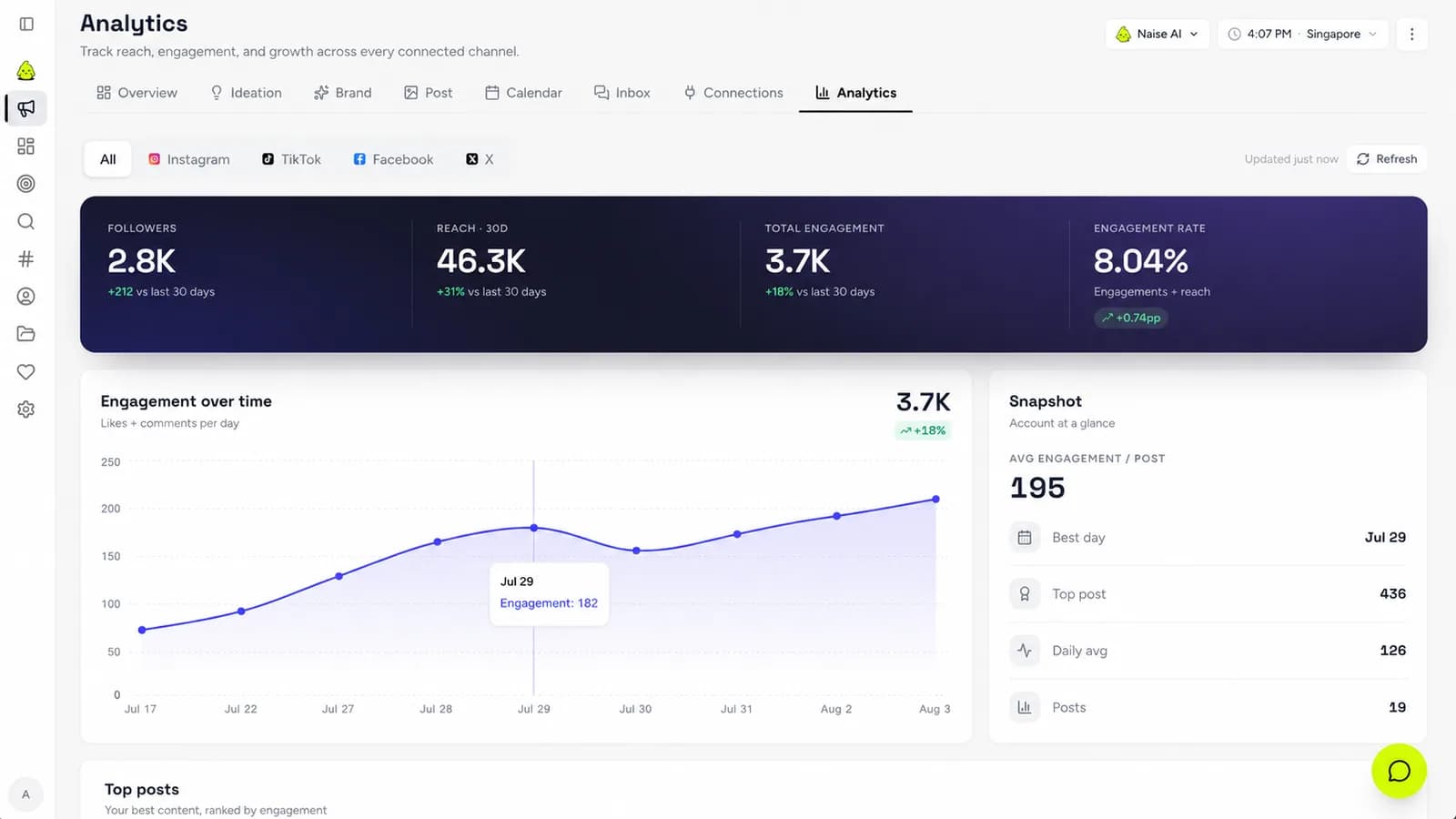
Step 4: Let the Agent Execute. Assign the task to the SMM Agent. It autonomously pulls the data, compares it against your historical memory, and generates a formatted, ready-to-share insights report.
Stop Crunching Numbers and Start Growing
Your time is too valuable to spend acting like a human calculator.
An automated marketing KPI tracking system is the ultimate antidote to tool fatigue and burnout. By leveraging persistent memory and autonomous agents, you centralize your knowledge and execute at ten times the speed. You get to focus strictly on creative strategy and high-level decision-making.
Let Naise AI overthink the spreadsheets. You should be planning your next big campaign. Grab your free trial and experience joyful productivity today.
Frequently Asked Questions (FAQs)
What is an automated marketing KPI tracking system?
It is a centralized framework that automatically aggregates, analyzes, and reports on your marketing performance metrics. Instead of manually exporting data from various platforms, this system pulls everything into one unified dashboard. It uses historical context to measure current performance against past benchmarks. This allows marketing managers to see real-time ROI without doing any manual spreadsheet formatting.
Why do marketing teams struggle with KPI reporting?
Most teams suffer from tool fatigue and fragmented data silos. Marketers often use completely different software for email, social media, and website analytics. Pulling reports requires logging into each tool separately and manually aligning the data into a single presentation. This fragmented stack leads to massive time waste and frequent human errors during data entry.
How does AI improve marketing KPI tracking?
AI applies persistent memory to understand your specific goals and autonomously generates insights. Standard dashboards only show raw numbers. An AI-powered tracking system understands your historical context (like past quarter results or specific brand OKRs). It automatically highlights anomalies, suggests strategy pivots, and formats the data into executive-ready reports in seconds.