The open-source Claude Video project fundamentally changes how AI interacts with media by allowing models to actually "watch" and "listen" to video files rather than just reading metadata. This Claude Video open source vision extractor pulls raw frames and audio transcripts, letting marketers ask highly specific questions about visual events, on-screen text, and spoken dialogue. While powerful for individual research, integrating these insights into a full campaign requires an autonomous system to handle the heavy lifting.
The End of Metadata Guesswork
The Claude Video tool bypasses titles and descriptions by extracting raw video frames and audio, sending this actual media data directly to the AI for analysis.
For years, getting an AI to understand a video meant feeding it the YouTube description, the title, or a manually typed summary. The AI was not watching the video; it was reading your notes about the video. The new open-source Claude Video project destroys this limitation entirely.
Developed as a lightweight, installable tool, it allows large language models to process video files natively. You simply paste a URL or drop a local file, and the tool goes to work. It extracts keyframes at specific intervals and pairs them with the audio transcript.
This means when you ask, "What color was the presenter's shirt when he showed the pricing chart?" the AI can actually answer accurately. It is grounded in the raw visual data, not the SEO-optimized metadata. This completely changes the game for marketers needing to analyze competitor webinars, breakdown viral TikTok hooks, or audit lengthy product demos.
How the Vision Extractor Actually Works
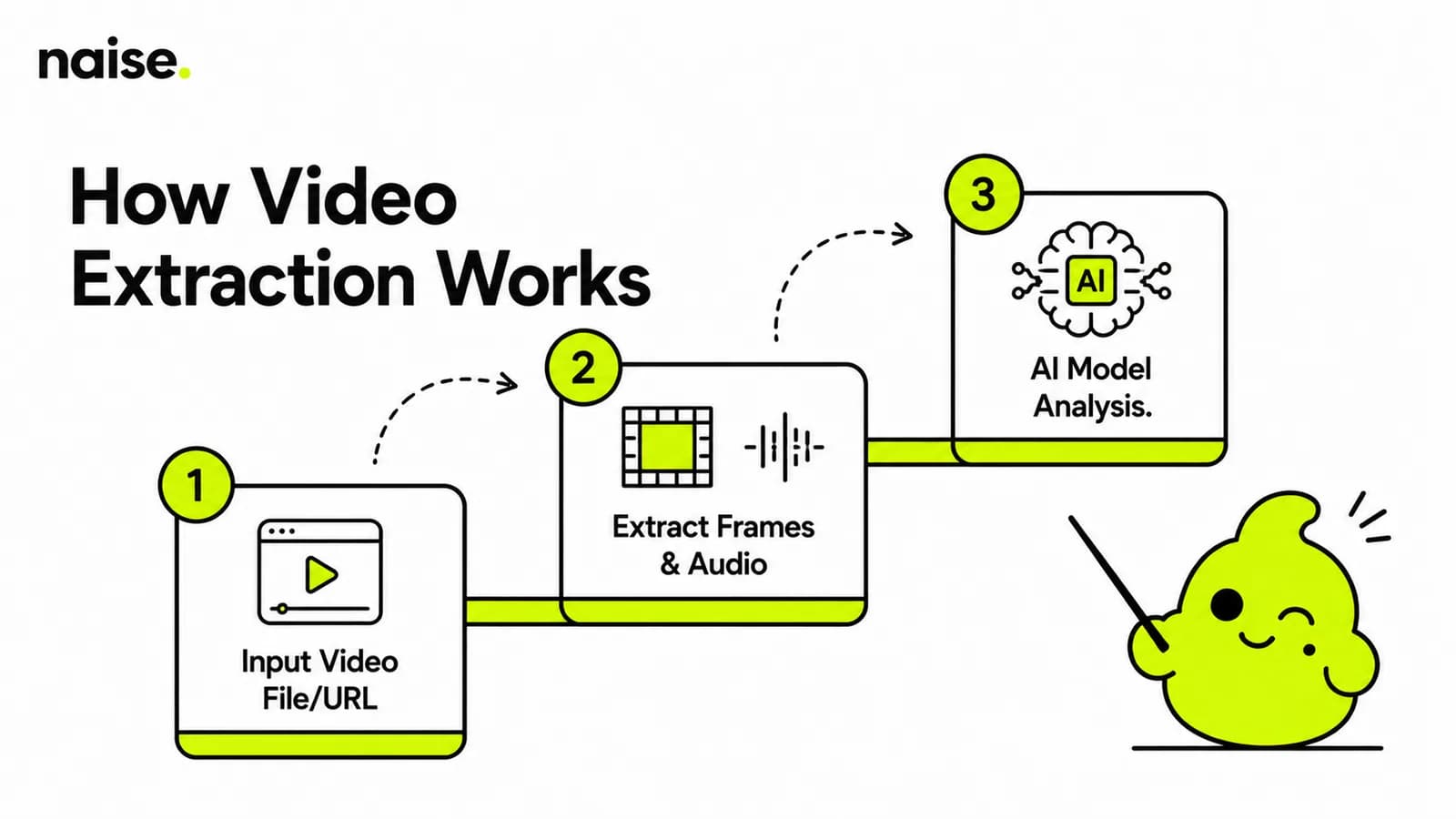
The tool uses a dual-pronged approach: extracting visual keyframes via tools like FFmpeg and processing audio with speech-to-text models, then feeding both streams into the chosen AI model.
The magic behind this tool is surprisingly practical. It does not try to feed a massive, gigabyte-heavy video file directly into a chat window. Instead, it acts as a highly efficient translator between the video format and the AI's processing capabilities.
First, it utilizes open-source libraries to slice the video into a series of images (keyframes). It captures the visual context at regular intervals, ensuring the AI "sees" the progression of the content. Simultaneously, it strips the audio track and runs it through a transcription service like Whisper.
It then packages these images and the text transcript together. When you prompt the AI, it cross-references the spoken words with the exact images on screen at that moment. This is why it can answer the way a human who actually watched the video would. It understands the interplay between the visual action and the audio track.
Beyond Claude: A Model-Agnostic Approach
While named after Claude, this open-source tool acts as a universal bridge, allowing over 50 different AI models, including Gemini and GPT-4, to process video data.
Do not let the name fool you. The Claude Video project is not locked into a single ecosystem. It is designed to be highly versatile, supporting over 50 different AI hosts. Whether you prefer the nuanced writing of Claude, the raw processing power of GPT-4V, or the speed of Gemini, this tool acts as the necessary bridge.
It also supports developer-focused models like Codex and Cursor. This means a developer could theoretically feed a video of a software bug directly into their coding environment and ask the AI to identify the issue based on the visual recording.
For marketing teams, this flexibility is crucial. You are not forced to abandon your preferred AI model just to gain video analysis capabilities. You can plug this extractor into your existing stack and immediately start mining video content for actionable insights, quotes, and visual references.
Stop Analyzing, Start Executing with Naise AI
While tools like Claude Video provide raw data, Naise AI takes those insights and autonomously executes the resulting marketing campaigns without manual prompting.
Being able to extract data from a video is an incredible technical achievement. But raw data is just the beginning of the marketing workflow. Once you know exactly what your competitor said at the 14-minute mark of their webinar, what do you do with that information?
You still have to write the counter-argument post, format it for LinkedIn, generate a graphic, and schedule it. That is where a fragmented tech stack creates massive bottlenecks. You are trading time spent watching videos for time spent prompting generic AI tools.
This is why modern teams rely on Naise AI. You do not need to stitch together open-source extractors and scheduling tools. You can drop a competitor's video link directly into the Dashboard, and let our ecosystem take over.
Here is how you turn video insights into immediate action:
Define the Context: Add the competitor's video to your Projects folder. Naise instantly internalizes the content, understanding both the audio and visual cues.
Select the Strategy: Open Naise Chat and select the "Competitor gap play" Playbook.
Deploy the Muscle: The PR Agent analyzes the video data to find the strategic blind spots, while the SMM Agent autonomously drafts three LinkedIn posts targeting those exact weaknesses, perfectly aligned with your established tone of voice.
Clock out on time: Review the drafted campaigns, approve them, and let Naise handle the scheduling.

The ability for AI to actually "watch" video content changes how we research and analyze the market. Open-source tools like the Claude Video extractor are brilliant for pulling specific data points from lengthy content. However, extracting the data is only half the battle. If you want to turn those insights into high-converting campaigns without drowning in manual execution, you need an autonomous operator. Stop stitching together separate tools and let Naise handle the heavy lifting.
FAQs
What is the Claude Video open-source tool?
It is a free, installable tool that allows AI models to process video files by extracting visual keyframes and audio transcripts. This enables the AI to answer questions based on the actual content of the video, rather than just relying on the title or description.
Does the Claude Video tool only work with Claude?
No. Despite the name, the tool is model-agnostic. It supports over 50 different AI hosts, including popular models like OpenAI's GPT-4, Google's Gemini, and developer tools like Cursor and Copilot.
How does AI watch a video file?
Instead of uploading a massive video file directly, tools like this use libraries to slice the video into a series of static images (keyframes) and transcribe the audio. These images and text are then sent to the AI model for analysis.
How can marketers use video extraction tools?
Marketers can use these tools to quickly analyze long-form content, such as webinars, product demos, or competitor ads. They can ask the AI to find specific visual moments, transcribe specific quotes, or summarize complex on-screen data without watching the entire video.