Why Manual Setups Kill Agency Profit Margins
Relying on manual data entry and fragmented tools for new clients drastically increases overhead costs and delays campaign deployment.
Scaling an agency requires a highly efficient operational foundation. When your team signs a new account, the excitement often quickly turns into a logistical nightmare. Account managers spend hours chasing down passwords, downloading rogue PDF files, and begging the client for updated brand guidelines. This chaotic scramble eats directly into your monthly retainer profit before a single piece of content goes live.
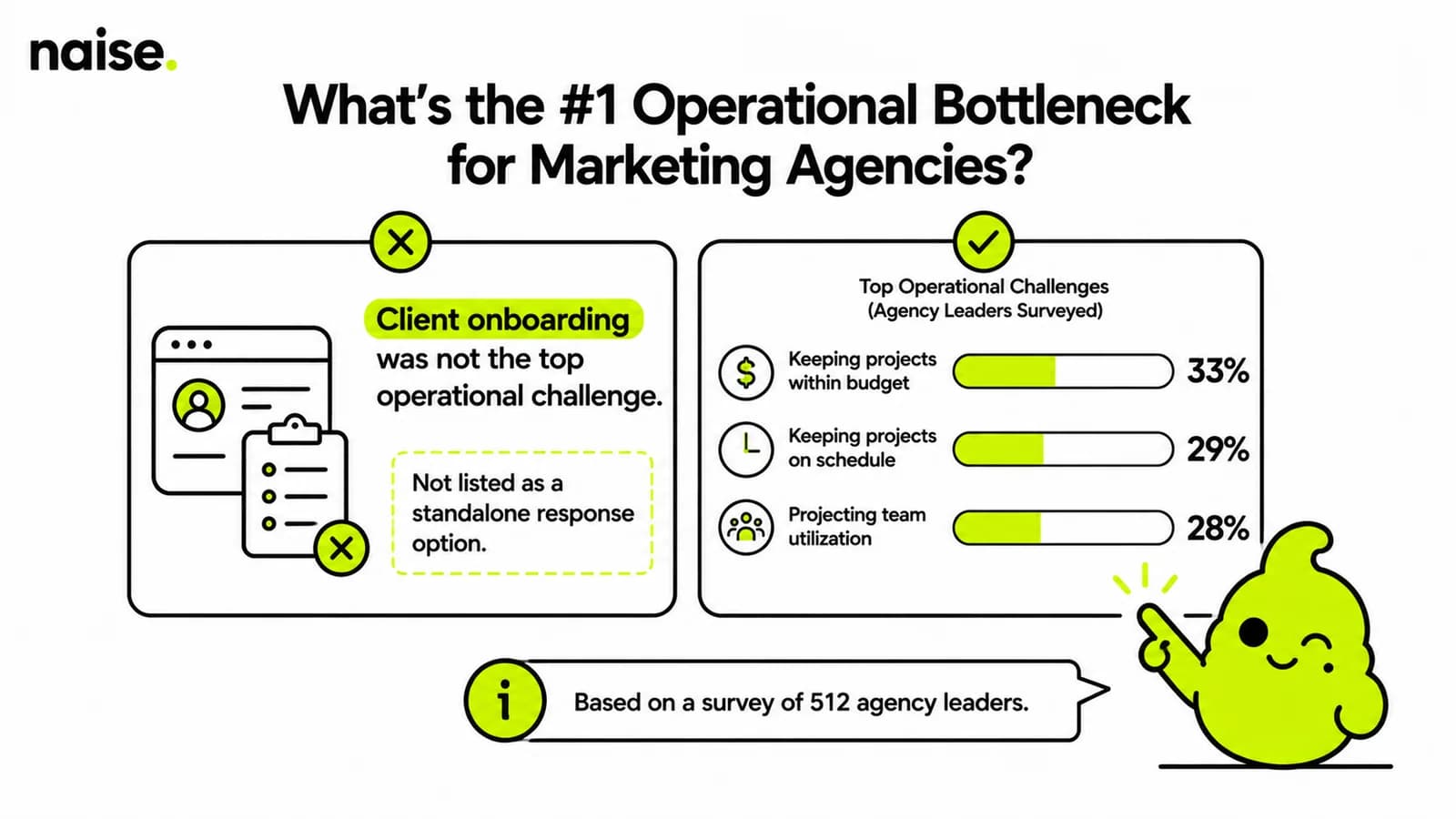
Most teams suffer from severe tool fatigue. They jump between Google Drive for assets, Notion for strategy, Asana for task management, and Slack for approvals. This fragmented workflow creates dangerous information silos. When a strategist leaves the company, all the nuanced context about a client's Brand Identity leaves with them.
You fix this by establishing rigid Standard Operating Procedures. A standardized intake system ensures you capture all necessary context upfront. This prevents the endless back-and-forth email chains that cause scope creep.
The Core Elements of a Standardized Setup
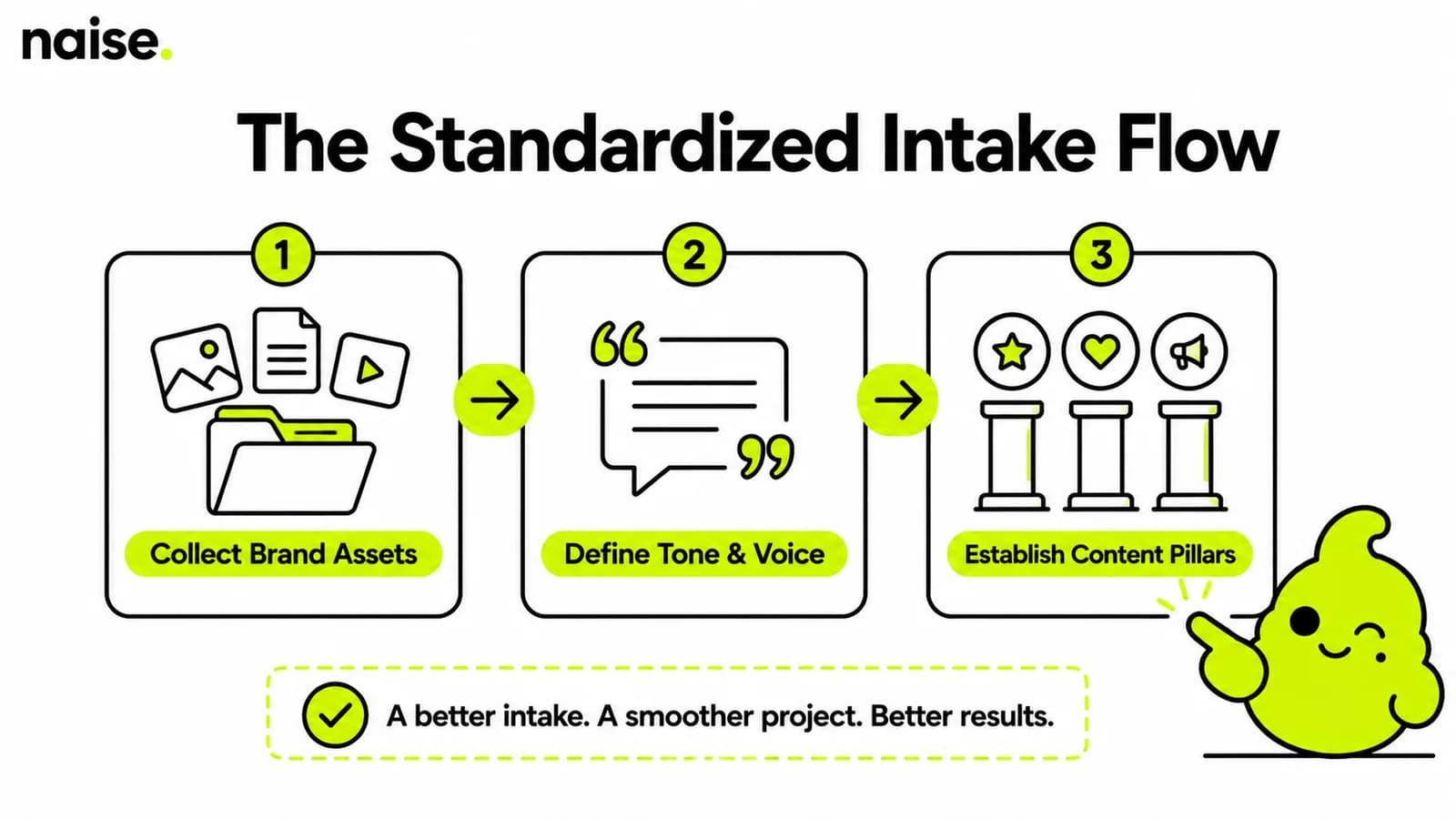
A scalable onboarding process requires centralizing the brand voice, defining exact buyer personas, and establishing strict content pillars.
To automate your growth, you need to turn abstract marketing concepts into concrete data points. You cannot expect new hires to simply "guess" what a client sounds like. You must document the Tone of Voice using clear, unambiguous rules. This includes mapping out approved adjectives, banned industry jargon, and strict emoji policies.
Next, you need to outline the Buyer Personas. Vague demographic data like "millennials in tech" provides zero value to your creative team. A proper persona document details exact pain points, daily workflow frustrations, and specific buying triggers. When you feed clear audience data into your campaign briefs, your output quality skyrockets.
Finally, you must lock in the content pillars. These are the three to five core topics your client has authority to speak on. Establishing these pillars during week one prevents your team from staring at a blank page.
Step-by-Step Guide to Deploying Agency Playbooks
Creating executable templates for common marketing requests allows your team to skip the drafting phase and move straight to strategy.
A playbook is a pre-configured template that dictates exactly how to execute a specific marketing play. Instead of starting a new document every time a client needs a product launch post, you simply load your established playbook. Step one is identifying your most repeatable tasks. Look at your past three months of deliverables and find the common denominators.
Step two requires you to standardize the inputs. A strong playbook needs specific variables to function properly. You must outline the exact Campaign Objective, the target Distribution Channel, and the desired Call to Action. When your team has a fill-in-the-blank system, you completely eliminate prompt fatigue and the dread of a blinking cursor.
Step three is refining the output through continuous iteration. The first version of your playbook will not be perfect. You need to review the analytics after a campaign runs and adjust the template accordingly. If the engagement metrics look low, you tweak the hook structure inside the template for the next client.
The Old Way vs The Standardized Way
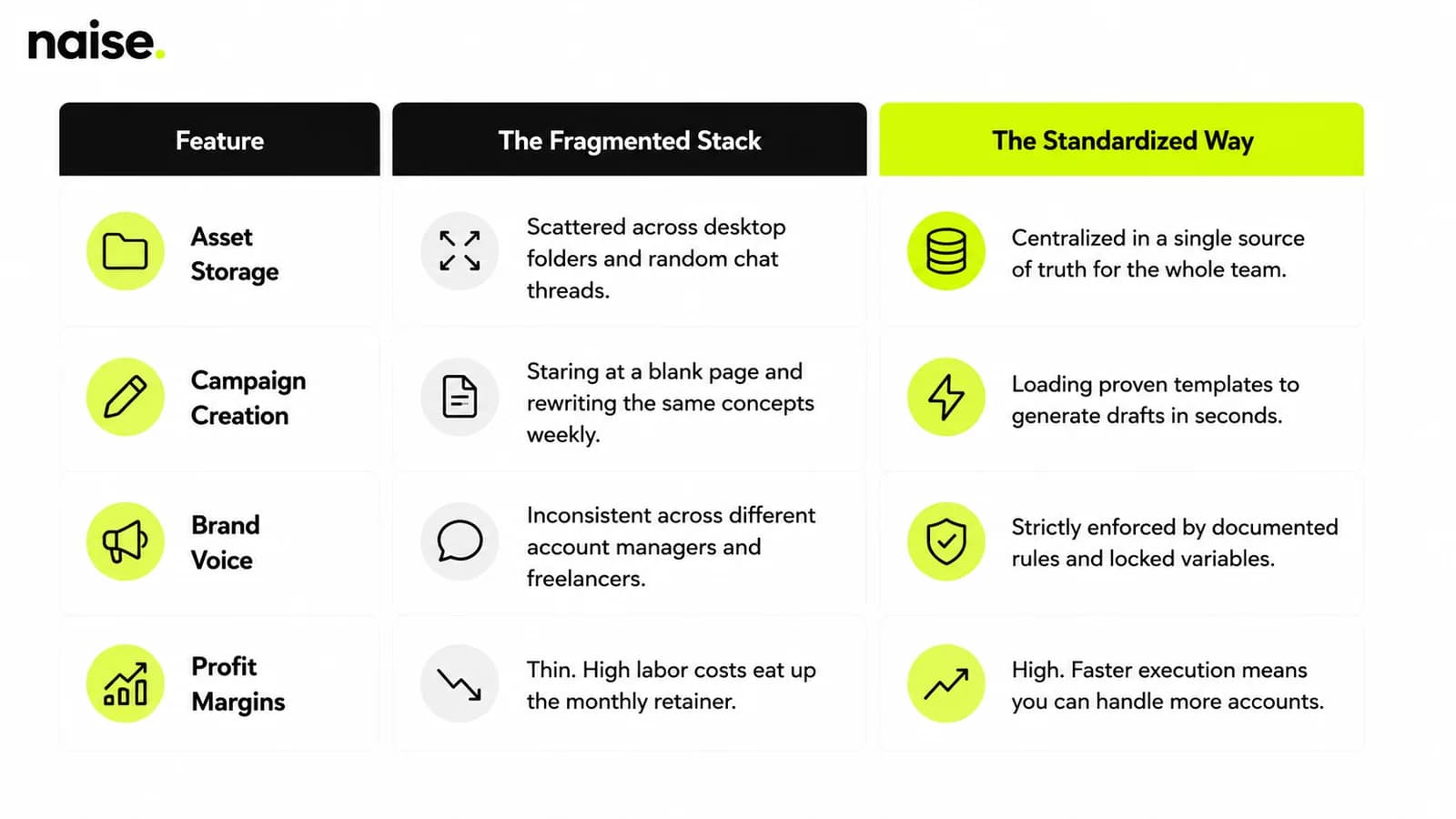
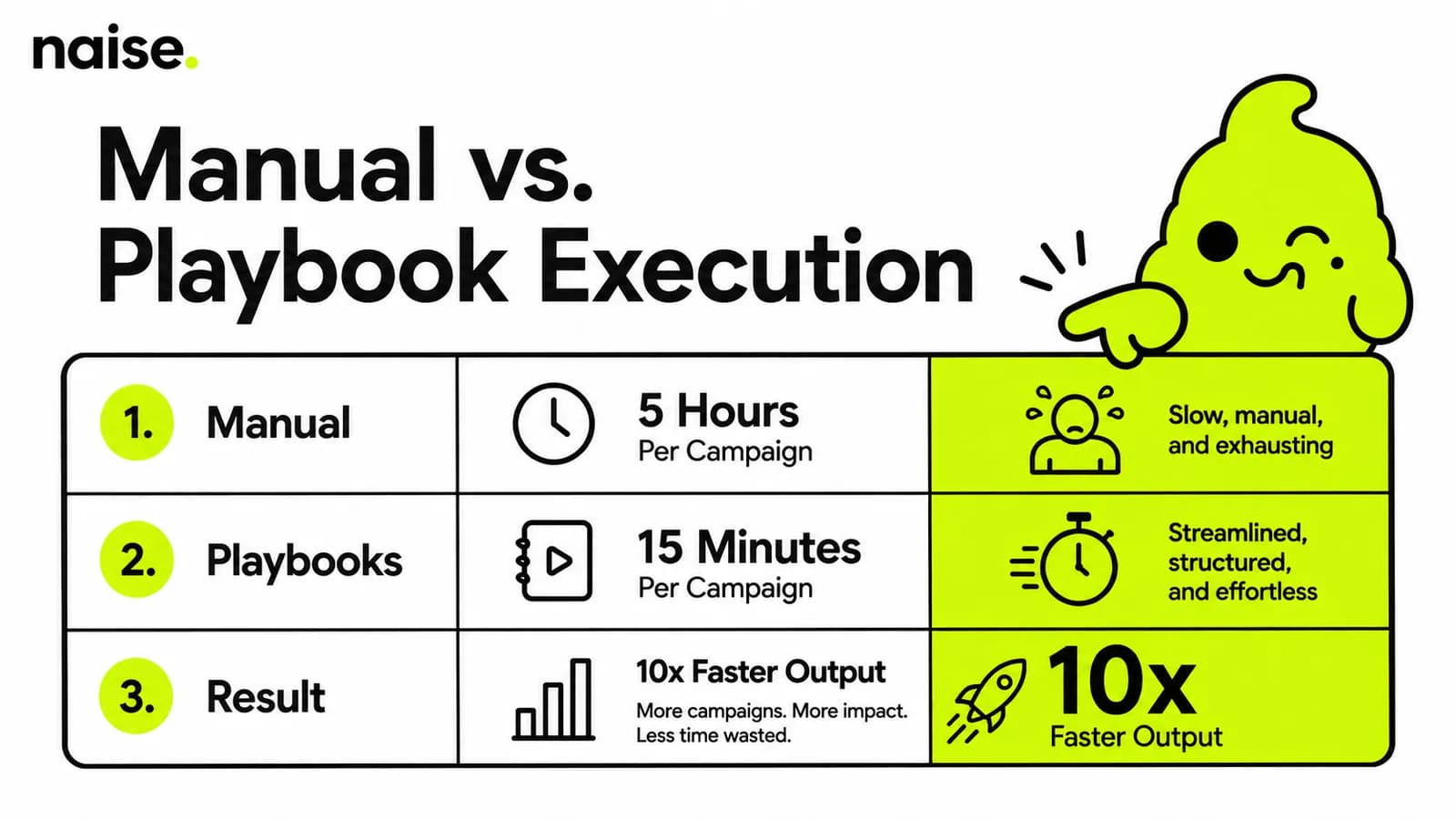
Clinging to manual execution keeps your team trapped in administrative hell, while standardized systems allow you to scale your client roster effortlessly.
Agencies that refuse to modernize their operations will eventually price themselves out of the market. Clients no longer want to pay high retainers for slow, manual execution. They want strategic partners who can move fast and react to market trends instantly.
How to Onboard Clients Instantly with Naise AI Playbooks
You can bypass the entire manual setup process by turning your client's raw data into actionable campaigns using the Naise AI ecosystem.
You understand the theory behind building a standardized system. Now you need a platform that actually executes the work for you. Naise AI is your 24/7 AI Marketing Operator built specifically to solve agency bottleneck issues. We replace your fragmented stack with a unified, intelligent system that remembers everything about your clients.
Here is exactly how you onboard a new account and launch a campaign in under five minutes using our ecosystem:
Step 1: Build the Persistent Memory. Log into the Dashboard and create a new space under Projects. Upload your client's scattered PDFs, past reports, and website links here once. The system acts as the brand's knowledge base, meaning you never have to repeat context again.
Step 2: Access Central Command. Open up Naise Chat. This is your direct line to your AI teammate. Instead of writing complex instructions from scratch, you tell the chat what you want to achieve for the new account.
Step 3: Select an Expert Template. Open the Playbooks library right inside the chat interface. Choose a pre-configured strategy like "Strategy-backed blog post" or "Post from a brand pillar". These templates are pre-engineered by marketing experts to guarantee high-quality outputs with zero prompt fatigue.
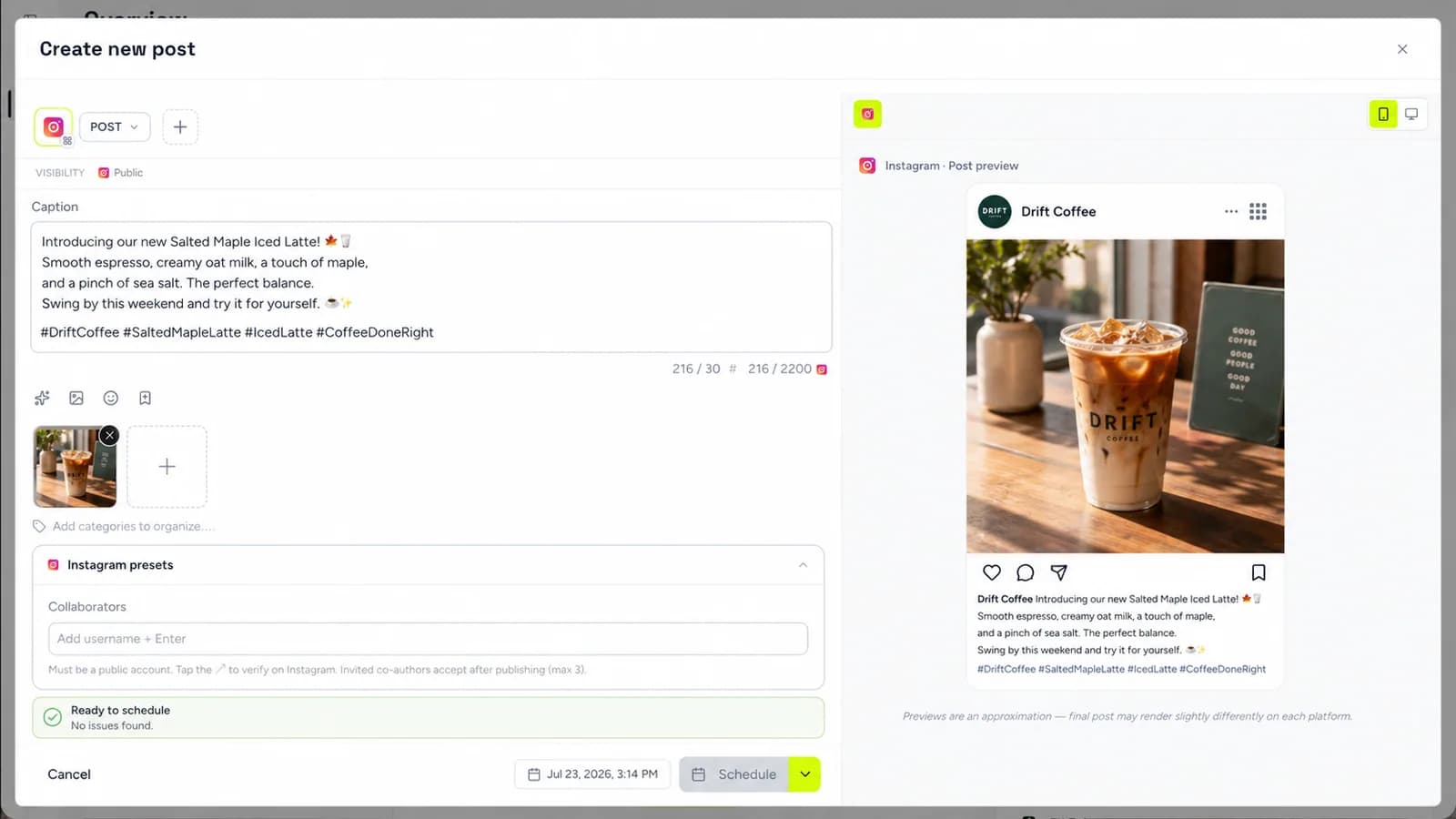
Step 4: Deploy the Muscle. Fill in the quick variables (like the product name) and let the SMM Agent take over. The agent autonomously pulls the exact Tone of Voice from your project files, drafts the content, generates matching visual assets, and queues it up for direct channel autoposting.
Your agency deserves to scale without forcing your team to work weekends. Building an automated marketing agency client onboarding system shifts your focus from tedious data entry to high-level strategy. By leveraging the right tools, you can guarantee brand safety for every new account while drastically improving your profit margins. Let your intelligent teammate handle the heavy lifting while you focus on closing your next big retainer.
Frequently Asked Questions (FAQs)
What is the biggest mistake agencies make during onboarding?
The most common error is relying on unstructured email threads to gather brand assets. This leads to missing files, forgotten context, and a massive delay in launching the first campaign. Agencies must utilize a strict, centralized intake form to capture everything before the kickoff call.
How do playbooks prevent prompt fatigue?
Prompt fatigue happens when marketers have to constantly rewrite complex instructions for AI tools to get a decent result. Playbooks solve this by acting as pre-configured, expert-level templates. You simply plug in a few basic variables (like the product name and target audience), and the system handles the intricate formatting and logic behind the scenes.
Can AI actually mimic a specific client's tone of voice?
Yes, provided you give it persistent memory. Generic text generators fail because they start with a blank slate every time. Systems that utilize dedicated project folders allow you to upload specific brand guidelines, banned phrases, and formatting rules. The AI references this locked data for every single task, ensuring the output never breaks character.
How long should it take to onboard a new social media client?
With a traditional manual setup, organizing assets and drafting the first month of content can easily take fifteen to twenty hours. By utilizing a centralized memory bank and standardized execution templates, a modern agency can complete this entire process and have campaigns ready for review in under an hour.