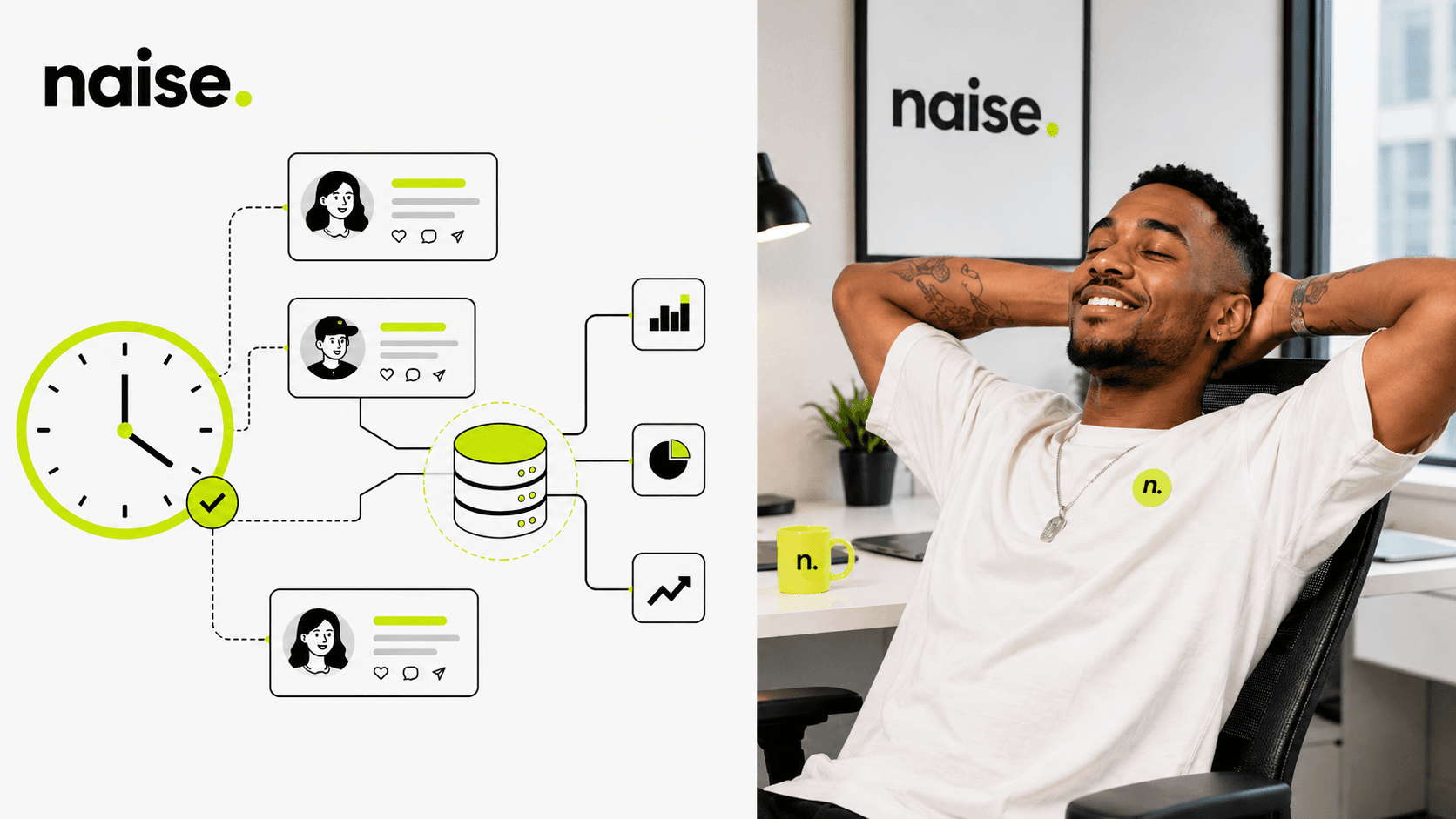
The Native vs. Stack Illusion
When we talk about true marketing automation and social media integration, standard advice usually misses the mark. It confuses all-in-one CRM platforms with pure social media schedulers. You usually need expensive third-party connector tools to make these separate systems communicate.
Most generic recommendations lump massive platforms like HubSpot into the same category as pure social schedulers like Hootsuite or Buffer. They fail to explain that these tools serve completely different masters. A pure Social Media Management Tool pushes content out to audiences. A Customer Relationship Management Platform pulls prospect data into a sales pipeline.
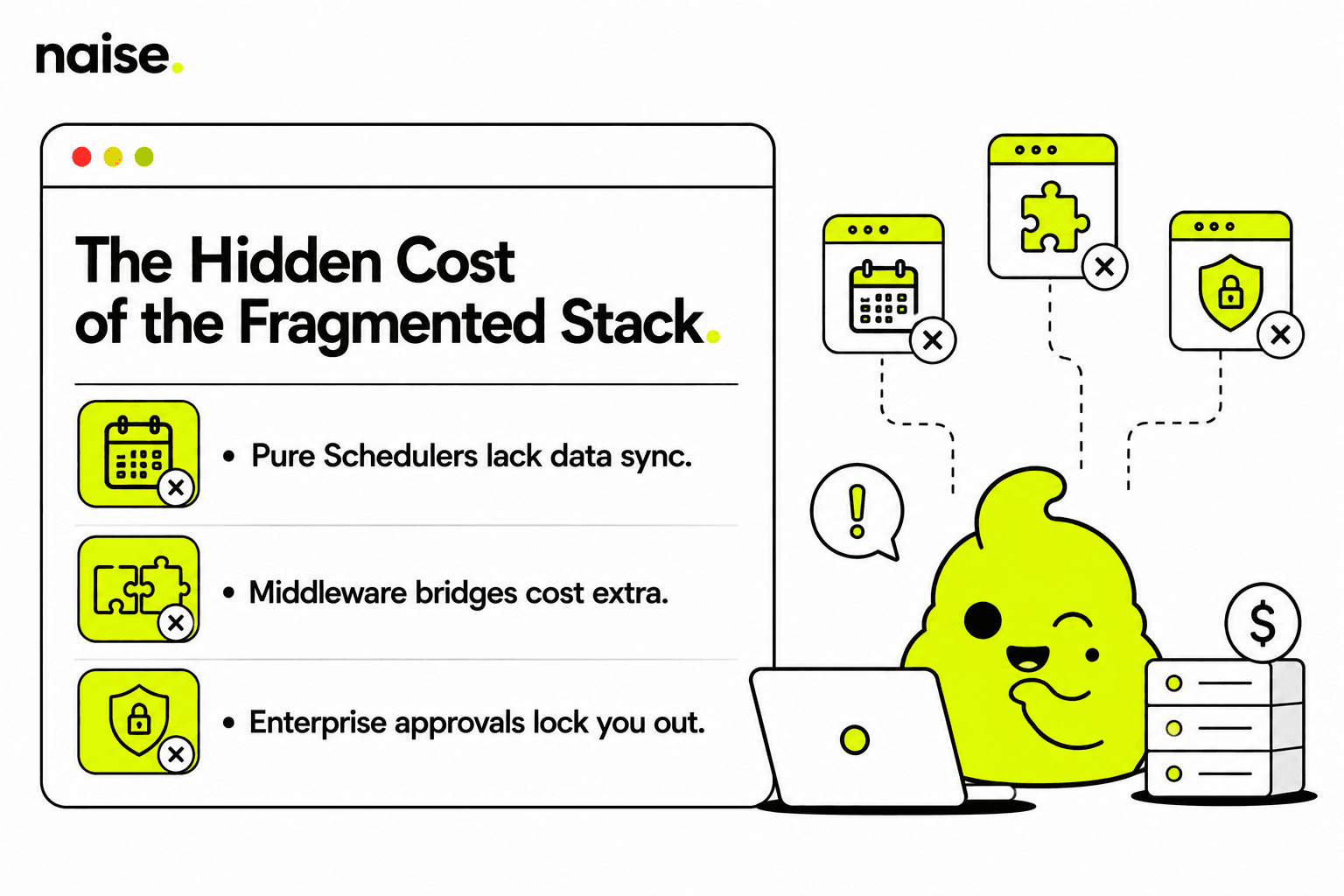
Getting them to actually talk to each other requires building an API Bridge. If you rely on a standalone social scheduler, you are forced to buy subscriptions for middleware tools like Zapier or Make. You end up spending hours building fragile zaps just to log a simple social click inside your main Marketing Engine.
This creates the dreaded Fragmented Stack. You have too many logins, too many monthly subscriptions, and zero synergy between your creative output and your revenue tracking. Your team wastes hours troubleshooting broken connections instead of executing high-level strategy.
The Enterprise Pricing Blindspot
High-tier marketing automation and mandatory approval workflows are strictly locked behind massive enterprise paywalls on legacy platforms.
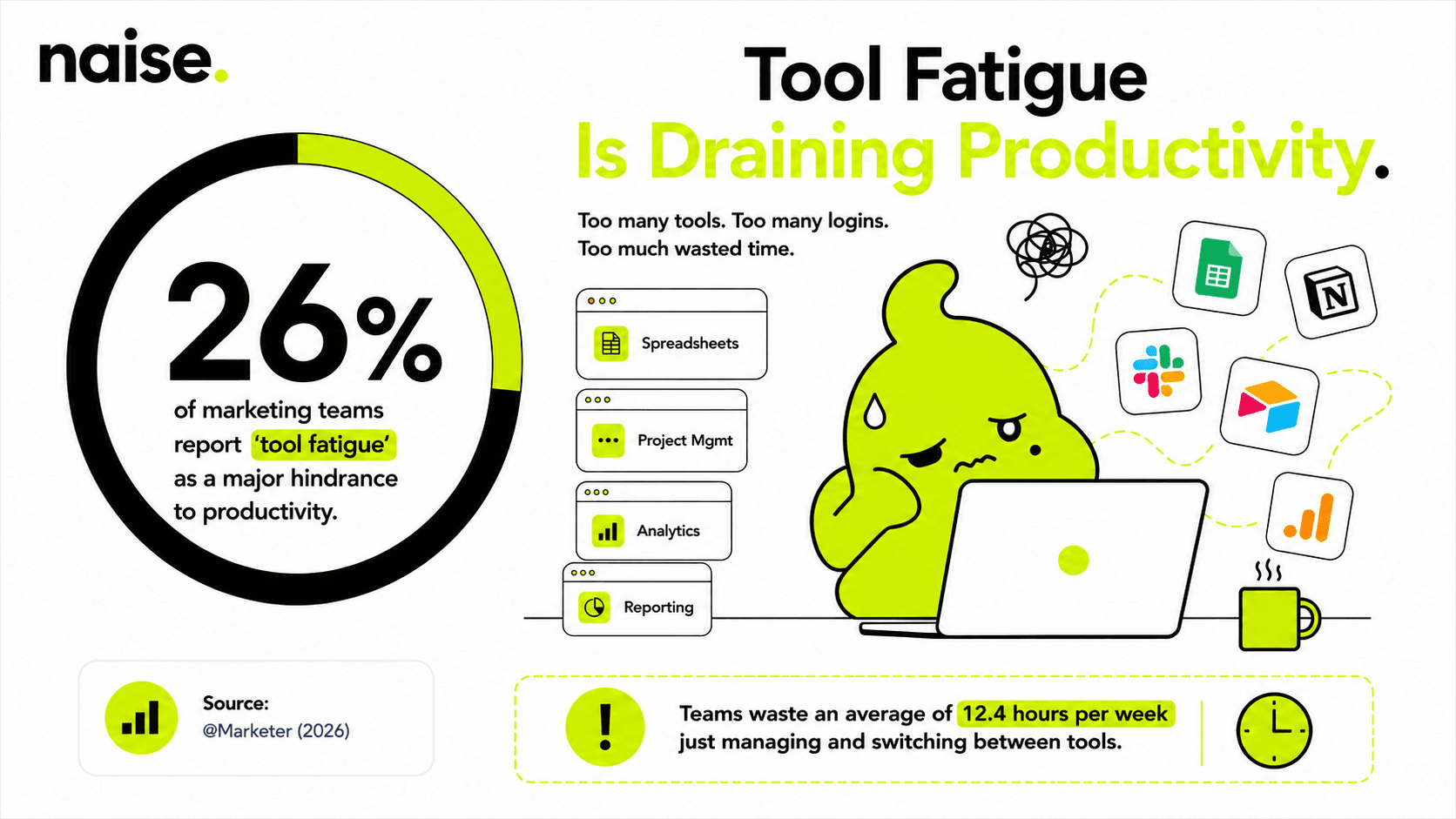
When trying to nail down your marketing automation and social media integration, you will constantly see recommendations for heavyweights like Sprout Social or Salesforce. The blindspot here is the actual cost of doing business. These platforms hide their most critical features behind massive enterprise-tier subscriptions. You might sign up for a basic plan, only to realize that basic Approval Workflows require an immediate upgrade.
If you run a lean marketing team, you do not have an unlimited budget for software bloat. You buy a tool expecting an extra set of hands. Instead, you get a rigid system that taxes you for adding a new user or implementing a basic Automated Trigger.
This pricing model forces smaller teams back into manual execution. You end up copying and pasting post drafts in a spreadsheet because the native software is too expensive to use properly. This is the exact opposite of joyful productivity.
The Tools Built for Pipeline Integration
Legacy platforms get all the attention while specific pipeline tools and modern no-code databases are completely ignored by generic advice.
If your goal is deep integration, standard social schedulers are the wrong choice. You need platforms built specifically for Marketing Pipeline Integration from day one. Tools like CoSchedule or ActiveCampaign prioritize the entire customer journey over simple vanity metrics. They connect your social broadcasting directly to your Email Marketing and lead scoring efforts.
Modern marketing teams are also bypassing legacy tools entirely in favor of no-code setups. By combining a relational database like Airtable with a visual automation builder like Make, you can construct a bespoke marketing machine. This approach allows you to dictate exactly how a Social Media Asset moves from the drafting phase into your active publishing queue.
However, even the best no-code setups require serious technical oversight. You still have to play the role of a system administrator to keep the data flowing smoothly.
The Missing Operational Context
True integration is about how data flows between the social post and the marketing engine, such as passing attribution data or syncing custom audiences.
According to HubSpot’s 2026 Social Media Marketing Report, 60% of B2B marketers report struggling to measure cross-channel and cross-campaign impact, which includes social media as a major channel.
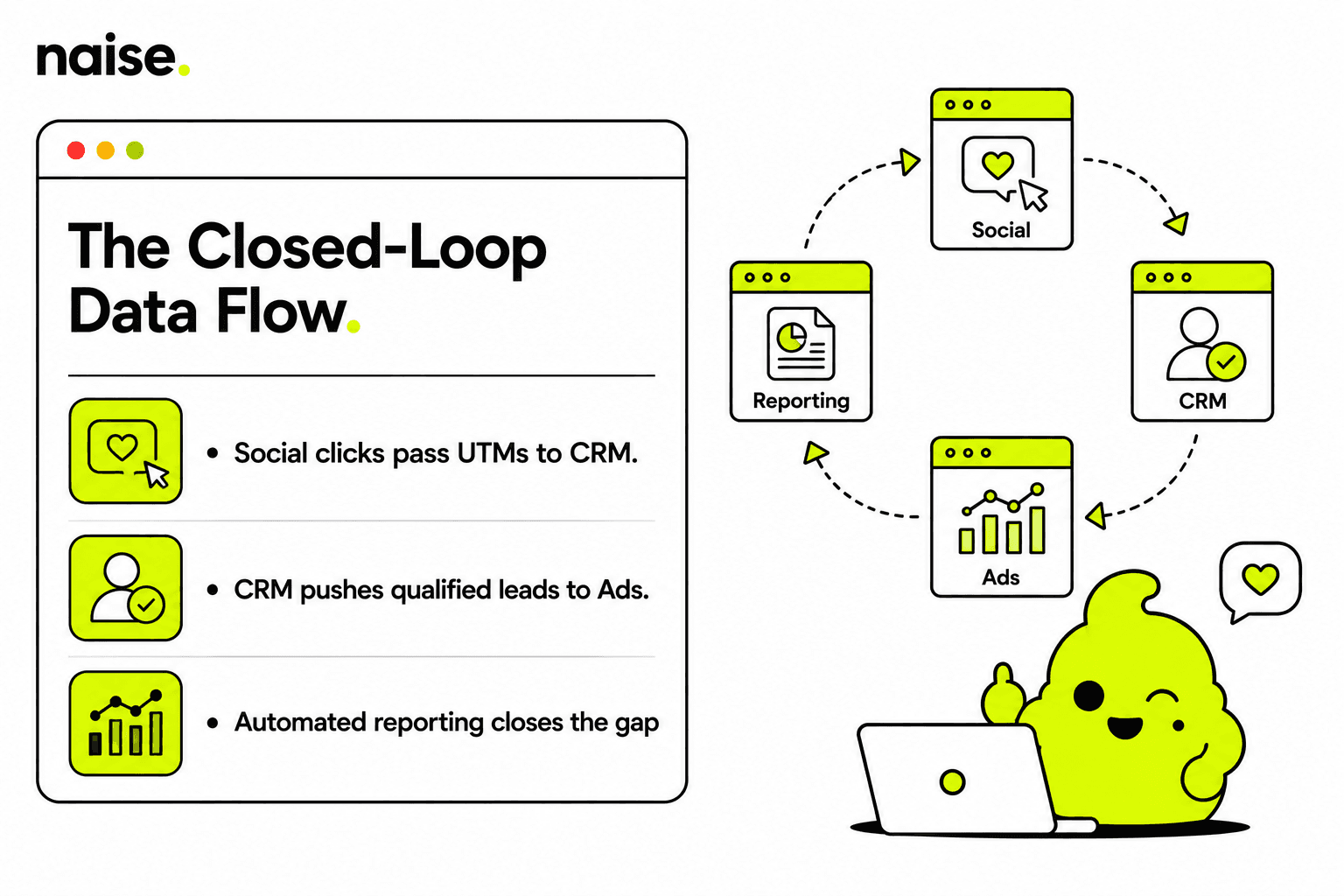
Connecting two apps is meaningless if you do not understand the data flow. A proper integration must pass UTM attribution parameters seamlessly from the social click directly into your CRM. Without this operational context, you have no way to measure your return on ad spend or organic pipeline impact.
Your automation should also work in reverse. When a user hits a specific lead score in your database, the system must push that contact into your Custom Audiences on advertising platforms. This creates a closed-loop system where your Marketing Automation Engine directly dictates who sees your social content.
Most tools stay entirely theoretical on this front. They give you a blank text box and expect you to do the heavy lifting of formatting links, building tracking codes, and analyzing the final data. You are left doing the grunt work for a machine that is supposed to be working for you.
Comparison: The Old Way vs. The Naise Way
The traditional fragmented stack relies on manual bridges and high costs, whereas the Naise AI ecosystem handles strategy and autonomous execution natively.
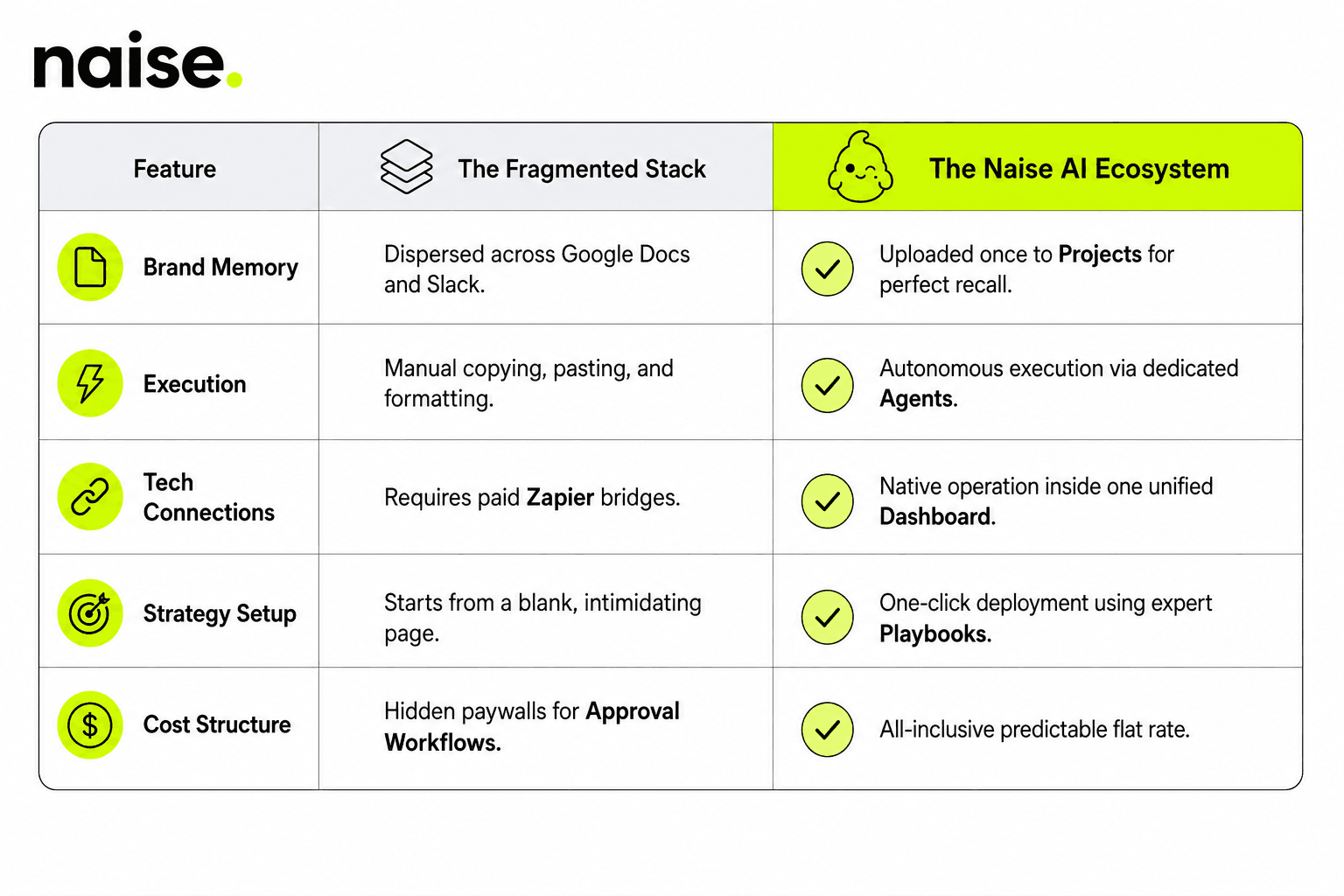
Stop Integrating. Start Executing with Naise AI.
Naise AI replaces broken integrations with an autonomous workflow that moves directly from persistent brand memory to final agent execution.
You do not need another software integration to manage. You need an autonomous teammate that handles the execution for you. Naise AI is built on a specific architectural flow to eliminate manual work entirely. Here is exactly how you deploy a fully automated campaign without touching a single API key or spreadsheet.
Step 1: Upload to Projects (The Brain). You drop your brand guidelines, past PDFs, and tone of voice documents into a persistent memory bank. The AI now completely understands your distinct brand identity.
Step 2: Enter Naise Chat (Central Command). You open the main interface and declare your goal. You never have to deal with prompt fatigue because the system already knows who you are targeting.
Step 3: Select a Playbook. Instead of staring at a blank page, you select a pre-configured, expert template. These are built by veteran marketers to guarantee high-converting outputs.
Step 4: Deploy the SMM Agent (The Muscle). You approve the deliverables and hand them over to your autonomous SMM Agent. The agent handles the formatting, scheduling, and direct publishing natively.
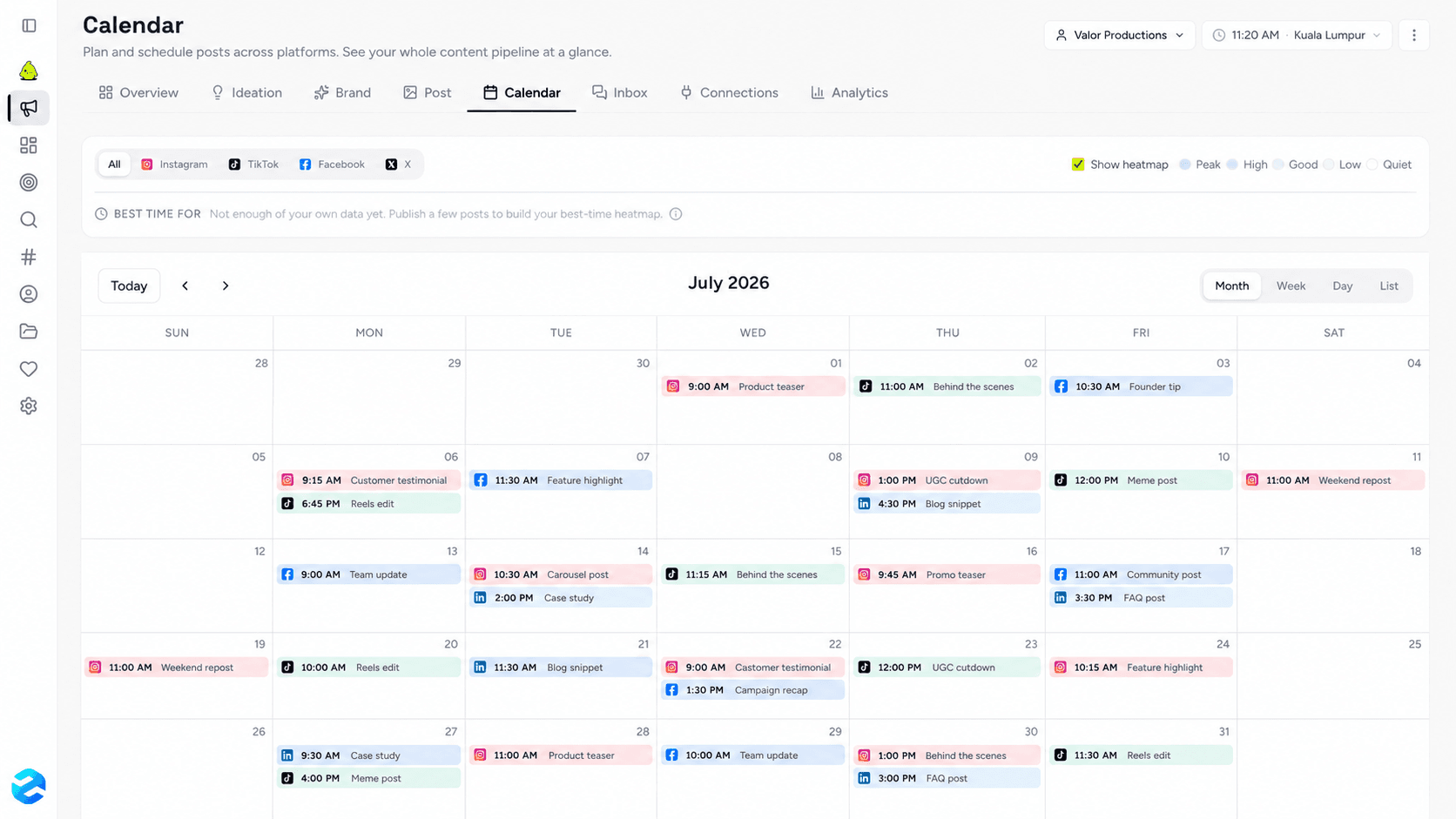
The era of duct-taping ten different software tools together is over. Real marketing automation and social media integration should not require a computer science degree or a massive enterprise budget to maintain. You deserve a system that handles the heavy lifting so you can focus strictly on creative strategy and clocking out on time. Stop babysitting your social channels and let your AI teammate take the wheel. Run your Free 60-Second URL Audit today and see exactly how fast Naise AI can build your brand profile.
Frequently Asked Questions (FAQs)
Q: Why do native social schedulers struggle with marketing automation?
Native social schedulers are built to broadcast content outward, not to ingest and organize complex customer journey data.
Most social tools lack the backend database structure required to handle lead scoring, pipeline stages, or complex email triggers. They operate in a silo, meaning any interaction on a social post stays locked inside that specific app. To achieve real automation, you must forcefully extract that data and feed it into a dedicated CRM.
Q: What is the true cost of a fragmented marketing stack?
The true cost includes overlapping monthly software subscriptions, paid middleware connectors, and the massive loss of human labor hours.
When your tools do not speak to each other naturally, you pay a premium just to connect them. Beyond the financial cost of tools like Make or Zapier, your marketing team wastes countless hours troubleshooting errors and manually moving data. This operational drag prevents your team from scaling campaigns effectively.
Q: How does persistent memory improve AI marketing automation?
Persistent memory ensures the AI strictly adheres to your brand guidelines without requiring repetitive prompting for every single task.
In standard AI tools, you have to explain your brand voice from scratch every time you open a new chat. With a system like Projects inside Naise AI, you upload your context once. The AI retains that memory permanently, ensuring that every piece of automated content deployed by your Agents sounds exactly like your brand.