The best AI marketing tools in 2025 don't just generate content; they automate your entire workflow. While standalone tools like Jasper, SEMrush, HubSpot, and Sprout Social are industry standards, building a fragmented stack leads to expensive data silos and prompt fatigue. The ultimate solution is moving toward a unified system like Naise AI, which uses persistent memory to run your campaigns autonomously.
The State of the Marketing Tech Stack in 2025
Building a modern tech stack used to mean buying the best tool for every individual category. Today, that approach just buys you a headache.
The average marketing manager spends more time acting as a software administrator than a creative strategist. You are constantly battling broken API connections, managing multiple subscriptions, and rewriting the same brand guidelines into generic chatboxes.
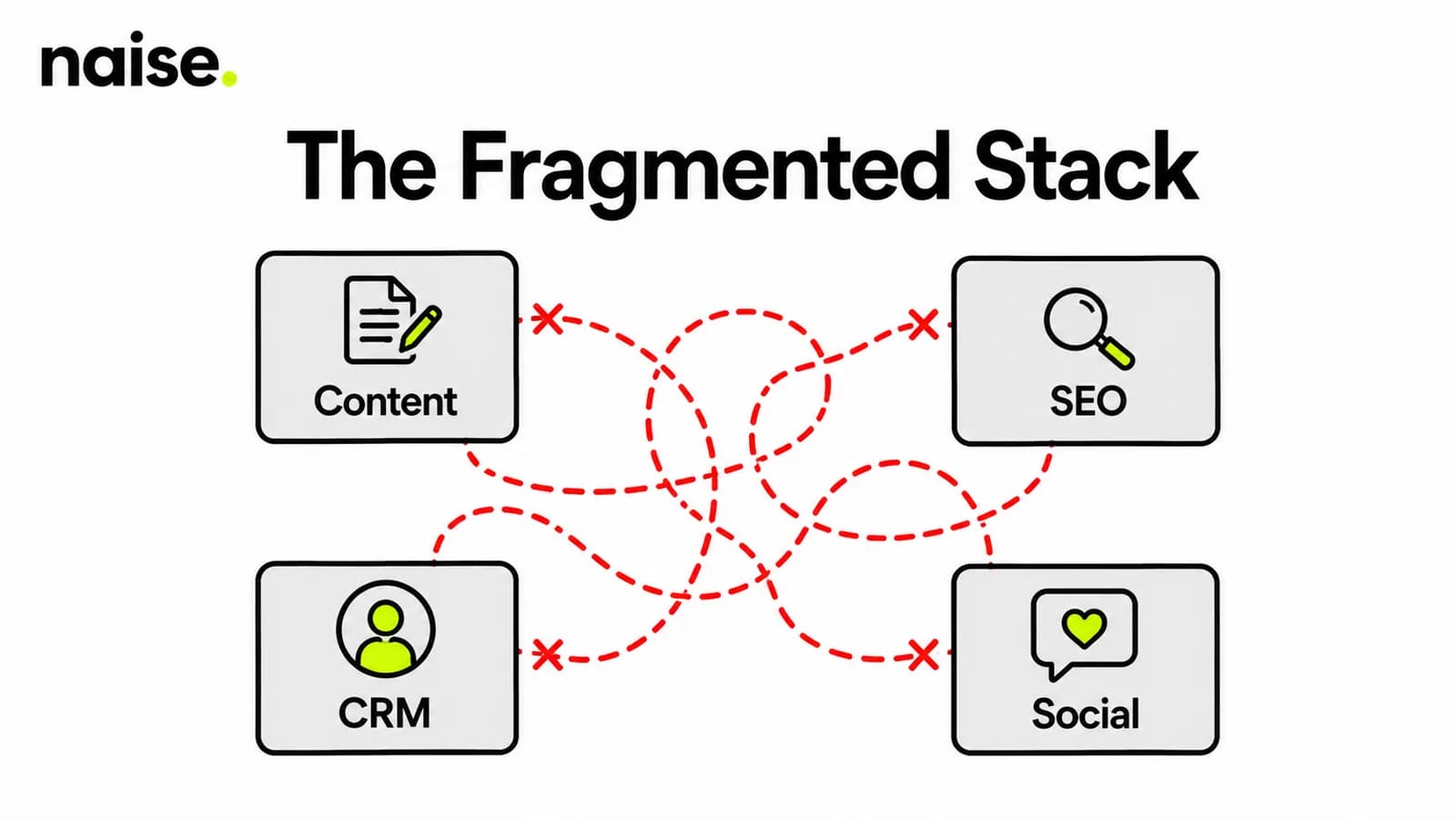
If you want to scale your output without hiring an army of freelancers, you need to consolidate. Here are the top 5 AI marketing tools you need to know about, leading up to the only platform that actually ties it all together.
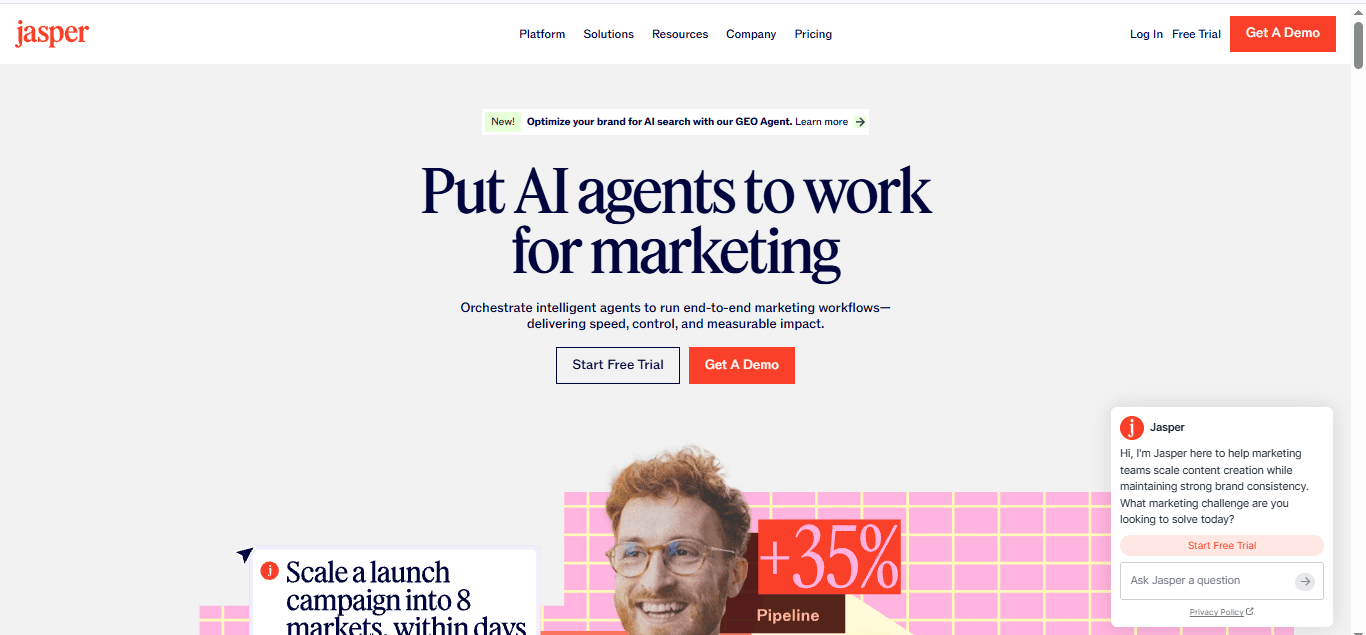
1. Jasper: The AI Content Engine Jasper is a powerful standalone generative AI tool built specifically for marketing copy and content creation.
The Pros: It is trained on marketing best practices, offers a brand voice feature, and includes an AI image suite. It helps teams churn out blog posts and ad copy fast.
The Catch: It is still just a content generation tool. You have to manually take what Jasper creates, format it, and move it into your CMS, email sender, or social media scheduler.
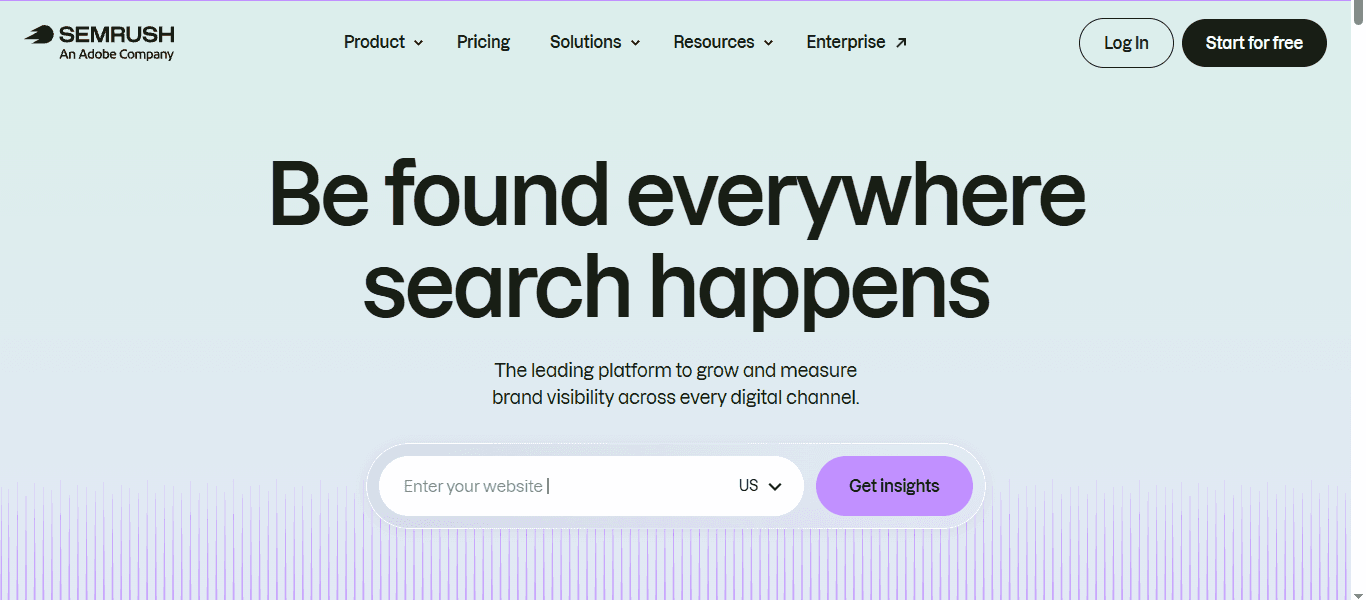
2. SEMrush: The SEO Powerhouse SEMrush remains an absolute titan for search engine optimization, keyword research, and competitive intelligence.
The Pros: Offers deep technical SEO audits, backlink profiling, and daily SERP tracking. It helps you find exact content gaps to exploit.
The Catch: It tells you what to do, but doesn't execute it for you. You still have to extract the data and brief a human writer or another AI tool to actually create the content.
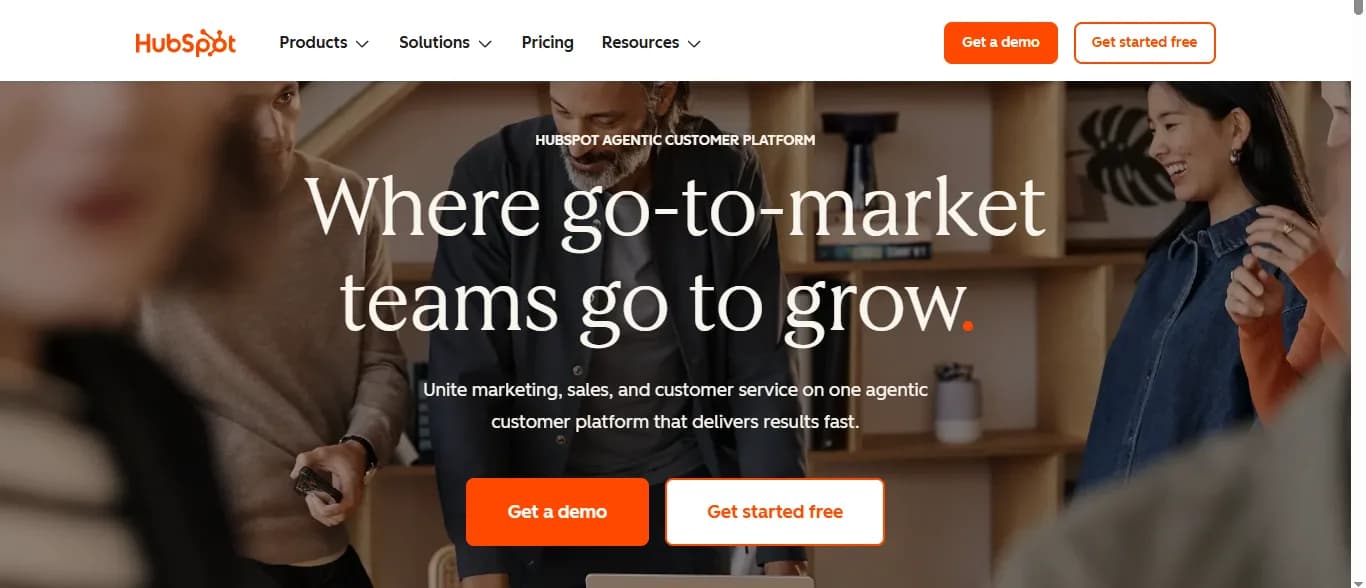
3. HubSpot: The CRM & Automation Giant HubSpot is the undeniable heavyweight for inbound marketing, sales pipelines, and customer data management.
The Pros: Features predictive lead scoring, robust customer segmentation, and seamless email marketing automation workflows.
The Catch: It is incredibly expensive and notoriously complex to set up. For lean marketing teams, it often feels like driving a tractor to the grocery store.
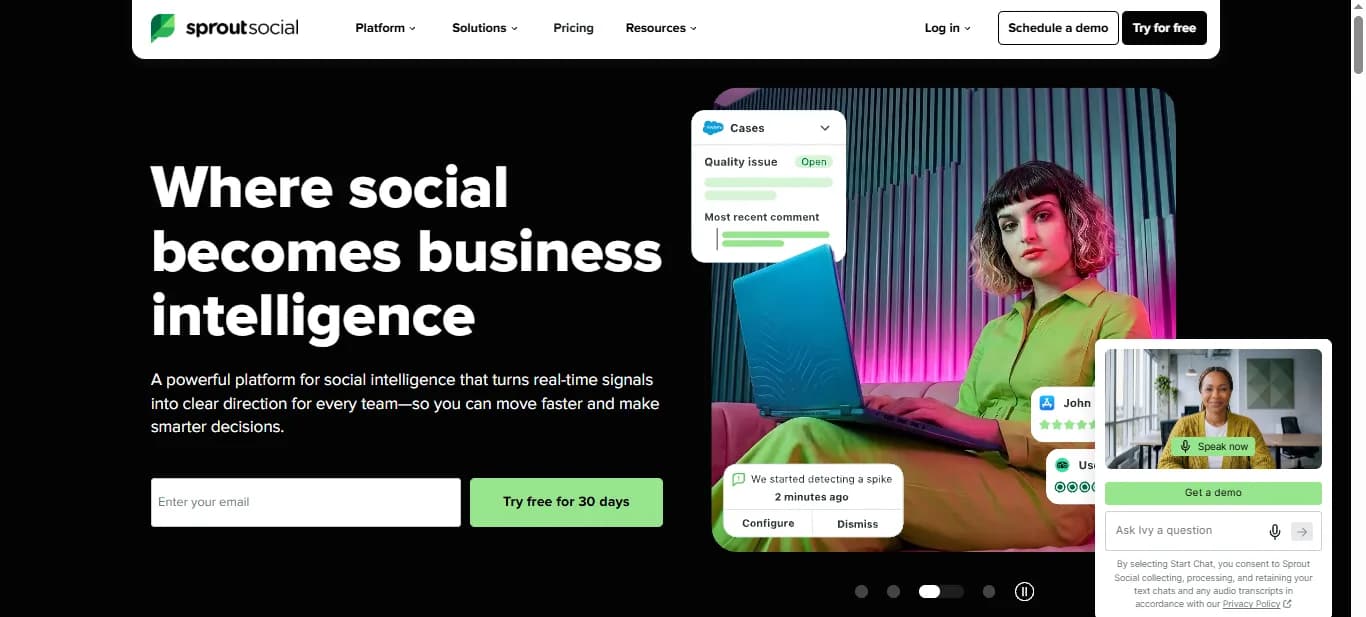
4. Sprout Social: The Social Listening Hub Sprout Social is a premium social media management platform designed for enterprise-level engagement and analytics.
The Pros: Offers unified inboxes, advanced social listening tools to spot trends, and AI-enhanced agent replies for customer service.
The Catch: It requires constant manual oversight. You still need your social media manager to sit at the Dashboard, monitor the inbox, and manually schedule the posts created elsewhere.
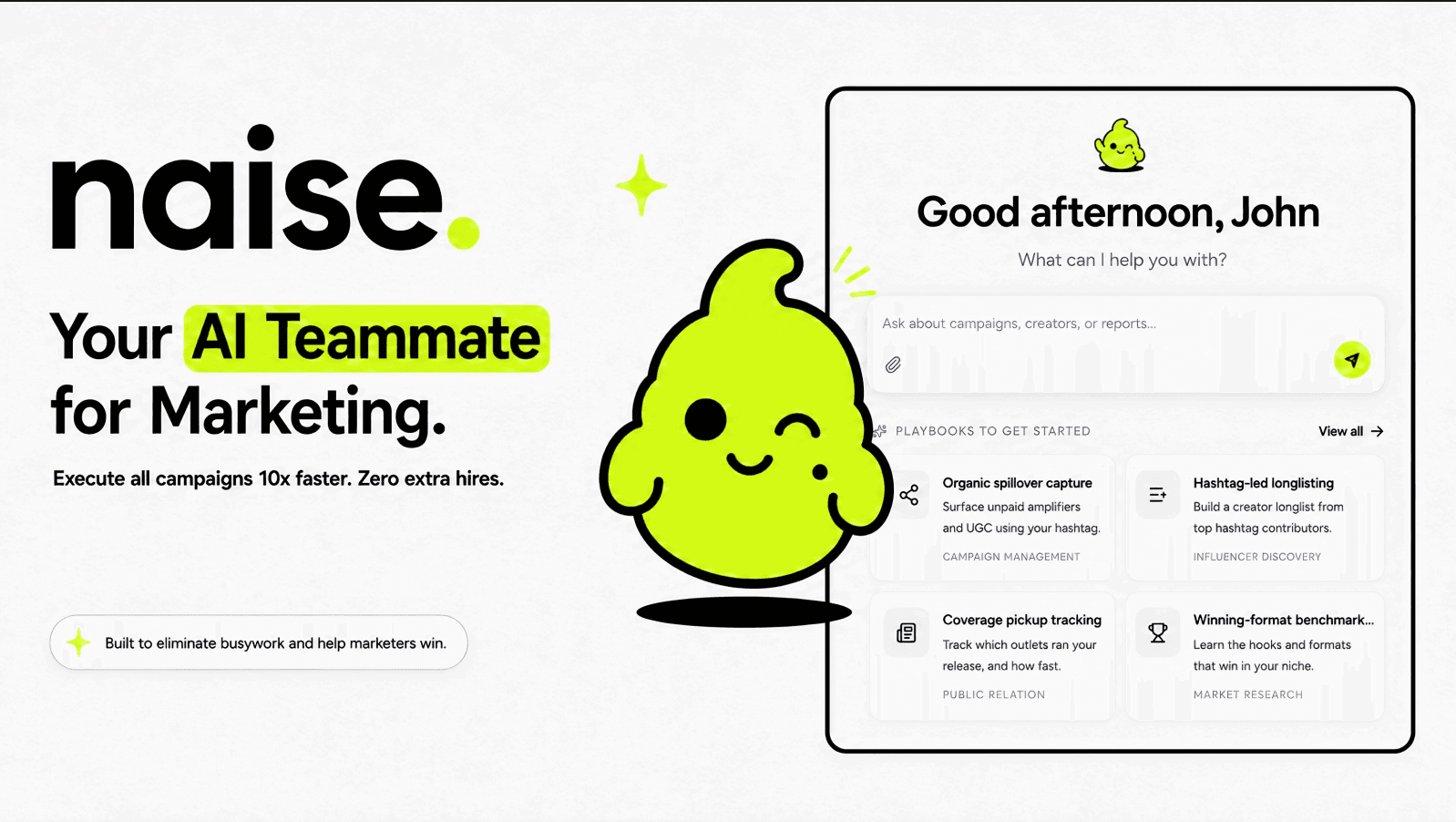
5. Naise AI: The Unified AI Teammate
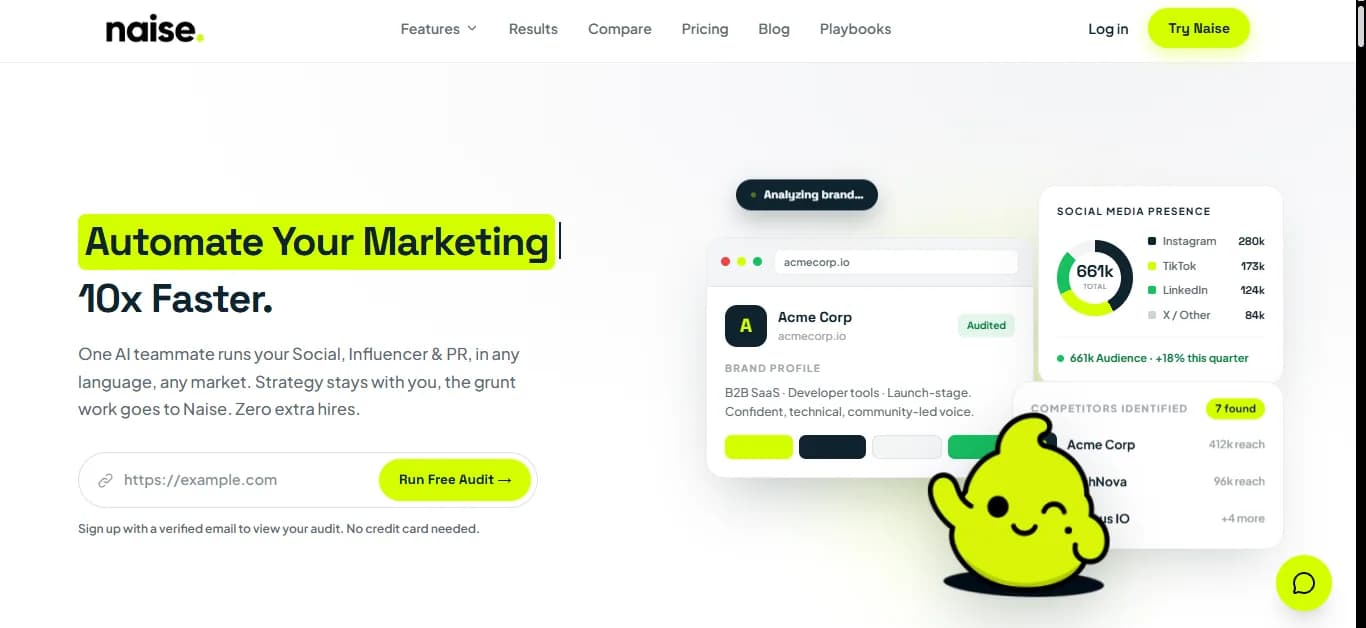
Standalone tools create bottlenecks; Naise AI creates leverage. It is not just a text generator or a scheduler—it is an autonomous operator that handles the entire campaign lifecycle.
Instead of paying for five different software subscriptions that refuse to talk to each other, you can consolidate your workflow into one unified Dashboard.
Here is how Naise AI completely replaces the fragmented tech stack by executing the work of an entire team.
Projects (Your Persistent Memory)
Stop repeating yourself. Projects act as your brand’s permanent brain, ensuring you never suffer from "prompt fatigue" again.
Upload Once, Execute Forever: Drop in your brand guidelines, past PDFs, and website URLs. The AI learns your exact tone, audience, and banned phrases.
Absolute Brand Safety: Every task delegated to the AI strictly adheres to the rules locked inside your Project.
Zero Reprompting: You never have to type "make this sound professional but cheeky" again. The system inherently knows who you are.
Playbooks (Agency-Level Strategies)
Say goodbye to the blank page syndrome. Playbooks are pre-configured, expert-level prompt templates ready for instant deployment.
Instant Strategy: Choose from plays like "Competitor Gap Play" or "Organic Spillover Capture."
No Guesswork: You don't need to be an expert prompt engineer. Just fill in a few variables, and the system does the heavy lifting.
Immediate ROI: Turn a high-level strategy objective into a fully drafted two-week campaign sprint in under three minutes.
The SMM Agent (Your 24/7 Social Manager)
Why pay for a scheduling tool when your Al can write, design, and post for you?
Automated Drafting: Select a channel, and the SMM Agent drafts the caption using your specific Project tone.
Visual Generation: It creates brand-aligned visual assets on the spot.
Direct Publishing: Seamlessly schedule and auto-post directly to Instagram, TikTok, and LinkedIn without leaving the platform.
Influencer & PR Agents (Scale Your Outreach)
Outreach is a numbers game that usually drains your week. Let the agents handle it.
Smart Discovery: The Influencer Agent filters a massive database of creators by niche, location, and real engagement rates.
Trend Hijacking: The PR Agent constantly scrapes live industry hashtags to find media conversations you can jump into.
Autonomous Pitching: Automatically drafts highly personalized, persuasive media pitches to secure PR coverage while you sleep.
The days of duct-taping your marketing tools together are officially over. A modern tech stack isn't about how many tools you have; it's about how much autonomous execution you can generate. Stop acting like a systems administrator, get your time back, and let your AI teammate handle the grunt work.
FAQs
What are the top AI marketing tools for 2025?
The top tools include Jasper for content generation, SEMrush for SEO, HubSpot for CRM automation, Sprout Social for social media management, and Naise AI for unified, autonomous campaign execution.
Why is a fragmented marketing tech stack a problem?
Using too many disconnected tools leads to data silos, expensive API maintenance, and prompt fatigue. Marketers waste hours manually transferring data between apps instead of focusing on strategy and growth.
How does Naise AI differ from tools like Jasper or ChatGPT?
Unlike generic AI tools that require constant prompting and context-setting, Naise AI uses a feature called Projects to maintain persistent brand memory. It also features autonomous Agents that don't just generate text, but actually execute and schedule full campaigns.
What is an AI marketing agent?
An AI marketing agent is an autonomous system that can execute complex, multi-step tasks without constant human oversight. For example, Naise AI's SMM Agent can independently draft brand-aligned copy, generate images, and schedule posts to social platforms.