Creating endless content without a solid foundation will only exhaust your team and ruin your engagement metrics. True marketing success relies on delivering the right message to the right audience, not just hitting a daily publishing quota. By shifting to a purposeful content strategy and leveraging smart automation, you can stop guessing and start driving real business results.
The Truth About Being "Consistent"
Consistency in marketing refers to the regularity of your publishing schedule and the stability of your core message, not just the act of posting every single day.
Many marketers fall into a dangerous trap regarding their output. They hear industry experts preach about the magic of consistency and immediately assume they need to crank out material seven days a week. This panicked mindset turns creative professionals into exhausted content factories. The pressure to keep the feed active often overrides the need for actual quality.
True consistency is about setting a realistic cadence and sticking to it religiously. You could choose to publish just one deeply researched case study every Tuesday morning. If you maintain that specific schedule without fail, you are being incredibly consistent. Your audience learns exactly when to expect your insights.
Major platforms like HubSpot and Sprout Social often highlight that audience trust is built through reliability. Your potential buyers want valuable insights that solve their problems. They absolutely do not want to be bombarded with fluffy filler content just because you felt obligated to post on a Sunday.
Actionable Tip: Run a 30-day consistency check. Did you stick to your planned posting days, regardless of frequency? If not, lower your frequency until you can hit your target 100% of the time.
Recent data shows that 41–42% of consumers unfollow brands for posting too frequently, while 45–51% unfollow due to irrelevant or overly promotional content—clear evidence that overposting and low-relevance posts are among the top drivers of audience churn.
Step 1: Diagnose the Real Problem (Frequency vs. Strategy)
If your posts receive zero engagement and fail to drive meaningful clicks despite a high publishing frequency, your core content strategy is broken.
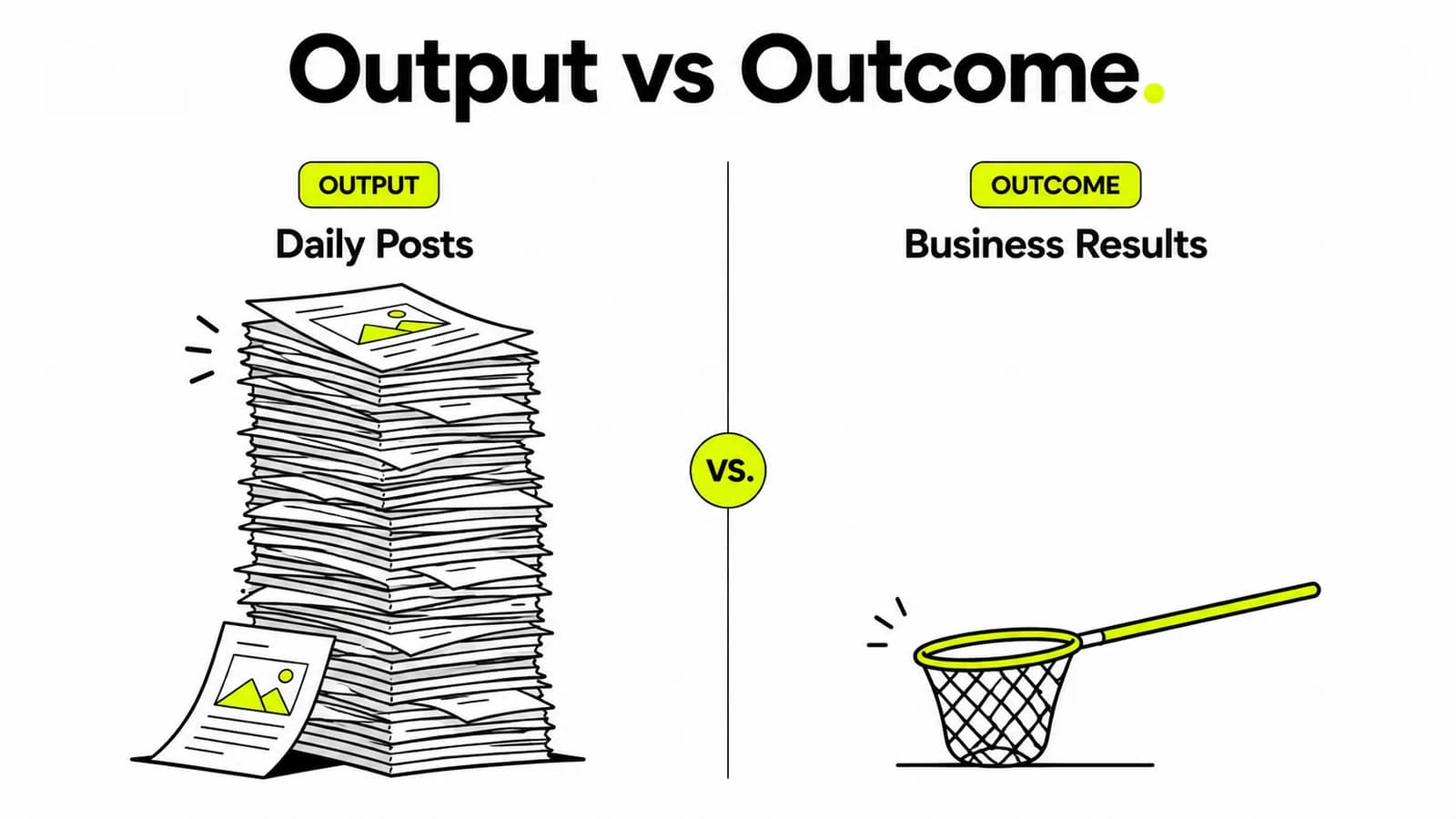
Publishing daily content without a strategic foundation will only amplify your lack of direction, leading to burnout rather than increased sales. We have all stared at a towering stack of scheduled posts and felt a false sense of accomplishment. You might even pay for expensive scheduling software like Buffer or Hootsuite to keep the machine running perfectly.
But you can post every single day and still get zero tangible business results. This frustrating reality happens because marketing is not simply the act of publishing more words on the internet. It is the calculated art of guiding a potential buyer toward a specific, profitable action.
When your conversion metrics flatline, the instinctive reaction is to create even more content. You assume people just need a few more touchpoints to finally pull out their credit cards. However, pushing out more of the wrong material is like shouting louder in a language your audience does not even understand.
Actionable Tip: Ask yourself these three diagnostic questions: Do I know exactly what action I want readers to take? Is my engagement rate healthy for my niche? Are people actually clicking my links or sending DMs? If the answer is "no," stop increasing your frequency immediately.
Step 2: Build the Three Core Pillars of Real Marketing
Effective marketing requires delivering the right message to the exact right people at the precise moment they are ready to engage.
Strategy starts by stepping away from the chaotic content calendar altogether. You need to stop waking up and asking what you should post today. Instead, you must ask who you are trying to reach and what specific pain points they are experiencing right now.
The first essential pillar is nailing the Right Message. This means understanding the deep psychological triggers of your target audience. Your copywriting must speak directly to their late-night worries and their boldest career aspirations.
The second crucial pillar is finding the Right People. You could write the most compelling sales copy in the history of advertising. But if you put it in front of people who do not have the budget or the need, you will only hear crickets.
The final pillar is delivering it at the Right Time. This involves understanding the complete buyer journey and aligning your content with their current stage of awareness. You have to nurture them from casual observers into eager buyers over weeks or months.
Actionable Tip: Before writing your next post, clearly define the "Who" (Target ICP), the "What" (Their specific problem), and the "When" (Their current funnel stage).
Step 3: Implement Purposeful Posting and Buyer Journeys
A converting strategy requires purposeful posts, a clearly mapped buyer journey, and a calculated balance of visibility and sales content.
Building a functional strategy means deciding the ultimate goal of a post before you even write the first word. You must visualize the exact path you want the reader to take after they finish reading. This clear intention is what separates amateur creators from highly paid marketing professionals.
Your social media presence is just one small piece of a much larger puzzle. You need to map out the entire buyer journey for your core offers and high-ticket services. Social media should act as the engaging entry point that seamlessly funnels traffic into your deeper Email Marketing ecosystem.
You also have to carefully balance your content types to maintain a healthy, active community. Pure visibility content will attract new followers and rapidly boost your vanity metrics. But visibility alone does not pay the bills or keep the lights on for your business. Conversely, posting nothing but hard sales pitches will quickly annoy your audience and drive them away.
Actionable Tip: Create a simple spreadsheet. For every post planned this week, assign a specific goal: Visibility (reach), Engagement (comments/saves), or Conversion (link clicks/DMs). Ensure a healthy mix.
Step 4: Automate Execution with Naise AI Playbooks
By leveraging Naise AI to automate content formatting and scheduling, marketers can reclaim their time and focus entirely on high-level strategy.
Once you lock in your brilliant strategy, the actual execution should never drain your creative energy. This is where the fragmented marketing stack usually falls apart completely. You end up bouncing between Google Docs, scheduling apps, and generic AI tools just to get one single post live.
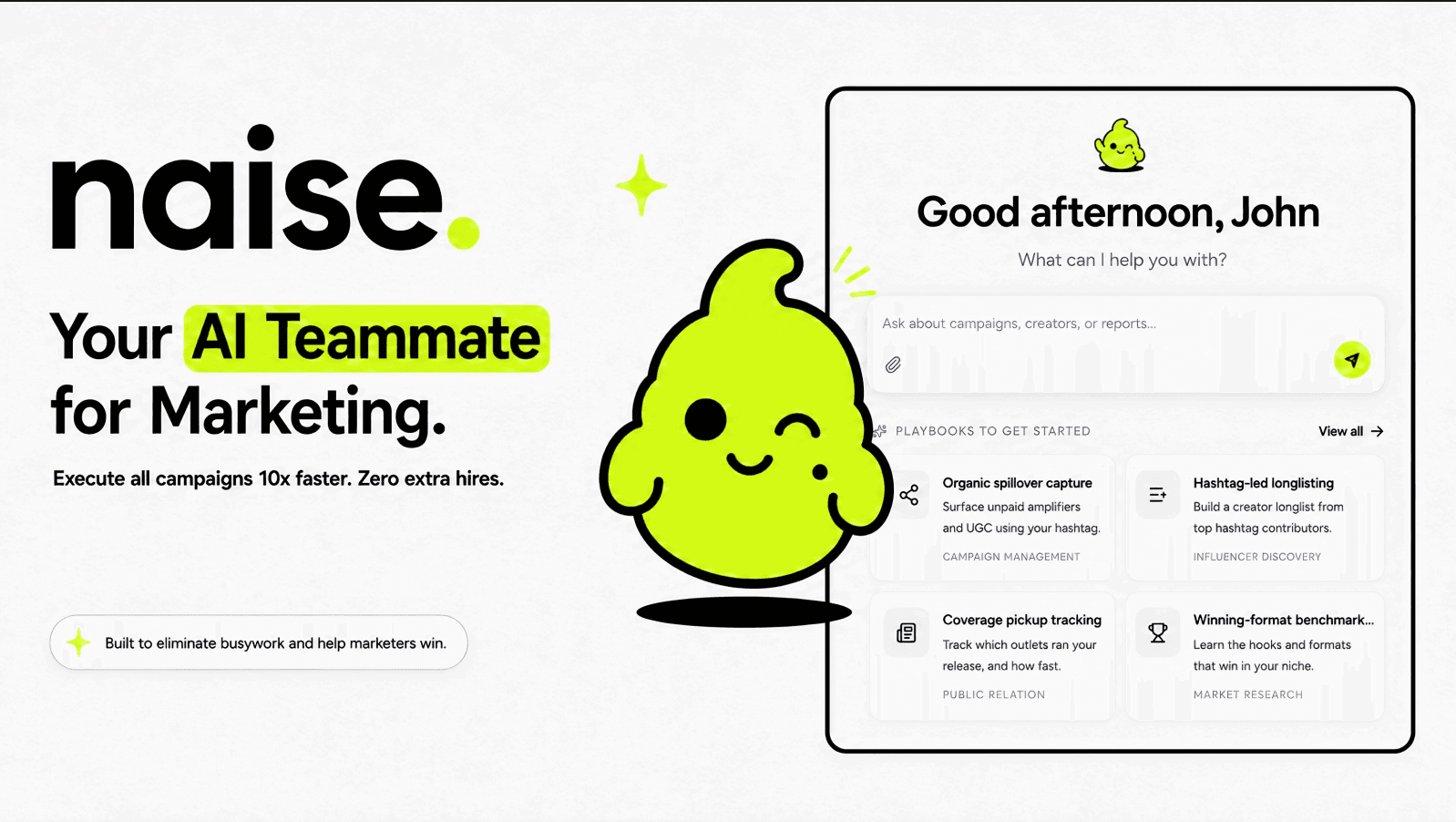
You can eliminate this chaotic workflow entirely with Naise AI. Think of it as your autonomous marketing team that never sleeps and never misses a deadline. You simply load your brand guidelines and strategic goals into your Projects, giving the system a persistent memory of your exact tone.
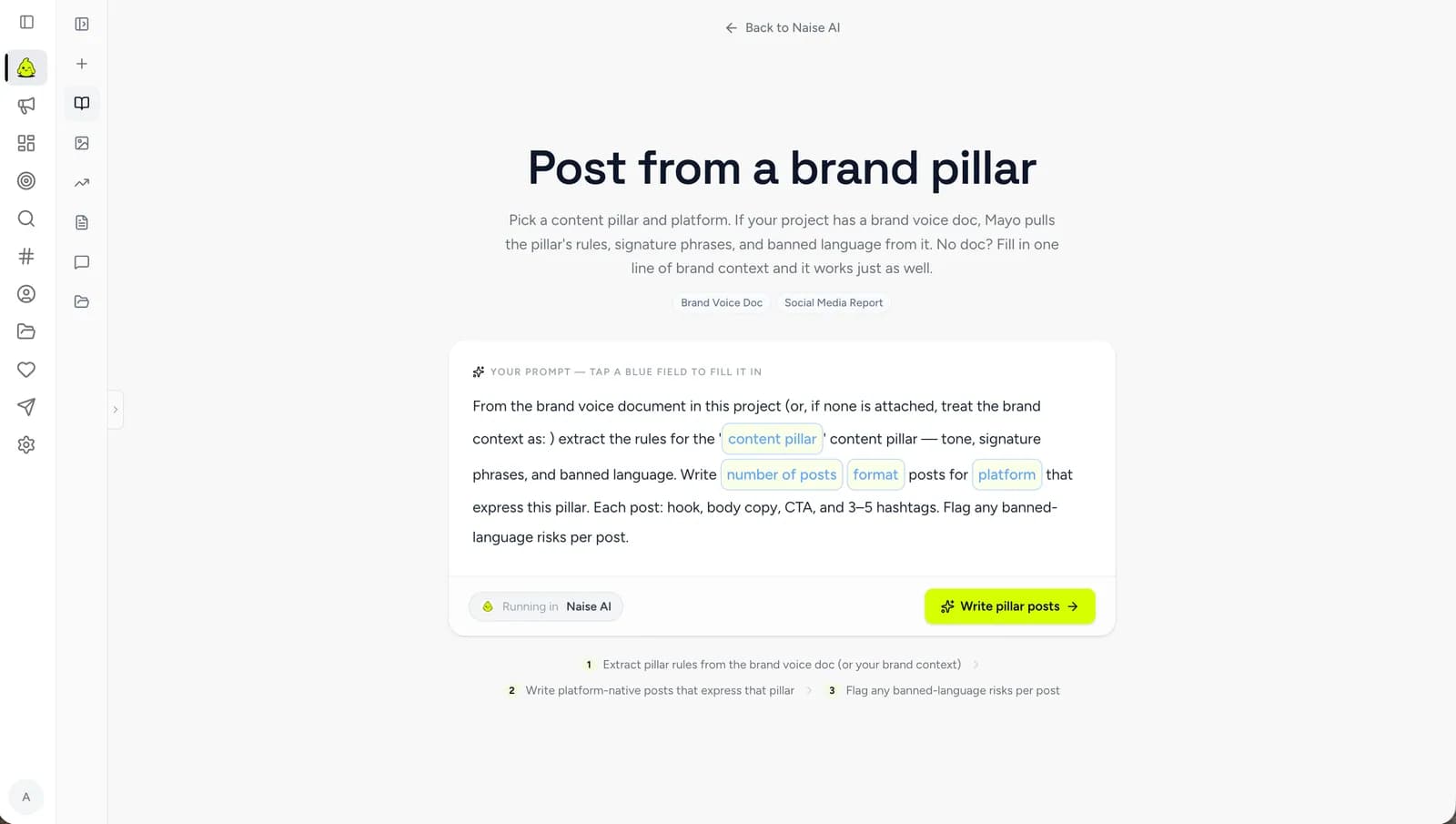
Instead of staring at a blank screen, you can open pre-configured Playbooks. These specialized templates give you agency-level prompts that generate highly targeted content instantly without the usual prompt fatigue. For example, if you need to create content based on your core themes, use the "Post from a brand pillar" playbook. If you want to analyze a competitor's weakness, deploy the "Competitor gap play."
Actionable Tip: Stop starting from scratch. Use a structured template or a dedicated AI playbook to maintain consistency and dramatically speed up your workflow.
Naise AI Prompt Template (From the "Strategy-backed blog post" Playbook):
"Name the objective and title - get an SEO post that pulls its weight." Fill in the blanks in the Naise dashboard, and the SMM Agent will generate a fully formatted, brand-aligned post based on your stored Projects data.
Posting every day is a guaranteed path to burnout if your underlying strategy is flawed. You have to stop treating volume as the ultimate metric for success. Focus on diagnosing the real problem, building the core pillars of marketing, and mapping out a purposeful buyer journey. When you separate the high-level strategy from the manual grunt work, you can finally start seeing real business results.
Stop asking what to post today. Let Naise handle the formatting and scheduling so you can focus on what actually drives revenue.
FAQs
Does posting every day increase my social media engagement?
Posting every day only increases engagement if every post provides high value to a specific audience. If you increase your frequency but sacrifice quality or relevance, platform algorithms will actively lower your reach due to poor interaction rates.
How do I know if my content strategy is actually working?
A working content strategy is measured by meaningful actions, not just vanity metrics like impressions. You should look for increases in direct messages, email newsletter sign-ups, link clicks, and ultimately, qualified inbound leads.
What is the difference between content execution and content strategy?
Content strategy is the high-level plan detailing who you are targeting, what problems you solve, and the journey you want buyers to take. Execution is the manual process of writing, formatting, scheduling, and publishing the actual posts.
Why do generic AI tools fail at social media marketing?
Generic AI tools lack persistent brand memory and require endless prompting to sound authentic. They often produce robotic, unaligned text because they do not understand your specific buyer personas, product nuances, or established brand voice.