Scaling a brand globally often turns a sharp Brand Identity into a bland, forgettable template. Through its ninth anniversary "One World. One CHAGEE" campaign, CHAGEE proved that a winning brand localization strategy keeps one recognizable core while letting every local market own its cultural expression. Below, we unpack how CHAGEE turned its elephant mascot Teadore into a local insider across multiple countries, and how running a focused Brand Audit keeps your own brand from sounding like a tourist.
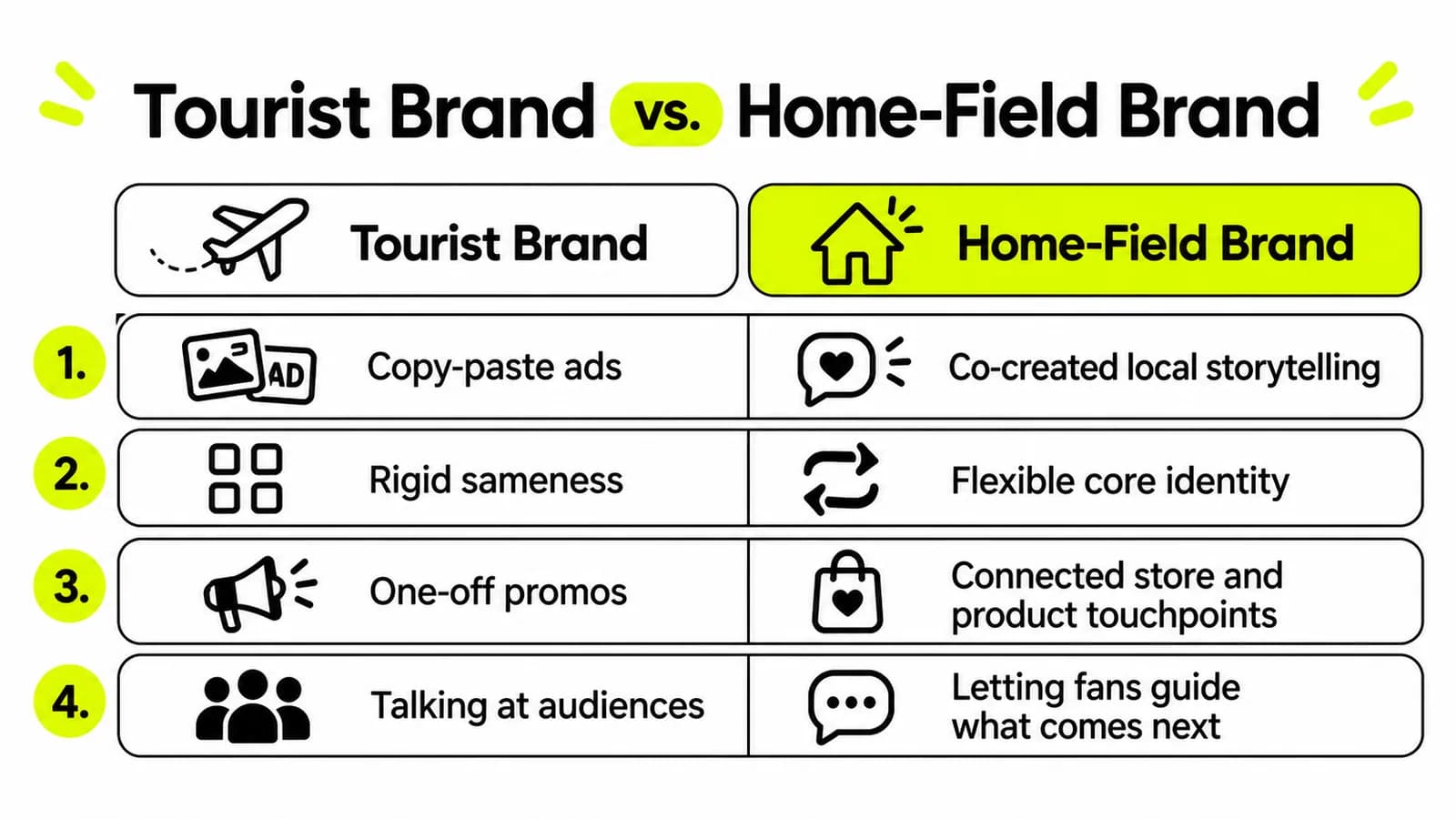
There is a massive difference between a brand that visits a market and a brand that actually lives there. You can spot a tourist brand in three seconds flat. It drops a translated tagline into a new country, runs the exact same campaign creative it used back home, and wonders why nobody cares.
CHAGEE decided to take the exact opposite route for its ninth anniversary celebrations. Under the theme "One World. One CHAGEE", the tea brand sent its signature green elephant mascot, Teadore, across seven international markets plus China and the US. Instead of shipping identical plushies everywhere, CHAGEE gave Teadore a distinct cultural identity tailored to each community.
In Singapore, Teadore appeared in a soft blue, Merlion-inspired look holding a CHAGEE cup. Across the border in Malaysia, the character wore a kebaya styled with Bunga Raya details, while Indonesia got a Teadore dressed in a traditional Jas Demang jacket, kain ujung serong waist cloth, and songkok. Thailand saw Muay Thai gear, the Philippines received the Balintawak, Vietnam featured an áo bà ba, South Korea wore a hanbok, China got a panda costume, and the US sported a Hawaiian shirt with a surfboard.
This was not just cute anniversary merch. It was a masterclass in brand localization strategy that every scaling marketer should study closely—because 76% of global consumers prefer buying products with information in their native language, while 40% say they will not buy from websites available only in a foreign language.
Why Your Brand Identity Must Anchor Your Brand Localization Strategy
A strong brand localization strategy only works when your core Brand Identity stays instantly recognizable across every single market. Without a fixed visual and narrative anchor, adapting to local tastes quickly fractures your brand into disconnected regional silos.
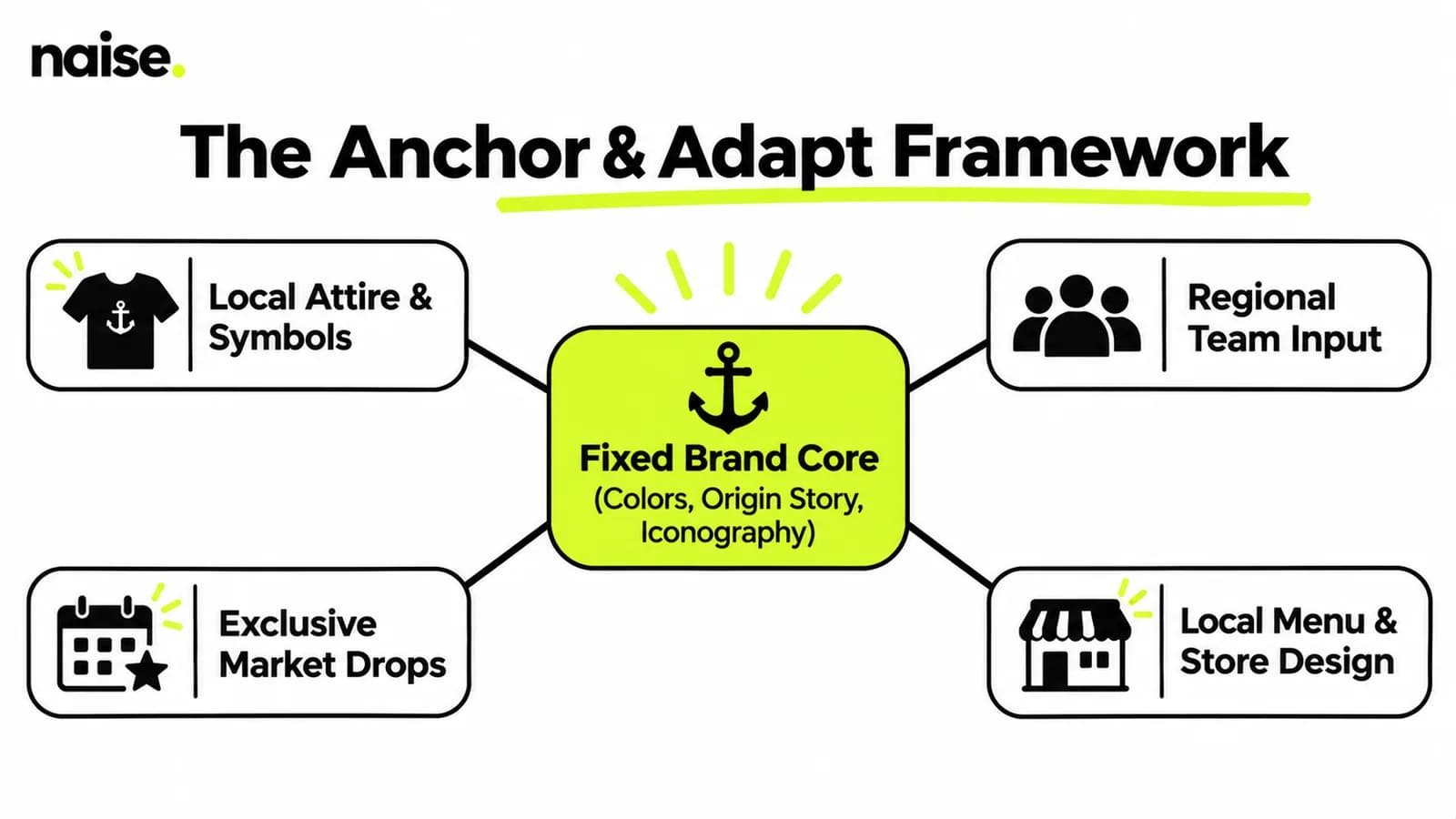
Many marketing teams overcorrect when entering new regions. They either refuse to change anything out of fear of diluting their Brand Guidelines, or they redesign so aggressively that nobody recognizes the parent company. CHAGEE dodged both traps by grounding Teadore in an origin story that naturally bridged heritage and expansion.
Founded in Yunnan in 2017, CHAGEE traced Teadore back to the Ancient Tea Horse Road, the historic mountain trails that carried tea out of Yunnan across borders for centuries. Because Yunnan is also home to China's wild Asian elephants, the mascot was never a random cartoon gimmick. Every design detail, from Teadore's signature green color and leaf-shaped ears to the CHAGEE "C" mark, stayed locked in across every country.
As Eugene Lee, CMO of CHAGEE APAC, explained to MARKETING-INTERACTIVE, the goal was making Teadore stay recognizable as the same green elephant everywhere while drawing on symbols people actually feel proud of. When your foundation is rock solid, local flair amplifies your Brand Equity instead of competing with it. You stop acting like a temporary pop-up and start feeling like a neighbor who brought great tea.
How to Turn Local Culture Into a Shared Brand Experience
To make Cultural Relevance stick, treat localization as a permanent layer of your Brand Architecture rather than a one-off holiday campaign. When local teams co-create your market presence, customers feel genuine ownership instead of pandering.
You cannot Google your way into authentic Brand Localization from a headquarters thousands of miles away. CHAGEE actively brought local teams into the design and review process to pick references that communities genuinely cherish, whether that meant national icons, traditional attire, flowers, or sports. That internal collaboration is what separates respectful homage from awkward corporate stereotyping.
Even smarter, CHAGEE made each market's Teadore design strictly exclusive to that country. You cannot walk into a store in Kuala Lumpur and grab the Singapore Merlion version or the Jakarta Jas Demang edition. That single strategic constraint transformed a standard anniversary giveaway into a community-driven Brand Asset.
Suddenly, customers had a reason to hunt for different Teadore versions while traveling and swap them with fellow tea lovers across borders. Instead of CHAGEE shouting about its global reach in an ad, fans organically sparked cross-market conversations themselves. That is the dream outcome of modern Community-Led Growth, where your audience carries your story further than paid media ever could.
Extending Home-Field Comfort Beyond One Campaign
A memorable mascot grabs attention, but true Consumer Trust happens when your physical spaces, product lineup, and activations tell the exact same story. Consumers feel "at home" with a brand when every touchpoint matches the promise made in your marketing.
CHAGEE did not isolate its localized thinking inside a single plushie drop. According to Lee, the mascot initiative directly mirrored how CHAGEE already designs its physical stores to reflect the neighborhoods they serve. When a customer walks through the door, the architecture, the packaging, and the merchandise all speak the same visual language.
For its November 17 anniversary milestone, CHAGEE paired Teadore with localized product experiences that gave younger audiences fresh reasons to visit. Singapore, Malaysia, and the Philippines celebrated with the BO·YA Mango Jasmine Green series, available as both milk tea and brewed tea. Singapore also rolled out a nationwide "Tear & Win" activation, nine new artisan bakes including Da Hong Pao Mochi Bun, Peach Oolong Choux Puff, and White Peach Oolong Butter Rice Cake, and Geelato, CHAGEE's first handcrafted tea gelato range outside China.
Notice the pattern here. Every new format still translated familiar CHAGEE tea flavors into experiences people wanted to share with friends. Even more telling, CHAGEE did not force Teadore into a rigid five-year roadmap on day one, choosing instead to watch which designs customers gravitate toward and share before deciding how to expand the character beyond merchandise.
How to Know If Your Brand Feels Like Home (Or Just Like a Tourist)
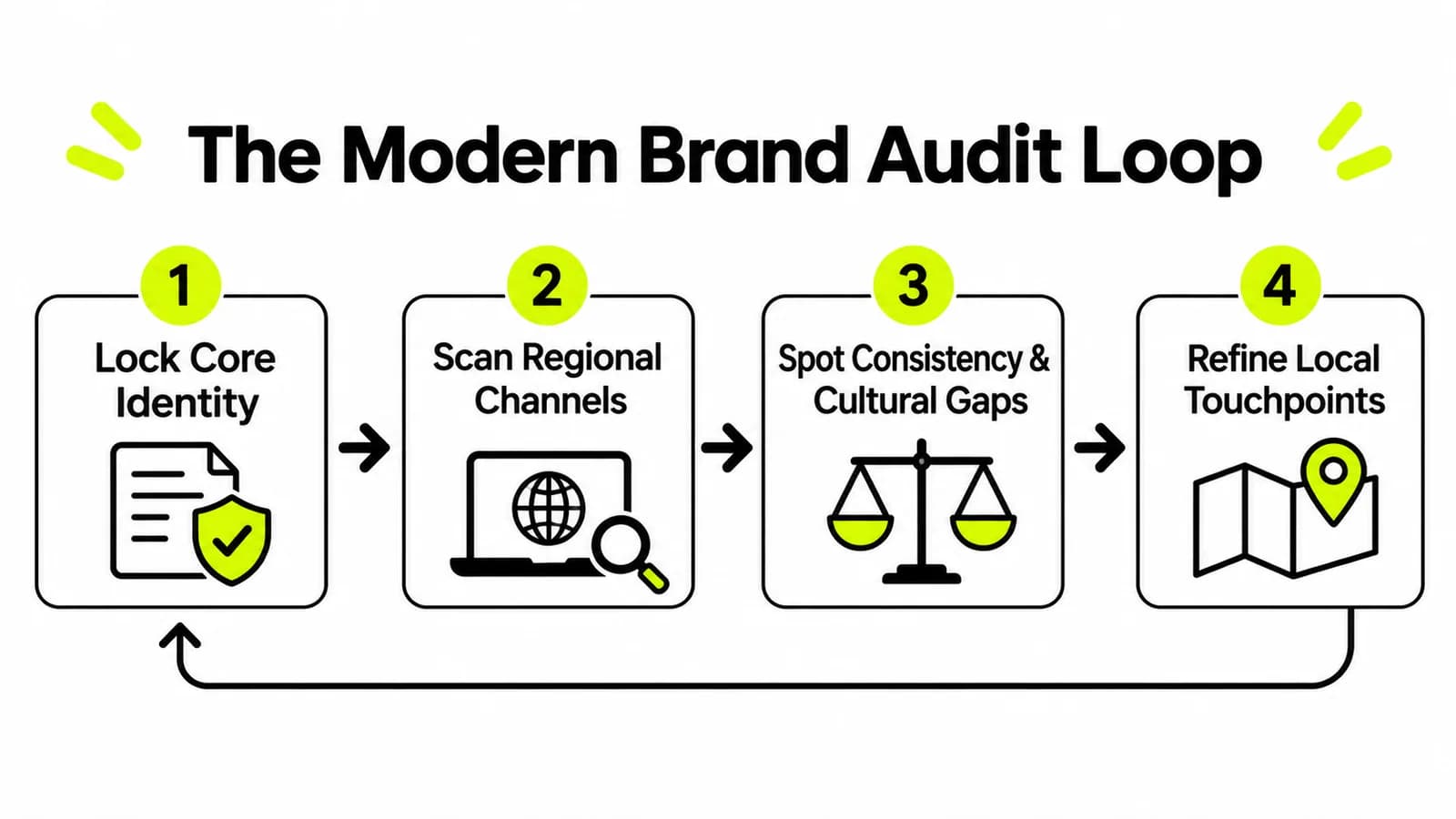
You can measure whether your brand localization strategy actually resonates by running a structured Brand Audit across your messaging, visuals, and regional channels. An honest Brand Audit reveals exactly where your global consistency breaks down and where your local voice sounds robotic.
Most marketing teams skip regular audits because their Brand Identity lives scattered across a Fragmented Marketing Stack. Your visual rules sit in an outdated PDF, your regional copy lives in five different spreadsheets, and your social team improvises captions on the fly. Before you know it, your brand feels cohesive in one channel and completely unrecognizable in another. And the cost is real, brands that present themselves consistently across every market can see revenue increase by up to 33%.
When you evaluate whether your brand truly feels like home, look closely at four specific friction points:
Core Identity Drift: Can someone recognize your brand in two seconds without seeing your logo, even when your messaging adapts to a local audience?
Tone and Cultural Alignment: Does your copy sound like a real insider speaking naturally, or like a stiff translation stitched together at the last minute?
Touchpoint Consistency: Do your website, social feeds, email flows, and product experiences reinforce the same Brand Positioning, or do they feel like four different companies?
Audience Resonance: Are customers actively engaging, sharing, and claiming ownership of your campaigns, or scrolling straight past them?
Doing this manually across markets, campaigns, and channels used to eat up weeks of agency retainers and endless slide decks. That is exactly why modern marketing teams are ditching the Fragmented Marketing Stack for a unified workspace like Naise AI.
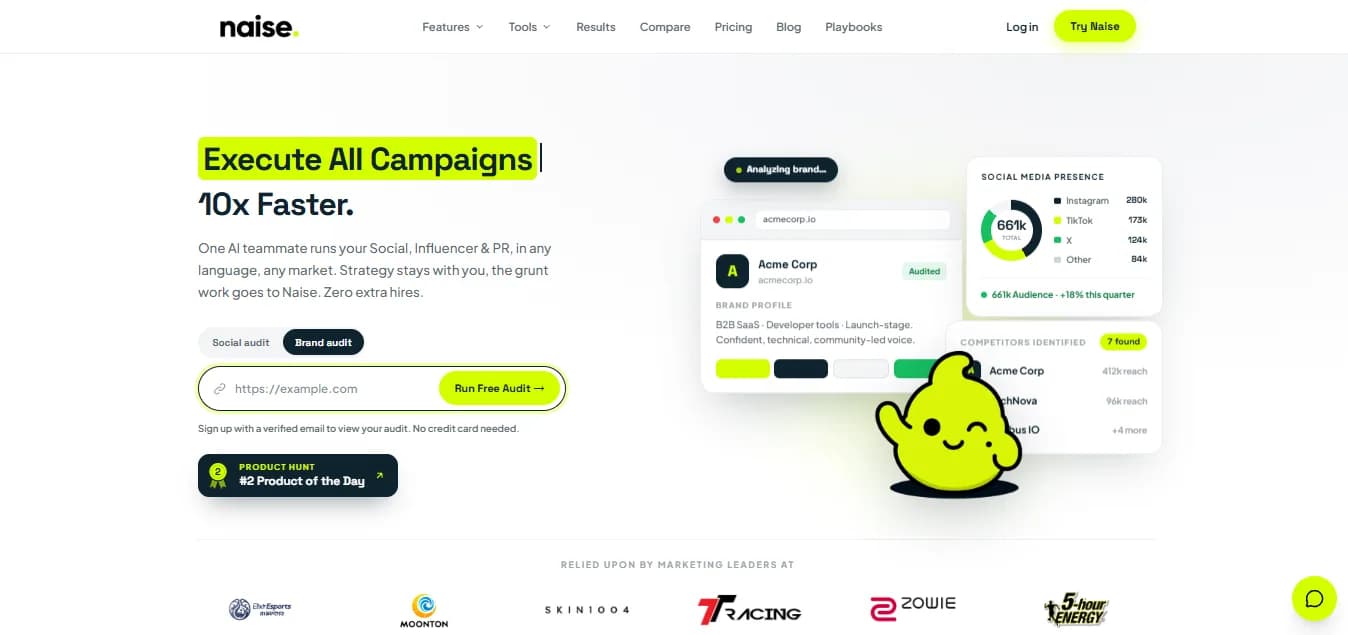
Instead of juggling ten disconnected tabs just to figure out why your brand feels slightly off, Naise AI brings your entire Brand Audit workflow under one roof. Inside your central Dashboard, you can organize your core positioning and regional nuances inside Projects, which act as persistent memory to lock in your exact Brand Voice and identity rules. From there, you can trigger pre-configured Playbooks and let autonomous Agents run a deep Brand Audit across your assets, flagging tonal inconsistencies, positioning gaps, and localization blind spots in minutes instead of weeks.
Make Your Brand Feel Like Home, Everywhere
CHAGEE did not win hearts across nine markets by shouting louder or spending more on generic global ads. It won by knowing exactly who it is at its core, respecting the unique pride of every community it serves, and letting local culture sit right inside its global story.
Whether you are expanding into seven new countries or just trying to make your brand click across three customer segments, the goal stays the same. Stop showing up like a tourist reading from a stiff phrasebook. Audit where your message feels distant, tighten your core identity, and build a brand experience your audience is genuinely proud to call their own.
Ready to see how well your brand actually connects across every touchpoint? Run a sharp, end-to-end Brand Audit inside Naise AI to uncover hidden voice gaps, sharpen your positioning, and make your brand feel unmistakably like home.
FAQs
What is a brand localization strategy?
A brand localization strategy is the practice of adapting your brand's messaging, visuals, products, and customer experiences to match the cultural values of specific markets while keeping your core Brand Identity intact. Unlike basic translation, true localization makes a brand feel native to each community without losing global recognizability.
Why did CHAGEE create different Teadore mascot designs for each country?
CHAGEE created market-specific Teadore designs for its ninth anniversary to celebrate "One World. One CHAGEE" while honoring local pride in every region. Keeping Teadore's core green elephant look consistent while changing its attire to local icons, like Singapore's Merlion or Indonesia's Jas Demang, turned the mascot into a relatable, collectible Brand Asset.
How do you balance global brand consistency with local cultural relevance?
Start by locking down your non-negotiable brand anchors, such as your origin story, primary colors, logo usage, and core values. Then empower local teams to adapt cultural references, seasonal products, and community activations around those anchors so the brand feels familiar rather than rigid.
How often should a growing company run a Brand Audit?
Scaling brands should run a full Brand Audit at least twice a year, and always before launching into a new market, rolling out a major campaign, or refreshing a product line. Using automated workflows inside Naise AI makes it easy to monitor Brand Consistency continuously without waiting for a messy annual overhaul.
What are the biggest signs that your brand needs a Brand Audit?
Key warning signs include inconsistent tone of voice across social and web channels, flat engagement in new regional markets, and internal confusion over how to describe your core value proposition. If your audience cannot instantly recognize your brand across different touchpoints, it is time to audit your identity and alignment.